
Review · KYOTO
Kyoto: Kinkaku-ji Temple & Serene Garden Guided Tour with Tickets
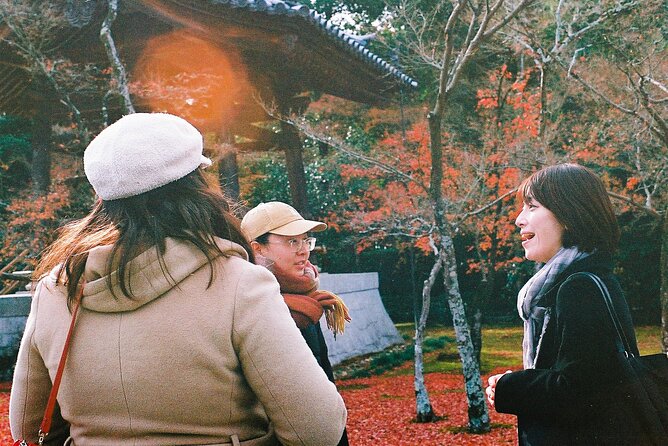
The most unusual part of this Kyoto tour is not the famous Golden Pavilion. It is the chance to enter a normally closed hall at Ninna-ji, listen to a monk chant, ask questions, and see the rotating sutra shelf. That gives you a glimpse of living Buddhist practice, not just another temple photo stop.
I like the small group of seven or fewer, which makes it easier to hear your guide and ask questions. I also like the contrast between Kinkaku-ji’s gold, pond, and formal beauty and Ninna-ji’s quieter imperial setting. The main drawback is that the Ninna-ji program can change when the temple has other needs, so the special access is not absolute.
Key points at a glance
- Enter Ninna-ji’s usually closed Main Hall for chanting led by a monk and a question-and-answer session.
- See Kinkaku-ji’s Golden Pavilion and garden with context about the shogun who built it as a retirement villa.
- Visit two UNESCO World Heritage temples in roughly three hours.
- Keep the group personal, with a maximum of seven people.
- Enjoy a practical route between the temples, with the guide bringing the group from Kinkaku-ji to Ninna-ji by taxi.
- Pay about $48.86 per person, including admission to both temples and the mobile ticket.
Two Kyoto temples, two very different moods
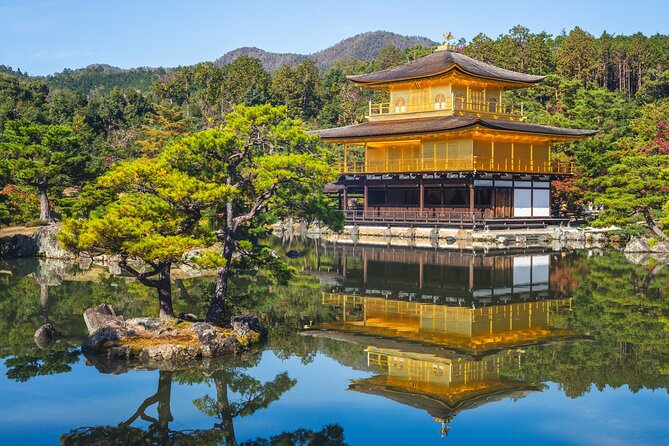
This tour works because it puts two famous but very different temples side by side. Kinkaku-ji is polished, theatrical, and instantly recognizable. Ninna-ji is quieter and more connected to imperial tradition and Buddhist practice.
You begin at Yamazaki-an25, at 25 Kinugasa Babachō in Kyoto’s Kita Ward. From there, the guide leads you into Kinkaku-ji for about an hour. The second part lasts about one hour and 45 minutes at Ninna-ji, ending at 33 Omuroōuchi in Ukyo Ward.
The route is short enough for a half-day plan, but the subject is not shallow. Your guide explains how temples relate to power, prestige, devotion, and the changing history of Japan. That context matters. Without it, Kinkaku-ji can become a quick photograph and Ninna-ji can look like another large temple complex.
The guides named in the feedback include Ellie, Eri, and Eriko. The most praised qualities are their clear English, warmth, preparation, and ability to explain Japanese religion without making the visit feel like a lecture. With only a few people in the group, you have a better chance to ask about details that catch your eye.
Garden entry tickets around Kyoto:
- Kyoto: Kinkaku-ji Temple & Serene Garden Tour with Tickets
★ 5.0 · 2 reviews - Paris: Versailles Palace and Gardens Full Access Ticket
★ 4.6 · 41,579 reviews - Marrakesh: Majorelle Garden Entry Tickets
★ 4.5 · 9,651 reviews
Kinkaku-ji: gold leaf, water, and samurai ambition
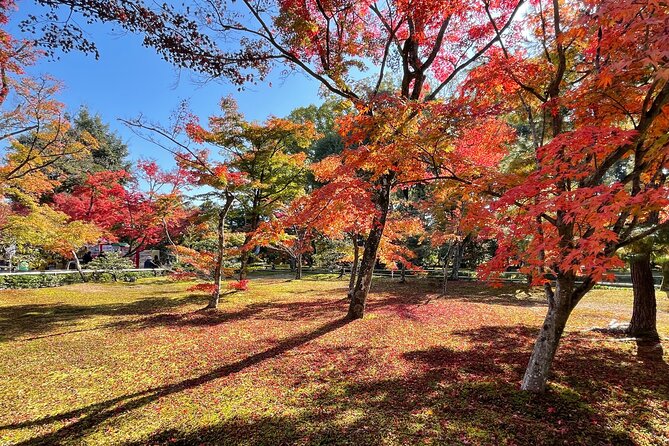
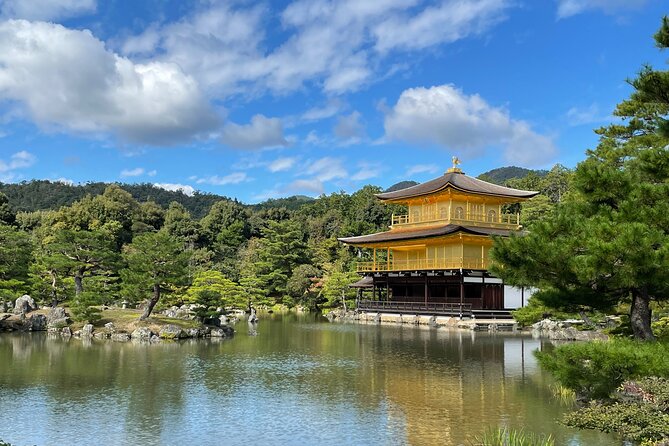
Kinkaku-ji is also called the Golden Pavilion. The building began as a retirement villa for Shogun Ashikaga Yoshimitsu before becoming a Zen Buddhist temple. That origin tells you something important about the building’s appearance. This was not designed as a modest retreat. It expressed status and power.
The upper floors are covered in gold leaf, and the pavilion reflects in the pond below. The view is carefully composed, with the building, water, trees, and surrounding garden working together. Your guide points out the idea of a borrowed view, where scenery beyond a garden becomes part of the garden’s design.
You will see the Shariden, the pavilion’s sacred reliquary hall, along with the Karamon Gate and several garden features. The route also includes Rikushu-no-taki waterfall, Anmintaku Pond, Hakujanotsuka, the Yukatei Teahouse, and Fudo Hall.
That list may sound like a lot for one hour, and it is. You should expect a focused visit rather than a slow, solitary garden walk. Kinkaku-ji is one of Kyoto’s most photographed sights, so your time here is best used by listening closely while you move through the grounds.
I like having a guide at this stop because the gold is obvious, but the design choices are less so. A guide can explain why the pavilion is positioned as it is, how the garden frames it, and how Yoshimitsu’s political status shaped the site.
The drawback is that the Golden Pavilion itself can dominate your attention. You may spend much of the stop taking pictures and less time noticing the smaller features. Try to pause after the first view. Look at the reflection, then turn your attention to the paths, gates, pond edges, and less famous buildings.
Admission to Kinkaku-ji is included. The tour does not ask you to arrange a separate ticket, which saves time at a busy attraction.
The taxi transfer makes the second temple easier
Ninna-ji is not far from Kinkaku-ji, but the transfer is a useful part of the experience. The guide has brought groups between the temples by taxi, which is more comfortable than making you work out the connection yourself during a short tour.
That convenience also protects your time. You are not spending the middle of the tour studying transit signs or wondering which stop comes next. The guide can keep the group together and use the ride to prepare you for Ninna-ji.
The exact transfer arrangements can depend on the day, so you should follow the meeting instructions from the operator. The tour begins at Kinkaku-ji and ends at Ninna-ji. It is not a round trip back to the starting point.
Ninna-ji offers the tour’s rare access
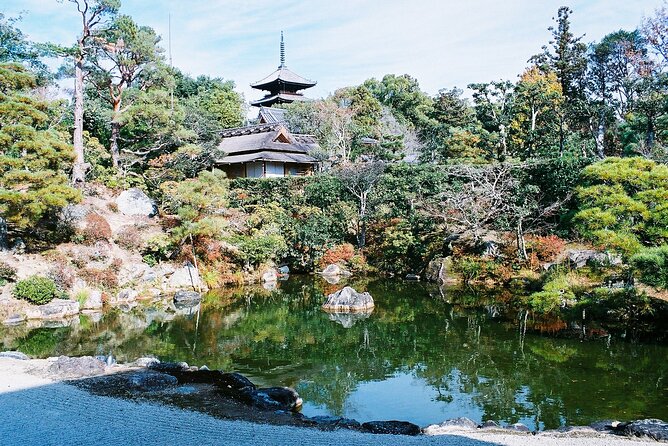
Ninna-ji was founded in 888 by Emperor Uda and became the head temple of the Omuro school of Shingon Buddhism. Its imperial connection gives the visit a different tone from Kinkaku-ji, which began as a shogun’s villa.
The temple is known for its five-story pagoda, gardens, and Omuro cherry trees. Cherry blossoms are seasonal, so do not book this tour expecting them to be in bloom. The larger point is the setting: Ninna-ji feels less like a single photogenic building and more like a functioning religious and cultural center.
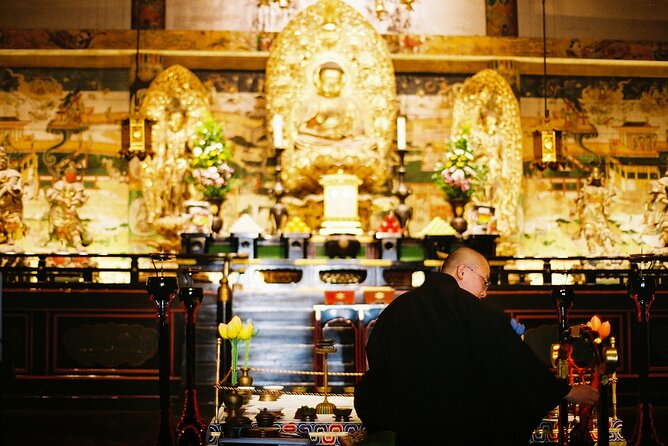
The highlight is access to the Main Hall, also called the Kondo Hall in the tour material. This space is not normally open to the public. Inside, a monk leads a sacred chanting session and then takes questions.
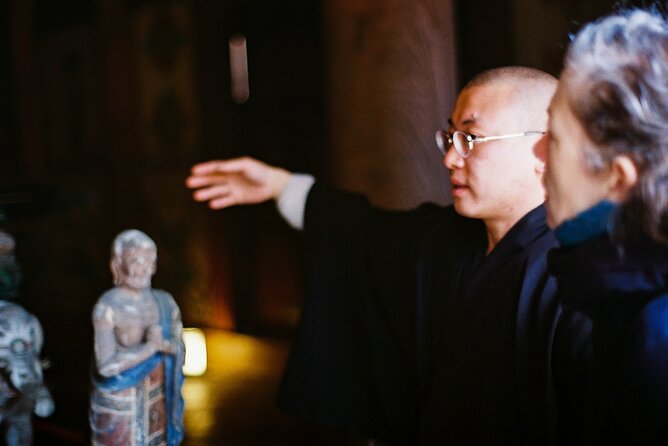
That personal exchange changes the pace of the visit. Instead of only hearing a guide interpret Buddhist customs from outside, you have the chance to ask a monk about the spiritual traditions connected to the temple. The quality of the conversation will depend on the questions asked and on the day’s program, but the format is far more personal than a standard walk around temple grounds.
You will also visit the Sutra Hall and see the rotating sutra shelf. The shelf is not simply a decorative object. Its movement has ritual meaning, and your guide explains how to interact with it respectfully.
A photo with the monk is included in the planned experience. Afterward, the tour visits the elegant Imperial Residence before ending at Ninna-ji. This final section gives the visit a calm finish, with imperial style and temple life placed side by side.
The schedule at Ninna-ji can change because of the temple’s own circumstances. That is the most important limitation to understand before booking. The special access is the reason this tour costs more than a self-guided temple visit, but it cannot be treated as a guaranteed performance at a fixed time.
More gardens worth a morning in Kyoto:
- Kyoto Zen Meditation & Garden Tour at a Zen Temple with Lunch
★ 5.0 · 441 reviews - Kyoto Arashiyama Bamboo forest & Garden Half-Day Walking Tour
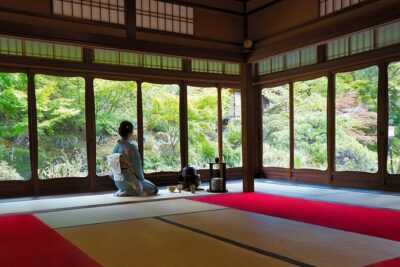
★ 5.0 · 413 reviews - Kyoto Kiyomizu Tea Ceremony with Scenic Garden Views
★ 5.0 · 101 reviews - Kyoto: Private Tea Ceremony with a Garden View
★ 4.9 · 61 reviews
Why the small group matters here
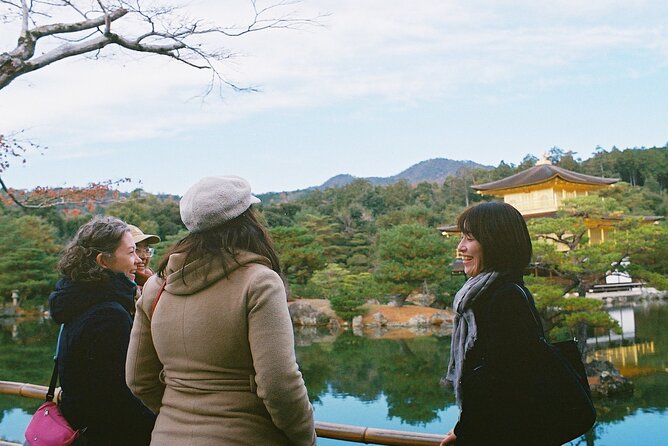
A maximum of seven people is a strong feature for this particular tour. At Kinkaku-ji, a large group can make it hard to hear explanations or stay together on the paths. At Ninna-ji, the advantage is greater because the visit includes chanting, questions, and interaction with a monk.
A small group also gives the guide room to adjust. If you want to ask about Shingon Buddhism, Japanese temple architecture, or the story behind the Golden Pavilion, you are less likely to feel that you are holding up a busload of people.
The named guides associated with this experience include Ellie, Eri, and Eriko. The descriptions of them consistently point to friendly personalities, strong English, and a serious interest in Japanese culture. Guide quality can vary by date, but the format is built for conversation rather than a memorized speech.
What the $48.86 price includes
At about $48.86 per person, this is not the cheapest way to see Kinkaku-ji. You can visit the Golden Pavilion and Ninna-ji independently for less if you prefer to move at your own speed and read the signs yourself.
The value comes from four things:
- Admission to both temples is included.
- You get a guide for the full three-hour experience.
- The group is limited to seven people.
- The Ninna-ji visit may include access and interaction not available on a normal independent visit.
The price makes the most sense if you want interpretation and special access. It is less compelling if you only want photographs of the Golden Pavilion. Kinkaku-ji is easy to recognize on your own, but understanding its connection to Yoshimitsu, Zen Buddhism, and garden design adds meaning to the stop.
The same is true at Ninna-ji. You can walk through the grounds independently, but you may not know which spaces are normally closed, what the rotating sutra shelf represents, or how to frame respectful questions for the monk.
Timing, walking, and practical expectations
The total duration is about three hours. Kinkaku-ji takes about one hour, while Ninna-ji receives about one hour and 45 minutes. That balance is sensible because Ninna-ji contains more of the tour’s special program.
You should expect walking through temple grounds and gardens. The tour is near public transportation, and most people can participate. Specific accessibility details are not provided, so you should ask the operator before booking if you have mobility concerns.
Wear comfortable shoes and allow a little mental space between the two stops. Kinkaku-ji is visually intense, while Ninna-ji asks for more quiet attention. The tour is best enjoyed when you do not try to squeeze another major attraction into the same narrow time slot.
A mobile ticket is provided. Confirmation arrives at booking, which helps when you are arranging a Kyoto day with several fixed plans.
The cancellation policy is friendly but firm: you can receive a full refund if you cancel at least 24 hours before the local start time. Changes or cancellations made inside that window are not accepted for a refund.
Who will get the most from this visit
I would choose this tour if you want more than a checklist of Kyoto landmarks. It suits you especially well if you are curious about Japanese religion, temple ritual, imperial tradition, or the way political power shaped sacred places.
It is also a good fit for a first visit to Kyoto. You see two major UNESCO World Heritage temples without having to solve the route yourself, and the guide gives you a framework for understanding what comes next in your trip.
Families and mixed-age groups may appreciate the short duration and small party size. The monk-led session can also give younger visitors a more direct point of contact than a long architectural explanation.
You may want to skip it if you strongly prefer solitude, photography, or a loose schedule. The tour moves according to a set plan, and the Ninna-ji portion can change. It is not designed as an unhurried garden meditation.
Should you book the Kinkaku-ji and Ninna-ji tour?
Book it if the Ninna-ji access is what interests you. The Golden Pavilion is the visual headline, but the monk-led chanting, Q&A, Sutra Hall, and usually closed Main Hall give this experience its real value.
At $48.86, you are paying for guidance, convenience, admission, and the possibility of a much more personal temple visit. I would not choose it only for Kinkaku-ji, since that stop is easy to visit independently. I would choose it for the contrast between the two temples and the chance to connect with Buddhist practice in a respectful, direct way.
Just keep your expectations flexible. Ninna-ji’s program may change, and the tour ends there rather than returning you to Kinkaku-ji. If those points work for your schedule, this is a thoughtful half-day addition to a Kyoto itinerary.
FAQ
How long does the tour last?
The tour lasts approximately three hours. About one hour is spent at Kinkaku-ji and about one hour and 45 minutes at Ninna-ji.
Where does the tour begin?
It begins at Yamazaki-an25, 25 Kinugasa Babachō, Kita Ward, Kyoto, 603-8362, Japan.
Where does the tour end?
The tour ends at Ninna-ji Temple, 33 Omuroōuchi, Ukyo Ward, Kyoto, 616-8092, Japan.
Are admission tickets included?
Yes. Admission to both Kinkaku-ji and Ninna-ji is included.
What is the maximum group size?
The tour has a maximum of seven people.
Is transportation between the temples included?
The guide has brought groups from Kinkaku-ji to Ninna-ji by taxi. The experience begins at Kinkaku-ji and ends at Ninna-ji.
Can I enter Ninna-ji’s Main Hall?
The planned experience includes entry to the Main Hall, which is usually not open to the public. The Ninna-ji program may change because of the temple’s circumstances.
Is there a monk-led activity?
Yes. A monk leads a sacred chanting session, answers questions, and may pose for a photo with the group.
Does the tour include Kinkaku-ji’s garden?
Yes. The Kinkaku-ji visit includes the Golden Pavilion and its surrounding garden, along with features such as the Shariden, Karamon Gate, Rikushu-no-taki, Anmintaku, Hakujanotsuka, Yukatei Teahouse, and Fudo Hall.
Can I cancel for a full refund?
Yes, if you cancel at least 24 hours before the experience’s local start time. Cancellations or changes made less than 24 hours before the start are not refunded.
Newly planted garden visits around Kyoto
- Kyoto-Nara Adventures Private Tour With Hotel Pick Up★ 4.0 · 5 reviews
- Stunning Private Tea Ceremony: Camellia Garden Teahouse★ 5.0 · 28 reviews
- Guided Kyoto City Cherry Blossom One Day Private Tour★ 5.0 · 16 reviews
- Kyoto Hidden Treasures: Special Temple & Garden Access Tour★ 4.5 · 25 reviews
- The Art of Mindful Living: Tea Ceremony in Kyoto★ 5.0 · 16 reviews
- Kyoto ITALIAN GUIDE Golden Pagoda Bamboo Forest Dry Garden★ 4.0 · 2 reviews
- Kyoto Japanese Garden Lover’s Private Tour with Government-Licensed Guide★ 4.5 · 10 reviews
- Bamboo Grove Temple and Garden Views Tour★ 5.0 · 41 reviews
Japan Garden Tours, bed by bed.
Imperial Palace East Garden and Edo Castle Walking Tour in Tokyo
Read our review →
Mt. Fuji Day Trip from Tokyo with English Speaking Driver Guide
Read our review →
Kyoto Zen Meditation & Garden Tour at a Zen Temple with Lunch
Read our review →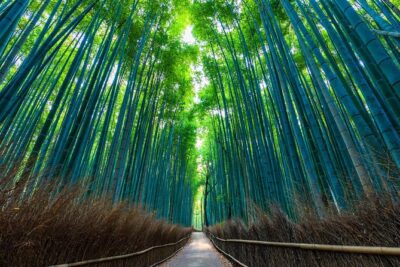
Kyoto Arashiyama Bamboo forest & Garden Half-Day Walking Tour
Read our review →
Tokyo: Imperial Palace East Gardens Walking Tour
Read our review →
Kyoto Kiyomizu Tea Ceremony with Scenic Garden Views
Read our review →Lists this garden visit belongs to