
Review · KYOTO
Kyoto Kiyomizu Tea Ceremony with Scenic Garden Views
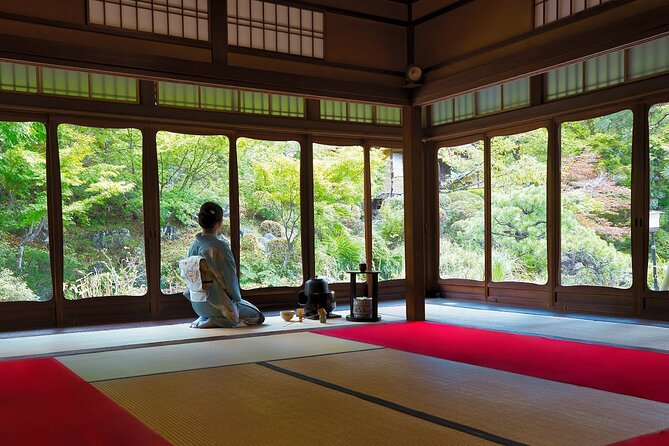
Kyoto’s tea ceremony is at its best when the room, garden, and careful movements all work together. At Tea Ceremony Sakaguchian, you watch a tea master purify the utensils, prepare bright green matcha, and serve it with wagashi sweets while a helpful English-speaking assistant explains what each step means. The large windows look onto a carefully tended Japanese garden.
I like the small group of no more than 12 because it leaves room for questions, and I like that you receive two cups: one made for you, then one you learn to whisk yourself. The main drawback is the short length. At about 45 minutes, you get a clear introduction rather than a full study of tea culture, so the $50.87 price may feel high if you want an extended lesson.
Key points at a glance
- Garden-facing tea room: Large windows provide a peaceful view while the ceremony unfolds.
- Two matcha servings: The tea master prepares the first cup, then you learn to make the second.
- Traditional wagashi: Delicate Japanese sweets are served with the matcha.
- Small-group format: The experience accepts a maximum of 12 people.
- Useful cultural context: An English-speaking assistant explains the rituals, symbols, and background.
- Plan for floor seating: The activity is not recommended for people with foot or knee problems, and wearing socks is a sensible tip.
A quiet pause near Kiyomizu
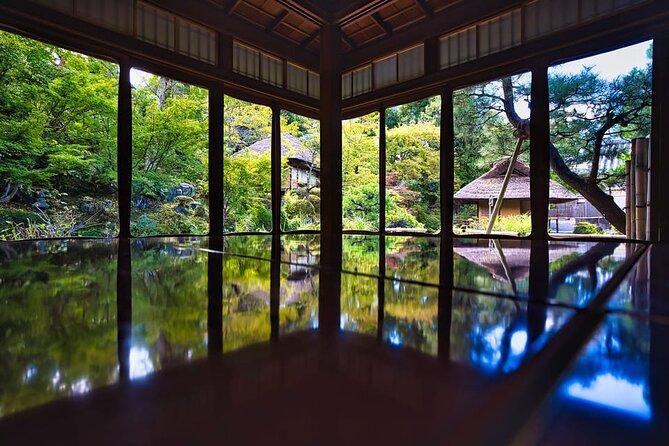
The meeting point is Tea Ceremony Sakaguchian, at 3-chōme-334 Kiyomizu in Kyoto’s Higashiyama Ward. This puts the experience in one of Kyoto’s most traditional areas, close to the Kiyomizu part of town rather than in a generic hotel or restaurant setting.
That location matters. You can pair the ceremony with sightseeing in the area, then use the tea room as a calm break from walking. The activity returns to the same meeting point, so you do not need to arrange a separate end location.
Inside, the setting is a traditional tea room with broad window views toward a Japanese garden. The garden is not simply decoration. It helps set the pace of the ceremony. Instead of focusing only on the bowl in front of you, you notice the seasonal setting, the architecture, and the quiet space beyond the room.
The garden view also gives this experience an advantage over a standard matcha tasting in a café. You are not just ordering a drink. You are watching how the drink is prepared and learning why the preparation is treated as an art.
More gardens worth a morning in Kyoto:
- Kyoto Zen Meditation & Garden Tour at a Zen Temple with Lunch
★ 5.0 · 441 reviews - Kyoto Arashiyama Bamboo forest & Garden Half-Day Walking Tour
★ 5.0 · 413 reviews - Kyoto: Private Tea Ceremony with a Garden View
★ 4.9 · 61 reviews
Watching the tea master’s precise movements
The ceremony begins with the tea master preparing the room and utensils through a series of deliberate actions. You may see the utensils purified, the tea measured, and the bowl handled with care before the matcha is whisked into a frothy drink.
The movements are slow and exact. That is part of the lesson. The ceremony shows how Japanese tea practice places value on cleanliness, respect, concentration, and calm. The English-speaking assistant explains the meaning behind the actions, which helps you understand why the process takes time.
This is where the experience earns its cultural value. Without explanations, a visitor might see only a graceful sequence of gestures. With the commentary, you can follow the purpose of the tools, the order of the actions, and the etiquette involved in receiving the bowl.
The tea master’s movements have been praised for their precision and grace. You should expect a formal presentation rather than a casual demonstration. The tone is warm, though, and the staff make time for questions about the ceremony and Japanese tea culture.
Your first bowl of matcha and wagashi
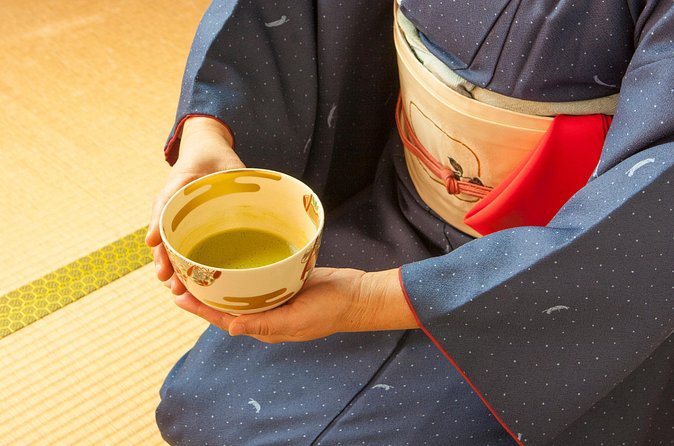
The first cup is prepared for you. It is served with wagashi, a traditional Japanese sweet chosen to pair with the bitter, grassy taste of matcha.
If you are used to sweetened tea or matcha drinks made with milk, this will taste different. Traditional matcha is whisked with water and has a direct, earthy flavor. The wagashi helps balance it, which is why the sweet is an important part of the serving rather than a separate dessert.
You also learn how to handle the tea bowl properly. Small gestures matter here. The way you receive the bowl, turn it, drink from it, and set it down forms part of the experience. You are not expected to know this before arriving. The assistant explains the process so you can take part without feeling awkward.
That instruction makes the ceremony accessible to first-time visitors. You do not need previous knowledge of tea etiquette, and you do not need to treat the activity like an exam. Pay attention, follow the guidance, and enjoy the rhythm of the room.
Making your second cup yourself
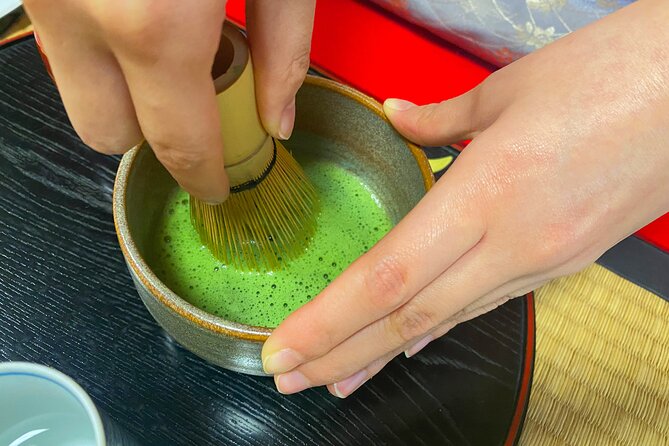
The second cup gives you a more active role. After watching the tea master, you learn how to prepare matcha yourself, including the technique for whisking it into a light foam.
This hands-on part is one of the strongest features of the session. A demonstration can be beautiful, but making the tea helps you remember the method. You see how the whisk moves, how the powder and water combine, and why the texture changes with careful preparation.
The second cup is also a useful reality check. Matcha preparation looks simple until you try to create a smooth, frothy drink yourself. The tea master guides you through it, and you can ask questions along the way.
The format works well for couples, families, and small groups of friends because everyone has a chance to take part. Children may also find the whisking more engaging than simply watching, although the supplied information does not give a specific minimum age.
Same season, a different set of beds:
- Bamboo Grove Temple and Garden Views Tour
★ 5.0 · 41 reviews - Stunning Private Tea Ceremony: Camellia Garden Teahouse
★ 5.0 · 28 reviews - Kyoto Hidden Treasures: Special Temple & Garden Access Tour
★ 4.5 · 25 reviews - Kyoto: Japanese Gardens Private Customizable Tour
★ 4.1 · 18 reviews
Why the small group matters
The maximum group size is 12 people. That is not a private lesson, but it is small enough to keep the room personal and allow questions.
A large group could make a tea ceremony feel like a stage show. Here, you are close enough to observe the utensils and movements, while the assistant can explain the ceremony to the whole room. The small format also suits the quiet character of the activity.
English support is provided through an assistant who explains the ceremony, its background, and the proper way to prepare and drink the tea. This is especially useful because the gestures can be hard to interpret on their own. You can ask about the symbolism, the garden, or the steps that interest you most.
The session has received a 4.9 rating from 101 reviews, with 100 percent recommending it. That strong response matches the experience’s clearest strengths: polite staff, clear explanations, a beautiful setting, and a relaxed pace. The praise is not just about the tea itself. The setting and teaching are central to the appeal.
The timing: short, focused, and easy to fit in
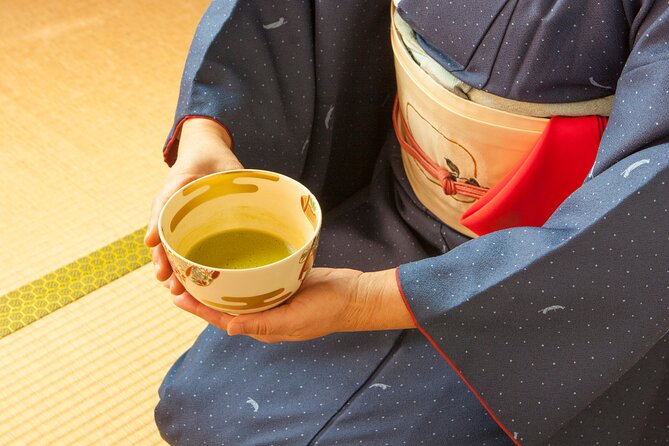
The stated duration is approximately 45 minutes. Some descriptions of the session refer to an hour, so I would set aside about an hour rather than schedule a train or restaurant reservation immediately afterward.
This length is practical during a full day in Kyoto. You can place it between visits in the Kiyomizu area without giving up half a day. It also works well when you need a quiet pause after walking through shrines and traditional streets.
The trade-off is depth. In 45 minutes, you can see the ceremony, taste two servings, learn the basic movements, and ask a few questions. You cannot cover every school of tea, every utensil, or every layer of Japanese tea culture.
One review describes the experience as thoughtful but brief and somewhat expensive for the time. That is a fair concern. At $50.87 per person, you are paying for more than two cups of matcha. You are paying for the tea master, the traditional room, garden access, instruction, sweets, and a small-group setting. The price makes more sense if those cultural and visual details matter to you. It makes less sense if you only want to taste matcha.
The value of the garden setting
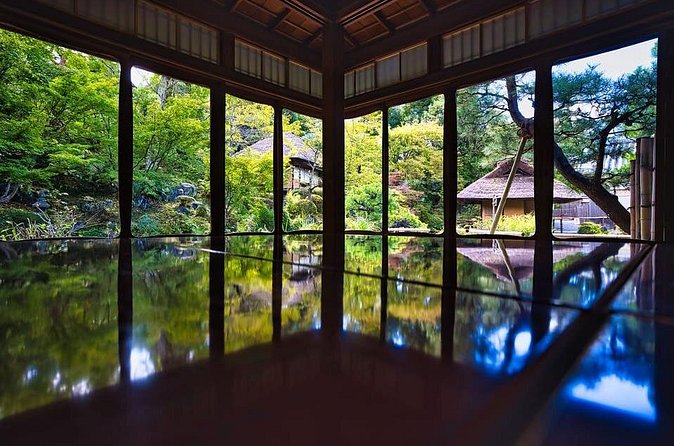
The garden view is one of the most repeated strengths of this experience. Large windows let you look out onto the grounds during the ceremony, giving you a connection to the changing seasons and the quiet character of the setting.
You may find that the view changes how the tea tastes. The ceremony asks you to slow down, and the garden gives your attention somewhere gentle to rest. This is especially welcome after a busy morning in Kyoto.
The room itself is also part of the lesson. You see how the tea ceremony depends on space, arrangement, movement, and restraint. The architecture and garden are not separate from the tea. Together, they create the setting in which the tea can be prepared and received properly.
If the weather is poor, the activity may be canceled. In that case, you are offered a different date or a full refund. Good weather is important because the garden view is a meaningful part of the experience, not an incidental extra.
Comfort, etiquette, and what to wear
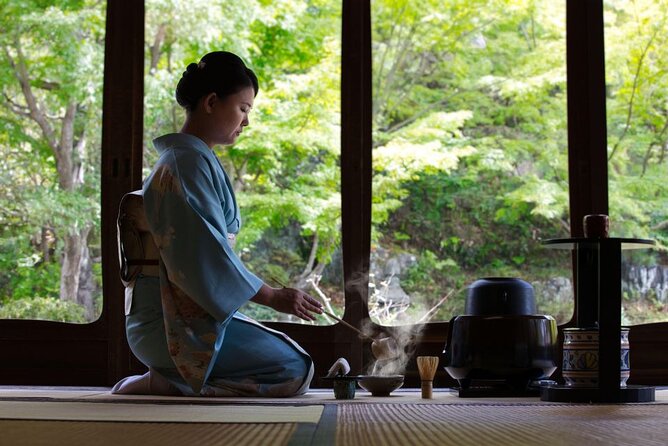
The information provided warns that this activity is not recommended for people with foot or knee problems. Tea ceremonies traditionally involve floor-level seating or positions that can be uncomfortable if you have limited mobility.
Wear comfortable clothing and, importantly, socks. One useful tip from the experience is to bring or wear socks, since you may remove your shoes before entering the tea room. The supplied information does not specify a dress code or kimono rental.
Kimono rental is not included. That is helpful to know if you are comparing this with a package that combines dressing up and a tea ceremony. Here, the focus is on the tea, the room, the garden, and the instruction.
Photography is included, but video recording is not. You can take home photos of the occasion, but you should not plan to film the full ceremony.
Who will enjoy this most
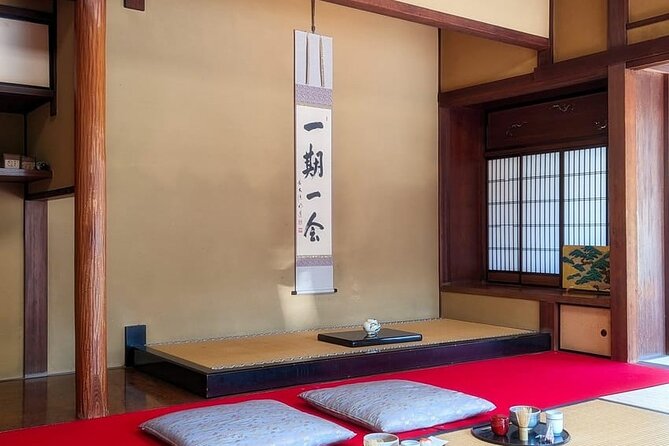
I would recommend this to you if you want a clear, beginner-friendly introduction to Japanese tea ceremony without committing to a long formal lesson. It works particularly well for first-time visitors to Kyoto, couples, families, and anyone curious about the details behind matcha preparation.
It is also a good choice if you prefer cultural activities that involve watching and doing. You are not only seated while someone performs. You receive tea, taste wagashi, learn the etiquette, and prepare your own second cup.
The activity may appeal less if you dislike slow, formal settings or if you want a very long workshop. The ceremony is deliberately measured. That is the point, but it will not suit someone looking for a fast food stop or a casual beverage tasting.
I would also think carefully if you have knee or foot problems. The supplied guidance specifically says the experience is not recommended for you, and the traditional room may not offer the comfortable chair seating you need.
Booking details and cancellation terms
Your confirmation is issued at the time of booking, and the mobile ticket makes entry simple. The activity begins and ends at Tea Ceremony Sakaguchian, 3-chōme-334 Kiyomizu, Higashiyama Ward, Kyoto, postal code 605-0043.
You can cancel for a full refund up to 24 hours before the local start time. Changes or cancellations made less than 24 hours ahead are not accepted for a refund.
Because the experience requires good weather, a cancellation caused by poor conditions gives you the choice of another date or a full refund. Book with that rule in mind, especially if your Kyoto schedule is tight.
Should you book this Kyoto tea ceremony?
Book it if you want a graceful cultural introduction with a garden view, clear English explanations, two matcha servings, and a chance to prepare tea yourself. The small group and traditional setting give it more substance than a quick café tasting.
Skip it if your main goal is simply to drink matcha, or if $50.87 feels too much for a session lasting roughly 45 minutes. You should also choose another activity if floor seating may cause pain.
For most visitors who want one well-organized tea ceremony during a Kyoto stay, this is a sensible pick. It is short, focused, visually beautiful, and practical to add near Kiyomizu. Just arrive ready to slow down, wear socks, and treat the tea as a cultural practice rather than an ordinary drink.
FAQ
Where does the tea ceremony take place?
It takes place at Tea Ceremony Sakaguchian, located at 3-chōme-334 Kiyomizu, Higashiyama Ward, Kyoto, 605-0043, Japan.
How long does the experience last?
The stated duration is approximately 45 minutes. Some descriptions refer to an hour, so allow a little extra time around the scheduled session.
How many people can join?
The experience has a maximum of 12 travelers.
How much does the experience cost?
The listed price is $50.87 per person.
What is included?
The experience includes two cups of matcha, traditional wagashi sweets, and photos.
Do I make matcha myself?
Yes. The tea master prepares one cup for you, then teaches you how to prepare the second cup yourself.
Is kimono rental included?
No. Kimono rental is not included in the experience.
Can I record video?
No. Video recording is not included. Photos are included.
Is the experience suitable for people with foot or knee problems?
The activity is not recommended for people with foot or knee problems. Wearing or bringing socks is also advised.
Newly planted garden visits around Kyoto
- Stunning Private Tea Ceremony: Camellia Garden Teahouse★ 5.0 · 28 reviews
- Kyoto-Nara Adventures Private Tour With Hotel Pick Up★ 4.0 · 5 reviews
- Kyoto: Kinkaku-ji Temple & Serene Garden Guided Tour with Tickets★ 5.0 · 9 reviews
- Guided Kyoto City Cherry Blossom One Day Private Tour★ 5.0 · 16 reviews
- Kyoto Hidden Treasures: Special Temple & Garden Access Tour★ 4.5 · 25 reviews
- The Art of Mindful Living: Tea Ceremony in Kyoto★ 5.0 · 16 reviews
- Kyoto ITALIAN GUIDE Golden Pagoda Bamboo Forest Dry Garden★ 4.0 · 2 reviews
- Kyoto Japanese Garden Lover’s Private Tour with Government-Licensed Guide★ 4.5 · 10 reviews
Japan Garden Tours, bed by bed.

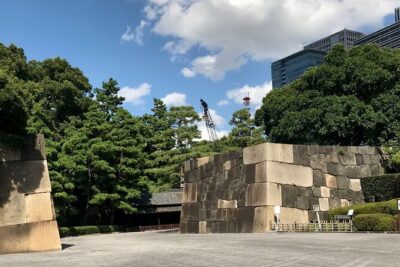
Imperial Palace East Garden and Edo Castle Walking Tour in Tokyo
Read our review →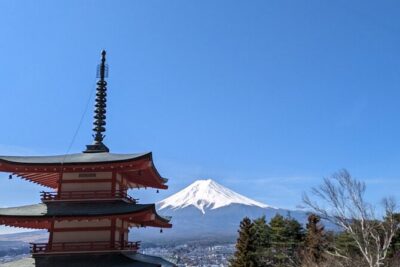
Mt. Fuji Day Trip from Tokyo with English Speaking Driver Guide
Read our review →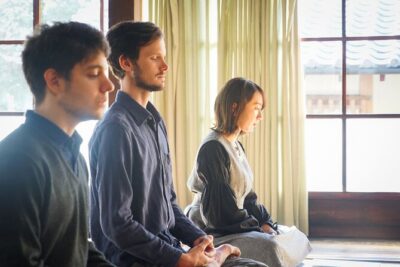
Kyoto Zen Meditation & Garden Tour at a Zen Temple with Lunch
Read our review →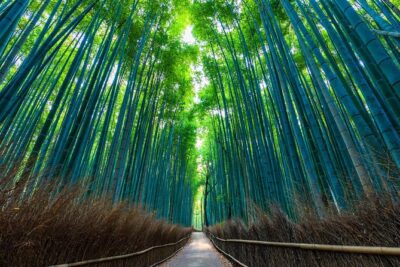
Kyoto Arashiyama Bamboo forest & Garden Half-Day Walking Tour
Read our review →
Tokyo: Imperial Palace East Gardens Walking Tour
Read our review →
Kanazawa: Samurai, Matcha, Gardens and Geisha Full-Day Tour
Read our review →Lists this garden visit belongs to