
Review · TOKYO
From Asakusa: Old Tokyo, Temples, Gardens and Pop Culture
Tokyo’s old and new sides meet on this four-hour walk. You start at Senso-ji and Asakusa, pass through Ueno and the no-frills Ameya-Yokocho market area, then reach Akihabara’s anime and electronics streets before ending among the quiet paths of Koishikawa Korakuen.
I like the clear story told by the route, and I like that standard admissions and local train rides are covered in the $68 price. The main consideration is pace: several districts are packed into four hours, so this is better for seeing connections than for spending long, relaxed time at each stop.
Key points to know before booking
- Asakusa begins the history lesson: Learn how Senso-ji and Nakamise-dori fit into Tokyo’s long commercial and religious life.
- Ueno and Okachimachi feel genuinely local: The market streets offer a rougher, more practical side of Tokyo than polished department-store districts.
- Akihabara is more than neon: Your guide explains its change from an electronics center into a major anime, manga, gaming, and pop-culture district.
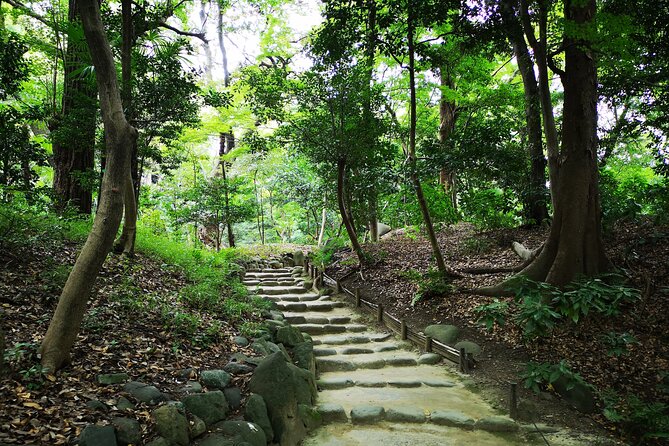
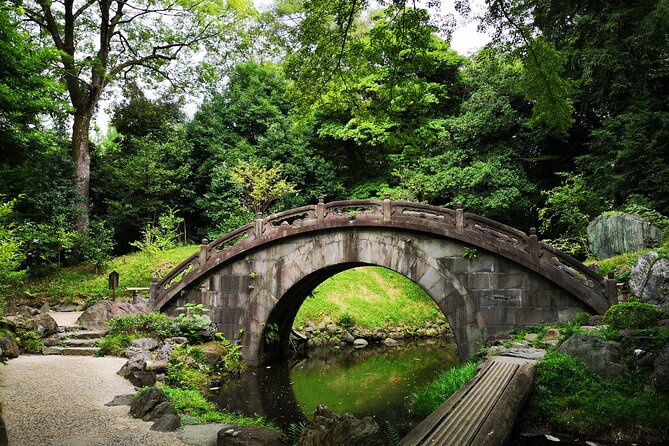
- Koishikawa Korakuen provides a quiet finish: The Edo-era garden gives you a sharp change of mood after the city streets.
- Guides can shape the experience: Taka, Takee, Michelle, and Toru are among the named guides associated with especially warm, informative tours, though your guide may be different.
- The small group matters: With no more than eight people, it is easier to hear explanations and ask questions than on a large coach tour.
A four-hour walk through Tokyo’s changing identity
This is not simply a checklist of famous sights. The route is designed to show how East Tokyo developed from temple grounds, market streets, and working neighborhoods into one of the world’s most recognizable city centers.
You begin at Kamiya Bar in Asakusa, near 1-chome-1-1 Asakusa. From there, the route covers several districts on foot, with local trains included when useful. Comfortable shoes are essential. Four hours is enough to cover a lot, but you should expect a purposeful walk rather than long breaks at every sight.
The value comes from the connections. Senso-ji explains the religious and commercial roots of the area. Ueno and Okachimachi show how shopping and street trade have worked for generations. Akihabara reveals a newer form of urban culture, while Koishikawa Korakuen offers a carefully designed garden shaped in the Edo period.
More gardens worth a morning in Tokyo:
- Imperial Palace East Garden and Edo Castle Walking Tour in Tokyo
★ 5.0 · 510 reviews - Tokyo: Imperial Palace East Gardens Walking Tour
★ 4.8 · 353 reviews - Mt. Fuji, Cherry Blossom & Shiba Sakura Pvt. Day Tour
★ 5.0 · 326 reviews
Asakusa and Senso-ji, Tokyo’s old front door
Asakusa gets the first 45 minutes, followed by about 15 minutes focused on Senso-ji. That division makes sense. The temple is the headline attraction, but Asakusa is more interesting when you also understand the streets around it.
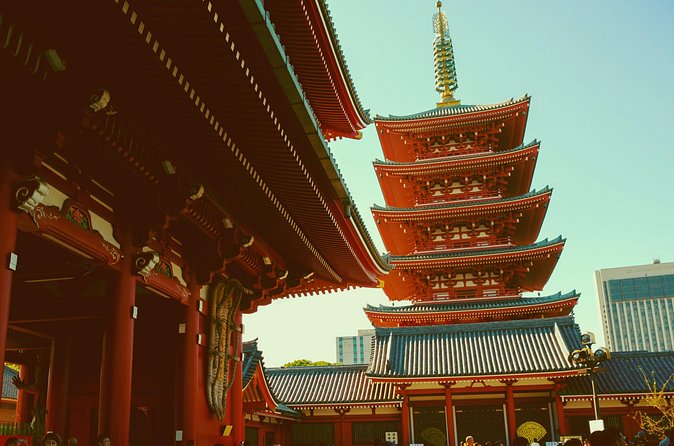
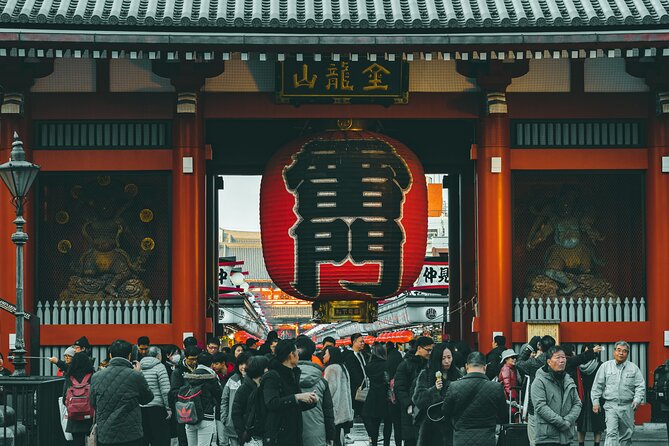
Senso-ji is identified as one of Japan’s earliest Buddhist temples. Your English-speaking guide explains its place in Japanese religious life and points out how the temple precinct works as more than a single building. You can expect the approach through Nakamise-dori, the shopping street leading toward the temple, where traditional-looking shops and snack sellers frame the walk.
I like this opening because it gives you immediate visual impact and useful context. Senso-ji can feel crowded and highly photographed, but a guide helps you see beyond the standard picture. You get an explanation of why the temple matters, rather than only a quick stop for photographs.
Asakusa also carries an important transport story. The first subway in Asia began service between Asakusa and Ueno about a century ago. That connection sets up the next part of the walk and shows that Asakusa was not an isolated old quarter. It has long been tied to movement, trade, entertainment, and the wider city.
Do not expect deep time inside Senso-ji itself. Fifteen minutes is a short temple visit, particularly if you want quiet reflection or detailed architectural study. This tour is better for orientation and interpretation than for a slow religious-site visit.
Ueno and Okachimachi, where Tokyo feels practical
The route gives roughly 25 minutes to Ueno and another 25 minutes to Okachimachi. These areas bring a different tone. Ueno is associated with museums and cherry blossoms, while Okachimachi leads into a long-standing market district.
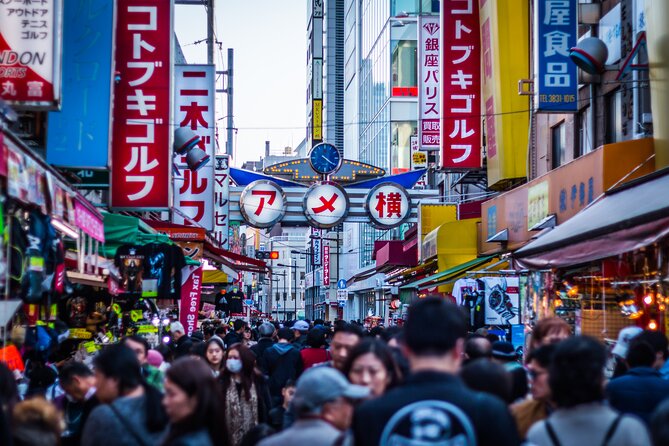
The focus here is not polished Tokyo. It is the working side of the city, where street vendors and small shops have sold food and goods for generations. Ameya-Yokocho is the key reference point, with a crowded, varied shopping atmosphere that feels far removed from luxury malls and carefully controlled retail streets.
I like this section because it gives you a useful contrast with Asakusa. Both districts have a strong past, but the character is different. Asakusa presents temple traditions and a formal approach. Ueno and Okachimachi show everyday buying and selling, with more visual clutter and a less dressed-up feel.
You should keep your expectations realistic. The schedule allows about 50 minutes for both areas, so you will not have time to browse every stall or visit the museums in depth. The Tokyo National Museum is not included. If you choose to enter it, admission is your own expense and would likely require more time than this compact route allows.
Still, the short visit can help you decide where to return later. That is one of the practical strengths of a guide-led first look. You see how the districts relate to each other, then you can come back independently for food, shopping, or a museum visit.
Akihabara, from electronics to otaku culture
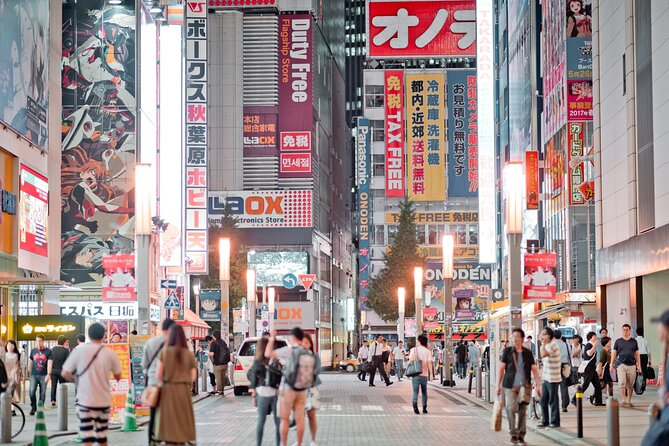
Akihabara receives about 45 minutes. Known as Electric Town, it began as a center for electronics and has changed into a major home for anime, manga, gaming, and other forms of otaku culture.
The useful part of this stop is the historical link. Akihabara did not appear fully formed as an anime district. Its identity grew from its earlier role as a place for cutting-edge electronics, then shifted as pop culture became a larger part of its shops, signs, and street life.
Your guide helps explain why the district can feel like a separate world. Neon signs, game shops, anime displays, and cosplay activity create a setting where ordinary shopping and fictional characters share the same streets. The district is not only about buying products. It also shows how a community of fans can shape the public face of a neighborhood.
I like having Akihabara placed after Asakusa, Ueno, and Okachimachi. The contrast is the point. You move from an old Buddhist temple to market streets, then into a district built around modern technology and entertainment. Without that sequence, Akihabara can seem like a colorful oddity. Within this route, it becomes part of Tokyo’s larger story.
Forty-five minutes will give you an introduction, not a complete tour of the area. If you want to shop for specific anime or gaming items, you may need to return. The guide’s role here is mainly to explain the district and help you read what you are seeing.
The supplied schedule places Koishikawa Korakuen before Akihabara, while the broader description presents Akihabara first and the garden afterward. Since the two sections create very different moods, confirm the exact order when booking or meeting your guide. Either way, both stops are part of the four-hour plan.
Same season, a different set of beds:
- Mt. Fuji Day Trip from Tokyo with English Speaking Driver Guide
★ 5.0 · 443 reviews - Tokyo: Edo Castle & East Garden of the Imperial Palace Tour
★ 4.7 · 112 reviews - Tokyo: Rainbow Bridge Day Cruise Show and Only Soft Drinks
★ 4.5 · 75 reviews - Tokyo: Tsukiji Market and Hama-rikyu Gardens Guided Tour
★ 4.8 · 73 reviews
Koishikawa Korakuen, a calm Edo-era pause
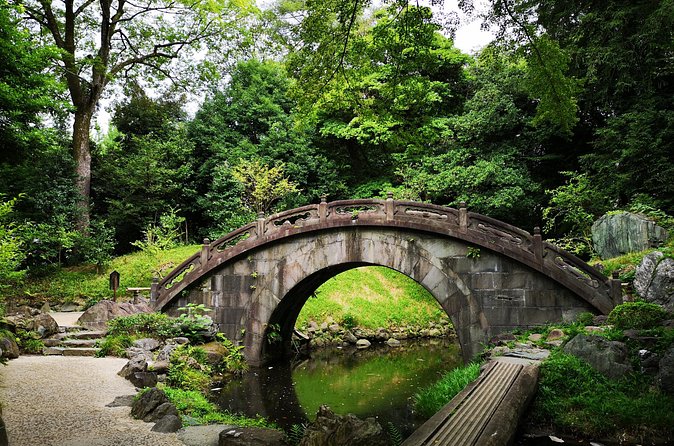
Koishikawa Korakuen receives about 45 minutes, including scenic views along the way. This garden is the route’s strongest change of pace. After markets, trains, temple crowds, and pop-culture signs, you enter a carefully arranged space connected to Edo-period design.
The garden changes with the seasons. Cherry blossoms shape the spring visit, while autumn brings strong red and gold color. Even without a particular seasonal display, the paths and views offer a calmer way to think about the city you have just crossed.
I especially like this inclusion because it keeps the tour from becoming a string of busy streets. Many Tokyo sightseeing plans pile on districts without giving you a pause. Koishikawa Korakuen gives the route balance and shows that old Tokyo was not only temples and merchant streets. Gardens, landscape design, and controlled views were also part of urban life.
The drawback is time. Forty-five minutes is enough for a guided introduction, but not for every path or viewpoint. If gardens are a main reason for visiting Tokyo, you may want a separate visit at a slower pace. On this tour, the garden works best as a focused closing chapter rather than a full garden study.
What the guides add to the experience
The guide is important here because the route crosses several neighborhoods that can otherwise feel disconnected. The strongest praise attached to this experience centers on guides who were warm, attentive, and easy to follow.
Taka, also written as Takee in one account, was described as engaging and fun, with enough energy to keep children interested. One family outing included a pub stop and origami, although you should not assume those extras are part of every tour. Michelle was praised for professional, friendly guiding and fluent Italian, which could matter if language support is important to you. Toru was remembered as kind and highly available during the outing.
These details suggest a tour that can feel personal in a small group, but named guides are not guaranteed. The advertised language is English, and the group is limited to eight people. That size gives you a better chance to ask about Buddhist customs, market life, transport history, or Akihabara culture without shouting over a crowd.
Is $68 a fair price?
At $68 per person, the price is reasonable if you want orientation across several East Tokyo districts. Standard admissions and local train rides while on the tour are included, which makes the cost easier to judge. You are paying for a guide, a planned route, transport within the experience, and access to the garden or other standard paid stops covered by the operator.
Food and drinks are not included. Neither is admission to the Tokyo National Museum if you decide to add it. Custom requests can also create extra expenses, so treat the $68 price as the cost of the planned experience, not an all-purpose day pass.
The value is strongest for a first visit. You get a broad introduction to Asakusa, Ueno, Okachimachi, Akihabara, and Koishikawa Korakuen in one compact outing. The value is weaker if you already know these neighborhoods and prefer long, unhurried time in one place.
The tour has a free-cancellation window up to 24 hours before the start, and you can reserve now and pay later. Those terms help if your Tokyo schedule is still taking shape. The experience is wheelchair accessible, though you should still consider the amount of walking and the mix of streets, station transfers, and garden paths.
Who should book this East Tokyo tour?
I would recommend it to first-time Tokyo visitors who want a clear introduction to the eastern side of the city. Families may also like the manageable group size and the possibility of a lively guide who can keep younger visitors engaged.
It suits you if you want cultural context but do not want a formal museum-heavy excursion. The route combines a Buddhist temple, a market district, pop culture, and a traditional garden, so it offers more variety than a standard Asakusa visit.
You should think twice if you dislike walking, need long stops for photography, or want detailed time inside Senso-ji, the Tokyo National Museum, or Akihabara’s shops. Four hours moves quickly, and the tour’s strength is comparison rather than depth at one site.
FAQ
How long is the tour?
The tour lasts four hours.
Where does the tour meet?
The meeting point is Kamiya Bar in Asakusa.
What language is the tour offered in?
The live tour guide speaks English.
How large is the group?
The group is limited to eight participants.
Is the tour wheelchair accessible?
Yes, the activity is listed as wheelchair accessible.
Which places are included?
The route includes Asakusa, Senso-ji Temple, Ueno, Okachimachi, Koishikawa Korakuen, and Akihabara.
Are local train rides included?
Yes, standard local train rides used during the tour are included.
Is food included in the price?
No. Food and drinks are not included.
Is the Tokyo National Museum included?
No. Admission to the Tokyo National Museum is separate if you choose to visit.
What should I bring?
Bring comfortable shoes, since the experience is a walking tour.
Can I cancel for a full refund?
Yes. You can cancel up to 24 hours in advance for a full refund.
Should you book it?
Book this tour if you want Tokyo explained through its neighborhoods rather than seen as a list of famous sights. The $68 price is fair for a small group, an English-speaking guide, included standard admissions, and local train rides. The best feature is the range: temple tradition, market life, electronics and anime culture, then a quiet historic garden.
Skip it if you want a slow morning at one temple or a serious museum and garden visit. For most first-time visitors who want a strong East Tokyo foundation, this is a useful, well-paced introduction.
Newly planted garden visits around Tokyo
- Tokyo Summer: Mt Fuji 5th Station& Kawaguchiko Lavender Trip★ 3.5 · 4 reviews
- Tokyo: Tsukiji Market and Hama-rikyu Gardens Guided Tour★ 4.8 · 73 reviews
- Tokyo: Pvt. Tour – Edo Castle & Imperial Palace East Gardens★ 4.8 · 63 reviews
- Tokyo: Mount Fuji Tour and Hakone Sakura Cherry Blossom Trip★ 5.0 · 4 reviews
- Tokyo: Meiji Jingu Shrine & Inner Garden Guided Tour (2h)★ 5.0 · 6 reviews
- Tokyo: Full-Day Japanese Garden Private Guided Tour★ 4.6 · 13 reviews
- Tokyo: Kimono Rental inside Shinjuku Gyoen National Garden★ 4.9 · 39 reviews
- Tokyo: Hama-rikyu Gardens tour with Japanese Tea & Sweets★ 4.7 · 14 reviews
Japan Garden Tours, bed by bed.

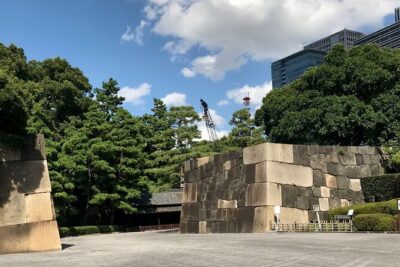
Imperial Palace East Garden and Edo Castle Walking Tour in Tokyo
Read our review →
Mt. Fuji Day Trip from Tokyo with English Speaking Driver Guide
Read our review →
Kyoto Zen Meditation & Garden Tour at a Zen Temple with Lunch
Read our review →
Kyoto Arashiyama Bamboo forest & Garden Half-Day Walking Tour
Read our review →
Tokyo: Imperial Palace East Gardens Walking Tour
Read our review →
Kyoto Kiyomizu Tea Ceremony with Scenic Garden Views
Read our review →Lists this garden visit belongs to