
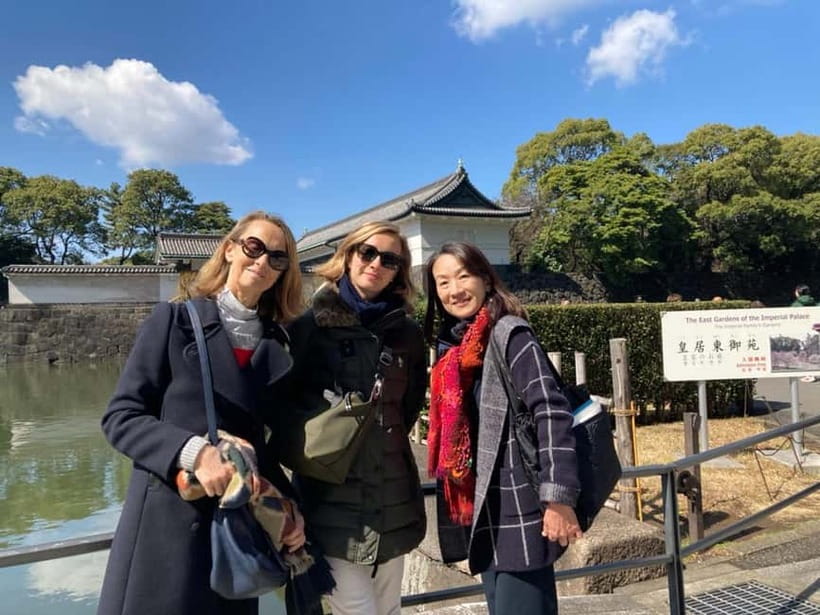
Review · TOKYO
Tokyo: Pvt. Tour – Edo Castle & Imperial Palace East Gardens
Tokyo’s Imperial Palace East Gardens give you a rare look at the city’s feudal core without leaving central Tokyo. I like the chance to walk beside Edo Castle’s huge stone walls and moats, and I like having a private guide explain why the garden, palace grounds, and shogun-era ruins matter. Guides such as Yoshi, Yuji, Mari, and Masahito have been praised for clear English, patience, and flexible pacing.
The main limitation is simple: you do not enter the Imperial Palace itself. This is an outdoor history walk through the East Gardens, not a palace interior visit, and seasonal flowers can be early or past their peak.
Key points to know before booking
- Private two-hour walk: You get an English-speaking guide for your group rather than joining a large party.
- Edo Castle remains: Stone walls, moats, the historic gate, and the former castle grounds provide the tour’s strongest historical setting.
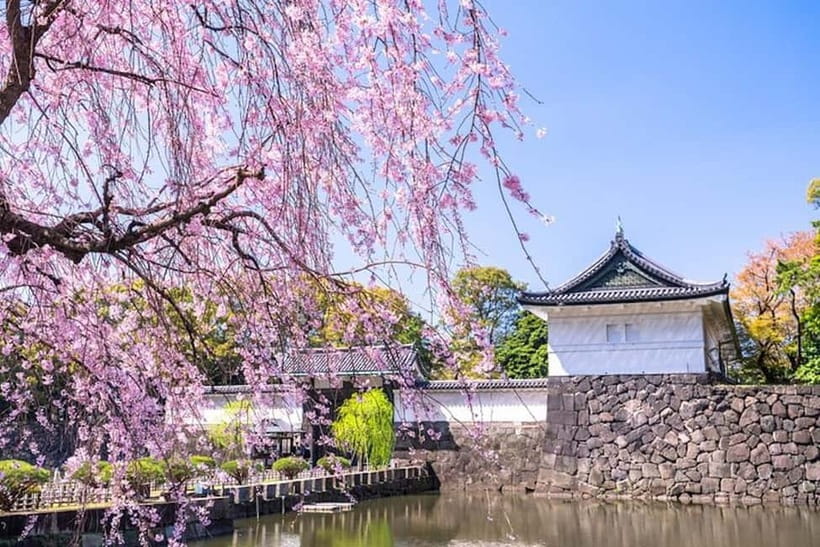
- Seasonal garden interest: Expect cherry blossoms in spring, irises in summer, and autumn leaves later in the year.
- Central meeting point: Meet near Starbucks in Wadakura Fountain Park, three minutes from Otemachi Station exit D2.
- No inner palace access: The tour stays in the Imperial Palace East Gardens.
- Pack carefully: Entry includes a baggage inspection, and recently purchased Japanese knives or similar items should be stored before the meeting.
Why Edo Castle is the real star of this walk
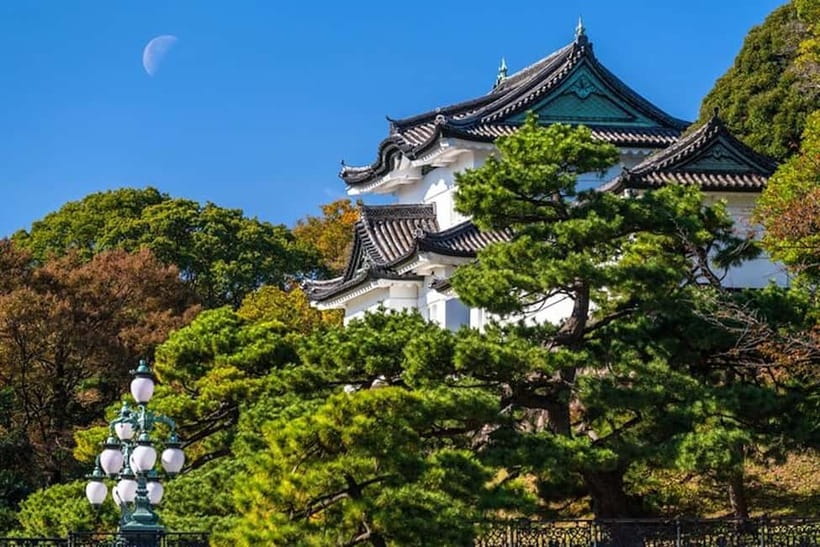
When you hear Imperial Palace, it is easy to picture a grand royal residence open to the public. That is not what this experience offers. Its focus is the East Gardens, built on the former grounds of Edo Castle, once the seat of the shogun and one of the most important political centers in Japan.
I like this distinction because the old castle site gives the tour a more tangible connection to Japan’s feudal past. You are not simply looking at a modern palace from behind a fence. You are walking across ground shaped by military power, court life, guards, moats, gates, and massive defensive walls.
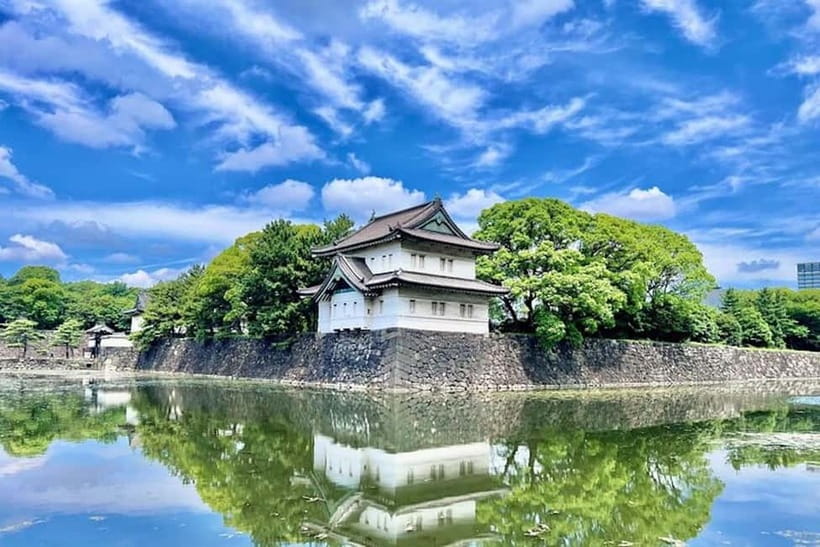
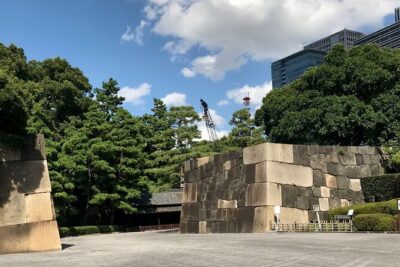
The remaining stonework helps you understand the scale of the castle better than a short history lesson alone. The walls and moats are reminders that this was not just a residence. It was a fortified center of government, built to protect the shogun and control access to the heart of Edo, the city that later became Tokyo.
Your guide can put those remains into context as you walk. That matters here because many features are partial ruins. Without explanation, a broad lawn, stone foundation, or old wall can look like an attractive park feature. With a guide, those fragments become clues to the castle that once occupied the site.
More gardens worth a morning in Tokyo:
- Imperial Palace East Garden and Edo Castle Walking Tour in Tokyo
★ 5.0 · 510 reviews - Tokyo: Imperial Palace East Gardens Walking Tour
★ 4.8 · 353 reviews - Mt. Fuji, Cherry Blossom & Shiba Sakura Pvt. Day Tour
★ 5.0 · 326 reviews
Meeting at Wadakura Fountain Park
The meeting point is in front of Starbucks in Wadakura Fountain Park. Look for the guide holding a sign marked gotcha. This is a useful detail in a city where several station exits, plazas, and palace-side paths can look alike.
The location is convenient from both major transport points. Otemachi Station exit D2 is about a three-minute walk away, while Tokyo Station’s Marunouchi Central Exit is about ten minutes on foot. If you are already near the Marunouchi business district, this tour fits neatly into a morning or afternoon without a long ride across the city.
I would allow a few extra minutes to find the right exit and reach the fountain park. The meeting instructions are clear, but Tokyo Station and Otemachi are large, busy transport areas. Arriving early also gives you time to use a restroom or store anything that cannot enter the palace grounds.
The tour begins outside the garden, then moves into the East Gardens for a guided walk lasting about two hours. Since it is a private group, your guide can generally keep the pace comfortable for your party. This is especially useful for families or groups with different walking speeds.
Entering through the historic gate
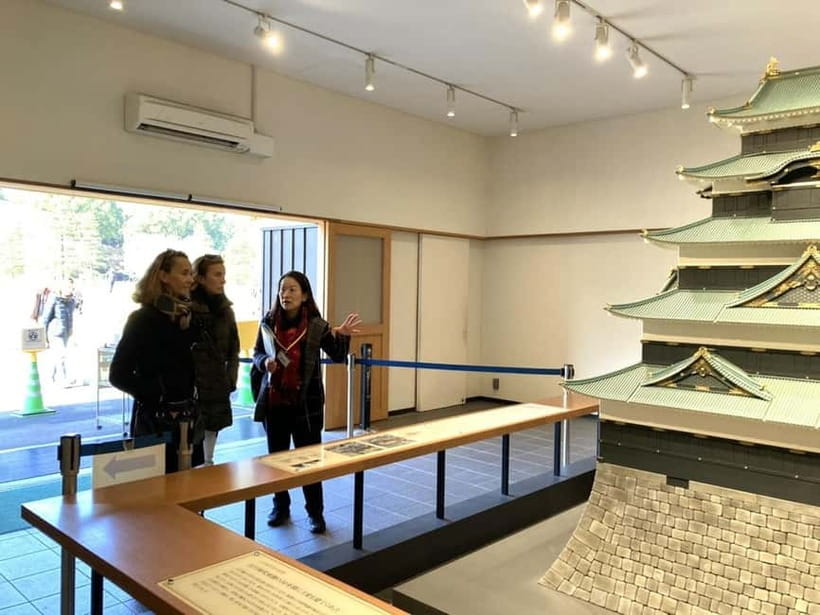
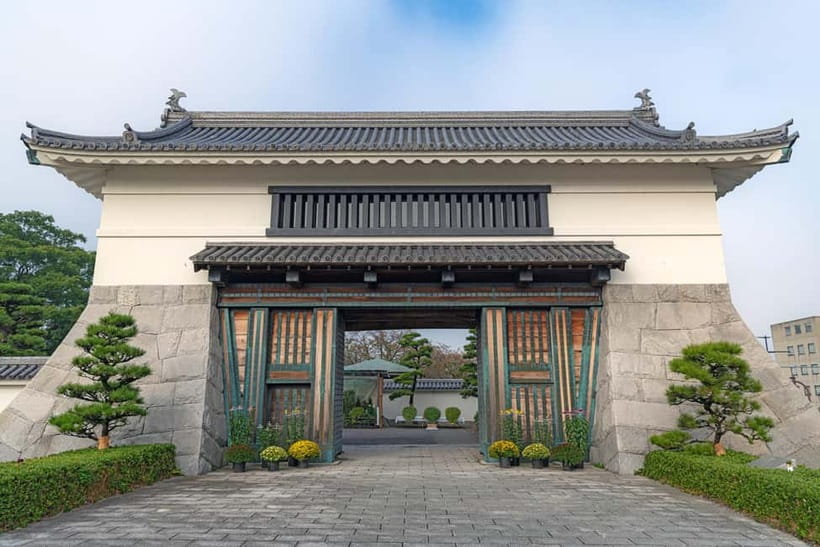
One of the early sights is the Main Gate, with its traditional guardhouse and a mix of old and modern security features. This is a good introduction to the site because it shows how the palace grounds function today while preserving traces of their earlier role.
You should expect a baggage inspection when entering the Imperial Palace grounds. This is not a minor detail if you have spent the morning shopping. Japanese knives or other objects that could be used as weapons should be left in a coin locker or another secure place before you meet the guide.
That rule applies if you have been to Tsukiji, Asakusa, or another shopping district and bought kitchen knives or similar items. Plan around it rather than arriving with bags that may slow down entry. The information provided does not list a specific locker at the meeting point, so arrange storage before the tour starts.
The gate also sets the tone for the experience. This is a working historic site with access rules, not simply an open public park. You get a pleasant walk, but you also need to treat the grounds as an official palace property.
Reading the stone walls and castle ruins
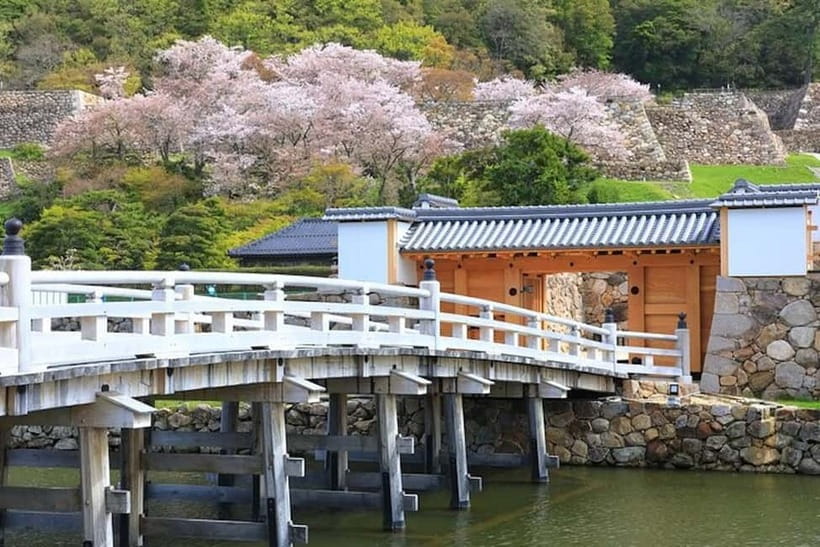
The castle ruins are the strongest reason to choose the guided version rather than simply wandering alone. The site includes ancient stone walls, moats, and the remains of a massive keep. These features help you picture how much land and authority the Edo shogunate once controlled.
I would pay close attention to your guide’s explanations here. The value is not only in seeing the stones. It is in learning how the site functioned, who lived and worked there, and how the shogun’s political world differed from the imperial institution that occupies the grounds today.
Several guides have been singled out for making this part easy to follow. Mari was praised for a clear route and prompt organization. Masahito was noted for adjusting the pace and finding answers to questions when needed. Naoko has explained details about the buildings, former inhabitants, koi, and the garden’s plant life.
Those details give you an idea of the tour’s best quality: a good guide turns a broad historic site into a connected story. You are not simply ticking off a gate, a wall, and a garden. You are following the development of one place through the age of the shoguns and into modern Japan.
The ruins also reward a slower pace. The walk is only two hours, so this is not an exhaustive survey of every corner. Still, a private guide can stop when your group has a question or move along when a section has less interest for you.
Same season, a different set of beds:
- Mt. Fuji Day Trip from Tokyo with English Speaking Driver Guide
★ 5.0 · 443 reviews - Tokyo: Edo Castle & East Garden of the Imperial Palace Tour
★ 4.7 · 112 reviews - Tokyo: Rainbow Bridge Day Cruise Show and Only Soft Drinks
★ 4.5 · 75 reviews - Tokyo: Tsukiji Market and Hama-rikyu Gardens Guided Tour
★ 4.8 · 73 reviews
Ninomaru Garden and seasonal color
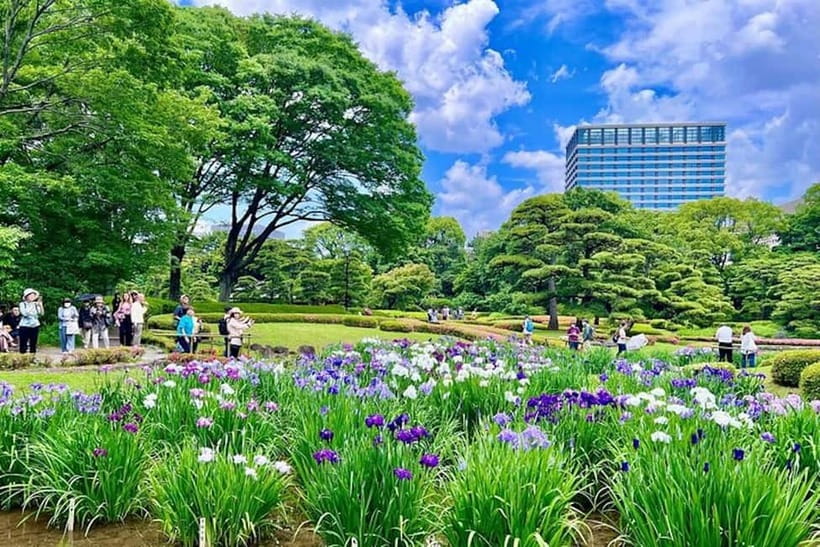
The Ninomaru Garden brings a different mood. After the hard lines of the fortifications, you enter a traditional Japanese garden with ponds, paths, shaped plantings, and seasonal flowers. The garden was created on the former castle grounds, so it combines beauty with the political setting you have just been learning about.
Spring can bring cherry blossoms, summer includes irises, and autumn brings colored leaves. The timing is never guaranteed, so I would treat flowers as a bonus rather than the sole reason to book. One April visit found the cherry blossoms and flowers not yet fully open, which is a useful warning for anyone planning around a specific bloom.
The garden can still be worthwhile outside peak color. Its appeal comes from the careful design, changing views, and contrast with the towers and office buildings around central Tokyo. It offers a calm break from the city without requiring a long trip to a distant garden.
Your guide may also point out details you could miss on your own. Naoko, for example, discussed the garden’s koi and its hybrid varieties as well as the plants and buildings. That kind of observation is one reason the private format earns its keep.
If you want the best chance of seasonal color, check the expected conditions before booking and keep your schedule flexible. The tour operator does not promise a particular bloom. Weather, temperature, and the exact date all affect what you see.
The guide makes the difference

The most important variable is the person leading your walk. The experience is offered in English, and named guides include Hiroshito, Yoshi, Masahito, Mari, Ishida, Yuji, Naoko, Chichiro, and David.
The strongest feedback centers on a few practical traits. Guides have been described as friendly, well organized, attentive, flexible, and easy to understand. Yuji has been praised for walking at a comfortable pace, helping a family find its way toward the next station, and sharing details that would be easy to miss alone.
Yoshi’s English was described as strong, with useful facts about the palace buildings and garden. Ishida was also noted for clear English and a good grasp of the Edo period. These are the qualities I would value most on this walk, since the experience depends on explanation rather than on entering a spectacular interior.
A private tour also gives you room to ask direct questions. If you want more detail about the shoguns, garden design, palace buildings, koi, or modern imperial life, you can shape the conversation around your interests. If your group prefers a quiet walk with short explanations, you can keep it lighter.
The tour does not promise a specific guide. If a particular guide is important to you, there is no stated way to request one in advance. Book this for the private format and English commentary, not on the assumption that you will receive a named guide.
What two hours can and cannot cover
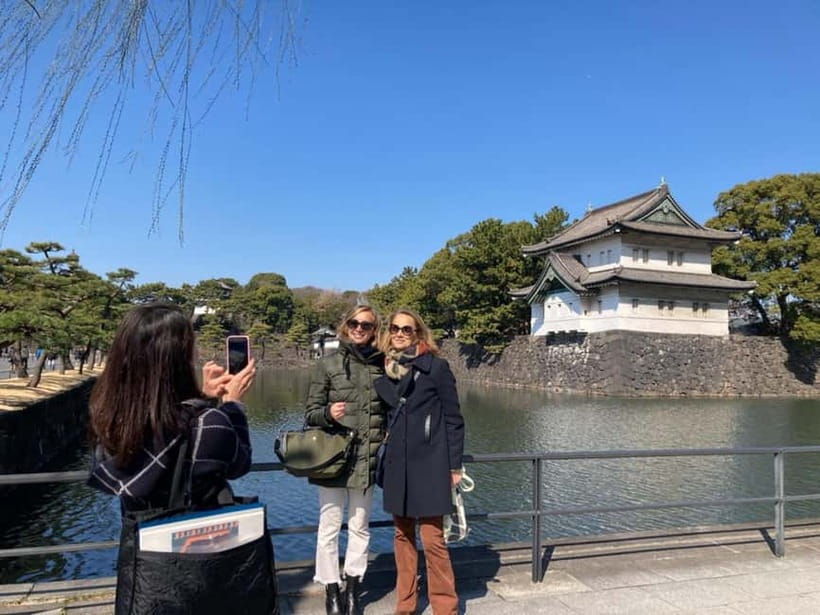
Two hours is a sensible length for the East Gardens. It is long enough to see the principal historic areas, hear the story of the site, and spend time in Ninomaru Garden without turning the outing into an all-day walk.
At the same time, you should not expect a full tour of Tokyo’s imperial institutions or a detailed survey of every castle-era feature. The route centers on the Main Gate, castle remains, and garden areas. The Inner Palace is not included, and the tour does not go inside the palace where the Emperor resides.
This makes the activity easy to fit into a larger Tokyo plan. You could pair it with time around Tokyo Station and Marunouchi before or after the walk. The central location also helps if you want a history-focused break between shopping, food stops, or other city sights.
The private setting is particularly useful if you are traveling with family. A private group can pause for photos, keep a steady pace, and ask questions without worrying about holding up strangers. One family described the guide as welcoming and attentive, which matches the practical advantage of having the route adjusted to your group.
Is $63 a fair price?
At $63 per person, this is not the cheapest way to enter a public garden. You can visit the East Gardens without paying for a private guide, depending on current entry arrangements and opening conditions. The extra cost is for the English commentary, route planning, personal attention, and the chance to ask questions throughout the walk.
I think the price is reasonable if the Edo period and Japanese history are important to you. The site has plenty of attractive scenery, but some of its most meaningful features are ruins and foundations. Without context, you may enjoy the greenery yet miss why the walls, moats, gates, and garden layout matter.
The value is also stronger for first-time visitors who want help understanding Japanese history. Guides have explained the past and present inhabitants, garden details, koi, buildings, and the transition between shogun rule and the modern imperial setting.
The value is weaker if you mainly want photographs or a quick stroll. In that case, a self-guided visit may suit you better. You should also think twice if entering the Imperial Palace itself is your main goal, since this tour specifically excludes the Inner Palace.
The activity allows cancellation up to 24 hours before the start for a full refund, and you can reserve now and pay later. Those terms make it easier to fit the walk into a changing Tokyo schedule.
Who should book this East Gardens tour?
I would recommend it to first-time Tokyo visitors who want history explained in plain English. It suits couples, families, and small private groups who prefer a relaxed pace over a large organized outing.
It is also a good choice for anyone interested in the Edo period, shogun-era government, traditional garden design, or the relationship between the former castle and today’s imperial grounds. The two-hour length works well if you have limited time in Tokyo.
You may want a different activity if you need indoor palace access, a longer castle tour, or a visit focused mostly on architecture from inside. This is an outdoor walking experience, and the quality depends heavily on weather, garden conditions, and the guide assigned to you.
Should you book it?
Book this tour if you want the East Gardens to make historical sense, not just look pretty. The best parts are the private English guide, the Edo Castle ruins, and the chance to ask questions while moving at your own pace.
Skip it if you mainly want entry to the Inner Palace, guaranteed cherry blossoms, or a cheap independent walk. For everyone else, $63 buys a useful two-hour introduction to one of central Tokyo’s most important historic sites, with a practical meeting point and enough flexibility for a family or small group.
FAQ
Where does the tour meet?
Meet in front of Starbucks in Wadakura Fountain Park. Look for a guide holding a sign marked gotcha.
How far is the meeting point from public transportation?
The meeting point is about a three-minute walk from Tokyo Metro Otemachi Station exit D2. It is about a ten-minute walk from Tokyo Station’s Marunouchi Central Exit.
How long does the tour last?
The guided walk lasts two hours.
Is this a private tour?
Yes. The tour is arranged for a private group with an English-speaking live guide.
Does the tour enter the Imperial Palace?
No. The tour visits the Imperial Palace East Gardens and does not enter the Inner Palace or the palace where the Emperor resides.
What can you see in the East Gardens?
The walk includes the historic Main Gate and guardhouse, Edo Castle ruins, ancient stone walls, moats, the former keep area, and Ninomaru Garden.
What flowers might be in bloom?
The garden may have cherry blossoms in spring, irises in summer, and autumn leaves later in the year. The exact timing is not guaranteed.
Is there a baggage inspection?
Yes. Visitors are subject to a baggage inspection when entering the Imperial Palace grounds. Japanese knives and similar items should be placed in a coin locker or another secure location before the meeting.
Newly planted garden visits around Tokyo
- Tokyo Summer: Mt Fuji 5th Station& Kawaguchiko Lavender Trip★ 3.5 · 4 reviews
- Tokyo: Tsukiji Market and Hama-rikyu Gardens Guided Tour★ 4.8 · 73 reviews
- Tokyo: Mount Fuji Tour and Hakone Sakura Cherry Blossom Trip★ 5.0 · 4 reviews
- Tokyo: Meiji Jingu Shrine & Inner Garden Guided Tour (2h)★ 5.0 · 6 reviews
- Tokyo: Full-Day Japanese Garden Private Guided Tour★ 4.6 · 13 reviews
- Tokyo: Kimono Rental inside Shinjuku Gyoen National Garden★ 4.9 · 39 reviews
- Tokyo: Hama-rikyu Gardens tour with Japanese Tea & Sweets★ 4.7 · 14 reviews
- Tokyo: Imperial Palace East Gardens and Tokyo Station Tour★ 5.0 · 16 reviews
Japan Garden Tours, bed by bed.

Imperial Palace East Garden and Edo Castle Walking Tour in Tokyo
Read our review →
Mt. Fuji Day Trip from Tokyo with English Speaking Driver Guide
Read our review →
Kyoto Zen Meditation & Garden Tour at a Zen Temple with Lunch
Read our review →
Kyoto Arashiyama Bamboo forest & Garden Half-Day Walking Tour
Read our review →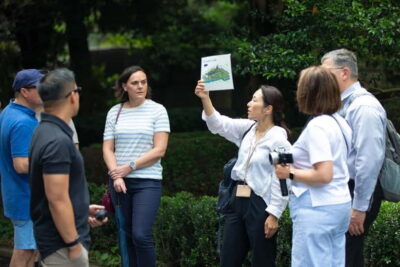
Tokyo: Imperial Palace East Gardens Walking Tour
Read our review →
Kyoto Kiyomizu Tea Ceremony with Scenic Garden Views
Read our review →Lists this garden visit belongs to