
Review · KYOTO
Kyoto ITALIAN GUIDE Golden Pagoda Bamboo Forest Dry Garden
Kyoto’s northwestern edge packs three very different scenes into one morning: a gold-leaf temple, a towering bamboo grove, and a historic bridge over the Katsura River. This tour links them by public transport and on foot, with a Kyoto native guide explaining how the area served emperors, aristocrats, writers, and samurai.
I like the small group limit of 15, which gives you a better chance to ask questions than a large coach tour. I also like the Italian-speaking guide format, especially if you want cultural background rather than a quick photo stop. The main drawback is timing: Kinkakuji and the Bamboo Forest are famous for a reason, so neither is likely to feel quiet, particularly at the most popular parts of the day.
Key points to know before booking
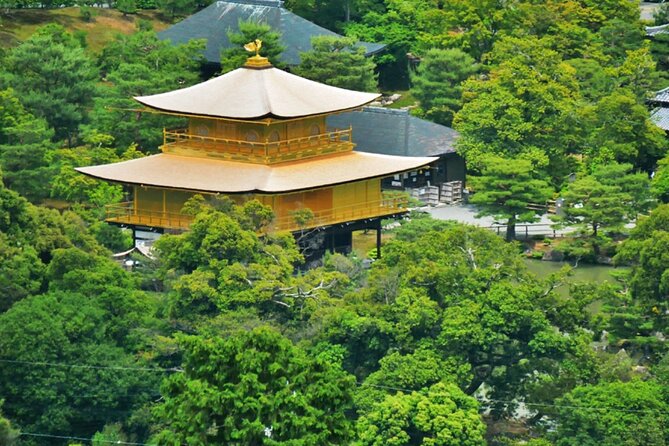
- Three major sights in one morning: Kinkakuji, Bamboo Forest Street, and Togetsukyo Bridge.
- Public transport is part of the experience: You travel by train, bus, and on foot through Kyoto’s northwestern districts.
- Kinkakuji admission is included: The other two stops have no separate admission charge.
- A Kyoto native leads the walk: Expect explanations about imperial families, aristocrats, writers, samurai, and everyday life in old and modern Japan.
- The group is capped at 15 people: This is more personal than a large sightseeing bus.
- Plan for moderate walking: The tour lasts about 4 hours and 30 minutes and returns to Kyoto Station.
Why this route works for a first Kyoto morning
This is a smart route if you want to see famous Kyoto sights without spending a full day on one district. The itinerary moves from Kinkakuji in the northwest to Arashiyama, where the Bamboo Forest and Togetsukyo Bridge give you a change of mood and setting.
You begin at Kyoto Station at 8:30 am. From there, the trip uses public transport and walking, so the journey itself gives you a look at the city beyond the postcard views. You are not simply deposited at three attractions by bus. You move through Kyoto as residents do, with a guide helping explain the places along the way.
The advertised experience lasts about four and a half hours. The three main stops account for about three and a half hours, leaving the rest for transport and movement between sights. That makes the pace fairly brisk, but not unreasonable. You get time at each main stop without committing your entire day.
The tour ends back at the original meeting point at Kyoto Station. That is useful if you have evening plans, a train to catch later, or a hotel near the station. It also keeps the route simple for a first morning in town.
More gardens worth a morning in Kyoto:
- Kyoto Zen Meditation & Garden Tour at a Zen Temple with Lunch
★ 5.0 · 441 reviews - Kyoto Arashiyama Bamboo forest & Garden Half-Day Walking Tour
★ 5.0 · 413 reviews - Kyoto Kiyomizu Tea Ceremony with Scenic Garden Views
★ 5.0 · 101 reviews
Kinkakuji: Kyoto’s glittering opening act
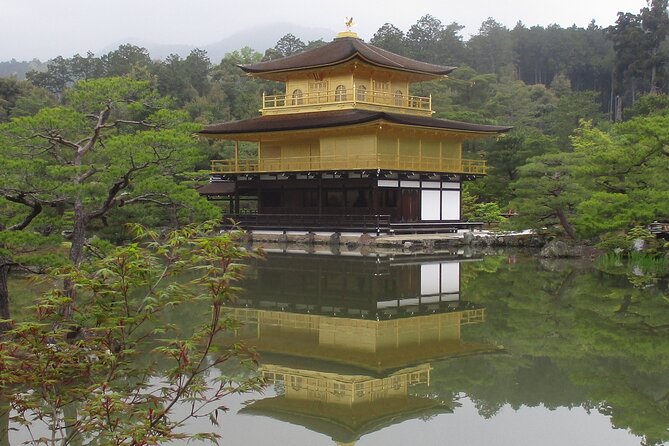
The first major stop is Kinkakuji, better known as the Golden Pavilion. The building was created in the 14th century at the order of shogun Yoshimitsu Ashikaga, who used the site as a private villa. Its setting reflects the old taste for quiet retreats outside the central city, where powerful families could enjoy gardens, water, and wooded hills.
You have about 1 hour and 30 minutes here, and admission is included in the tour price. That is the longest stop of the morning, which makes sense. Kinkakuji deserves more than a quick glance from the entrance, even though the famous view of the pavilion across the pond is likely to command most of your attention.
The gold exterior is striking, but it can also feel almost too polished. One practical point matters: the current pavilion is a reconstruction. The earlier building burned in 1955, so the shining structure you see today is not the original 14th-century building. That does not erase its historical importance, but it does change how you should think about the site. You are seeing a modern rebuilding of an old design, not an untouched medieval monument.
Kinkakuji is also a place where expectations need adjusting. The site was created to suggest calm and refinement, yet the popular viewing areas can become extremely crowded. You may find it hard to pause in silence or study the details for long. The guide can add useful context, but no explanation can remove the people gathered around the main viewpoint.
The tour’s early start helps, though it does not guarantee solitude. If your priority is photography or a quiet pause, stay ready when the group arrives at the key viewing area. You will have more control over your morning if you treat Kinkakuji as a beautiful, important sight with crowds, not as a private garden visit.
The site is recognized as part of Kyoto’s UNESCO World Heritage collection, which helps explain its place on nearly every first-time itinerary. You will see why once the pavilion, pond, and surrounding woodland line up in one view. The beauty is immediate, even if the atmosphere can be less peaceful than the setting suggests.
Bamboo Forest Street: famous, photogenic, and busy
The second stop takes you to Arashiyama’s Bamboo Forest Street for about an hour. The bamboo stalks rise high above the path, creating one of Japan’s most recognizable scenes. The location has also appeared in films, which has helped turn it into an international symbol of Kyoto.
This stop is free to enter, so your tour cost here covers the guide’s organization and commentary rather than an admission ticket. The forest is best understood as a public walking route, not a formal temple attraction. You follow the path through tall bamboo, with the vertical lines and filtered light providing a sharp contrast to Kinkakuji’s gold and garden setting.
The main issue is crowding. This is one of Japan’s most photographed places, and the narrow route can feel crowded rather than meditative. You might find a quieter moment by looking beyond the most photographed stretch, but the tour does not promise an empty grove. Keep your expectations practical, especially if you have seen photographs showing a completely clear path.
An hour is enough to experience the setting and take photographs, but it is not enough for an unhurried exploration of all Arashiyama. That is not necessarily a flaw. The tour is designed to connect several key sights, not to provide a full day in the district.
Your guide’s role is especially useful here because the bamboo can otherwise become a quick visual stop. The broader route places the grove within the old retreat area of Kyoto, where imperial family members, aristocrats, writers, and samurai once sought time away from the city center. That background gives the walk more meaning than simply collecting another famous photograph.
If you want a long, quiet nature walk, this tour may feel too short and too busy. If you want to see the famous grove while also visiting two other major sights, the one-hour stop is a reasonable trade.
Togetsukyo Bridge and the old Arashiyama setting
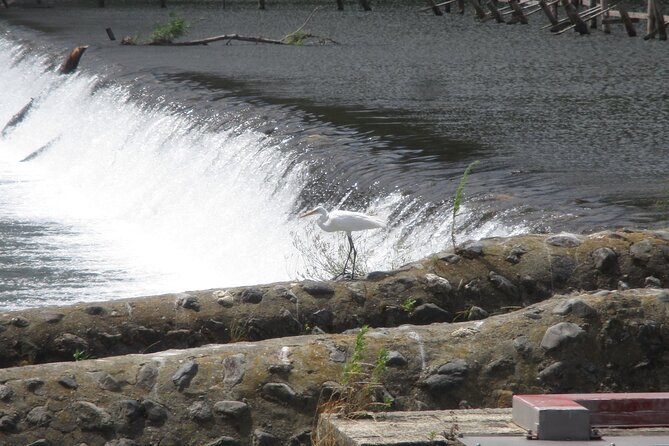
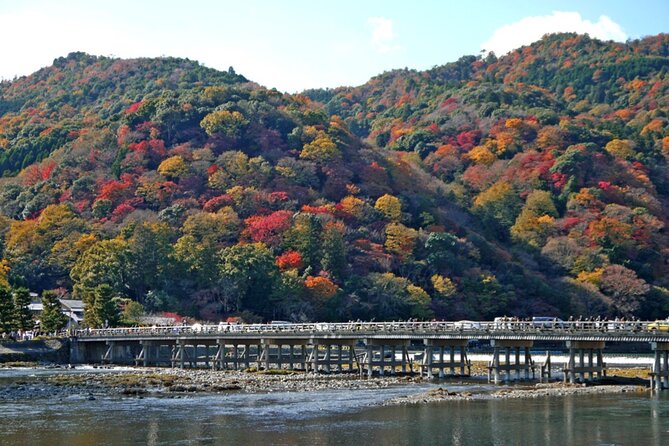
The final main stop is Togetsukyo Bridge, where you spend about an hour. The bridge has existed since the ninth century and crosses the Katsura River in one of Arashiyama’s best-known views.
This is a slower finish after the gold pavilion and the bamboo path. Instead of focusing on one building or a narrow grove, you look outward across the river and the preserved historical setting of the suburb. The bridge connects the natural scenery with the old retreat culture that shaped this part of Kyoto.
The bridge itself is free to visit. The value here is not a ticketed attraction but the chance to walk across a landmark that has been part of Kyoto’s sightseeing and local life for centuries. Your guide can help connect the view with the area’s past, including the people who used this part of the city as a place for leisure and retreat.
You get enough time to walk on the bridge and take in the surroundings without being rushed through in a few minutes. Still, the tour does not include a long independent stay in Arashiyama after the scheduled hour. If you want to visit additional temples, shops, or gardens in the area, you will need to return on your own another time.
Togetsukyo is a good final stop because it gives the morning a sense of place. Kinkakuji is a single famous monument. Bamboo Forest Street is a narrow route built around one dramatic natural feature. The bridge opens the view and lets you see why Arashiyama became such a valued retreat area.
Same season, a different set of beds:
- Kyoto: Private Tea Ceremony with a Garden View
★ 4.9 · 61 reviews - Bamboo Grove Temple and Garden Views Tour
★ 5.0 · 41 reviews - Stunning Private Tea Ceremony: Camellia Garden Teahouse
★ 5.0 · 28 reviews - Kyoto Hidden Treasures: Special Temple & Garden Access Tour
★ 4.5 · 25 reviews
What the guide adds to a public-transport tour
The tour is led by a native Kyoto guide and is presented for Italian-speaking visitors. That combination matters because the route includes more than attractive photo stops. The guide is there to explain the customs, politics, social classes, and daily life connected with the places you see.
You can ask questions about both ancient and modern Japan during the outing. The description also promises assistance when participants need it, which is useful when a half-day route involves buses, trains, walking, and several busy public places.
A local guide can also help you understand the contrast between the sites. Kinkakuji reflects the power and taste of a shogun. Arashiyama reflects the long appeal of retreat, scenery, and literary life outside central Kyoto. The bridge and bamboo route show how those old preferences still shape the way people experience the city today.
The information does not provide the guide’s personal name, so you should not book this expecting a named historian or celebrity guide. What is clear is the local connection, Italian guide format, and willingness to answer questions.
Is $113.85 a fair price?
At $113.85 per person, this is not the cheapest way to see these sights. Two of the three stops are free, and Kinkakuji admission is the only included entry ticket specifically noted. You are paying mainly for the guide, route planning, public-transport coordination, and the convenience of covering three distant attractions in one organized morning.
The price makes more sense if you value explanations in Italian, want help navigating the route, or have only a short time in Kyoto. It is also a better fit for someone who would rather not work out the train and bus connections between Kinkakuji and Arashiyama.
The value is weaker if you are comfortable using public transport and prefer to linger. You could visit the same broad area independently and set your own pace, especially at the Bamboo Forest and Togetsukyo Bridge. An independent visit would also let you return to Arashiyama after the scheduled tour.
The group maximum of 15 improves the value compared with a large sightseeing coach. It does not make the major sights private, but it should give the guide a more workable group for questions and movement.
Pace, walking, and who should book
You should have a moderate level of physical fitness. The tour combines public transportation with walking at three major sights, and the schedule leaves limited room for long rest periods. Exact walking distances are not provided, so you should expect a normal active sightseeing morning rather than a seated bus excursion.
This tour suits you best if:
- You are visiting Kyoto for the first time.
- You want three major sights in about half a day.
- You prefer an Italian-speaking guide with local Kyoto background.
- You want historical and cultural explanation along with photographs.
- You are comfortable with public transportation and moderate walking.
- You have limited time but want to see both Kinkakuji and Arashiyama.
It may not suit you if your main goal is solitude. Kinkakuji and the Bamboo Forest are highly popular, and the busy conditions can undercut the calm mood associated with both places.
It is also not the best choice if you want a deep, slow visit to Arashiyama. The one-hour bamboo stop and one-hour bridge stop offer a good introduction, but not enough time to cover every nearby sight.
Booking details worth keeping in mind
Your meeting point is Kyoto Station, at Higashishiokoji Kamadonocho in Shimogyo Ward. The start time is 8:30 am, and the activity returns to that same meeting point.
A mobile ticket is provided, and confirmation is received when you book. The experience is near public transportation, which fits the route’s use of trains and buses.
The tour offers free cancellation if you cancel at least 24 hours before the local start time. Cancellations or changes made less than 24 hours before the start are not accepted for a refund. The experience also requires a minimum number of participants, so if that number is not met, you are offered another date or experience, or a full refund.
Should you book this Kyoto morning?
Book this tour if you want an efficient introduction to Kyoto’s northwestern sights and prefer a local Italian-speaking guide to handle the route. The strongest reasons are the three-part itinerary, the small group cap, and the cultural context connecting imperial retreats, aristocratic life, samurai culture, and modern Kyoto.
Skip it if you want empty paths, long time in Arashiyama, or the lowest possible cost. The Golden Pavilion and Bamboo Forest are genuinely beautiful, but both can be crowded, and the modern reconstruction at Kinkakuji may surprise you.
For a first visit, I think the route is a practical choice. You get Kyoto’s most recognizable golden temple, its famous bamboo setting, and the historic Togetsukyo Bridge in one organized morning. Just book it for access and context, not for solitude.
FAQ
Where does the tour begin?
The tour begins at Kyoto Station, at Higashishiokoji Kamadonocho in Shimogyo Ward, Kyoto.
What time does the tour start?
The scheduled start time is 8:30 am.
Where does the tour finish?
The activity ends back at the original meeting point at Kyoto Station.
How long does the experience last?
The tour lasts approximately 4 hours and 30 minutes.
Which sights are included?
The tour visits Kinkakuji Temple, Bamboo Forest Street, and Togetsukyo Bridge.
Is admission to Kinkakuji included?
Yes. Admission to Kinkakuji Temple is included in the tour.
Are there admission fees for the Bamboo Forest and Togetsukyo Bridge?
No separate admission charge is listed for either Bamboo Forest Street or Togetsukyo Bridge.
How large is the group?
The experience has a maximum of 15 participants.
Newly planted garden visits around Kyoto
- Kyoto-Nara Adventures Private Tour With Hotel Pick Up★ 4.0 · 5 reviews
- Stunning Private Tea Ceremony: Camellia Garden Teahouse★ 5.0 · 28 reviews
- Guided Kyoto City Cherry Blossom One Day Private Tour★ 5.0 · 16 reviews
- Kyoto Hidden Treasures: Special Temple & Garden Access Tour★ 4.5 · 25 reviews
- Kyoto: Kinkaku-ji Temple & Serene Garden Guided Tour with Tickets★ 5.0 · 9 reviews
- The Art of Mindful Living: Tea Ceremony in Kyoto★ 5.0 · 16 reviews
- Kyoto Japanese Garden Lover’s Private Tour with Government-Licensed Guide★ 4.5 · 10 reviews
- Bamboo Grove Temple and Garden Views Tour★ 5.0 · 41 reviews
Japan Garden Tours, bed by bed.

Imperial Palace East Garden and Edo Castle Walking Tour in Tokyo
Read our review →
Mt. Fuji Day Trip from Tokyo with English Speaking Driver Guide
Read our review →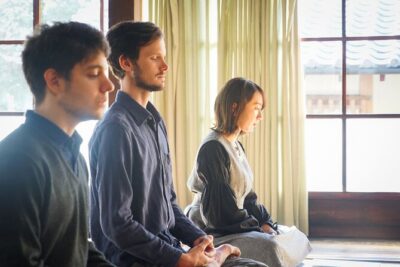
Kyoto Zen Meditation & Garden Tour at a Zen Temple with Lunch
Read our review →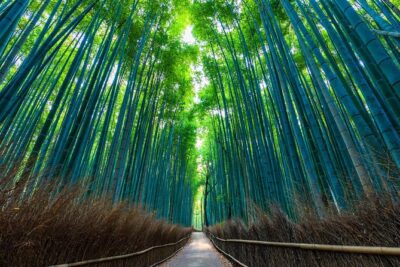
Kyoto Arashiyama Bamboo forest & Garden Half-Day Walking Tour
Read our review →
Tokyo: Imperial Palace East Gardens Walking Tour
Read our review →
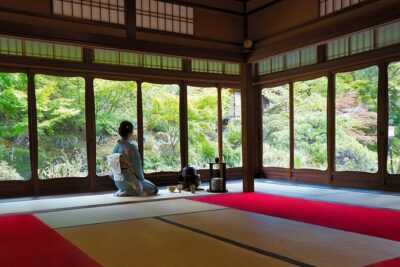
Kyoto Kiyomizu Tea Ceremony with Scenic Garden Views
Read our review →Lists this garden visit belongs to