
Review · TOKYO
Tokyo: Imperial Palace East Gardens Walking Tour
Tokyo’s Imperial Palace East Gardens give you one of the clearest views of old Tokyo without taking you far from the city center. You’ll walk over the former grounds of Edo Castle, where stone defenses, guard houses, castle foundations, and the Ninomaru Garden explain how the Tokugawa shoguns lived and ruled.
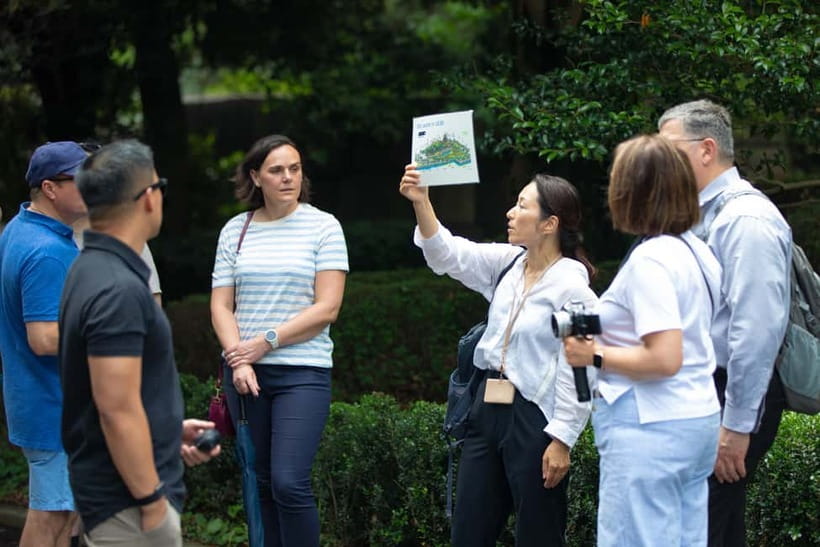
I especially like the way the tour joins military history with garden design. The castle ruins make the past concrete, while ponds, bridges, bonsai, and clipped trees slow the pace. I also like the guides’ practical touch. Mei has used laminated maps and old images to explain areas where little remains, and guides including Kei, Wakana, Mei, and Tatsie are praised for clear English, humor, and thoughtful answers.
The main limitation is simple: this is an outdoor walk, and you do not enter the Imperial Palace. Rain, heat, or cold can affect your comfort, and the tour asks you to spend two and a half hours on foot. At $19, though, it offers strong value if you want context rather than a quick garden stroll.
Key points to know before you book
- Edo Castle under your feet: Walk through the former Honmaru area and see foundations, gates, and defensive structures from the castle compound.
- A guide makes the ruins readable: Maps, old photographs, and stories about shoguns help you picture buildings that no longer survive.
- Ninomaru Garden is the visual highlight: Ponds, bridges, stone lanterns, carefully pruned trees, and bonsai create a calm contrast to central Tokyo.
- Seasonal timing matters: Cherry blossoms brighten spring, while fall brings colorful foliage, especially around the garden areas.
- The meeting point is central: Start and finish near Starbucks Coffee at Kokyo Gaien Wadakura Fountain Park, close to Tokyo Station.
- A compact, affordable tour: The walk lasts 150 minutes, costs $19 per person, is offered in English, and is wheelchair accessible.
Why the East Gardens tell Tokyo’s story so well
Tokyo can feel like a city of glass towers, train lines, neon signs, and hurried foot traffic. The East Gardens offer a different view. You are still near the center of modern Tokyo, but the ground beneath you once belonged to Edo Castle, the seat of the Tokugawa shoguns during the Edo period.
That contrast is the reason I find this tour worthwhile. You are not simply looking at flowers. You are walking through a former seat of power, then seeing how Japanese garden design softened and shaped parts of the same space.
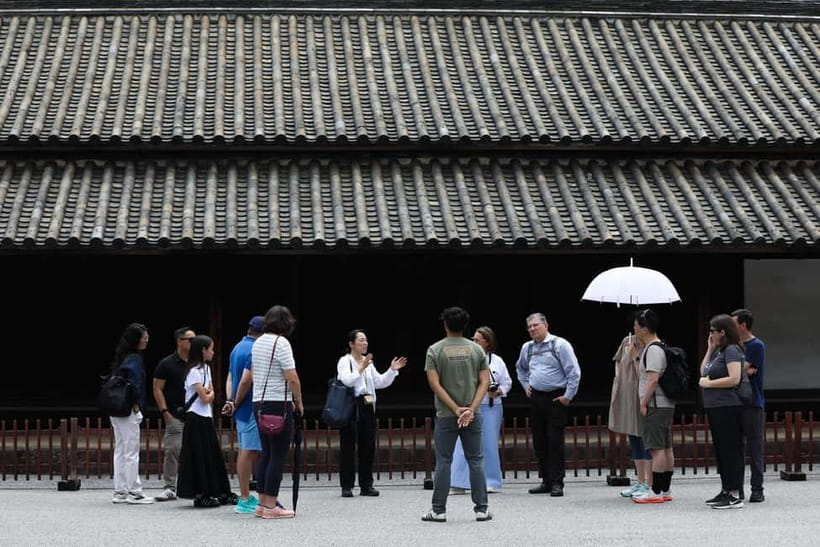
The gardens preserve several visible pieces of the old castle system. Stone walls, gates, guard houses, watch towers, and castle foundations show how the site was protected. The ruins are not intact rooms with furniture and dramatic interiors, so a guide matters. A good explanation helps you imagine the scale and layout of what has disappeared.
The tour also gives you a useful introduction to the change from shogun rule to imperial Tokyo. Guides explain the role of the shoguns and emperors, along with customs and stories tied to the Imperial Palace. That makes this a good early-Tokyo activity if you want a framework for understanding Japan before visiting temples, museums, or former samurai districts elsewhere.
More gardens worth a morning in Tokyo:
- Imperial Palace East Garden and Edo Castle Walking Tour in Tokyo
★ 5.0 · 510 reviews - Mt. Fuji, Cherry Blossom & Shiba Sakura Pvt. Day Tour
★ 5.0 · 326 reviews - Tokyo: Edo Castle & East Garden of the Imperial Palace Tour
★ 4.7 · 112 reviews
Meeting at Wadakura Fountain Park
The tour begins near Starbucks Coffee at Kokyo Gaien Wadakura Fountain Park, at coordinates 35.68299330000001, 139.7611971. You return to the same area at the end, which makes the walk easy to fit into a day around Tokyo Station and the surrounding central districts.
I would arrive with enough time to identify the guide and settle in. The meeting point is described as nearby the Starbucks rather than inside the Imperial Palace grounds, so do not head to a palace gate expecting to find the group there.
The central location is useful for a first or last activity in this part of Tokyo. It also keeps the tour focused. There is no long bus ride or transfer between stops. Your time goes toward the gardens, the castle remains, and the explanations.
Entering the former Edo Castle grounds

The East Gardens were once part of Edo Castle, the huge compound connected with the Tokugawa shoguns. Today, you encounter open garden space and preserved structures rather than a complete castle complex.
That partial survival is important to understand before you arrive. You will not walk through a restored palace interior. Instead, you will see the physical traces that remain and use the guide’s explanation to reconstruct the old site in your mind.
The tour’s strongest historical moments come from these fragments. A stone wall is not just a wall when you learn how it helped control access. A guard house becomes more interesting when you understand its place in the castle’s defensive plan. A foundation gives you a sense of the scale of a building that has vanished.
Guides such as Mei have brought laminated maps and old photographs to make this easier. That is a smart addition because the open grounds can otherwise leave you wondering where the main buildings once stood. The visual aids connect the present garden to the earlier castle compound without asking you to guess.
Honmaru area: the castle’s former center
The Honmaru area was the main compound of Edo Castle. Here, the focus shifts from decorative garden views to the power and organization of the castle itself.
You can explore remnants of foundations, gates, and defensive features. The remains help explain the layout of the former compound and the ways the castle was designed to control movement. I like this section because it keeps the tour from becoming only a pleasant walk among flowers.
The Honmaru remains are also a good reminder that the castle was a working center of government, not just a residence. The Tokugawa shoguns ruled Japan from this wider setting during the Edo period. Your guide can connect the stones beneath your feet with the people, authority, and military structure that shaped the country.
Do not expect a full castle reconstruction. The appeal here is archaeological and interpretive. If you enjoy standing in a place and picturing what once occupied it, you will get more from this section than someone looking for grand surviving interiors.
Same season, a different set of beds:
- Mt. Fuji Day Trip from Tokyo with English Speaking Driver Guide
★ 5.0 · 443 reviews - Tokyo: Rainbow Bridge Day Cruise Show and Only Soft Drinks
★ 4.5 · 75 reviews - Tokyo: Tsukiji Market and Hama-rikyu Gardens Guided Tour
★ 4.8 · 73 reviews - Tokyo: Pvt. Tour – Edo Castle & Imperial Palace East Gardens
★ 4.8 · 63 reviews
Ninomaru Garden and traditional Japanese design
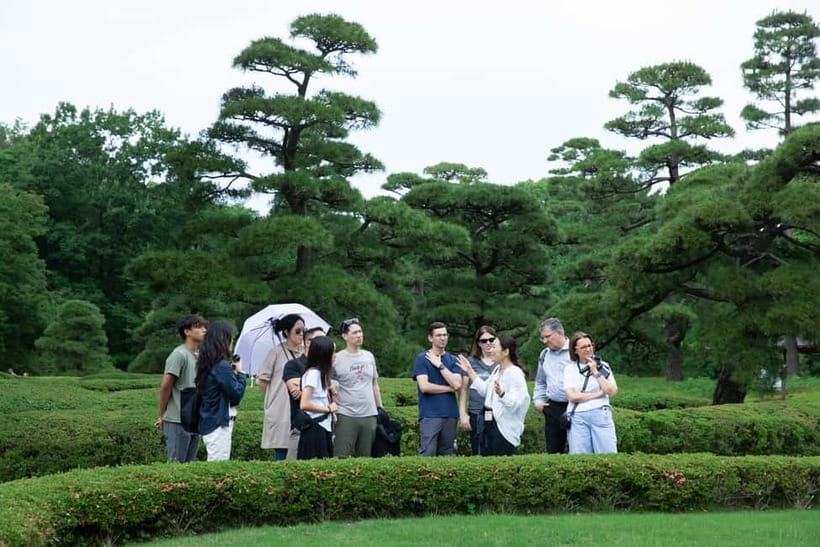
The Ninomaru Garden provides the tour’s quiet visual change. Its design uses ponds, bridges, trees, shrubs, stone lanterns, and open views to create a composed setting for walking and contemplation.
The garden rewards a slower pace. Your guide points out how individual elements work together, rather than treating the space as a collection of isolated objects. The carefully pruned trees and bonsai show the control and patience involved in traditional Japanese gardening.
I find this part especially useful for first-time visitors to Japan. Garden design can look simple at first glance, but the arrangement of water, stone, greenery, and pathways carries much of the atmosphere. A guide helps you notice what you might otherwise pass without a second look.
Season affects the experience. In spring, cherry blossoms can bring a soft burst of color to the grounds. In fall, changing leaves add reds, oranges, and golds. Winter and summer will offer a different mood, but the garden’s structure remains the main attraction.
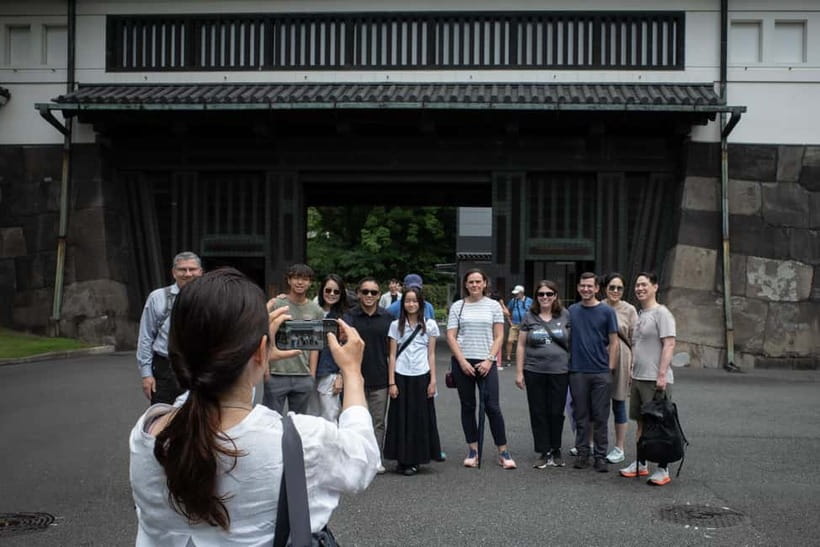
The garden is also where the tour seems to allow time for looking and photographs, rather than keeping every minute packed with facts. One guide offered personal time at the end and suggested good picture opportunities. That small pause matters because a garden should not be experienced only at the speed of a lecture.
Stone walls, guard houses, and military details
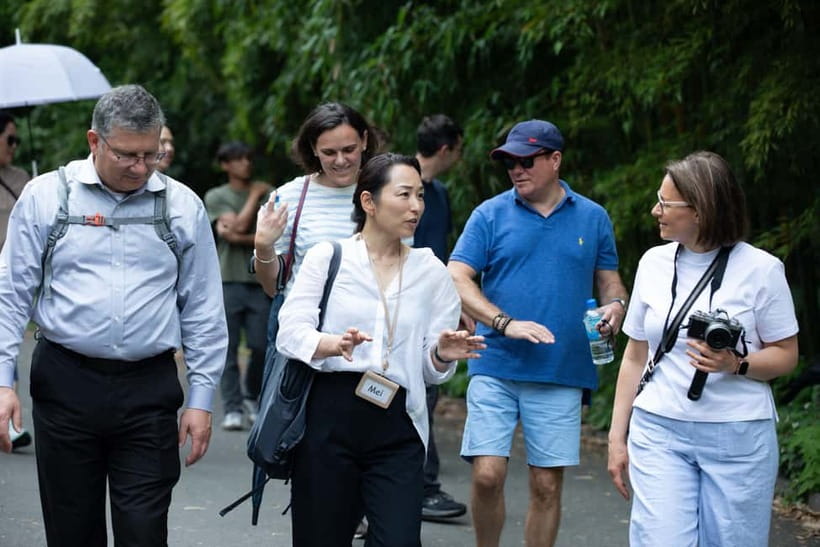
The East Gardens work well because the peaceful garden and the defensive remains are so close together. You might move from clipped trees and a pond to a heavy stone wall or guard house within the same walk.
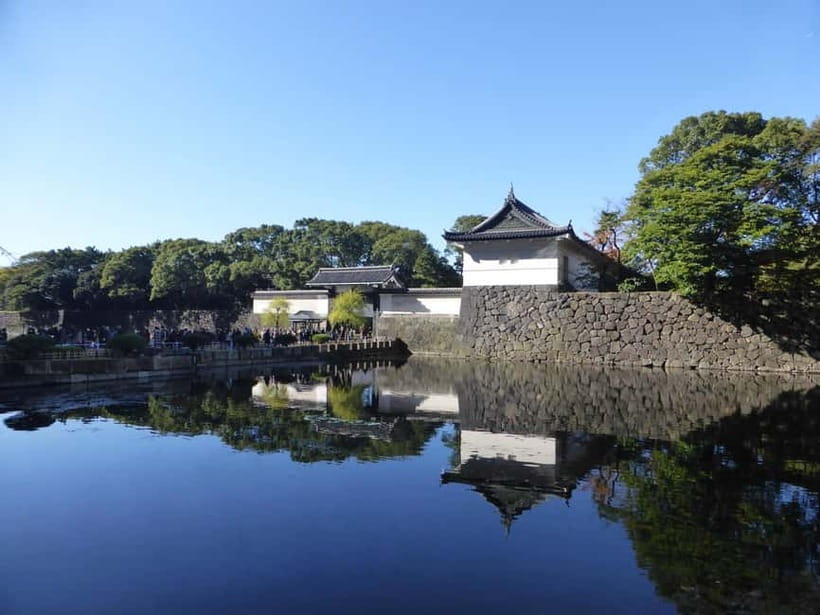
These details show the practical side of Edo Castle. Watch towers, gates, and defensive structures point to a site built for protection and administration, not just beauty. The contrast also makes the walk more memorable. You are not choosing between a history tour and a garden visit. You get both in one compact route.
I would pay close attention when the guide explains the castle’s defensive strategy. This is one of the areas where the tour adds real value over visiting alone. Without context, old stones can blend into the scenery. With context, their position and purpose become easier to understand.
The military architecture also gives the experience a different tone from many Tokyo garden visits. The site is serene now, but the walls and foundations keep reminding you that this was once a center of power guarded by design.
What the guides add to the walk
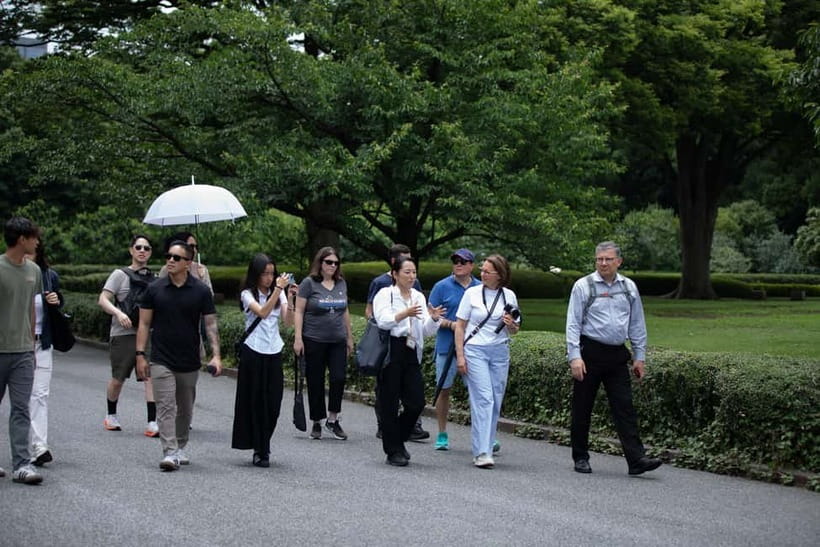
The guide is the main reason to choose this experience instead of simply entering the gardens independently. The tour is offered in English, and the strongest guide feedback centers on clear explanations, warmth, humor, and a willingness to answer questions.
Mei is praised repeatedly for making the history easy to follow and for using visual aids. Kei is described as friendly, prepared to answer a wide range of questions, and strong on the story of the castle. Wakana is noted for excellent English, useful explanations, and an easy manner. Tatsie is praised for a good pace and for explaining shoguns, customs, and Japanese history in a light way.
Other named guides include Miko, Miyu, Meiko, Midori, Fuku, Loc, Mieko, and Wakan. The individual style will vary, but the common strength is a personable approach rather than a dry recitation of dates.
Several guides also help with practical questions beyond the garden. Mei, for example, has offered suggestions about other places to visit, restaurants, and ways to get around Tokyo. That is not the formal purpose of the tour, but it can be useful early in your stay.
The overall rating is 4.8 from 353 reviews, with especially strong praise for guide quality. I would treat that as a sign that the human element is central here. The garden is worth seeing on its own, but the guide turns scattered remains into a coherent visit.
Timing, pace, and physical demands
The experience lasts 150 minutes, or two and a half hours. That gives the guide enough time to cover the Honmaru area, Ninomaru Garden, defensive remains, and seasonal features without rushing through every stop.
This is still a walking tour. Comfortable shoes are sensible, and you should be ready to remain outdoors for the full visit. The activity is listed as wheelchair accessible, which is useful for guests who need an accessible route, though the exact surface and route conditions are not specified.
The pace appears designed to leave room for photographs and questions. One guide was praised for keeping the walk well paced, while another was noted for giving the group personal time in the Japanese garden. You should expect a guided walk rather than a fast march from one landmark to the next.
Weather deserves attention. The gardens can be beautiful in rain, and Miko was praised for keeping a group comfortable during wet conditions, but rain still changes the experience. Bring suitable protection and be realistic about spending 150 minutes outside.
Is $19 good value?
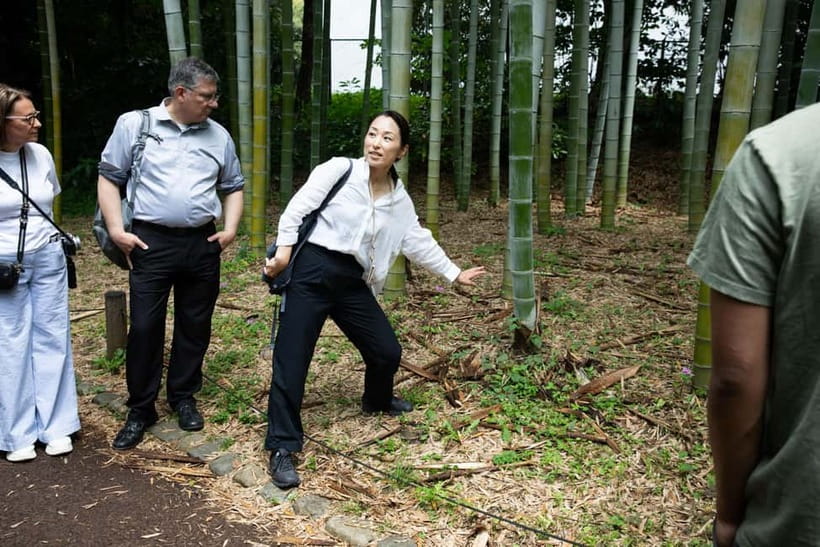
At $19 per person, this is a modestly priced guided experience in central Tokyo. You are paying for an English-speaking guide and two and a half hours of interpretation, not for a large attraction with an elaborate indoor exhibition.
The value is strongest if you want to understand what you are seeing. The castle remains are incomplete, and the gardens can be visited at a more casual pace on your own. The guide’s maps, photographs, stories about the shoguns, and explanations of military architecture provide the extra layer that makes the price worthwhile.
The price is less compelling if you only want a quick look at flowers or a self-guided walk. It is also important to note that entry to the Imperial Palace is not included, and the tour does not go inside the palace. This experience concerns the East Gardens and former Edo Castle grounds.
The booking terms are flexible. You can cancel up to 24 hours before the activity for a full refund, and the reserve-now, pay-later option lets you hold a place without paying immediately. Those terms help if your Tokyo schedule is still changing.
Who should book this East Gardens tour?
I would recommend it to first-time visitors who want a clear introduction to the shoguns, emperors, Edo Castle, and Japanese garden design. It also suits anyone who enjoys history but prefers to learn it while walking through real places rather than sitting in a museum.
Families can benefit from the short stories, old maps, and visible castle remains, especially if children lose interest in gardens without a narrative. The 150-minute length is long enough to feel substantial but short enough to fit beside other Tokyo plans.
This is also a good choice for visitors who want seasonal scenery. Spring cherry blossoms and fall foliage add extra appeal, though the exact display depends on nature and timing.
I would think twice if you dislike outdoor walks, need a complete castle interior, or want an entirely unscheduled visit. The activity has a clear route and a steady historical focus. It is not a private, make-it-up-as-you-go outing.
Should you book it?
Book this tour if you want the East Gardens to make sense. The strongest reason to go is the guide, especially if you get someone like Mei, Kei, Wakana, or Tatsie, whose approach combines clear history, humor, questions, and visual material.
At $19, the tour offers a good balance of scenery and explanation. You will see Ninomaru Garden, castle foundations, stone walls, guard houses, and seasonal plantings, but you should book with the right expectation: this is an outdoor tour of former castle grounds, not an inside visit to the Imperial Palace.
If that sounds like your kind of Tokyo morning or afternoon, I would book it. If you only want palace photographs or a grand restored castle interior, choose a different attraction.
FAQ
How much does the Imperial Palace East Gardens walking tour cost?
The tour costs $19 per person.
How long does the tour last?
The walking tour lasts 150 minutes, or two and a half hours.
Does the tour go inside the Imperial Palace?
No. The tour does not go inside the Imperial Palace.
What language is the tour offered in?
The tour is offered in English with a live English-speaking guide.
Where does the tour begin?
The guide waits nearby Starbucks Coffee at Kokyo Gaien Wadakura Fountain Park. The coordinates are 35.68299330000001, 139.7611971.
Where does the tour end?
The walk returns to Starbucks Coffee at Kokyo Gaien Wadakura Fountain Park.
What is included in the price?
The price includes the walking tour and a guide.
Is the tour wheelchair accessible?
Yes, the activity is listed as wheelchair accessible.
Can I cancel the tour for a refund?
Yes. You can cancel up to 24 hours in advance for a full refund. You can also reserve now and pay later.
Newly planted garden visits around Tokyo
- Tokyo Summer: Mt Fuji 5th Station& Kawaguchiko Lavender Trip★ 3.5 · 4 reviews
- Tokyo: Tsukiji Market and Hama-rikyu Gardens Guided Tour★ 4.8 · 73 reviews
- Tokyo: Pvt. Tour – Edo Castle & Imperial Palace East Gardens★ 4.8 · 63 reviews
- Tokyo: Mount Fuji Tour and Hakone Sakura Cherry Blossom Trip★ 5.0 · 4 reviews
- Tokyo: Meiji Jingu Shrine & Inner Garden Guided Tour (2h)★ 5.0 · 6 reviews
- Tokyo: Full-Day Japanese Garden Private Guided Tour★ 4.6 · 13 reviews
- Tokyo: Kimono Rental inside Shinjuku Gyoen National Garden★ 4.9 · 39 reviews
- Tokyo: Hama-rikyu Gardens tour with Japanese Tea & Sweets★ 4.7 · 14 reviews
Japan Garden Tours, bed by bed.

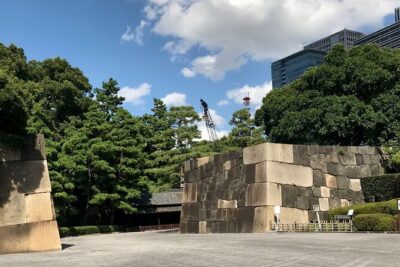
Imperial Palace East Garden and Edo Castle Walking Tour in Tokyo
Read our review →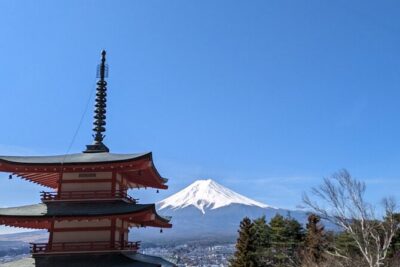
Mt. Fuji Day Trip from Tokyo with English Speaking Driver Guide
Read our review →
Kyoto Zen Meditation & Garden Tour at a Zen Temple with Lunch
Read our review →
Kyoto Arashiyama Bamboo forest & Garden Half-Day Walking Tour
Read our review →
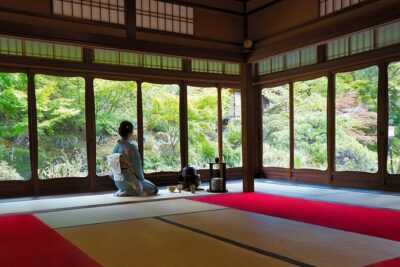
Kyoto Kiyomizu Tea Ceremony with Scenic Garden Views
Read our review →
Kanazawa: Samurai, Matcha, Gardens and Geisha Full-Day Tour
Read our review →Lists this garden visit belongs to