
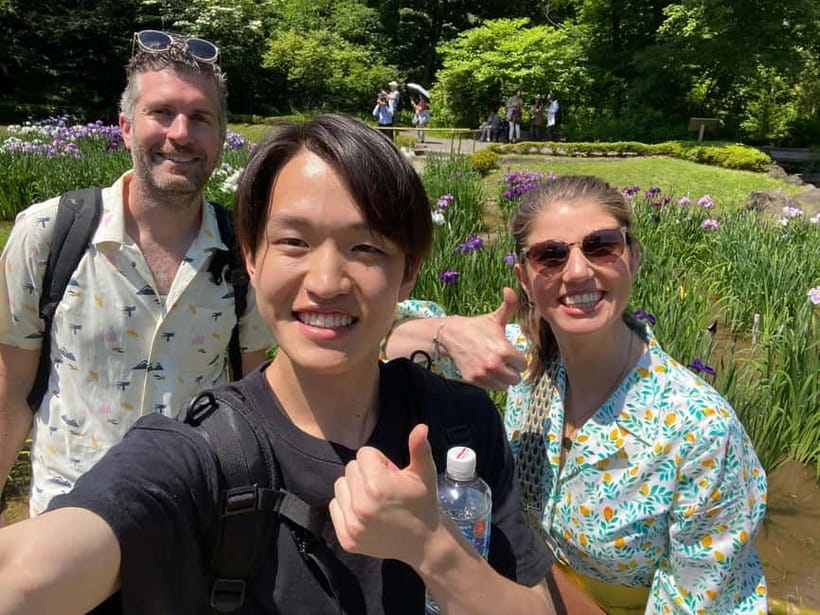
Review · TOKYO
Tokyo: Imperial Palace East Gardens and Tokyo Station Tour
Tokyo’s imperial story becomes much easier to picture when you see it laid out in stone, water, gates, gardens, and surviving castle grounds. This 150-minute walk connects the Imperial Palace East Gardens with modern Marunouchi, ending at the red-brick face of Tokyo Station.
I like the way the tour links two very different sides of the city, and I like its focus on specific places such as Ote-mon Gate, the Hyakunin Bansho Guardhouse, Ninomaru Garden, and the Edo Castle ruins. Guide Yuki receives particular praise for clear, humorous explanations. The main consideration is the amount of walking, so comfortable shoes matter.
Key points
- See Edo Castle remains: Visit the old castle grounds, Fujimi-yagura watchtower, Honmaru area, and a scale model of the former main keep.
- Hear history brought to life: Yuki’s clear, good-humored storytelling helps you picture Tokyo during the shogunate era.
- Walk through Ninomaru Garden: The garden offers a calm pause among moats, stone walls, trees, and carefully arranged scenery.
- Compare old and new Tokyo: Move from imperial grounds into Marunouchi’s modern architecture and public art.
- Finish at Tokyo Station: End beside one of the city’s best-known red-brick buildings, restored to reflect its earlier appearance.
- Plan for a moderate walk: Bring water, sun protection, weather-appropriate clothing, and no backpack.
From Wadakura Fountain Park to the palace grounds
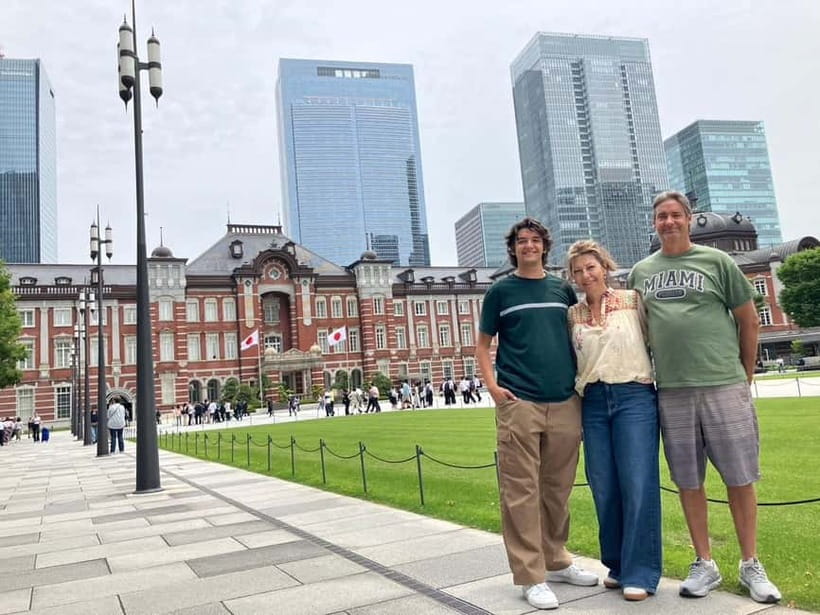
The meeting point is Starbucks Coffee Imperial Palace Outer Garden, beside Wadakura Fountain Park. This is a practical place to begin because the tour quickly moves into the broad open spaces around the palace rather than wasting time on a long transfer.
You will start near Kokyo Gaien National Garden, the open area surrounding the Imperial Palace. Here, the city feels unusually spacious. Office towers rise nearby, but the palace grounds create a wide break between modern Tokyo and the former seat of the shogunate.
That contrast is the central idea of the walk. You are not simply looking at a garden, then a station. You are following Tokyo’s change from fortified Edo Castle to imperial capital and, finally, to a modern business district.
Your guide provides the context as you walk. The available guides speak English, Japanese, Spanish, Chinese, or French, though you should check which language is offered at your chosen time. The tour is listed as wheelchair accessible, but it still includes a moderate amount of walking, so ask about the route if you need a slower pace or particular assistance.
More gardens worth a morning in Tokyo:
- Imperial Palace East Garden and Edo Castle Walking Tour in Tokyo
★ 5.0 · 510 reviews - Tokyo: Imperial Palace East Gardens Walking Tour
★ 4.8 · 353 reviews - Mt. Fuji, Cherry Blossom & Shiba Sakura Pvt. Day Tour
★ 5.0 · 326 reviews
Ote-mon Gate and the old castle defenses
The Imperial Palace East Gardens are part of the former Edo Castle grounds. The first major sights include Ote-mon Gate and the Hyakunin Bansho Guardhouse. These places help you understand that this was once a working fortress, not simply a royal residence surrounded by pretty plants.
Ote-mon Gate was an important entrance into the castle complex. Look closely at the scale of the stonework and the layered approach to the gate. The design forced anyone entering to pass through controlled spaces, giving guards time to inspect people and protect the inner castle.
The Hyakunin Bansho Guardhouse adds another human detail. Its name refers to a guard post associated with a large group of guards. This is the sort of stop that benefits from a guide because the building itself may not explain how the castle worked or why its location mattered.
Yuki’s style appears to suit this section especially well. Her explanations are described as easy to follow, humorous, and vivid enough to help you picture Tokyo 400 years ago. That matters here. Without context, a wall or gate can seem like an isolated relic. With the story, it becomes part of a security system shaped by samurai politics.
Ninomaru Garden and the art of a Japanese garden
Ninomaru Garden gives the walking tour a quieter rhythm. After the gates, walls, and castle defenses, you move into a carefully arranged garden where water, trees, paths, and planting create a different kind of historical record.
The garden is valuable not only for its beauty but also for what it reveals about taste and power in the Edo period. Garden design was never random. The arrangement of views and water reflects a culture that treated controlled scenery as an art form.
I would give this stop your full attention rather than treating it as a quick photo break. Listen to how the guide explains the garden’s layout and its connection to the former castle. The repeated comments about clear explanations of each section suggest that this tour is strongest when you let the guide connect one part of the grounds to the next.
Bring your camera, but remember that flash photography is not allowed. A hat, sunscreen, and water are useful because parts of the route are outdoors, with limited shelter depending on the section you are visiting.
Fujimi-yagura and the Honmaru area
The route continues through the former inner castle grounds, including the Honmaru area and the Fujimi-yagura watchtower. The Honmaru was the central part of Edo Castle, so this section gives you a better sense of the site’s importance than a garden visit alone.
The Fujimi-yagura is one of the notable surviving structures associated with the castle. The name refers to viewing Mount Fuji, though the important point for your visit is its role as a watchtower and its place within the castle’s defensive layout.
The tour also includes a scale model of the Edo Castle main keep. This is particularly useful because the keep itself no longer dominates the grounds. A model lets you understand the size and visual power of the structure that once defined the complex.
I like this combination of full-scale ruins and a model. The stone foundations show what remains, while the model helps you imagine what has disappeared. Yuki’s storytelling is repeatedly praised for making the past feel real without turning the walk into a dry lecture.
The East Gardens visit is scheduled for about 30 minutes, but the full experience lasts 150 minutes because the palace grounds, Marunouchi, and Tokyo Station are all part of the route. Expect time on your feet rather than a long indoor presentation.
Same season, a different set of beds:
- Mt. Fuji Day Trip from Tokyo with English Speaking Driver Guide
★ 5.0 · 443 reviews - Tokyo: Edo Castle & East Garden of the Imperial Palace Tour
★ 4.7 · 112 reviews - Tokyo: Rainbow Bridge Day Cruise Show and Only Soft Drinks
★ 4.5 · 75 reviews - Tokyo: Tsukiji Market and Hama-rikyu Gardens Guided Tour
★ 4.8 · 73 reviews
From the palace to Marunouchi in ten minutes
The transfer from the Imperial Palace area to Marunouchi takes about ten minutes on foot. This short walk marks a clear change in mood.
Inside the palace grounds, the main visual language is stone walls, moats, gardens, and historic gates. In Marunouchi, you see office buildings, polished streets, public art, and the energy of central Tokyo’s business district. The tour uses this shift to show how the old castle center became part of the modern city.
You should not expect a full architectural survey of every Marunouchi building. Instead, the guide helps you read the district as a meeting point between old and new Japan. The value lies in the connection. Tokyo’s modern center did not grow somewhere unrelated to its past. It developed around one of the country’s most important political sites.
The open setting also gives you useful city views. The route includes sightseeing around the palace and Marunouchi, with views toward Nijubashi Bridge. Nijubashi is one of the most recognizable palace views, and it provides a strong photo stop, especially for anyone interested in the imperial side of Tokyo.
Marunouchi architecture and public art
Marunouchi is a good place to notice how Tokyo handles old and new buildings in the same district. Modern architecture sits close to historic structures and palace grounds, while public art adds another layer to the walk.
The guide’s role here is less about seeing individual attractions from the inside and more about helping you understand the area around you. You will walk through the district rather than enter a series of museums or office towers. That makes the tour accessible to anyone who wants an introduction to the area without committing to a full day of indoor sightseeing.
This section may feel less dramatic than the castle grounds. If you want a tour made entirely of historic buildings, it could seem like a change of subject. I think the change is useful, though. It shows what Tokyo looks like when centuries of history sit beside corporate towers and contemporary city design.
The walk also keeps the pace moving. You are not returning to the starting point, and you are not being asked to spend extra time on transport. The route works as a short introduction to central Tokyo, especially if you want to combine history with a practical orientation to the station district.
Tokyo Station, the final frame
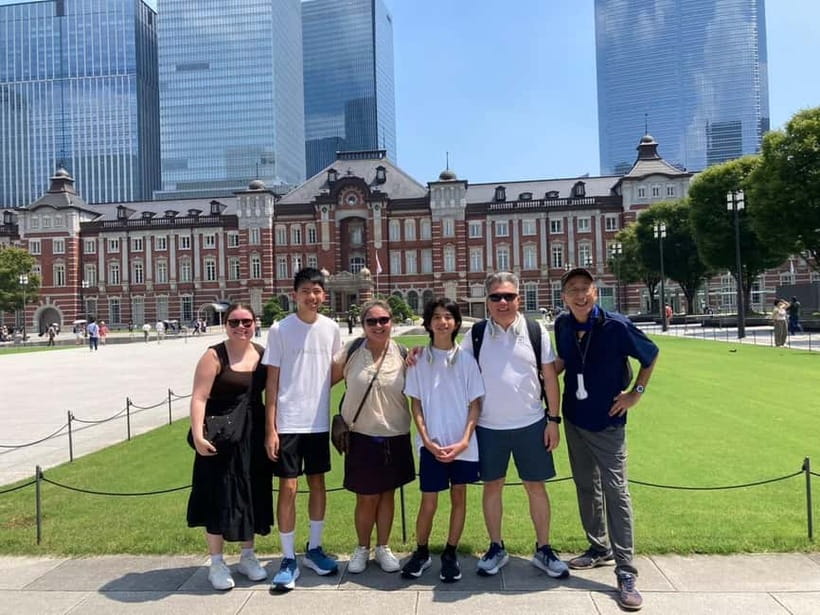
The tour ends at Tokyo Station, where the red-brick exterior provides a memorable finish. The station is one of Tokyo’s best-known landmarks, and its restored appearance gives the walk a clear final chapter.
The station is more than a transport hub in this context. It represents the city’s turn toward rail travel, modern architecture, and international-looking public buildings. After the samurai-era gates and castle ruins, the station shows another stage in Tokyo’s development.
The tour focuses on the exterior, so you should not book it expecting a station interior tour or a railway history program. You will, however, finish in a location that is easy to use afterward. Tokyo Station connects with many parts of the city and is surrounded by Marunouchi shops, offices, and restaurants.
This ending also makes the route practical for a first day in Tokyo. You finish near one of the city’s major transport points instead of having to retrace your steps. If you are continuing to another neighborhood, the final location can save time.
What the $38 price gets you
At $38 per person, the cost is reasonable if you value a guide who can explain what you are seeing. There is no admission fee for the Imperial Palace East Gardens, so you are mainly paying for the guided route, historical interpretation, language support, and the convenience of connecting several central sights in one walk.
You could visit the gardens and Tokyo Station on your own for less. The tradeoff is that you would need to research Edo Castle, identify the surviving structures, understand the garden, and work out how the palace grounds connect to Marunouchi. A good guide turns scattered sights into one story.
The value depends heavily on your interest in explanation. If you prefer wandering at your own pace and reading signs, the price may feel less necessary. If you are seeing the Imperial Palace area for the first time, the guide can help you notice details that would otherwise pass without meaning.
The strongest evidence of the tour’s appeal is the consistent praise for Yuki’s delivery. Her style is described as kind, organized, humorous, and original. The repeated focus on her ability to explain Edo Castle and the shogunate suggests that the guide is the main reason to choose this experience over a self-guided walk.
Practical details before you book
Wear comfortable shoes. The tour lasts two and a half hours and includes the East Gardens, the palace area, Marunouchi, and Tokyo Station. Even if the route is not difficult, the time on foot can feel long in hot, rainy, or cold weather.
Bring water, sunscreen, a hat, a camera, and clothing suited to the forecast. Smoking and flash photography are not allowed, and backpacks are not permitted. The backpack rule is worth noting because many Tokyo day trips involve carrying a small daypack. Plan to travel light or confirm how you should handle your belongings before setting out.
The activity is wheelchair accessible, but the route still involves moderate walking. If you use a wheelchair or have limited stamina, check the starting time and route details before booking so the pace works for you.
You can cancel up to 24 hours before the activity for a full refund, and the reserve-now, pay-later option gives you some flexibility while arranging your Tokyo schedule. Starting times vary, so check availability rather than assuming a particular departure.
The experience has a rating of 5 from 16 reviews, with praise concentrated on the guide’s historical explanations and friendly manner. That does not mean every part will suit every person. The walking, outdoor exposure, and exterior-focused finish are important to weigh alongside the strong guide feedback.
Who should choose this Imperial Palace walk?
I would recommend this tour to first-time Tokyo visitors who want a compact history lesson tied to real places. It suits anyone interested in the Edo period, samurai-era architecture, Japanese gardens, imperial history, and the way Tokyo changed into a modern capital.
It is also a good fit if you want a guide who can explain rather than simply point. Yuki’s clear and humorous approach seems especially helpful for people who know little about the shogunate but want more than a quick photo at the palace.
You may want something else if you dislike walking, need long indoor breaks, or want extensive time at each garden and landmark. This is a moving tour with several stops, not a slow garden meditation or a detailed museum visit.
Should you book it?
Book this tour if you want the Imperial Palace East Gardens to make sense, not just look attractive. The combination of Edo Castle remains, Ninomaru Garden, Nijubashi views, Marunouchi architecture, and Tokyo Station gives you a useful two-and-a-half-hour outline of central Tokyo.
The best reason to book is the guide-led interpretation, especially if Yuki is leading your departure. Skip it if you prefer total independence or cannot manage moderate outdoor walking. For most history-minded visitors, $38 is a fair price for a well-connected route and a guide who helps turn walls, gardens, and city streets into a clear story.
FAQ
How long does the Imperial Palace and Tokyo Station tour last?
The tour lasts 150 minutes, or two and a half hours.
Where does the tour start?
It starts at Starbucks Coffee Imperial Palace Outer Garden, beside Wadakura Fountain Park.
Where does the tour finish?
The tour finishes at Tokyo Station.
What places are included in the walk?
The route includes the Imperial Palace East Gardens, Ninomaru Garden, Ote-mon Gate, the Hyakunin Bansho Guardhouse, Edo Castle ruins, the Fujimi-yagura watchtower, the Honmaru area, Kokyo Gaien National Garden, Marunouchi, and Tokyo Station’s exterior.
Is admission to the Imperial Palace East Gardens included?
The gardens do not require an admission fee, and access to the East Gardens is included as part of the guided walk.
Which languages are available?
Live guides are available in English, Japanese, Spanish, Chinese, and French. Check the available language when choosing your departure.
What should I bring, and what is not allowed?
Bring comfortable shoes, a hat, a camera, sunscreen, water, and weather-appropriate clothing. Smoking, flash photography, and backpacks are not allowed.
Newly planted garden visits around Tokyo
- Tokyo Summer: Mt Fuji 5th Station& Kawaguchiko Lavender Trip★ 3.5 · 4 reviews
- Tokyo: Tsukiji Market and Hama-rikyu Gardens Guided Tour★ 4.8 · 73 reviews
- Tokyo: Pvt. Tour – Edo Castle & Imperial Palace East Gardens★ 4.8 · 63 reviews
- Tokyo: Mount Fuji Tour and Hakone Sakura Cherry Blossom Trip★ 5.0 · 4 reviews
- Tokyo: Meiji Jingu Shrine & Inner Garden Guided Tour (2h)★ 5.0 · 6 reviews
- Tokyo: Kimono Rental inside Shinjuku Gyoen National Garden★ 4.9 · 39 reviews
- Tokyo: Hama-rikyu Gardens tour with Japanese Tea & Sweets★ 4.7 · 14 reviews
- Tokyo: Full-Day Japanese Garden Private Guided Tour★ 4.6 · 13 reviews
Japan Garden Tours, bed by bed.

Imperial Palace East Garden and Edo Castle Walking Tour in Tokyo
Read our review →
Mt. Fuji Day Trip from Tokyo with English Speaking Driver Guide
Read our review →
Kyoto Zen Meditation & Garden Tour at a Zen Temple with Lunch
Read our review →
Kyoto Arashiyama Bamboo forest & Garden Half-Day Walking Tour
Read our review →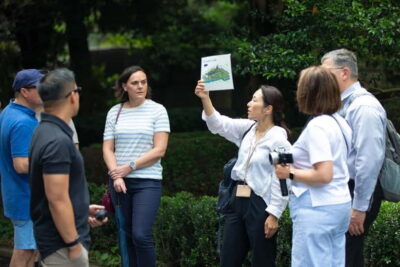
Tokyo: Imperial Palace East Gardens Walking Tour
Read our review →
Kyoto Kiyomizu Tea Ceremony with Scenic Garden Views
Read our review →Lists this garden visit belongs to