
Review · JAPAN
Himeji: Himeji Castle & Kokoen Garden 3.5-Hour Guided Tour
Himeji Castle is the rare Japanese castle that looks almost exactly as it did 400 years ago. Its white-plastered walls, clever defenses, and six-story tower make this tour far more than a quick photo stop. Your guide helps you notice the traps, tight passages, and small details that are easy to miss alone.
I like the two-part design: first the castle’s dramatic history, then the quiet ponds and seasonal flowers of Kokoen Garden. I also like the personal guidance from English-speaking guides such as Chiyuki, Junko, and Rie, who explain both castle lore and wider Japanese culture. The main drawback is physical: you climb more than 100 steps inside the castle, and rainy weather can make the visit less comfortable.
Key points at a glance
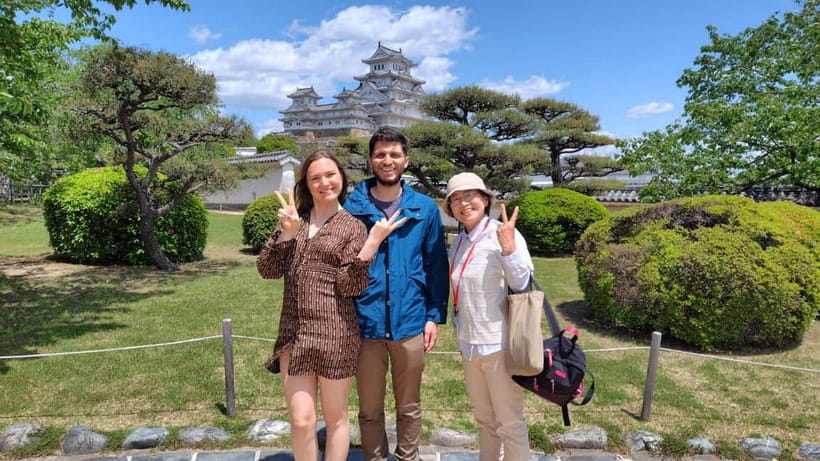
- A 400-year-old survivor: Himeji Castle escaped battle and survived World War II bombings.
- A guide who points out the tricks: Learn about defensive traps, hidden features, restoration work, and castle design.
- A six-story climb: The tower visit involves more than 100 steps and narrow interior spaces.
- A calm finish at Kokoen: Ponds, garden paths, and seasonal flowers provide a gentle contrast to the fortress.
- A convenient meeting point: Meet in front of the central ticket gate at JR Himeji Station, where your guide carries a yellow DeepExperience sign.
- A flexible private experience: Private and small-group formats are available, with English or Japanese guidance.
Why Himeji Castle deserves three and a half hours
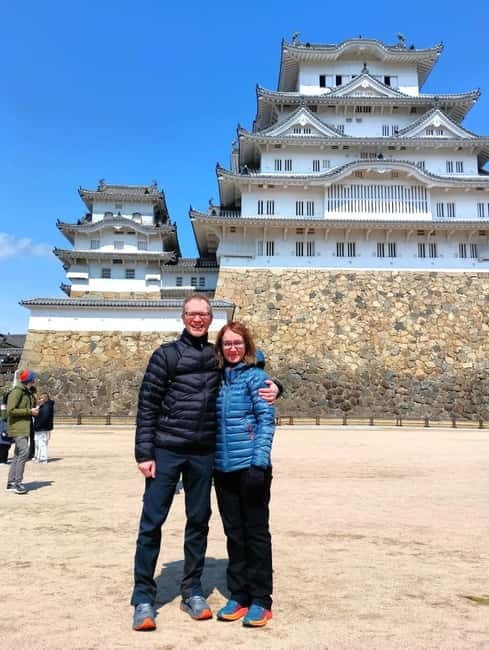
Himeji Castle is one of Japan’s great sights because it gives you both spectacle and substance. From outside, the white walls and layered rooflines create the famous image of the White Heron Castle. Inside, the building feels less like a polished museum and more like a working defensive machine.
The castle was built in the early 1600s and has never seen battle. It also survived the bombing of World War II, leaving you with an unusually intact example of Japan’s feudal architecture. That matters when you walk through the gates and climb the tower. You are not simply looking at a reconstruction or a modern replica.
I find the guided format especially useful here because Himeji’s best details are not always obvious. The castle’s winding approach, concealed spaces, defensive openings, and changes in height were designed to confuse anyone trying to reach the center. A guide can explain why the route turns, why certain openings appear in the walls, and how the castle protected its occupants.
The tour gives about two hours to the castle. That is enough time to see the key areas without turning the visit into a rushed photo mission. It also leaves a full hour for Kokoen Garden, so the day has a sensible rhythm rather than three straight hours of climbing and historical explanation.
More gardens worth a morning in Japan:
- Osaka: teamLab Botanical Garden Entry Ticket
★ 4.5 · 1,710 reviews - Imperial Palace East Garden and Edo Castle Walking Tour in Tokyo
★ 5.0 · 510 reviews - Kyoto Zen Meditation & Garden Tour at a Zen Temple with Lunch
★ 5.0 · 441 reviews
Meeting at JR Himeji Station
You meet your guide in front of the central ticket gate at JR Himeji Station. Look for a yellow sign with the DeepExperience logo. This is a practical arrangement because the station is an easy landmark, and you do not need to find your way directly to the castle on your own.
The tour ends at Kokoen Garden rather than returning you to the station. Keep that in mind when planning the rest of your day. The finish gives you a natural chance to continue sightseeing near the castle, but you should also allow time to get back to Himeji Station if you have a train reservation.
English and Japanese tours are available. Private and small-group options can be booked, which is useful if you want to ask plenty of questions or prefer a quieter pace. The guide names associated with this experience include Chiyuki, Junko, and Rie. The exact guide depends on the date and availability, but the recurring strength of the tour is the human explanation rather than simply being led from room to room.
Entering the White Heron Castle
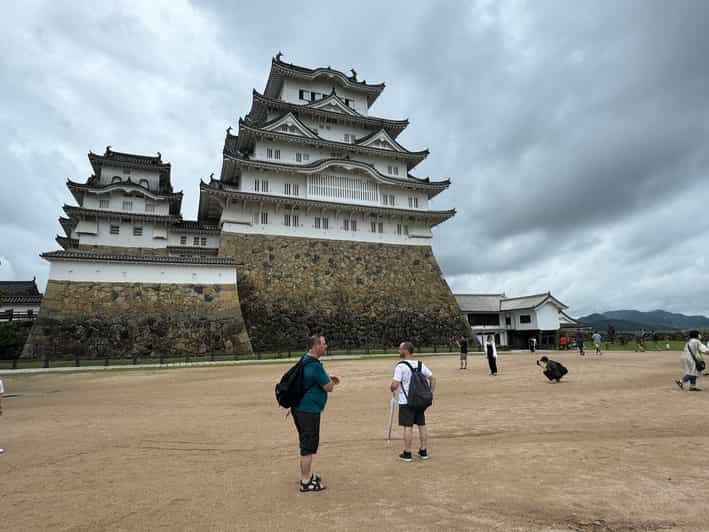
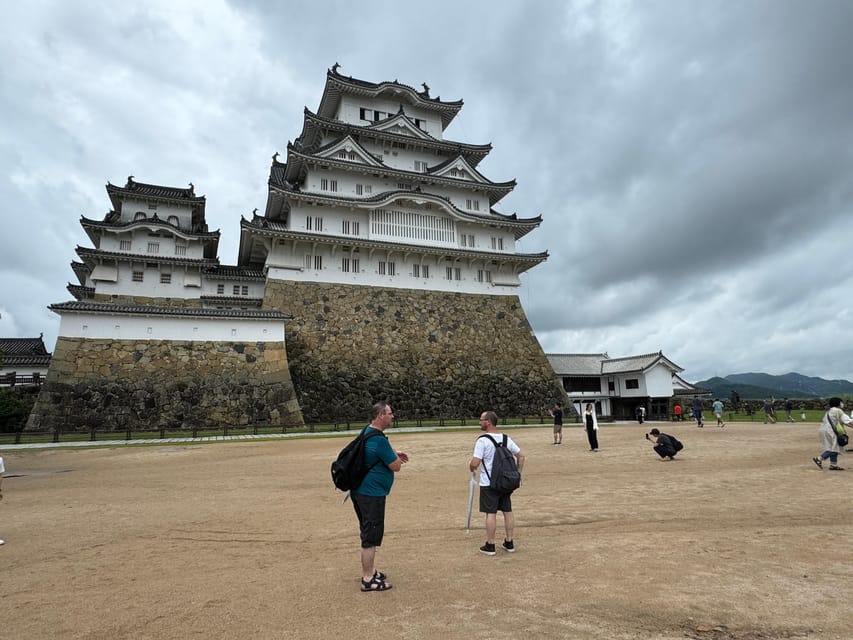
The first view of Himeji Castle is the visual payoff. Its bright white exterior rises above the surrounding grounds, with rooflines layered one behind another. The nickname White Heron Castle comes from this pale, elegant appearance.
The image is graceful, but the building was made for defense. That contrast is one of the most interesting parts of the visit. From a distance, the castle looks refined and almost delicate. Inside, the layout reveals a building designed to slow, confuse, and expose an attacker.
Your guide introduces the castle’s background as you move through it, connecting the architecture to the wider story of Japan. You can expect explanations about the castle’s construction, its survival, and the restoration work that has helped preserve its appearance. Rie, Chiyuki, and Junko have each been praised for making these details easy to follow and enjoyable rather than turning the tour into a dry lecture.
Take time for the classic photo in front of the main tower. The tour specifically includes a chance to commemorate the visit there, and the view is worth more than a hurried snapshot. The white tower, dark roof tiles, and open space around the castle create one of the strongest castle photographs in Japan.
The six-story tower and its defensive secrets
The main tower is the heart of the visit. It rises six stories, though the interior experience is not a simple series of grand rooms. You climb through wooden spaces, stairways, and compact passages that show how practical the castle was.
More than 100 steps are involved, so this is not an easy-access attraction. The stairs can feel steep, and the interior route requires steady walking. If you have difficulty walking or climbing, this tour is not a good choice. That warning is important because the castle’s beauty outside can make the physical demands easy to underestimate.
The reward is a closer look at the castle’s hidden charms. Your guide may point out traps, defensive openings, unusual corners, and other features that make more sense once someone explains their purpose. One particularly entertaining part of the tour is learning how the castle’s layout could confuse an intruder. The route itself becomes part of the lesson.
A guide can also help you understand the difference between a building that looks old and one that has survived with its essential form intact. Himeji’s survival through war and natural wear gives the visit unusual weight. You can see why preservation matters without needing a long museum visit to make the point.
The interior is not the place to rush. I would keep your hands free where possible and wear shoes suitable for climbing. The provided information does not specify a footwear rule, so follow the site’s instructions on the day, but practical walking shoes are the sensible choice.
Same season, a different set of beds:
- Mt. Fuji Day Trip from Tokyo with English Speaking Driver Guide
★ 5.0 · 443 reviews - Kyoto Arashiyama Bamboo forest & Garden Half-Day Walking Tour
★ 5.0 · 413 reviews - Tokyo: Imperial Palace East Gardens Walking Tour
★ 4.8 · 353 reviews - Mt. Fuji, Cherry Blossom & Shiba Sakura Pvt. Day Tour
★ 5.0 · 326 reviews
The stories that make the architecture memorable
A castle tour can easily become a list of dates. This one has more life when the guide links the physical details to stories of defense, restoration, and daily use.
Chiyuki has been praised for explaining the castle and Japanese history in a clear, warm way. Junko is known for adding wider cultural context, so you may learn as much about Japanese customs and the surrounding area as you do about the walls. Rie brings attention to restoration work, local history, and the castle’s traps and secrets.
Those differences matter because the castle offers several kinds of interest at once. You can approach it as an architecture fan, a history enthusiast, a photographer, or simply someone who wants to understand why this particular castle is so famous. A good guide adjusts the emphasis to the group and gives the building a human scale.
There may even be a memorable surprise, such as meeting a ninja, but that should be treated as a happy possibility rather than a guaranteed part of the tour. The reliable feature is the guide’s explanation of the castle’s less obvious details.
Kokoen Garden changes the pace
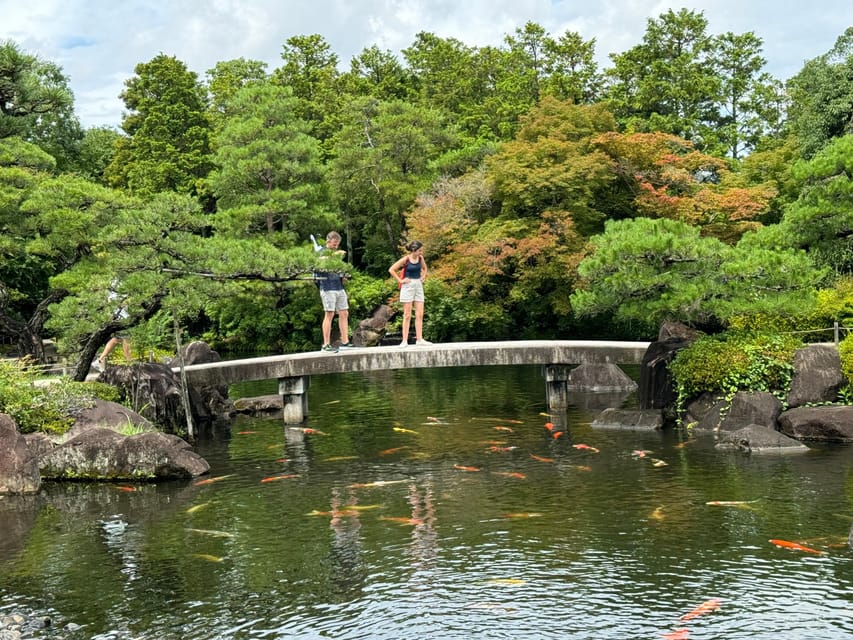
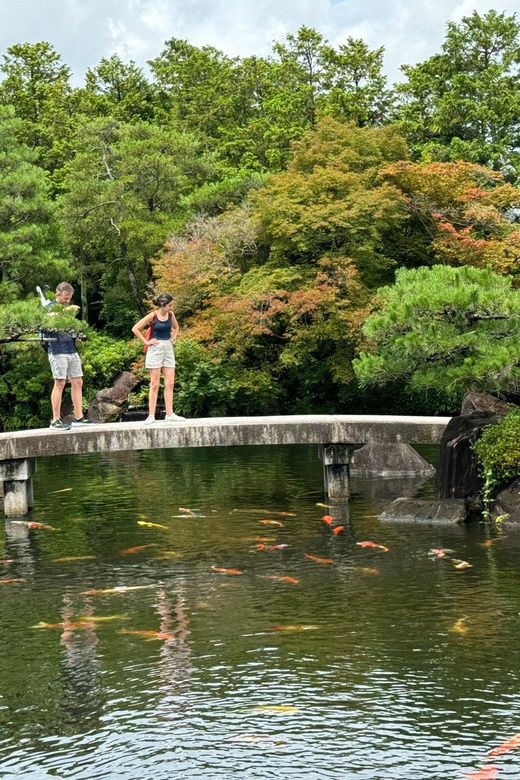
After the castle, the tour moves to Kokoen Garden for about an hour. This is a smart pairing. Himeji Castle is about height, walls, movement, and defense. Kokoen is about water, plants, quiet paths, and carefully arranged views.
The garden has serene ponds and seasonal flowers. What you see will depend on the time of year, but the garden’s appeal does not rely on one single bloom. The water and planting create a slower setting where you can recover from the tower climb and think over what you have just seen.
Your guide continues with you for this portion, adding context to the garden and its place in the visit. The transition is part of the experience. You move from a fortress built to keep people out to a garden designed for calm observation.
I like having a full hour here rather than treating Kokoen as a ten-minute add-on. The garden deserves enough time to walk at an unhurried pace and enjoy the contrast. It also gives you a more rounded impression of Japanese design, where architecture, water, plants, and the changing seasons work together.
Still, Kokoen is quieter and less dramatic than the castle. If you are mainly interested in military architecture, you may find the garden portion slower. If you want a balanced outing, it is exactly what keeps the day from feeling too intense.
Is $96 a fair price?
The cost is $96 per person. That is more than paying only for basic admission, but the value depends on how much you want from the visit.
You receive entry to both Himeji Castle and Kokoen Garden, plus three and a half hours with a live guide. The main benefit is interpretation. You could enter the sites without a guide, but you would need to make sense of the castle’s defensive design, restoration, and historical details on your own.
For a first visit to Himeji, I think the price is reasonable if you value context and personal attention. The castle is large enough that a self-guided visit can leave you admiring the exterior without fully understanding what you are seeing. The guide helps turn visual details into a story.
The value is also stronger for a private or small group than for someone who prefers to wander independently. If you already know Japanese castle architecture well, or you mainly want quick photographs, the price may feel high. If you have traveled a long way to see Himeji and want to make the most of a limited visit, the guided format earns its keep.
Free cancellation up to 24 hours before the start and reserve-now, pay-later terms add flexibility. The weather still matters. Rain does not cancel the historical value, but it can make the walking less pleasant, and heavy rain may limit the enjoyment of the outdoor portions.
Who should book this Himeji tour?
I would recommend it to first-time visitors who want the main castle explained clearly and who enjoy asking questions. It also suits couples, families with older children, and small groups looking for a shared experience rather than a quick independent visit.
History fans will appreciate the castle’s survival story. Architecture fans will enjoy the defensive layout and restoration details. Garden lovers will like the way Kokoen softens the second half of the outing.
I would think twice if you have trouble with stairs, need frequent seating, or dislike narrow historic interiors. The climb is a real part of the experience, not a minor footnote. I would also avoid booking it too tightly around a train departure because the tour finishes at Kokoen Garden.
The experience received a 4.9 rating from 30 verified bookings, with repeated praise for Chiyuki, Junko, and Rie. The clearest pattern is not simply friendliness. It is the ability to make the castle’s history understandable, entertaining, and connected to Japanese culture.
Should you book it?
Book this tour if you want Himeji Castle to make sense, not just look beautiful in a photograph. The combination of a six-story fortress and a peaceful garden gives you a strong half-day in Himeji, while the guide adds the traps, restoration stories, and cultural details you might miss alone.
Skip it if you want a fast visit, cannot manage more than 100 steps, or prefer complete freedom to set your own pace. For most first-time visitors who can handle the climb, the guided explanation and carefully chosen Kokoen finish make the $96 worthwhile.
FAQ
How long is the Himeji Castle and Kokoen Garden tour?
The tour lasts 210 minutes, or three and a half hours. About two hours are spent at Himeji Castle and about one hour at Kokoen Garden.
Where do I meet the guide?
Meet in front of the central ticket gate at JR Himeji Station. The guide will be holding a yellow sign with the DeepExperience logo.
Where does the tour finish?
The tour finishes at Kokoen Garden. It does not list JR Himeji Station as the finishing point.
What languages are available?
Live guided tours are available in English and Japanese.
Is entry to both attractions included?
Yes. The price includes admission to Himeji Castle and Kokoen Garden, as well as the guide.
How difficult is the castle visit?
You climb more than 100 steps inside Himeji Castle. The tour advises against booking if you may have difficulty walking.
Can I cancel the booking?
You can cancel up to 24 hours in advance for a full refund. Reserve-now, pay-later booking is also available.
Newly planted garden visits around Japan
- Kyoto-Nara Adventures Private Tour With Hotel Pick Up★ 4.0 · 5 reviews
- Stunning Private Tea Ceremony: Camellia Garden Teahouse★ 5.0 · 28 reviews
- Kyoto: Kinkaku-ji Temple & Serene Garden Guided Tour with Tickets★ 5.0 · 9 reviews
- Guided Kyoto City Cherry Blossom One Day Private Tour★ 5.0 · 16 reviews
- Kyoto Hidden Treasures: Special Temple & Garden Access Tour★ 4.5 · 25 reviews
- The Art of Mindful Living: Tea Ceremony in Kyoto★ 5.0 · 16 reviews
- Kyoto ITALIAN GUIDE Golden Pagoda Bamboo Forest Dry Garden★ 4.0 · 2 reviews
- Kyoto Japanese Garden Lover’s Private Tour with Government-Licensed Guide★ 4.5 · 10 reviews
Japan Garden Tours, bed by bed.

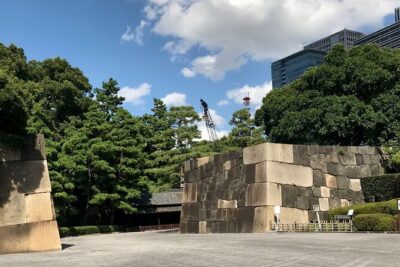
Imperial Palace East Garden and Edo Castle Walking Tour in Tokyo
Read our review →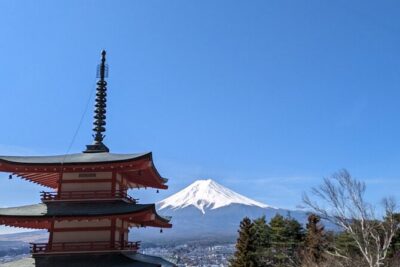
Mt. Fuji Day Trip from Tokyo with English Speaking Driver Guide
Read our review →
Kyoto Zen Meditation & Garden Tour at a Zen Temple with Lunch
Read our review →
Kyoto Arashiyama Bamboo forest & Garden Half-Day Walking Tour
Read our review →
Tokyo: Imperial Palace East Gardens Walking Tour
Read our review →
Kyoto Kiyomizu Tea Ceremony with Scenic Garden Views
Read our review →Lists this garden visit belongs to