
Review · JAPAN
Kyoto: Zen Meditation and Garden Tour at a Temple with Lunch
Kyoto’s Zen tradition makes the most sense when you experience it in stages: first through a quiet garden, then inside a temple, and finally in a one-hour zazen session. This half-day tour brings those pieces together, with a local English-speaking guide such as Yutaka explaining Buddhist ideas in plain language.
I especially like the small group capped at seven, which gives the walk a personal feel, and the chance to eat shojin ryori, the traditional Buddhist cuisine served at the end. The garden visit also helps you understand what you are looking at before you sit down to meditate.
The main thing to keep in mind is that the meditation room may not always feel intimate. One participant found about 30 people sharing a large L-shaped room, and the monk may not speak English, so questions can depend on your guide or written material. Also, a 10:45 start means lunch comes at about 2:15, so eat a good breakfast.
Key points before you book
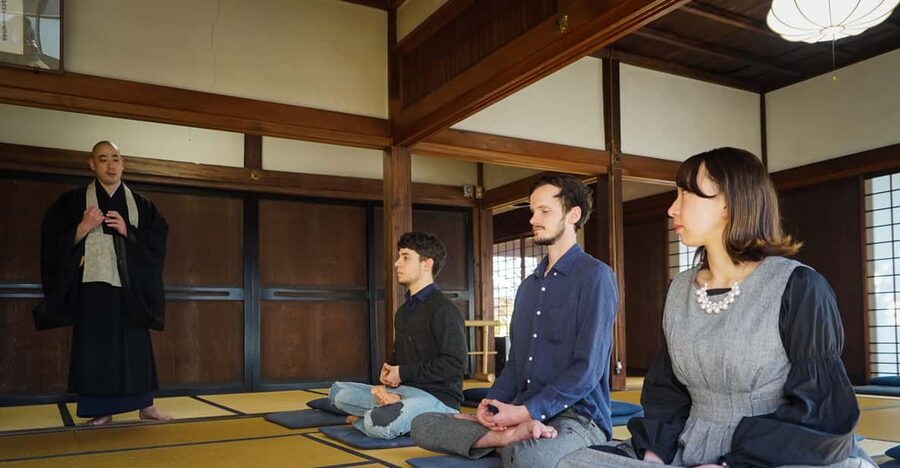
- A real one-hour zazen session: Learn posture, breathing, and the basic ideas behind Zen meditation in a temple setting.
- Three temple stops with different roles: Komyo-in provides the garden introduction, Tofukuji supplies major historic sights, and Shorin-ji hosts the meditation.
- Shojin ryori lunch included: Expect vegetable, mushroom, and seaweed dishes, with dashi fish broth and a little dairy included.
- Small English-speaking group: The advertised maximum is seven, though the shared meditation room can sometimes be larger.
- A guide who adds cultural context: Guides including Yutaka, Eri, Louis, and Tammy have helped explain Buddhism, symbols, temple customs, and Kyoto life.
- Plan around the conditions: Children under 12 and people with gluten intolerance should not book, and temple floors can be cold in winter.
Starting at Tofukuji Station
The tour begins outside Exit 2 of Tofukuji Station, beside the Family Mart. This detail matters. Tofukuji is also the name of the temple, and a taxi driver who hears only the temple name may take you to the wrong place. One participant had to hurry back after being dropped at the temple rather than the station.
From Kyoto Station, take the JR line to Tofukuji. Rapid and local trains work. From Shijo Keihan, use the Keihan line, but avoid express trains. Give yourself extra time to find Exit 2, especially if you are carrying luggage or arriving during a busy morning.
The group does not wait for late arrivals. If you miss the departure, you cannot join later, change the booking, or receive a refund. That firm policy is understandable for a tour built around temple reservations and a meditation period, but it makes a calm start important.
The total time is 270 minutes, or four and a half hours. You will walk between several nearby temple areas, stand and sit on traditional floors, and spend much of the day at a measured pace rather than rushing from one sight to another.
More gardens worth a morning in Japan:
- Osaka: teamLab Botanical Garden Entry Ticket
★ 4.5 · 1,710 reviews - Imperial Palace East Garden and Edo Castle Walking Tour in Tokyo
★ 5.0 · 510 reviews - Kyoto Zen Meditation & Garden Tour at a Zen Temple with Lunch
★ 5.0 · 441 reviews
Komyo-in’s garden sets the tone
The first major stop is Komyo-in, where you spend about 40 minutes. This is the right place to begin because the guide introduces Zen through a garden before asking you to meditate.
Rather than treating the garden as a quick photo stop, you are shown how Zen principles can be read through space, form, quiet, and restraint. Your guide explains basic Buddhist ideas and offers a way to look at the garden without needing a background in religion.
This part is valuable even if you never meditate at home. Zen can seem like a vague word attached to anything calm or minimalist. A guide helps separate the popular image from the religious practice, and the garden gives you something concrete to consider.
You will want to move slowly here. The garden’s quiet mood is part of the experience, not empty time between attractions. Guides such as Yutaka have been praised for explaining Buddhist philosophy clearly, while Eri has also helped visitors understand symbols and their meanings.
Photography is allowed as part of the tour experience, and the guide may take pictures for you. Still, I would keep your camera ready but not let it take over. This is one of the places where looking carefully matters more than collecting another temple image.
Tofukuji brings the grand scale
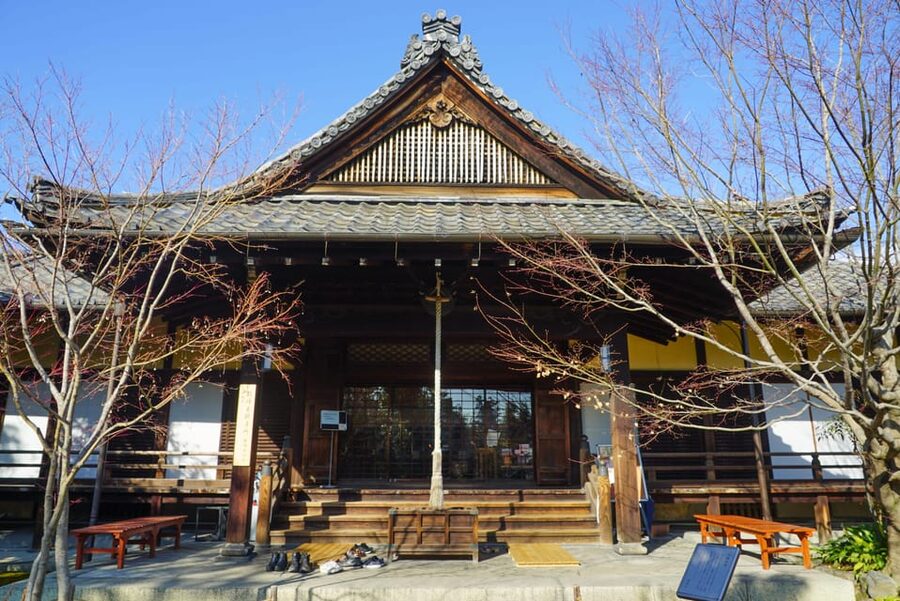
The walk then continues to Tofukuji Temple, one of Kyoto’s five major Zen temples. The visit here is brief, about 10 minutes in the stated schedule, but the stop packs in several important sights.
You may see the San-mon gate, impressive dragon paintings on a ceiling, and the oldest surviving toji, or temple toilet. These details show that a Zen temple is not only a place for silent contemplation. It is also a working religious complex with architecture, daily routines, and centuries of institutional life.
Tofukuji has served as a home and training site for monks since the 13th century. That background gives the later meditation session more meaning. You are not simply sitting in a scenic room. You are entering a tradition shaped by monastic practice.
Because the scheduled visit is short, do not expect a full tour of every building or garden at Tofukuji. The value lies in seeing the major features and understanding how this large temple relates to the smaller meditation temple that follows.
Shorin-ji provides the quiet hour
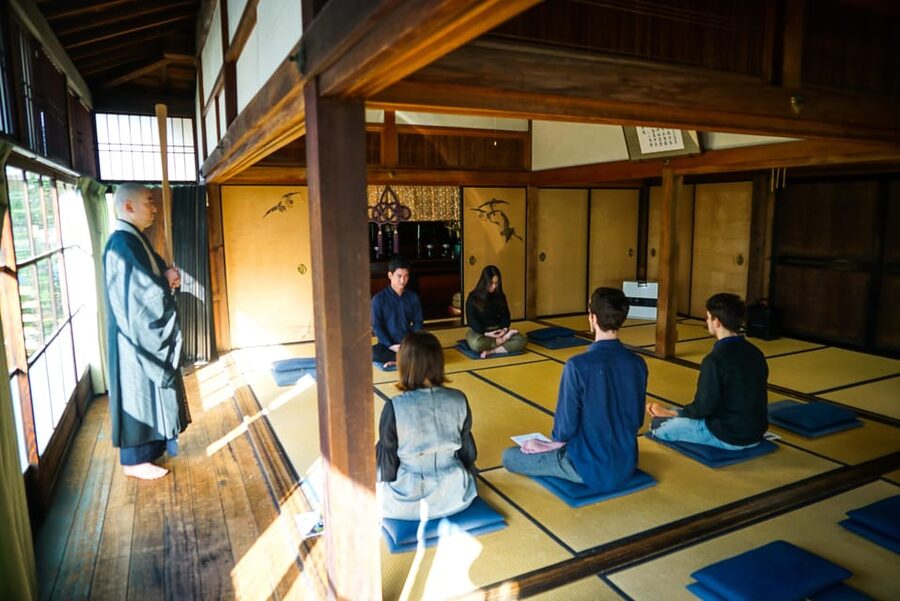
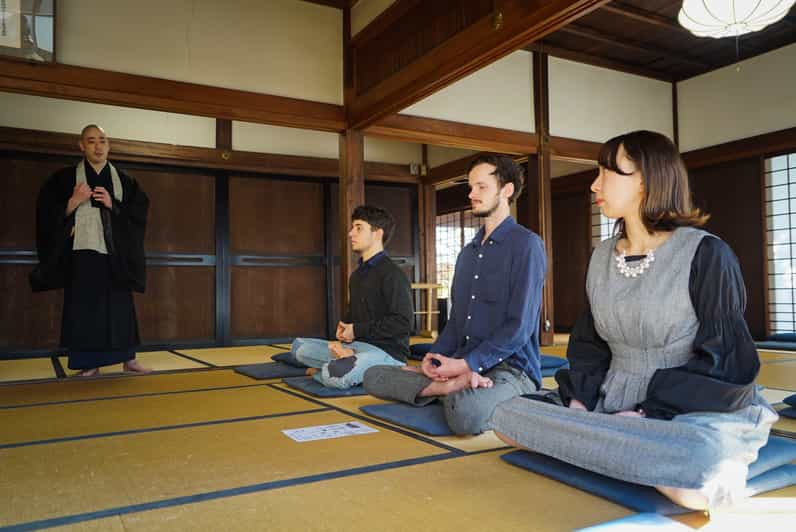
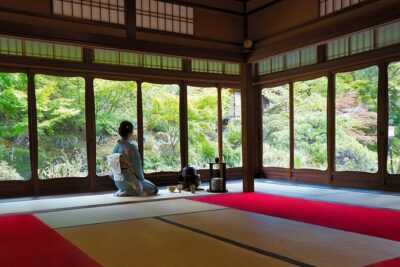
The central stop is Shorin-ji, also called Bishamon-do Temple. You spend about 70 minutes here, including the zazen session. This is the point of the tour for anyone who wants more than sightseeing.
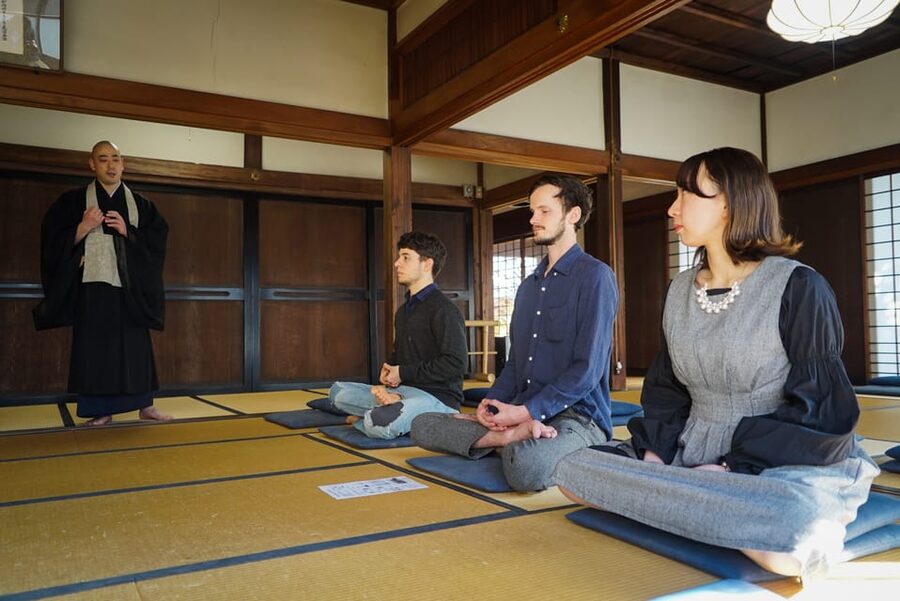
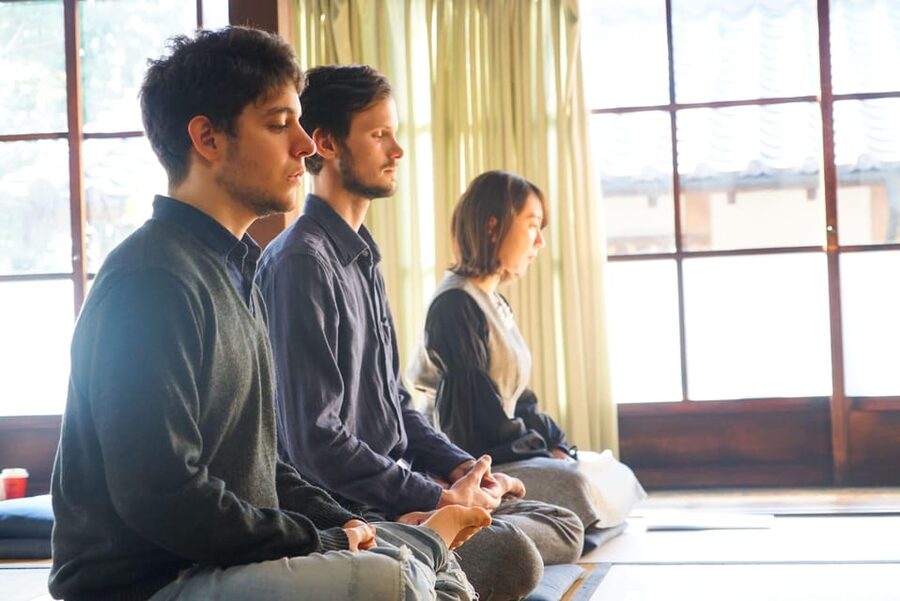
Your guide introduces the posture, breathing method, and basic approach before the session begins. The guide remains silent while you meditate, respecting the room and the other people practicing. You receive written material for quiet reading, so you can follow along without a running explanation during the sitting period.
Expect about one hour of zazen. You will learn how to sit, how to hold your body, and how to direct your attention. The session is presented as an experience and introduction, not as a promise that you will reach some dramatic state of calm.
That distinction is useful. Meditation can be awkward at first. Legs may feel uncomfortable, attention wanders, and the silence can seem longer than expected. The value comes from trying the practice in the setting where it developed, with instructions that make the process less mysterious.
A monk is available for a discussion afterward. Depending on the day, your guide may translate questions, as happened for a participant whose monk did not speak English. The written materials help, but they are not the same as a direct English conversation. If asking questions is important to you, check how translation will work at the start.
The meditation room may also be larger than the small tour group suggests. One participant described a large L-shaped room with about 30 people. That could make the session feel more like a shared temple practice than a private lesson. Some people will appreciate sitting with local practitioners and other visitors; others may find the room less personal than expected.
Same season, a different set of beds:
- Mt. Fuji Day Trip from Tokyo with English Speaking Driver Guide
★ 5.0 · 443 reviews - Kyoto Arashiyama Bamboo forest & Garden Half-Day Walking Tour
★ 5.0 · 413 reviews - Tokyo: Imperial Palace East Gardens Walking Tour
★ 4.8 · 353 reviews - Mt. Fuji, Cherry Blossom & Shiba Sakura Pvt. Day Tour
★ 5.0 · 326 reviews
A traditional lunch after meditation
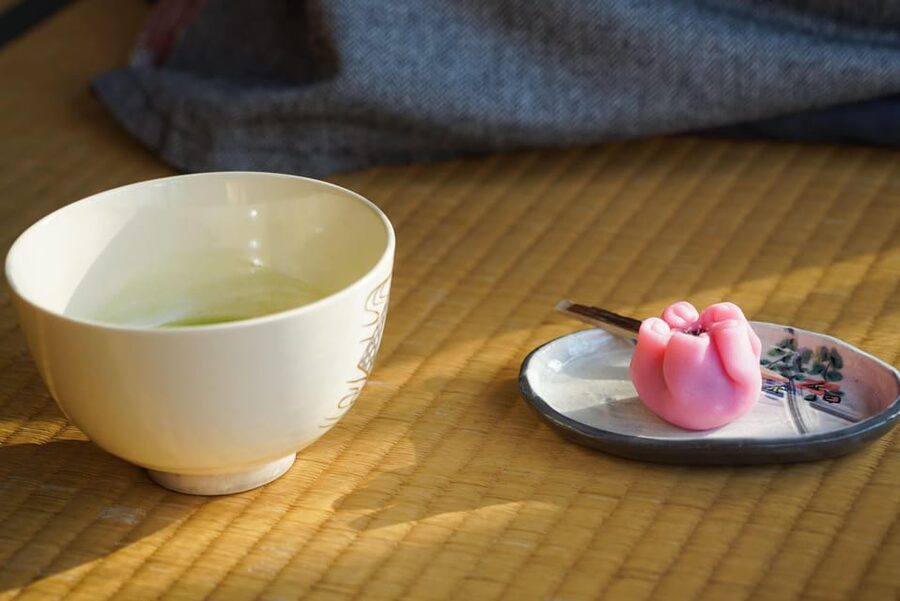
After the temple visits and discussion, you take a short walk to a local restaurant for lunch. The meal is shojin ryori, a Buddhist cuisine centered on vegetables, mushrooms, and seaweed.
This is more than a convenient meal added to the booking. Food has long been part of Zen temple life, and a traditional Buddhist lunch gives you another way to encounter the practice. The meal is served in multiple dishes, and the variety is part of its appeal. Several participants found it more substantial and interesting than expected.
The description calls the meal vegetarian, but you should note two important exceptions for your planning. The dashi uses fish broth, and a small amount of dairy is included. This is not suitable for strict vegans, people avoiding fish, or anyone with a gluten intolerance. Ask the provider about ingredients if your dietary needs are serious, since the supplied information does not promise gluten-free or fully vegan dining.
Timing matters. A tour beginning at 10:45 places lunch around 2:15, after meditation. I would eat something before meeting the group, especially if you get hungry easily. A later meal may suit you perfectly, but it is not a good plan to arrive with only coffee in your stomach.
The lunch also creates space to talk. After a quiet hour, conversation helps you sort out what you noticed. The guide can explain food customs, answer questions about Zen, and suggest other places to visit in Kyoto. Guides such as Yutaka have been appreciated for offering practical recommendations beyond the scheduled route.
What the guide adds to the experience
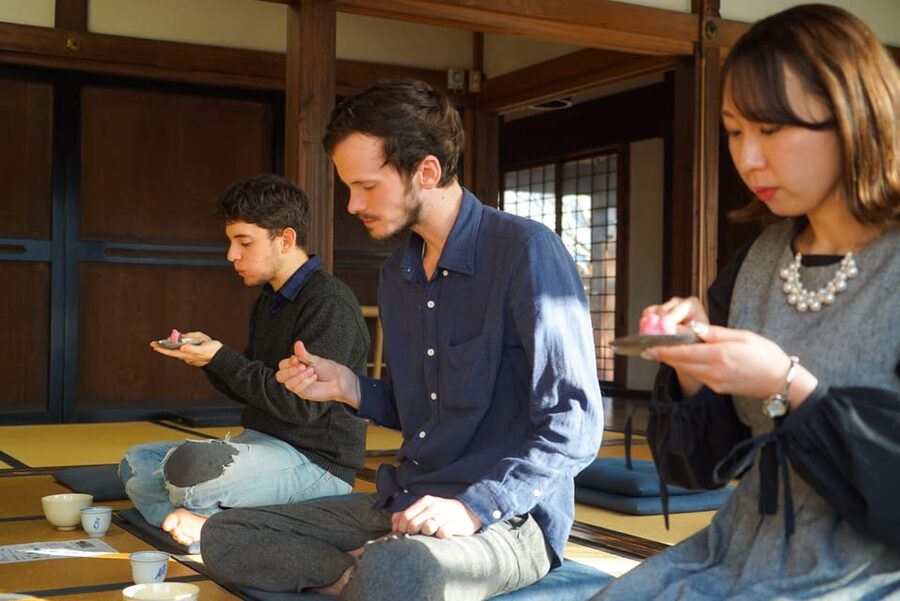
The temples are worth seeing on their own, but the guide is what turns this into a lesson rather than a sequence of entrances. Your guide explains the garden, interprets Buddhist symbols, introduces the meditation method, and helps with questions after the monk session.
Guide names vary. Yutaka appears frequently in the supplied feedback, and other visitors have been led by Louis, Eri, and Tammy. The common thread is an English-speaking local guide who can put Japanese religious customs into terms you can understand.
Yutaka’s style has been described as calm, funny, patient, and helpful. That combination matters. A guide who only delivers dates can make a temple feel like a museum. A guide who explains every detail without allowing silence can spoil a meditation tour. Here, the strongest accounts point to a balance of explanation and quiet.
Photography is included. Your guide may take pictures during the day, including a photo with the monk when appropriate. That is a useful perk because temple visits often leave you choosing between being present and trying to document everything yourself.
How much value do you get for $107?
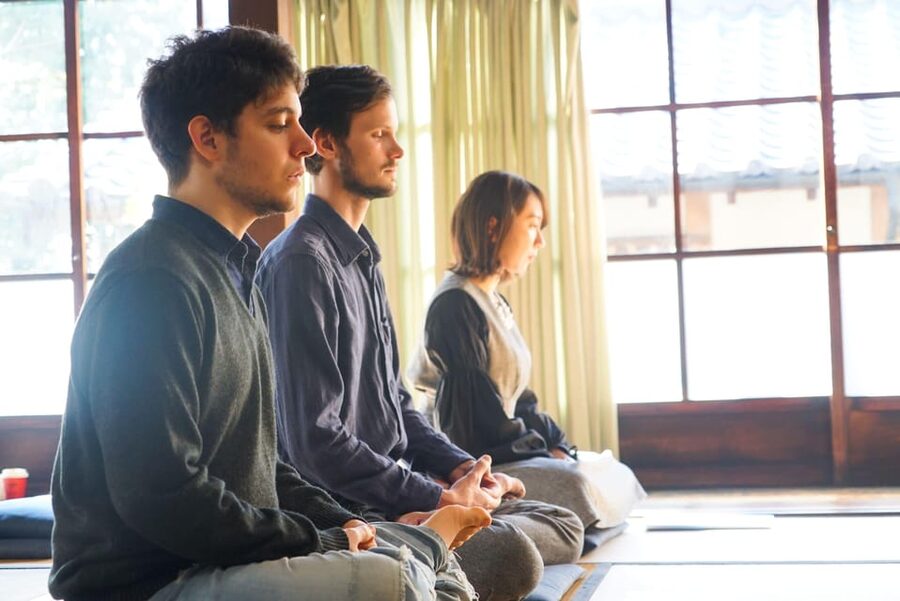
At $107 per person, this is not the cheapest way to see Kyoto temples. You can visit many shrines and temple grounds independently for far less. The price makes more sense if you want instruction, translation, a planned route, admission fees, lunch, and a small group handled in one booking.
You are paying for several connected elements:
- Admission to the garden and temple sites
- A guided explanation of Zen gardens and Buddhist ideas
- A one-hour zazen experience
- Access to a monk discussion after meditation
- A traditional Buddhist lunch
- An English-speaking guide
- Photos taken during the tour
The value is strongest for a first visit to Kyoto or for anyone curious about Buddhism but unsure how to approach a temple respectfully. It is also useful if you want a quieter cultural activity that is more focused than a general city walk.
The value is weaker if your main goal is a private meditation lesson. The meditation room may include many people, and the monk may not speak English. It is also less appealing if you already know Zen practice well and mainly want an extended period of silent sitting.
Weather, clothing, and age limits
Kyoto summers are hot and humid. Bring water and wear a hat, especially for the walks between stations, gardens, and temples. You will spend time outside, even though the meditation and meal take place indoors.
Winter brings the opposite problem. Temple floors can be cold, so thick socks are a smart choice. You will likely remove your shoes in some temple areas, and warm socks are more useful than relying on thin footwear.
Wear clothes that allow you to sit comfortably. The tour includes a long meditation period, so tight or restrictive clothing could make the session harder than it needs to be. You should also be comfortable walking at a steady pace between stops.
The experience is not suitable for children under 12. That is reasonable given the quiet rules and the length of the meditation. Private conversation is generally not allowed during zazen because other people are practicing, so children and adults who need constant activity may find the format difficult.
The tour is offered in English and limited to seven participants. That small walking group does not guarantee a private meditation room, but it does make the garden explanations and questions easier than on a large coach tour.
Who should book this Zen experience?
I would recommend it to you if you want cultural context rather than a quick temple checklist. It suits first-time visitors to Kyoto, people curious about Buddhism, and anyone who wants to try meditation in a traditional setting without committing to a longer retreat.
It is also a good match for independent travelers who want a local guide for one carefully planned morning or afternoon. You can ask questions about religion, symbols, food, and other Kyoto sights, then continue exploring on your own after the tour.
I would hesitate if you need a fully private meditation session, strict dietary control, or a late start with an early lunch. People with gluten intolerance should not book, and strict vegetarians should confirm the dashi and dairy ingredients before paying.
The format asks you to respect silence, sit still for an hour, and accept that the monk may communicate through a guide or written material. If that sounds appealing, the combination of garden, temple, meditation, and lunch gives you a fuller picture of Zen than any one stop could provide.
Should you book it?
Book this tour if you want to understand Zen through several senses: seeing the garden, hearing the guide, sitting in meditation, speaking with a monk, and tasting Buddhist temple food. The strongest part is the way those pieces connect, especially when a guide such as Yutaka helps you move from sightseeing into actual practice.
Skip it if you want a guaranteed private session or a purely silent retreat. For the right person, $107 buys a well-shaped cultural experience and removes much of the uncertainty around entering Kyoto’s Zen world. Arrive early, eat before a late-start tour, wear suitable socks, and let the quiet do some of the work.
FAQ
Where does the tour meet?
Meet outside Exit 2 of Tofukuji Station, next to the Family Mart.
How do I get to Tofukuji Station from Kyoto Station?
Take the JR line. Both rapid and local trains can be used.
Which train should I take from Shijo Keihan?
Use the Keihan line and choose a sub-express, semi-express, or local train. Do not use an express train.
How long does the experience last?
The tour lasts 270 minutes, or four and a half hours.
Is the tour conducted in English?
Yes. The tour includes a live English-speaking guide.
How large is the group?
The walking tour is limited to seven participants. The meditation room may include additional people practicing zazen.
Is lunch completely vegan?
No. The meal is vegetarian, but the dashi includes fish broth and a little dairy is included.
Can children join the tour?
No. The experience is not suitable for children under 12 years old.
Newly planted garden visits around Japan
- Kyoto-Nara Adventures Private Tour With Hotel Pick Up★ 4.0 · 5 reviews
- Stunning Private Tea Ceremony: Camellia Garden Teahouse★ 5.0 · 28 reviews
- Kyoto: Kinkaku-ji Temple & Serene Garden Guided Tour with Tickets★ 5.0 · 9 reviews
- Guided Kyoto City Cherry Blossom One Day Private Tour★ 5.0 · 16 reviews
- Kyoto Hidden Treasures: Special Temple & Garden Access Tour★ 4.5 · 25 reviews
- The Art of Mindful Living: Tea Ceremony in Kyoto★ 5.0 · 16 reviews
- Kyoto ITALIAN GUIDE Golden Pagoda Bamboo Forest Dry Garden★ 4.0 · 2 reviews
- Kyoto Japanese Garden Lover’s Private Tour with Government-Licensed Guide★ 4.5 · 10 reviews
Japan Garden Tours, bed by bed.

Imperial Palace East Garden and Edo Castle Walking Tour in Tokyo
Read our review →
Mt. Fuji Day Trip from Tokyo with English Speaking Driver Guide
Read our review →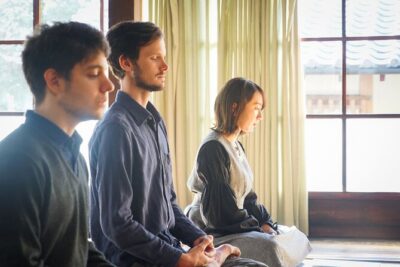
Kyoto Zen Meditation & Garden Tour at a Zen Temple with Lunch
Read our review →
Kyoto Arashiyama Bamboo forest & Garden Half-Day Walking Tour
Read our review →
Tokyo: Imperial Palace East Gardens Walking Tour
Read our review →
Kyoto Kiyomizu Tea Ceremony with Scenic Garden Views
Read our review →Lists this garden visit belongs to