
Review · TOKYO
Licensed Guide Tokyo Meguro Cherry Blossom Walking Tour
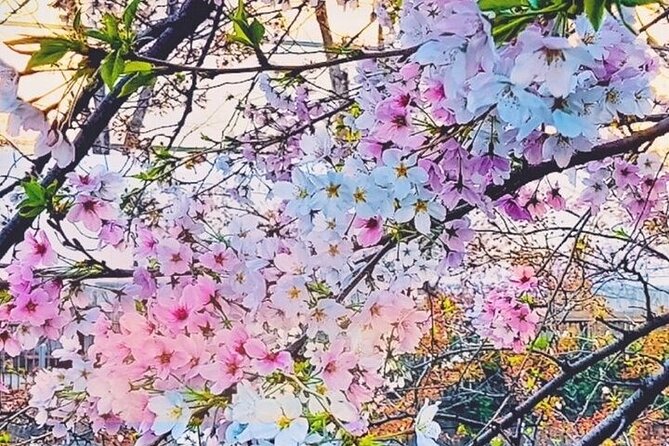
The Meguro River walk is the main event here: a short, scenic route through one of Tokyo’s best-known cherry-blossom areas. You also get two very different stops, Daienji Temple, tied to Edo’s great fire, and Gajoen, a lavish Showa-era wedding complex with a strong connection to everyday Japanese dining.
I like the easy route and the small private-group format. I also like that the tour links pretty scenery with local stories instead of treating the river as a quick photo stop. The main catch is timing: outside the late-March to early-April blossom window, the walk loses much of its visual punch, and finding the guide at the meeting point may require care.
Key points
- Meguro River in blossom season: The best reason to book, with the usual flowering period from late March to early April.
- A compact 90-minute route: You walk from Nakameguro to Meguro Station without spending half a day on transport.
- Daienji Temple’s difficult past: The temple is connected to the fire that turned Edo into a sea of flames in the 18th century.
- Gajoen’s unusual role: This was Japan’s first general wedding hall, but it began as a restaurant serving Beijing and Japanese food.
- English-speaking licensed guide: The tour is private, so the pace and explanations can feel more personal.
- Meeting point requires attention: Look for the guide at Starbucks Coffee, Naka-Meguro Tsutaya Books, opposite Nakameguro Station.
The Meguro River is the reason to go
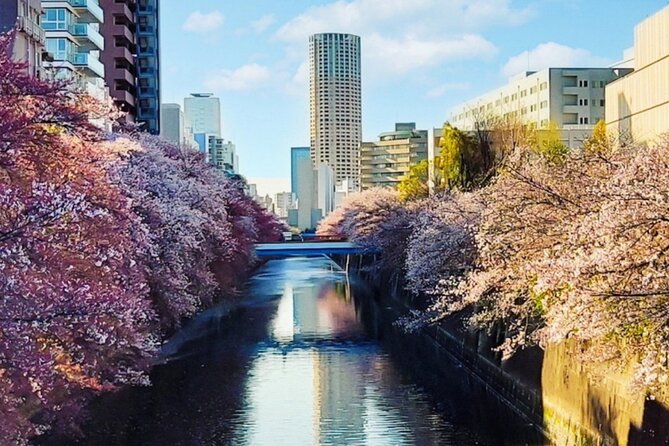
Tokyo has no shortage of cherry trees, but the Meguro River is one of the city’s most famous blossom corridors. The walking route begins near Nakameguro, where you meet at Starbucks Coffee, Naka-Meguro Tsutaya Books, opposite the station on the Hibiya Line.
From there, you follow the river for about 45 minutes. The route is described as a scenic walk rather than a strenuous hike, but you should still wear comfortable shoes. The main pleasure is simple: water, bridges, city streets, and rows of cherry trees, all packed into a very accessible part of Tokyo.
The timing matters more here than on many city tours. Cherry blossoms usually appear from late March to early April, but the exact dates change each year. If you arrive before the flowers open, you will still have the river and the neighborhood, but the famous pink canopy will not be there. A rainy day can also change the mood and make the walking less comfortable.
One recent departure took place in driving rain, and the blossoms had not yet opened. The guide adapted by taking the group to a traditional house, which gave the outing a different cultural angle. That is useful to know, but you should not count on the same substitute every time. The advertised focus remains the Meguro River and its seasonal scenery.
More Cherry Blossom Tours in Japan
- Mt. Fuji, Cherry Blossom & Shiba Sakura Pvt. Day Tour
★ 5.0 · 326 reviews - Mt. Fuji & Hakone Cherry Blossom private One Day Tour
★ 4.5 · 35 reviews - Tokyo Cherry Blossoms blooming spots E-bike Tour, 3hrs
★ 5.0 · 27 reviews
Daienji adds a serious Edo story
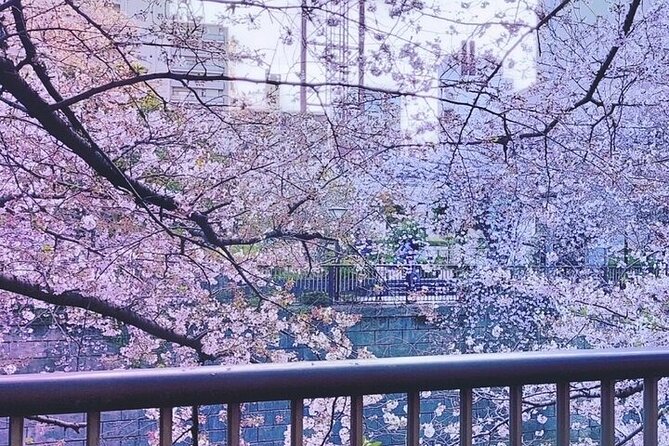
After the river walk, the route goes to Daienji Temple. It is one of the seven lucky temples associated with the Edo period, but its most striking story concerns fire and loss.
In the middle of the 18th century, a fire broke out from the temple. The blaze spread through Edo, and the city became a sea of fire. The temple was not allowed to be rebuilt until the end of the Edo period. It was later rebuilt as a memorial to those who died in the disaster.
That background gives the stop more weight than a quick temple photograph. You are not simply ticking off another religious site. You are hearing how fire shaped old Tokyo, where wooden buildings and dense neighborhoods made urban disasters especially deadly.
Daienji is also a welcome change of pace after the river. The river section is open and scenic, while the temple stop brings the focus down to a smaller place with a specific story. The guide is licensed by the national government and leads the walk in English, so this is the point where an explanation can add real value.
The supplied details do not give the exact time spent inside Daienji or list specific temple features beyond its history and status among the seven lucky temples. Keep your expectations sensible. This is a short city walk, not a long temple tour.
Gajoen reveals another side of Meguro
The final major stop is Hotel Gajoen Tokyo, known here as Meguro Gajoen. The route allows about 30 minutes for a photo stop, guided visit, and views on the way.
Gajoen opened in 1931 as a restaurant named after Meguro. It was not just a place for wealthy diners. The restaurant served authentic Beijing cuisine and Japanese food, put prices on its menus, and used other ideas that made it accessible to ordinary people as well as politicians and high-ranking customers.
That detail makes Gajoen especially interesting. It shows a side of Japanese social history that is easy to miss if you only look at temples and shrines. Food, public pricing, weddings, and grand interiors all meet here.
The building interiors are known for their grand decoration and have been compared to a Showa-era Ryukyu Castle. On March 16, 2009, the Tokyo Metropolitan Government designated four of the seven banquet halls as tangible cultural properties. You may not see every room during a short visit, but the guide can explain why Gajoen matters and point out the most useful photo views.
The official plan describes Gajoen as a guided stop and a pass-by point, so the exact access may vary. Do not assume you will receive a full tour of every banquet hall. The value comes from seeing the complex, learning its role in Japanese dining and weddings, and understanding how it fits into Meguro’s development.
A short walk with a private-group feel

The experience lasts 90 minutes and ends at JR Meguro Station. That makes it easy to fit into a day of sightseeing. You can begin around Nakameguro, walk through the river area, and finish near a major rail stop without needing to return to your starting point.
The private-group format is another plus. The group size is not specified, so you should not assume it means a completely personal one-to-one tour. Still, a private booking normally gives you more room to ask questions and request a slightly slower pace than a large scheduled group.
The guide speaks English and carries a company-logo brochure and a licensed guide certificate. Look for that at the meeting point rather than relying only on the general Starbucks sign. One booking went wrong because the group could not locate the guide, and the map did not lead directly to the right place for another person. I would arrive early, confirm that you are at the Starbucks opposite Nakameguro Station, and check the guide’s identification carefully.
The meeting coordinates are 35.644621, 139.6993005. Having those numbers ready on your phone is a sensible backup, especially if you are unfamiliar with Tokyo’s station exits.
More Cherry Blossom Tours in Tokyo
- Cherry Blossom Private Tour
★ 4.5 · 18 reviews - Tokyo: Mt. Fuji & Hakone Cherry Blossoms Private Day Tour
★ 3.5 · 9 reviews - Tokyo Cherry Blossom Express Tour with Boat Ride
★ 4.3 · 7 reviews - Tokyo: Mount Fuji Tour and Hakone Sakura Cherry Blossom Trip
★ 5.0 · 4 reviews
The $22 price: good value with the right expectations

At $22 per person, the tour is priced as an affordable guided walk rather than a full-day cultural program. You are paying for a licensed English-speaking guide, local context, and a planned route through three distinct parts of Meguro.
The value is strongest during blossom season. At that time, the river scenery alone can make the price feel fair, and Daienji and Gajoen give you more than a simple stroll. If the flowers have not opened, you are paying mainly for the guide’s explanations and the chance to connect several local sights in one walk.
There are no listed extras such as meals, entrance tickets, or transport. The included services are the walking tour and the licensed guide. That keeps the cost clear, but it also means you should budget separately for anything you buy along the way.
The experience has a current average rating of 3.6 from six ratings, which is a mixed result. The strongest praise centers on the guide’s friendly manner, useful information, and ability to keep the tour worthwhile when rain and poor blossom timing spoiled the main view. The sharpest criticism concerns meeting-point confusion and an unhappy refund exchange after a missed departure.
That combination tells me the tour can work well, but it is not a booking to handle casually. Confirm the location, allow extra time, and do not assume that a missed start will lead to a refund. Free cancellation is available up to 24 hours before the tour, and you can reserve now and pay later, but those benefits do not remove the need to arrive at the correct place on time.
What the tour is not
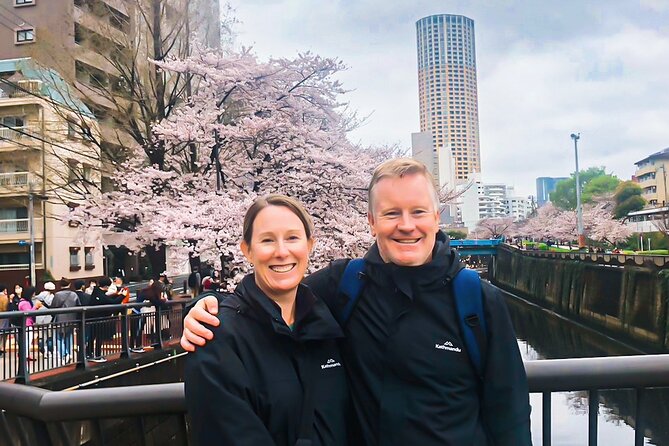
Some promotional material connected with this experience mentions a bus tour around Shinjuku, cartwheeling samurai, breakdancing ghosts, and taiko drums. Those are not part of the detailed 90-minute Meguro walking route described here.
The route you should plan for is Nakameguro, the Meguro River, Daienji Temple, Gajoen, and JR Meguro Station. If you specifically want a Shinjuku bus ride or a theatrical samurai and ghost show, you should treat those as a separate experience and confirm before booking.
This distinction matters because the Meguro walk is quiet and historical. It is built around blossoms, temple history, architecture, and neighborhood connections. It is not a stage show or a bus-based sightseeing circuit.
Who will enjoy this Meguro route
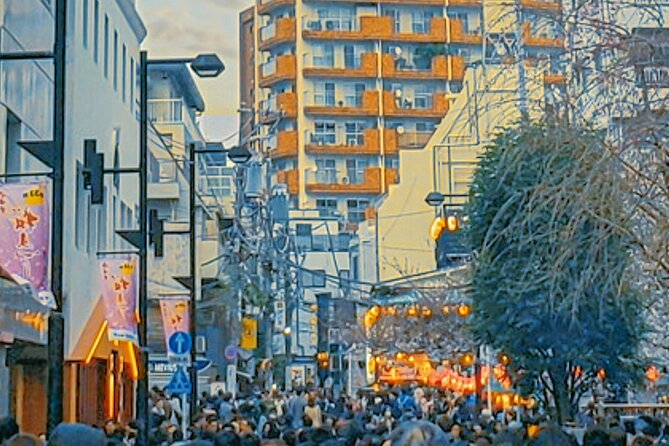
I would recommend this walk to someone who wants a short introduction to Meguro and prefers a guide to explain what they are seeing. It suits first-time Tokyo visitors who want a manageable outing, as well as repeat visitors who have already seen the major central sights and want a different neighborhood.
It is also a good fit if you are visiting during blossom season and want a planned route rather than trying to navigate the river alone. The walk is short enough to combine with other Tokyo plans, and finishing at Meguro Station gives you a useful onward connection.
You should think twice if your schedule is tight enough that a missed meeting would ruin the day. The guide can be hard to locate if you do not use the exact meeting-point details. I would also hesitate to book this as your main cherry-blossom experience if your dates are outside late March and early April.
Children under three, babies under one, people with altitude sickness, and people over 95 are listed as unsuitable for the activity. The altitude restriction seems unusual for a flat urban route, but it is part of the stated policy. Comfortable shoes are the one essential item.
Should you book it?
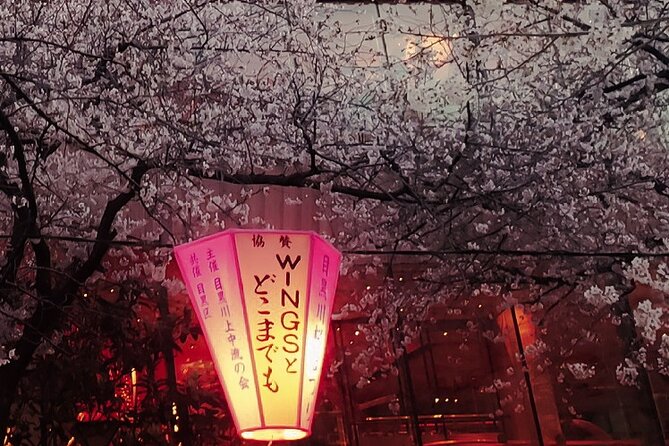
Book this tour if you want a low-cost, compact walk that combines seasonal scenery with two pieces of Meguro history. The best version of the experience takes place when the cherry trees are flowering and you arrive early at the correct Starbucks meeting point.
Skip it if you are expecting a Shinjuku bus tour, a theatrical show, or a guaranteed indoor visit through every Gajoen hall. The route is more modest, but that is also its strength: in 90 minutes, you get a clear introduction to the Meguro River, Daienji Temple, and Gajoen without giving up a full day.
FAQ
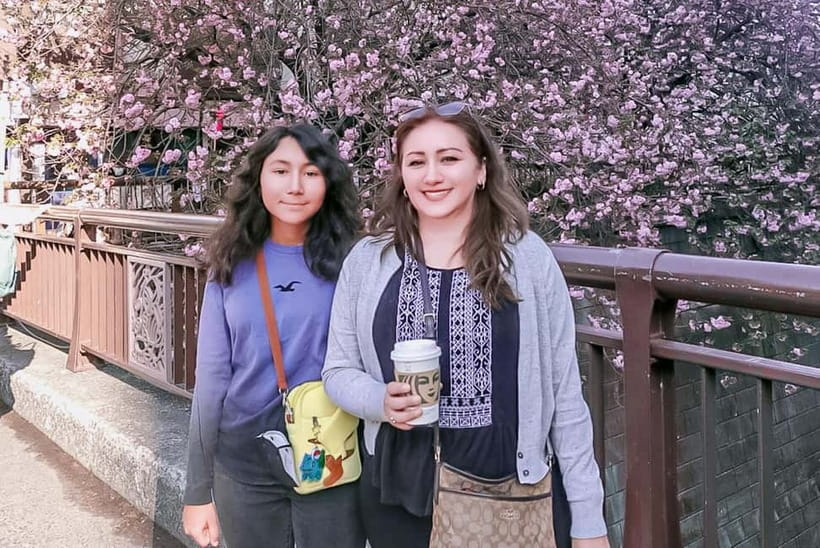
Where does the Meguro Cherry Blossom Walking Tour begin?
It begins at Starbucks Coffee, Naka-Meguro Tsutaya Books, opposite Nakameguro Station on the Metro Hibiya Line.
Where does the tour finish?
The tour finishes at JR Meguro Station.
How long does the activity last?
The walking tour lasts 90 minutes.
What language does the guide speak?
The live tour guide speaks English.
Is the tour private?
Yes. The activity is described as a private-group tour.
When are the cherry blossoms usually in bloom?
The usual season is late March to early April, although the exact timing can vary.
What sights are included?
The route follows the Meguro River, visits Daienji Temple, and goes to Hotel Gajoen Tokyo for a photo stop, guided visit, and scenic views.
What should I bring?
You should bring comfortable shoes.
Can I cancel for a full refund?
Yes. You can cancel up to 24 hours in advance for a full refund.
Newly planted garden visits around Tokyo
- Tokyo Summer: Mt Fuji 5th Station& Kawaguchiko Lavender Trip★ 3.5 · 4 reviews
- Tokyo: Tsukiji Market and Hama-rikyu Gardens Guided Tour★ 4.8 · 73 reviews
- Tokyo: Pvt. Tour – Edo Castle & Imperial Palace East Gardens★ 4.8 · 63 reviews
- Tokyo: Mount Fuji Tour and Hakone Sakura Cherry Blossom Trip★ 5.0 · 4 reviews
- Tokyo: Meiji Jingu Shrine & Inner Garden Guided Tour (2h)★ 5.0 · 6 reviews
- Tokyo: Full-Day Japanese Garden Private Guided Tour★ 4.6 · 13 reviews
- Tokyo: Kimono Rental inside Shinjuku Gyoen National Garden★ 4.9 · 39 reviews
- Tokyo: Hama-rikyu Gardens tour with Japanese Tea & Sweets★ 4.7 · 14 reviews
Cherry Blossom Tours, bed by bed.

The DC Cherry Blossom Bus Tour with Tidal Basin Guided Walk
Read our review →National Mall & Cherry Blossoms Tour with Optional Museum Tickets
Read our review →
Nagano: 1-Day Snow Monkey & Cherry Blossom Tour in Spring
Read our review →
Nagano Spring: 1-Day Cherry Blossoms & Snow Monkeys Guided Tour
Read our review →Lists this garden visit belongs to