
Review · GREECE
Karpathos: Botanical Clay Workshop & Pottery in a Vineyard
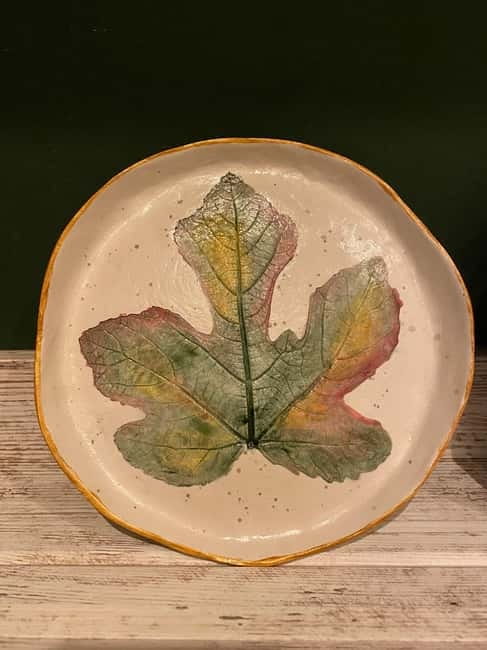
The most memorable part of this Karpathos workshop is the chance to turn seasonal plants into a personal clay design. You choose leaves, herbs, or flowers near the studio, then press them into a rolled slab of clay to make a botanical plate. It is a calm, hands-on way to connect your souvenir with the island itself.
I like the freedom to choose your own plant patterns, and I like that Renate gives help without taking over. The workshop is made for beginners, all materials are supplied, and you leave with both a handmade object and a new skill. The main consideration is access: transportation is not included, and the rural meeting point is not suitable for wheelchair users.
Key points to know before booking
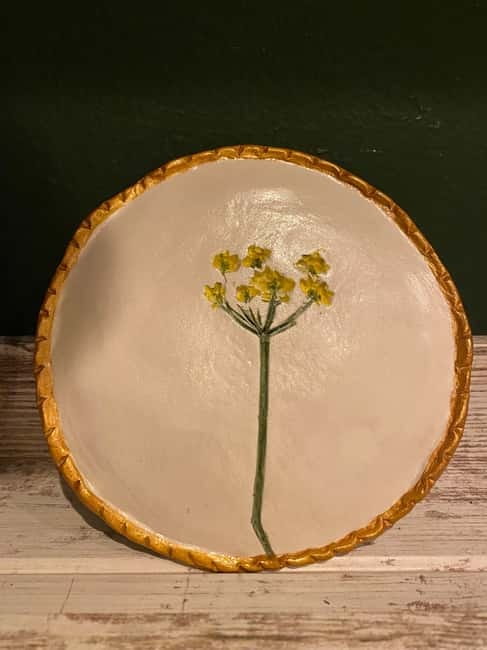
- Choose plants from the surrounding garden: Seasonal leaves, herbs, and flowers become the patterns on your clay plate.
- Make a slab-rolled plate: You shape and decorate a flat piece of clay rather than working at a pottery wheel.
- Renate offers gentle guidance: You get help when needed, while keeping plenty of control over your own design.
- The workshop lasts 2.5 hours: That gives you time to select plants, work the clay, and finish your piece without rushing.
- Bring practical clothing: Clay can make a mess, so wear clothes you do not mind dirtying and carry cash.
- The setting is in the hills beyond Othos: You need to arrange your own way to the meeting point near Lastos.
Making a Karpathos souvenir from leaves and clay
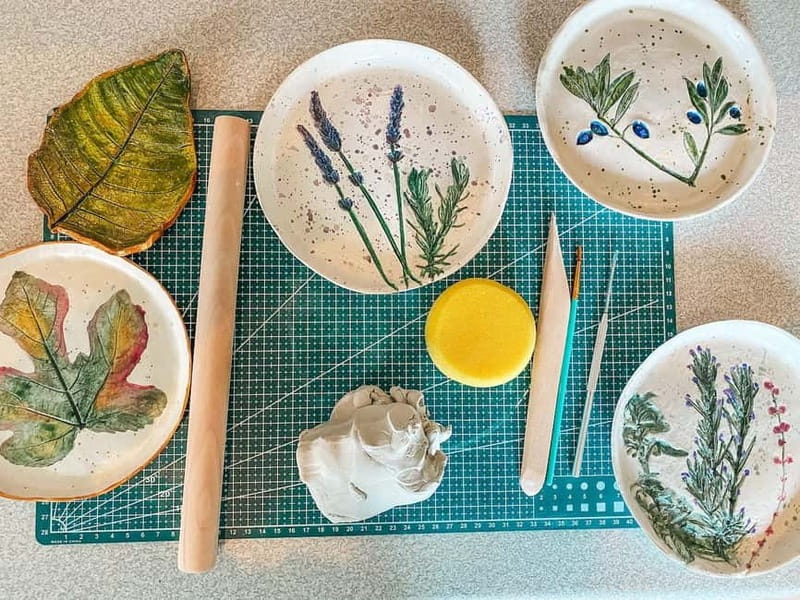
Many island souvenirs are bought in a shop and packed into a suitcase. This one begins with a walk around the workshop area and a look at the plants growing there. You select the leaves, herbs, or flowers that appeal to you, then use their shapes and textures as a design tool.
That small choice changes the whole experience. Instead of copying a fixed pattern, you make decisions as you go. A long narrow leaf may create a strong border. A smaller plant may work better as a repeated mark. Flowers can add a softer impression, while textured herbs may leave a clearer imprint in the clay.
The finished object is a plate made from a rolled slab. You press your chosen botanicals into the clay, remove them, and leave their forms behind. The design will be natural and individual rather than perfectly uniform. That is part of the appeal. You are not trying to produce factory-perfect pottery. You are making a record of your time in Karpathos.
The activity description does not specify exactly how or when the piece is fired, so ask Renate about the final treatment and collection arrangements if that matters to you. The important promise is that you receive your own botanical clay piece to take home, along with the basic skills to try similar work again.
More Botanical Gardens in Greece:
- Rethymno:Matala ,Agia Galini,Botanic Garden & Spili Day Trip
★ 4.6 · 21 reviews - Off-Road Safari, Traditional Villages & Botanic Garden Walk
★ 5.0 · 5 reviews - Botanical Gardens of Crete Private SUV Tour
★ 3.5 · 4 reviews
What happens during the 2.5-hour workshop
The session is long enough to feel like a real creative activity, but short enough to fit into a day of exploring Karpathos. You begin by settling in, selecting plants, and learning how botanical impressions work in clay.
Choosing the plants
The first creative decision is made outside the clay itself. You look around the studio area and choose seasonal leaves, herbs, or flowers for your design. This is not a generic craft kit with printed patterns. The available plants connect the finished plate to the time of year and the immediate surroundings.
You may find yourself testing several shapes before deciding what to use. Look for plants with clear outlines or interesting surface texture. You will have freedom to make those choices yourself, and the supplied information indicates that there are enough materials and tools for everyone to work comfortably.
This part should suit children and adults alike. Younger participants can focus on spotting appealing leaves, while adults may enjoy arranging a more deliberate pattern. The activity is suitable for all ages and skill levels, though children will need the usual help and supervision that any clay activity requires.
Rolling the clay slab
Rather than learning wheel pottery, you make a flat slab and turn it into a plate. This keeps the process accessible. You do not need previous clay experience, and you are not expected to arrive knowing how to center clay or control a spinning wheel.
The slab method also gives you a clear surface for botanical designs. You can think about the arrangement before pressing anything into the clay. That makes the workshop less intimidating for a first-timer and leaves room for personal style.
Renate’s role is important here. The available feedback describes her as present and helpful, stepping in when needed while allowing each person to work freely. That balance is useful in a beginner class. You can ask for guidance without feeling that your plate is being made for you.
More gardens worth a morning in Greece:
- Athens Cooking Class and Lunch in our beautiful garden in Greece
★ 5.0 · 130 reviews - Athens Market Tour and Cooking Class in a Beautiful Garden
★ 5.0 · 122 reviews - National Gardens Segway Tour
★ 4.5 · 93 reviews - Cooking experience in the most beautiful garden near Rethymno
★ 4.5 · 19 reviews
Pressing leaves and flowers into the clay
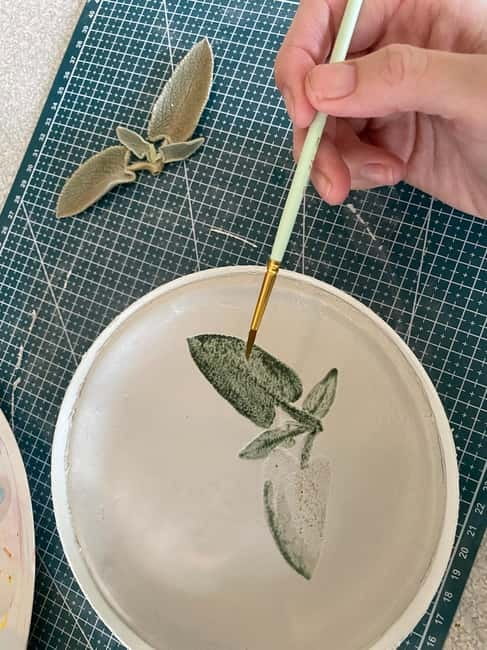
This is the central craft step. You arrange your chosen plants on the soft clay and press them in to create natural patterns. The result depends on the form of the plant, how firmly you press, and how you arrange each piece.
You should expect some trial and error. A botanical imprint is not a stencil, and the result may be softer or less even than expected. That is not a flaw. The best plates will have the irregular marks that show how they were made.
You also have room to make the design simple. You do not need to cover every part of the plate. A few well-placed leaves may look better than a crowded surface. Renate’s approach, as described in the available information, gives you enough freedom to make those choices for yourself.
Finishing your piece
After the impressions are made, you complete your botanical clay artwork with the instructor’s help. The exact finishing and firing process is not specified, so confirm the practical details on the day. You should also ask when the piece will be ready if it is not immediately portable.
The valuable part is that your final object is not just a decorative plate bought in Karpathos. It reflects the plants you selected and the decisions you made during the session. That gives it a stronger personal connection than a standard souvenir.
Why the setting beyond Othos matters
The meeting point is just past the Othos sign as you go into the hills of Lastos. This is not a central-town activity where you simply walk from a hotel or port. You need to plan your own transportation, allow time to find the place, and arrive five minutes early.
That extra planning is the main logistical drawback. Transportation to and from the workshop is not included, and the activity is not suitable for wheelchair users. If you have limited mobility, ask for detailed access information before booking. The supplied details do not describe the path, surfaces, parking, or bathroom arrangements.
On the other hand, the hill setting is part of the experience. You are working with plants in the same area rather than being handed a preselected bundle of materials. The activity encourages you to pay attention to the local surroundings and use what is in season.
Do not treat this as a formal sightseeing stop with a long guided explanation of Karpathos. Its focus is making things with your hands. The setting supports the craft, but the clay work is the main event.
Renate’s teaching style and the right level of help
The instructor languages are English, Dutch, and Spanish. Renate is the named host associated with the workshop, and her role appears to be that of a patient guide rather than a lecturer.
That matters because craft classes can go wrong in two ways. You can be left uncertain about what to do, or the instructor can direct every move until all the pieces look alike. Here, you have guidance when necessary and freedom to decide what you want to create.
I would still ask questions as soon as you need help. A small adjustment early in the clay process can save frustration later. If you have a particular design in mind, explain it before you begin. If you do not, let the plant selection guide you.
The relaxed approach also makes this a good shared activity. Couples can work side by side without needing to produce matching pieces. Friends can compare designs, and families can take different approaches according to age and confidence. The session is not limited to serious pottery students.
What to bring and how to prepare
The practical advice is simple:
- Wear clothes that can get dirty.
- Bring cash.
- Arrive five minutes early.
- Arrange your own transportation.
- Check the starting time when booking, since availability varies.
Clay has a way of finding cuffs, knees, and shoes, even during a tidy session. Wear something comfortable that you will not worry about. The workshop provides the materials, so you do not need to bring clay, tools, leaves, or flowers.
Cash is specifically listed as something to bring. The supplied details do not explain what payment it might cover, so carry some rather than assuming a card will be accepted for every possible expense.
Because food and drinks are not included, plan around the 2.5-hour session. Bring anything you need for your own comfort, but do not expect a meal or refreshments to be part of the activity. You can combine the workshop with other plans in the hills, but leave enough time for the drive and finding the meeting point.
Is $56 a fair price?
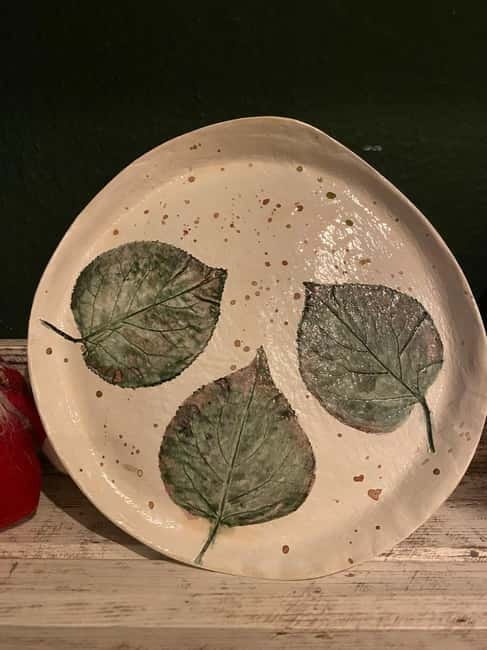
At $56 per person, this is not the cheapest way to spend a few hours in Karpathos. Its value comes from what is included: all workshop materials, instruction, and your own botanical clay piece to take home.
You are paying for more than raw clay. The price includes guided time, access to the tools and materials, help from an experienced instructor, and the chance to make an object that is specific to your visit. If you enjoy creative activities, that is a reasonable package.
The value is weaker if you mainly want a quick souvenir or if you dislike hands-on crafts. You also need to pay for your own transportation, and food and drinks are extra. Those costs should be part of your calculation.
For a couple, the price can work well as a shared morning or afternoon activity. For a family, multiply the cost across each participant and decide if everyone is likely to take part. The all-ages format helps, but not every child will want to spend 2.5 hours working carefully with clay.
The flexible booking terms add some practical value. You can reserve now and pay later, and cancellation is free up to 24 hours in advance for a full refund. Check the current starting times and conditions when booking, since these can affect your plans.
Who will enjoy this activity most?
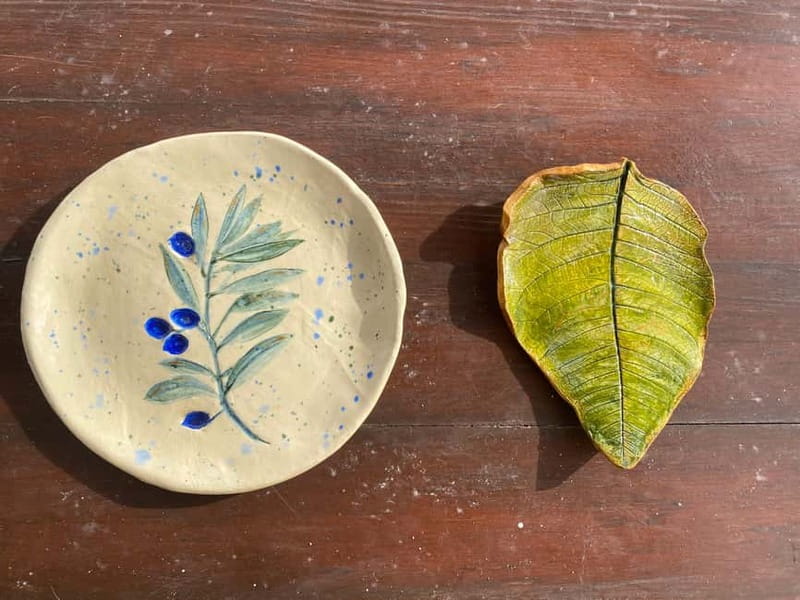
I would choose this workshop if you want a slower, creative break from sightseeing. It suits people who like local materials, small group activities, and souvenirs with a story behind them.
It is especially good for:
- Couples looking for a shared activity that does not require advanced skills.
- Friends who want to make separate designs while spending time together.
- Families with children who enjoy leaves, flowers, and tactile crafts.
- First-time clay workers who want a forgiving introduction.
- Anyone who prefers making a souvenir instead of buying one.
It may not suit you if you need step-free access, do not have transportation to the hills, or want a polished pottery lesson focused on wheel throwing. It also may disappoint you if you expect a food tasting, a long walk, or a broad cultural tour. The session is centered on botanical clay work.
The experience received an overall rating of 4.8 from four bookings, with three five-star scores and one four-star score. The strongest themes are the beautiful setting, the friendly organization, and Renate’s helpful but hands-off teaching. Those points line up with what makes the activity attractive: you get structure, but your finished work remains your own.
Should you book the botanical clay workshop?
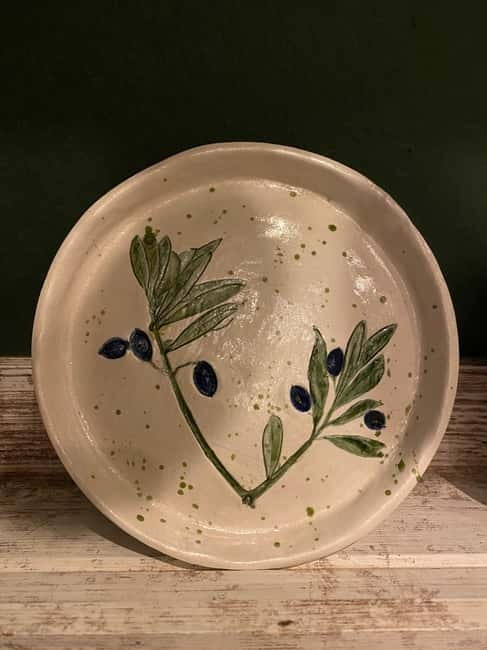
Book it if you want a personal Karpathos keepsake and enjoy making things with your hands. The combination of seasonal plants, a rural hill setting, and a beginner-friendly clay process gives the activity more character than a standard craft class.
Before paying, make sure you can reach the meeting point beyond Othos and that the access suits you. Wear old clothes, bring cash, and ask about the final firing and collection details for your plate. If those practical points work for you, $56 buys a thoughtful, unhurried experience with a souvenir you helped create from start to finish.
FAQ
Do I need previous clay experience?
No. The workshop is designed for beginners, and no previous experience with clay is required.
How long does the workshop last?
The workshop lasts 2.5 hours. Starting times vary, so check availability when booking.
What is included in the price?
All materials needed for the workshop, guidance from an experienced instructor, and your own botanical clay piece to take home are included.
What should I bring?
Bring cash and clothes that can get dirty. You should also arrive five minutes early to settle in.
Where is the meeting point?
The meeting point is just past the Othos sign as you go into the hills of Lastos. Transportation to and from the workshop is not included.
Is the workshop suitable for children and wheelchair users?
The workshop is suitable for all ages and skill levels. It is not suitable for wheelchair users.
Newly planted garden visits around Greece
- Off-Road Safari, Traditional Villages & Botanic Garden Walk★ 5.0 · 5 reviews
- Cooking experience in the most beautiful garden near Rethymno★ 4.5 · 19 reviews
- Half Day Private Tour to Botanical Garden in Chania★ 5.0 · 2 reviews
- Cooking Class at Diamond Roof Garden★ 5.0 · 14 reviews
- Athens with Kids: Myths & Family Games in the National Garden★ 5.0 · 8 reviews
- Rethymno:Matala ,Agia Galini,Botanic Garden & Spili Day Trip★ 4.6 · 21 reviews
- Melanes Tour: Village Highlights & Garden-to-Table Meal★ 4.5 · 5 reviews
- Botanical Gardens of Crete Private SUV Tour★ 3.5 · 4 reviews
Botanical Gardens, bed by bed.

Blanes: Marimurtra Botanical Garden Entry Ticket
Read our review →
Malta: Mdina, Dingli Cliffs and San Anton Botanical Gardens
Read our review →
Princeville Botanical Gardens Tour and Chocolate Tasting Ticket
Read our review →
Icod de los Vinos: Dragon Tree & Botanical Garden Ticket
Read our review →
Maleny Botanic Gardens Bird Aviary Experience Ticket
Read our review →
Big Island Waterfalls Tour with Swimming and Botanical Garden
Read our review →
Lists this garden visit belongs to