
Review · FLORENCE
Florence: Boboli The Medici Gardens & Hidden Messages
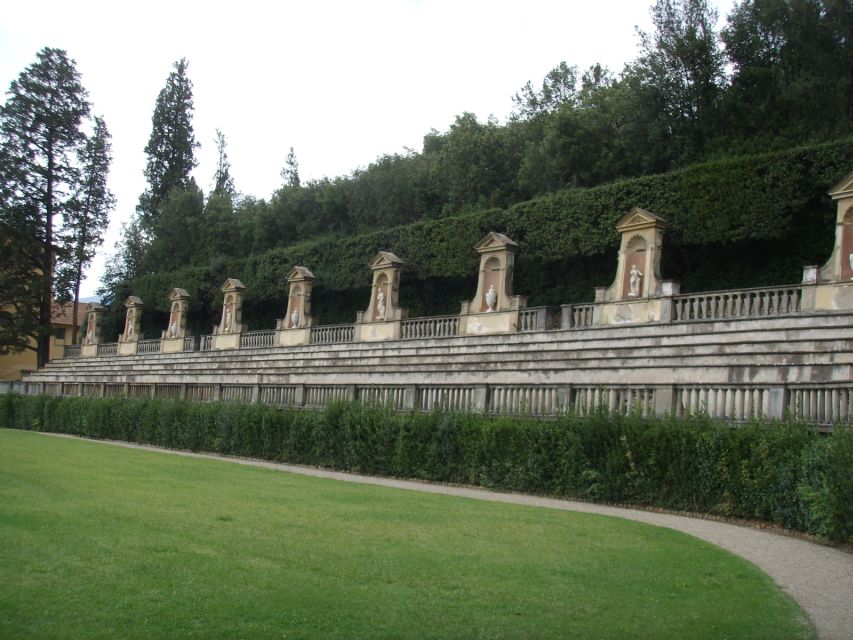
Boboli Gardens is not simply a pleasant park behind Pitti Palace. It is a giant Medici stage, filled with gods, heroes, fountains, tunnels, and visual clues that make much more sense when someone explains them. I like the way this guided walk turns statues into stories, and I like that it reaches the upper terraces for a broad view over Florence.
The best part is the guide’s ability to connect art, politics, family ambition, and old myths. Alessandra, Guido, Ivano, and Anna Maria have each received especially warm praise for clear and engaging tours. The main consideration is time: 1.5 hours goes quickly, and you will see the key sights rather than explore every corner at a leisurely pace.
Key points at a glance
- Medici symbolism in the open air: Learn why gods, heroes, fountains, and garden designs carried political messages.
- Major Boboli sights in one walk: See Hercules, Demeter, Tyndareus, the Artichoke Fountain, Neptune’s Fountain, the Secret Garden, and the Tunnel of Love.
- A high terrace viewpoint: Finish among the upper gardens with a panoramic view across Florence.
- A guide-led route through several kilometers of grounds: Helpful in a park where it is easy to miss the meaning behind an artwork.
- A practical 1.5-hour visit: A good choice when you want Boboli’s essential sights without giving the entire day to the gardens.
- Skip-the-ticket-line entry: The entrance fee and priority access are included, but Pitti Palace museums are not.
Entering Boboli through Pitti Palace
Your meeting point is the main entrance to Pitti Palace. From there, the walk leads into Boboli Gardens, the large formal park created for Cosimo I de’ Medici in 1562.
That date matters. Boboli was not designed as a simple retreat from city life. It was a carefully planned display of Medici power and taste. Its terraces, statues, fountains, groves, and grottoes helped create a model copied by royal gardens across Europe.
I find this context useful before you begin, because the garden can otherwise feel like a collection of attractive but unrelated objects. With a guide, you start to read the place as a message. A statue of a classical figure, a fountain placed at a certain point, or a path leading toward a terrace can all reflect ideas about power, virtue, nature, and control.
The included entrance ticket saves you from waiting in the regular ticket line. That is helpful at a busy time of day, though priority entry does not mean you should arrive casually. The meeting point is at the main entrance to a major palace, so allow enough time to find the correct spot.
More Palace and Castle Gardens in Italy
- Florence: Pitti Palace and Boboli Gardens Ticket & eBook
★ 4.5 · 835 reviews - Florence: Pitti Palace, Boboli Garden, Palatine Gallery Tour
★ 4.9 · 558 reviews - Pitti Palace, Boboli Garden & Palatina Gallery Guided Tour
★ 5.0 · 264 reviews
Hercules, Demeter, and Tyndareus
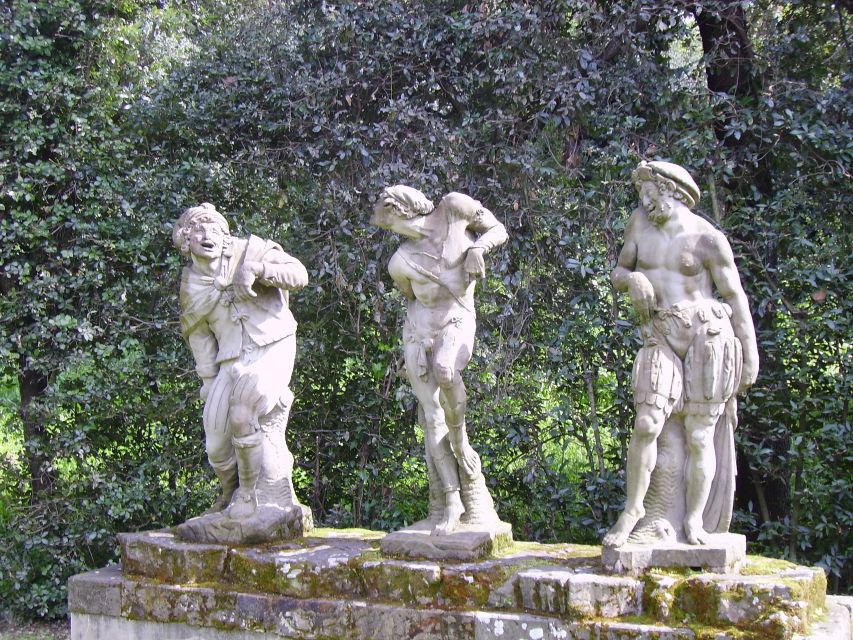
The tour brings you to sculptures connected with ancient myths and heroic figures. Hercules is one of the most useful figures for understanding the garden’s allegories. His strength, labors, and victories made him a natural symbol for rulers who wanted to present themselves as protectors and conquerors.
Demeter brings a different set of ideas. As a goddess linked with agriculture and the earth, she fits the garden’s connection with fertility, cultivation, and the controlled natural world. Boboli is full of trees and plant life, but very little here is accidental in the usual sense. The vegetation is shaped, framed, and placed within a larger artistic plan.
The Spartan King Tyndareus adds another layer of classical storytelling. You do not need to arrive with a background in Greek and Roman mythology. That is one of the main reasons to choose this guided visit. The guide gives you enough of the story to see why the figure belongs in the garden and what it might have communicated to the people who commissioned it.
Guides Alessandra, Guido, Ivano, and Anna Maria have been singled out for their clear explanations and warm manner. You should not expect the same person on every departure, but these names give you an idea of the kind of guide-led experience available. The strongest guides do more than identify a statue. They explain how the object fits into Medici culture and the wider artistic plan.
Fountains with more to say than water
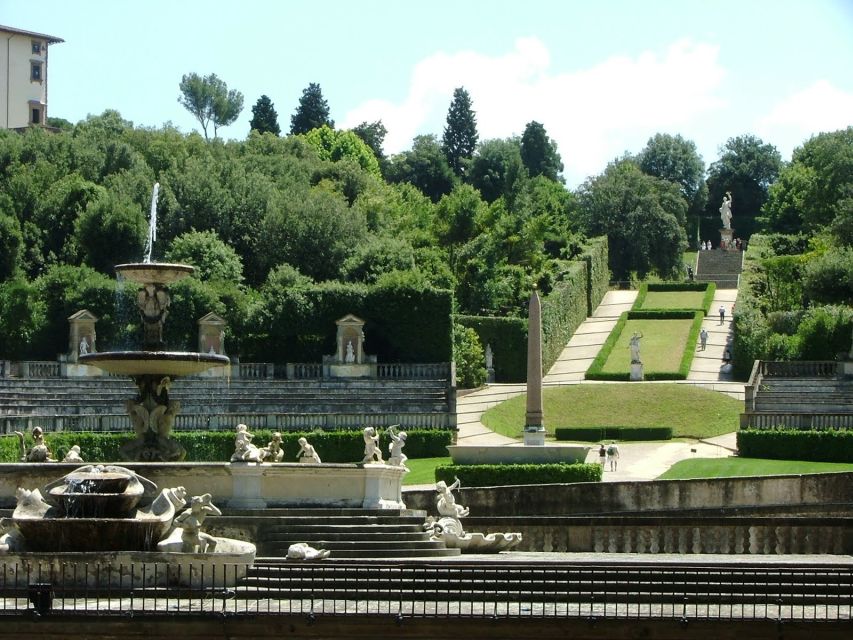
Boboli’s fountains are not just decorative stops. The Fountain of the Artichoke and Neptune’s Fountain help show how water, sculpture, and formal design worked together.
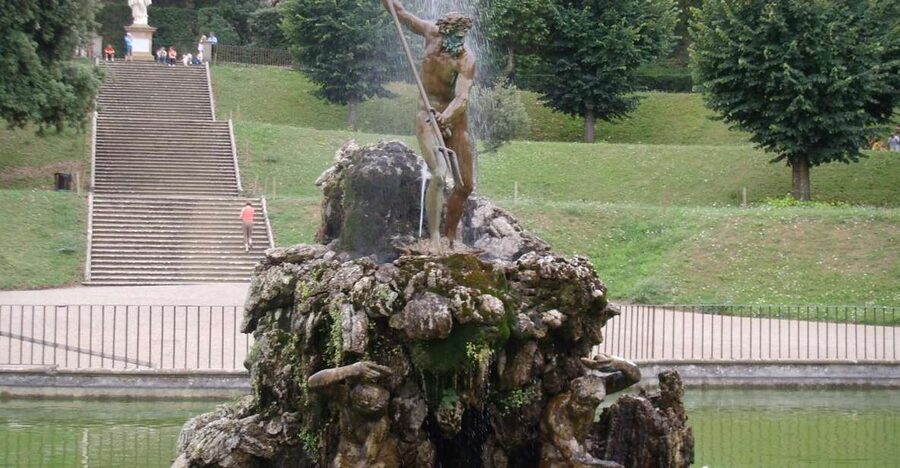
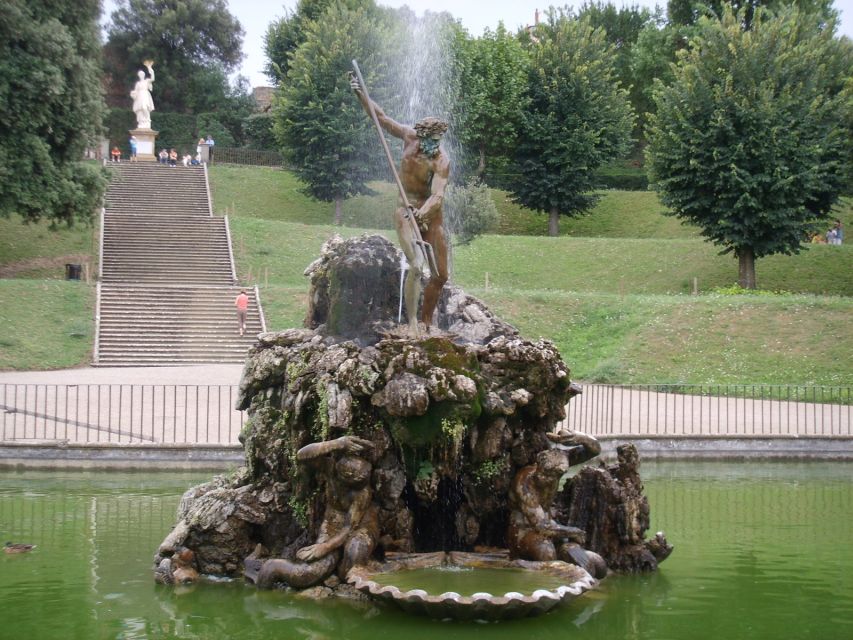
The Artichoke Fountain has an immediately curious name, and it is one of the garden’s memorable visual points. Neptune’s Fountain draws on the Roman god of the sea, giving the garden another classical figure with political and symbolic weight. A guide can point out details that you might otherwise pass without noticing.
I like this part of the experience because it slows the visit down. You are not only walking between attractions. You are learning to look at how a fountain is framed by vegetation, how a statue is positioned along a route, and how the garden creates surprise by revealing one view after another.
Do keep your expectations realistic. Boboli’s fountains are historic works of art, not polished theme-park features. Their condition and the general care of the grounds may vary. One experienced garden enthusiast found the upkeep less precise than expected, even while enjoying the visit overall. If you judge gardens mainly by immaculate flower beds, you may notice this. If you come for the mix of art, design, trees, and history, it is less troubling.
The Secret Garden and Tunnel of Love
The Secret Garden is one of the more intriguing names on the route. It reflects Boboli’s fondness for spaces that feel set apart from the main paths. The name suggests privacy and discovery, but the real value is the way the garden uses enclosed areas and transitions to change your sense of scale.
The Tunnel of Love adds a romantic touch. It is a useful reminder that Boboli is not only a political display. The park also contains spaces designed to entertain, surprise, and encourage private conversation.
These stops should appeal to couples, families, and children who enjoy a little mystery in their sightseeing. Kids may not care about every Medici detail, but tunnels, statues, fountains, and mythic characters give the walk variety. You will want to keep younger children close, since this is a large historic garden rather than a structured attraction built around play.
The names can also sound more dramatic than the actual spaces. Do not expect theatrical effects or a modern attraction. The pleasure comes from the old design, the stories attached to it, and the feeling of finding a more secluded corner within a major Florentine sight.
More Palace and Castle Gardens in Florence:
- Florence: Pitti Palace and Boboli Gardens Walking Tour
★ 4.6 · 182 reviews - Florence: Museum Pass–David, Uffizi, Pitti Palace & Gardens
★ 4.2 · 134 reviews - Timed Entry Ticket to Pitti Palace and Boboli Gardens in Florence
★ 3.5 · 118 reviews - Florence: Boboli Gardens Guided Tour
★ 4.5 · 69 reviews
Climbing to the upper gardens
The route reaches the top of Boboli, where you can look across Florence. This is one of the tour’s strongest payoffs.
From the upper gardens, the city opens out below you. The view gives you a better sense of Florence’s placement and scale after the enclosed streets around Pitti Palace. It also shows why the garden’s terraces matter. They are not only practical levels for walking. They create changing viewpoints and make the park feel larger than it first appears.
The climb is another reason to wear comfortable shoes. The tour lasts only 1.5 hours, but you are walking through several kilometers of garden paths and reaching higher ground. The information provided does not promise a flat route, so anyone who dislikes uneven or uphill walking should take the timing seriously.
I would especially value this final viewpoint if you have already spent time inside Florence’s crowded center. Boboli offers a break from tight streets and packed piazzas without taking you far from the main city sights. It is a green change of pace, but it still connects directly to Florence’s art and political story.
What the 1.5-hour format really gives you
A 1.5-hour guided walk is enough for an introduction to Boboli’s major sights. You can see the principal sculptures, fountains, special garden areas, and the upper viewpoint while gaining a framework for understanding the park.
It is not enough for a slow botanical study of every path. Boboli covers a broad area, and the tour has to keep moving. If you want time to sit beside a fountain, photograph every statue, or wander without a plan, you may want to return on your own after the guided portion.
One visit led by Ivano was described as lasting about two hours, despite the advertised 1.5-hour duration. That suggests the exact pace may vary with the guide, group, and conditions, but you should plan around the stated duration rather than count on extra time.
The English and Italian options make the activity useful for a wide range of visitors. Clear interpretation matters here because much of the pleasure comes from meaning rather than spectacle. Without context, some sections can look like attractive woodland paths with old stone objects. With context, the same route becomes a lesson in Medici ambition and European garden design.
Is $93 a fair price?
At $93 per person, this is not a low-cost garden stroll. The value depends on what you want from Boboli.
You are paying for the entrance fee, skip-the-line access, and a live guide who leads you to the important sights. If you would otherwise buy admission and spend much of your visit trying to work out what you are seeing, the added explanation may justify the price. The garden’s symbolism is not always obvious from the sculptures alone.
The price is harder to defend if you mainly want an independent walk through trees and terraces. Boboli is accessible as a sightseeing stop, and some people will prefer to enter at their own pace, pause often, and stay longer than 1.5 hours.
I would see the tour as better value for a first visit to Boboli, especially if you are short on time or want the Medici story explained in plain language. It is less compelling for repeat visitors who already know the garden or who care more about plant maintenance than artistic allegory.
The high rating of 4.8 from 17 ratings points to strong satisfaction, but the small number of ratings means I would not treat it as a guarantee of a perfect fit. The guide is central to the experience. Alessandra was praised for both expertise and kindness, Guido for reaching the most interesting and beautiful areas, and Ivano for making an outing enjoyable despite poor weather. Those are useful signs, but the particular guide on your date may differ.
Who should book this walk?
I would recommend it to you if you want:
- A first look at Boboli’s main sights
- Stories about Greek and Roman gods, heroes, and Medici symbolism
- A guided route rather than a self-directed wander
- A city viewpoint combined with art and garden design
- An activity suitable for families, nature lovers, or couples
- A short cultural experience that fits around other Florence plans
You should think twice if you want a long, quiet garden visit. The route is active, the time is limited, and the grounds may not satisfy someone expecting perfectly maintained formal planting.
The tour also suits people who like to understand what they are seeing. The hidden messages in the title are not secret codes waiting to be solved. They are the visual meanings behind the statues, myths, fountains, and layout. The guide helps bring those ideas into focus.
Practical details before you go
Wear comfortable shoes. This is a walking tour through a large garden, and the route reaches the upper areas. Bring a passport or ID card, since identification is listed among the things to carry.
Large bags and luggage are not allowed, and pets and smoking are not permitted. There is no need to plan this as a museum combo: the price does not include the Palatine Gallery or other museums inside Pitti Palace.
You can cancel up to 24 hours before the activity for a full refund, and the reserve-now, pay-later option keeps payment flexible. Starting times vary, so check availability for your date.
I would avoid treating Boboli as a rainy-day backup without checking the forecast. One guided outing remained enjoyable in unpleasant weather, but rain can make a large garden less comfortable, especially when you are climbing and walking between open areas.
Should you book Boboli Gardens and Hidden Messages?
Book this tour if Boboli is on your Florence list and you want the park’s art and symbolism explained rather than simply photographed. The combination of Medici stories, classical statues, fountains, secluded garden areas, and a high city view gives you a fuller experience than a quick stroll through the grounds.
At $93, it is a considered purchase, not an automatic bargain. I would choose it for a first visit, a tight schedule, or a strong interest in art and history. I would skip it if you prefer to wander alone for several hours or want a detailed botanical tour. For most first-time visitors, the guide’s interpretation is the main reason to pay for the experience.
FAQ
Where does the Boboli Gardens tour meet?
The meeting point is at the main entrance to Pitti Palace in Florence.
How long does the guided tour last?
The advertised duration is 1.5 hours. One guided outing was described as lasting about two hours, but you should plan around the stated 1.5-hour schedule.
What is included in the price?
The price includes entrance fees, skip-the-line tickets, an official local guide, and the walking tour.
Are Pitti Palace museums included?
No. Tickets to the Palatine Gallery and other museums inside Pitti Palace are not included.
What languages are available?
The live tour guide is available in English or Italian.
What should I bring?
Bring a passport or ID card and wear comfortable shoes.
Are large bags or luggage allowed?
No. Luggage and large bags are not allowed.
Can I bring a pet?
No. Pets are not allowed on the tour.
Is smoking permitted?
No. Smoking is not permitted.
Is the tour suitable for children?
The activity is described as suitable for kids, nature lovers, and couples. The gardens include statues, fountains, tunnels, and myths that can give children plenty to notice.
Can I cancel for a refund?
Yes. You can cancel up to 24 hours in advance for a full refund. You can also reserve now and pay later.
Newly planted garden visits around Florence
- Timed Entry Ticket to the Boboli Gardens★ 3.5 · 50 reviews
- Florence Cooking Class with Wine Pairing in Mirella’s Garden Home★ 5.0 · 29 reviews
- Pitti Palace and Boboli Gardens Private Tour★ 4.5 · 38 reviews
- Timed Entry Ticket to Pitti Palace and Boboli Gardens in Florence★ 3.5 · 118 reviews
- Market Tour & Traditional Tuscan cooking class in a garden★ 5.0 · 4 reviews
- Private Tour of Pitti Palace with Boboli Garden★ 5.0 · 28 reviews
- Palazzo Vecchio, Palazzo Pitti and Boboli gardens private tour★ 5.0 · 18 reviews
- Pitti Palace – Private Tour At Galleria Palatina Incl. Tkts To Boboli Gardens★ 4.5 · 7 reviews
Palace and Castle Gardens, bed by bed.
Paris: Versailles Palace and Gardens Full Access Ticket
Read our review →Versailles: Skip-the-Line Tour of Palace and Gardens Access
Read our review →
Vienna: Schönbrunn Palace & Gardens Skip-the-Line Tour
Read our review →
Granada: Alhambra & Gardens Tour w/Nasrid Palaces Option
Read our review →
From Paris: Versailles Palace & Gardens with Transportation
Read our review →
Florence: Reserved Entry Ticket to the Boboli Gardens
Read our review →
From Paris: Versailles Palace Guided Tour & Gardens Access
Read our review →Versailles Palace and Gardens Tour from Paris
Read our review →Lists this garden visit belongs to