
Review · FLORENCE
Florence: Pitti Palace, Boboli Garden, Palatine Gallery Tour
Pitti Palace gives you a different side of Florence. Instead of the city’s busy cathedral and Uffizi crowds, you enter a former grand-ducal residence filled with gilded frames, frescoes, carved furniture, and paintings by Raphael, Titian, Rubens, Van Dyck, and Caravaggio. Then you step outside into the Boboli Gardens, where paths climb through lawns, statues, and the old amphitheater.
I like this tour for two clear reasons: the guide helps you make sense of a huge collection, and the early start makes the gardens cooler and calmer. Guides such as Camilla, Sara, and Silvia have been praised for art history, restoration work, and their ability to explain difficult subjects in plain English. The main drawback is physical: Boboli is hilly, so this is not a gentle stroll for everyone.
Key points at a glance
- Medici masterpieces: See works by Raphael, Titian, Rubens, Van Dyck, Caravaggio, and Andrea del Sarto in the Palatine Gallery.
- A palace built for power: Learn how the Pitti residence passed among the Medici and other major European families.
- Early access to Boboli: The morning timing can help you avoid the worst heat and enjoy more breathing room.
- Furniture worth stopping for: Look closely at cabinets and tables decorated with semi-precious stones.
- Florence from above: Climb toward the upper parts of the garden for broad views across the city.
- Three major sights in one visit: The three-hour route combines architecture, painting, decorative arts, and outdoor spaces.
Why Pitti Palace feels different from Florence’s other major museums
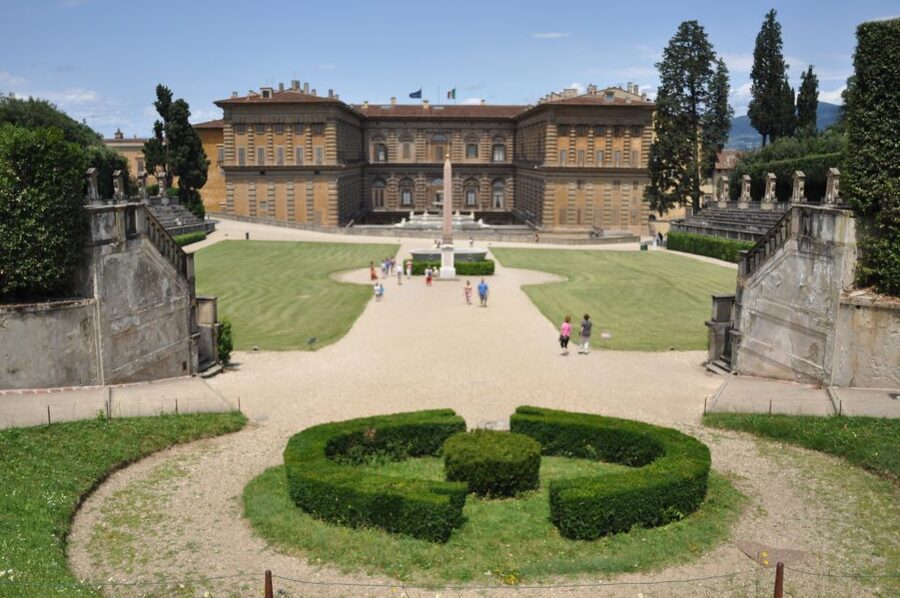
Pitti Palace is not simply a picture gallery with rooms arranged for easy viewing. It was a residence, a court, and a public display of wealth. The building’s grand courtyard gives you the right opening scene: this was designed to impress before you even reached the art.
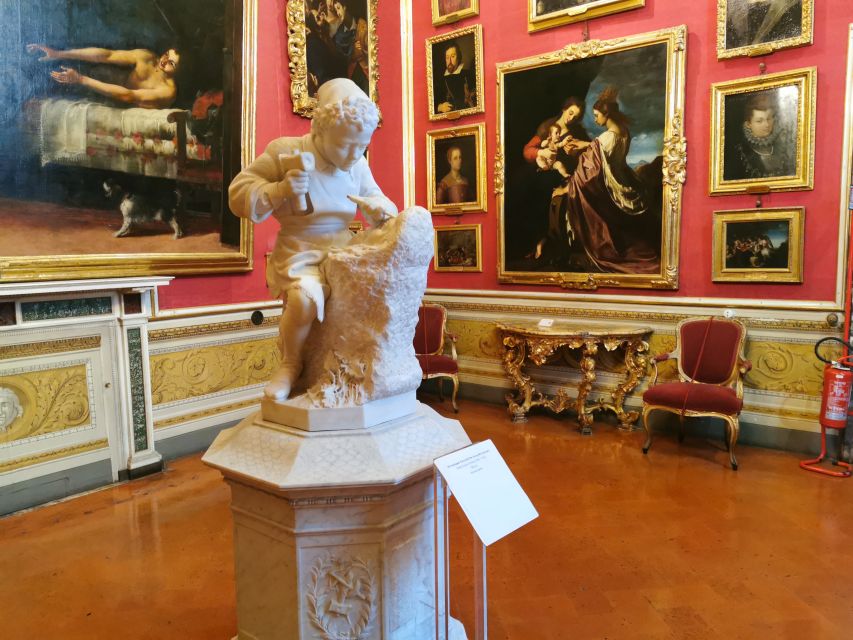
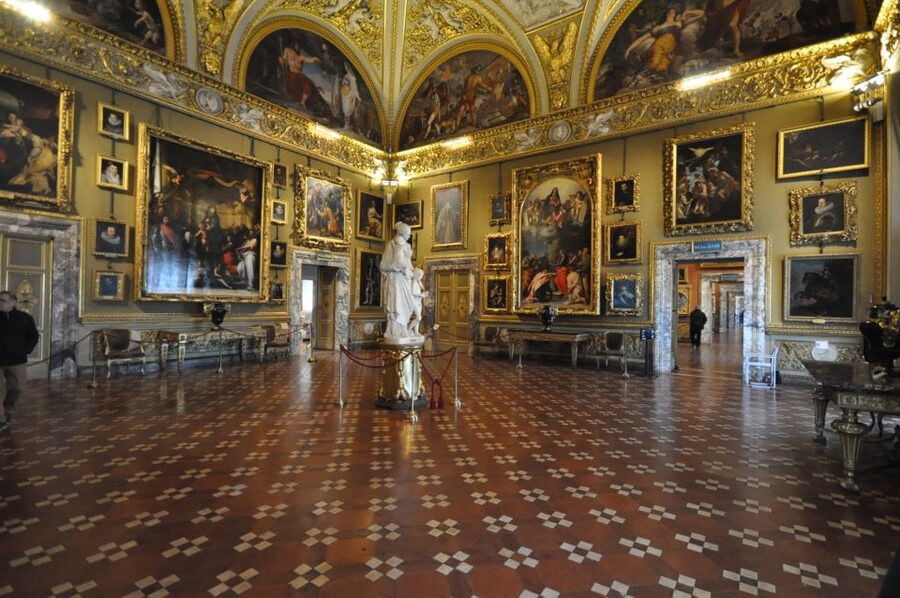
The palace became associated with the Medici as a grand-ducal home, and the decoration reflects their position. You are not looking at isolated paintings on plain white walls. You move through rooms with stucco decoration, ceiling frescoes, carved furnishings, and gold frames competing for your attention.
That abundance can be exciting, but it can also be tiring. Pitti has a lot to take in. Without a plan, you might remember only that every room was decorated. A good guide gives the collection a shape, points out the strongest works, and explains why the objects mattered to the people who lived there.
The tour begins in the early morning at Piazza Pitti, outside the palace entrance. Arrive with enough time to find the meeting point at Piazza Pitti 1. The palace is easy to locate, but the square can be lively with people arriving for different activities, so do not cut it close.
More Palace and Castle Gardens in Italy
- Florence: Pitti Palace and Boboli Gardens Ticket & eBook
★ 4.5 · 835 reviews - Pitti Palace, Boboli Garden & Palatina Gallery Guided Tour
★ 5.0 · 264 reviews - Florence: Pitti Palace and Boboli Gardens Walking Tour
★ 4.6 · 182 reviews
The grand courtyard and the noble floor
Your guide begins in the courtyard, where the scale of Pitti Palace becomes clear. This is a useful pause before the galleries because you can look at the building as architecture rather than rushing straight toward the paintings.
From there, you go to the noble floor, described in the tour as the first floor. This is where the Palatine Gallery fills room after room with paintings and decorative arts. The word noble matters here: these were spaces meant for court life, ceremony, and display.
I would pay attention to the furniture as much as the paintings. The collection includes Renaissance and Neoclassical pieces, with striking tabletops and cabinets made using semi-precious stones. These works show the Medici interest in skilled craft, not just famous painters.
The guide’s role is especially useful in rooms like these. A painting can be hard to judge when it shares space with an elaborate ceiling and a cabinet covered in stonework. Guides such as Camilla have backgrounds in art restoration, while other guides including Sara, Silvia, Federica, Elena, and Christian have been praised for clear explanations and strong command of the subject. The exact guide is not guaranteed, but the tour is built around live English commentary rather than a silent walk through the rooms.
The Palatine Gallery and its famous paintings
The Palatine Gallery is the artistic heart of the visit. You will see paintings associated with major names including Raphael, Titian, Rubens, Van Dyck, Caravaggio, and Andrea del Sarto.
The value of a guided visit here is not simply learning the artists’ names. You need help deciding where to look. One room may contain a famous religious painting, a royal portrait, and a ceiling covered in decorative work. A guide can draw your eye to details in composition, materials, restoration, symbolism, or the way the work functioned in a palace.
The tour also gives context about the Medici family and their collecting habits. Their collection was not assembled only for private pleasure. Art helped communicate status, taste, education, faith, and political influence. That makes the Palatine Gallery more interesting than a list of masterpieces.
The gallery’s old-fashioned display style is part of its character. Paintings hang close together in ornate rooms, rather than being separated by large stretches of blank wall. Some people love this because it preserves the feeling of a palace collection. Others may find it visually crowded.
If you prefer modern museum design, Pitti may take adjustment. I would not expect the quiet, carefully spaced presentation found in some newer galleries. Instead, expect a lavish court interior where the setting is part of the story.
What the guide adds to the palace visit
The strongest feature of this experience is the human explanation. The guides are not just moving you from room to room. The best ones ask questions, invite you to look closely, and adjust the amount of detail to the group.
Camilla is repeatedly praised for her art and restoration background, warmth, and ability to explain complex subjects in accessible English. Sara, Silvia, Federica, Elena, Christian, and others are also singled out for bringing the palace and gardens to life. You may not receive one particular guide, but the pattern is clear: this tour depends heavily on the quality of its live commentary.
That matters because Pitti can feel overwhelming. One person described having so much to see that it was almost too much, which is a fair warning. A guide helps you focus on important paintings and furniture instead of trying to absorb every object.
The pace is another advantage. The tour lasts three hours, long enough to cover the major areas without turning into an all-day museum march. Several people appreciated guides who kept the group moving at a sensible rate while still leaving room for questions.
With four or more participants, earsets are included. That is a small but useful detail in rooms where sound can carry poorly or where the group needs to spread out.
More Palace and Castle Gardens in Florence:
- Florence: Museum Pass–David, Uffizi, Pitti Palace & Gardens
★ 4.2 · 134 reviews - Timed Entry Ticket to Pitti Palace and Boboli Gardens in Florence
★ 3.5 · 118 reviews - Florence: Boboli Gardens Guided Tour
★ 4.5 · 69 reviews - Florence: David, Pitti Palace, & Gardens Combination Tickets
★ 4.5 · 59 reviews
Boboli Gardens: art outside the palace walls
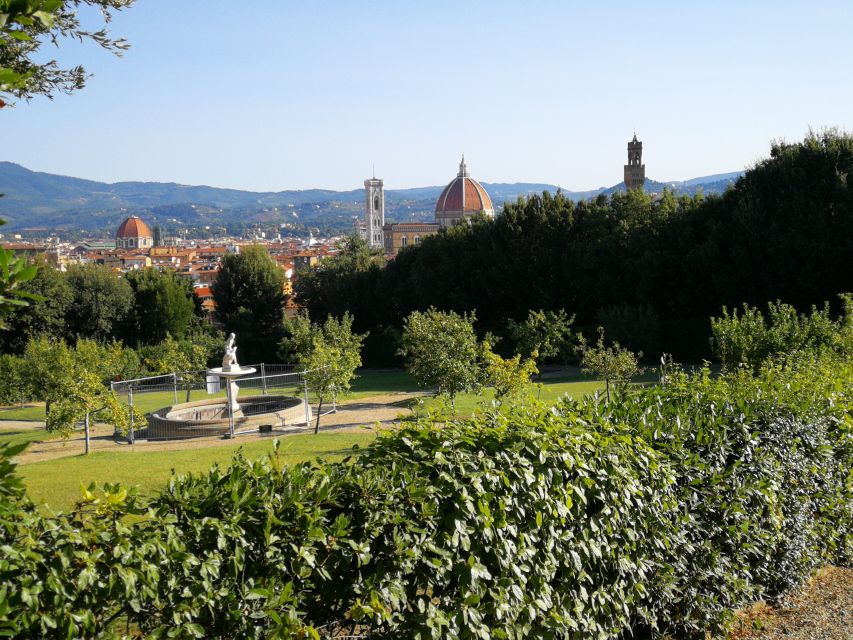
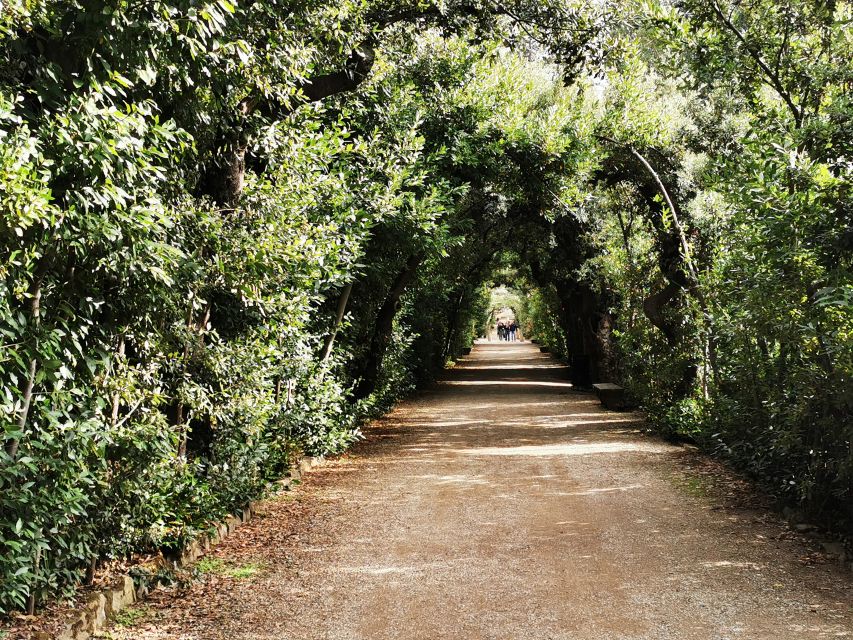
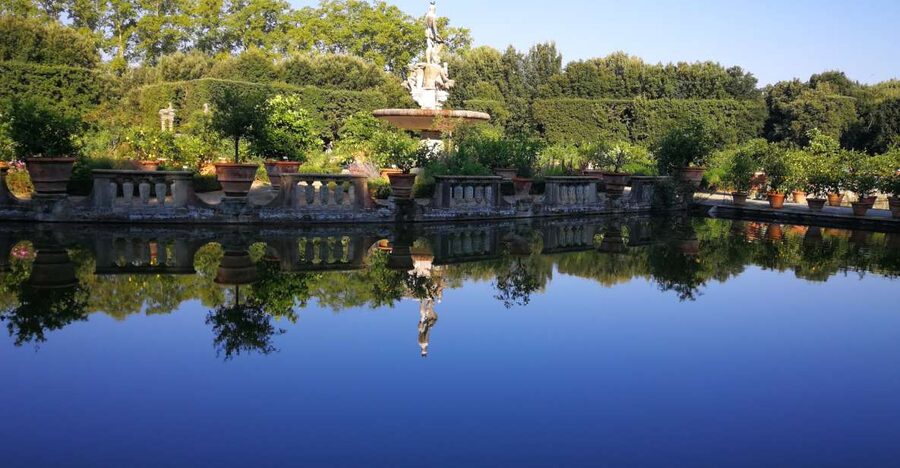
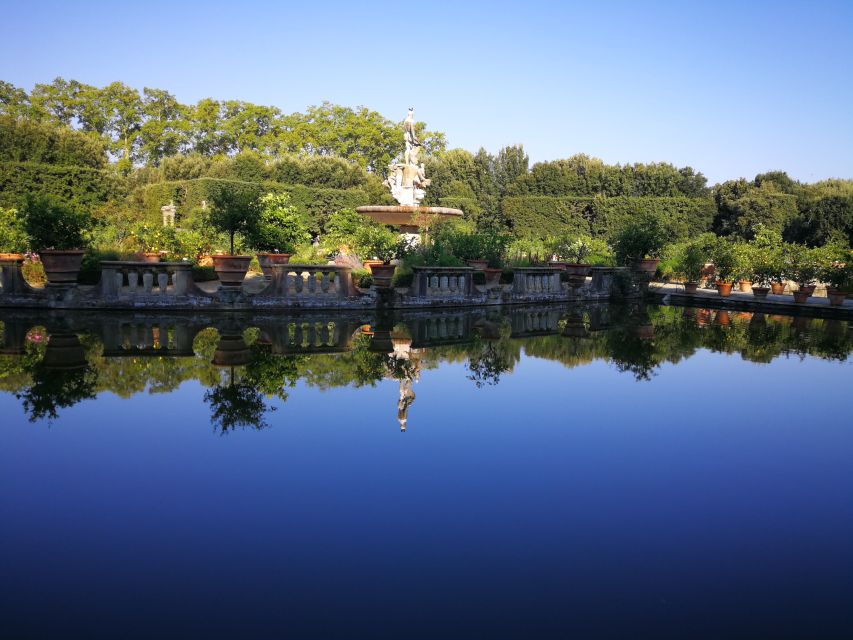
After the indoor rooms, Boboli changes the rhythm of the visit. You leave behind gilded interiors and enter a large garden shaped by formal design, sculpture, open lawns, and rising paths.
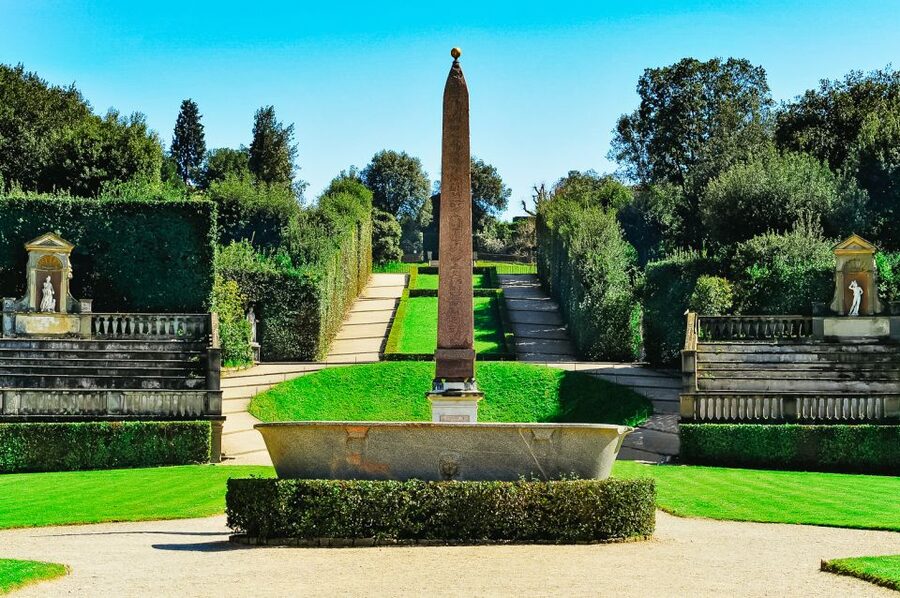
The oldest section includes the famous amphitheater. This is not just a patch of green after the museum. Boboli was designed as an extension of court life, where gardens, views, sculpture, and ceremony worked together.
The garden also helps explain the reach of Medici power. The palace tells you about collecting and court rooms. Boboli shows how a ruling family used outdoor space to create a controlled world of beauty and authority.
Go slowly here. The paths rise and fall, and the garden can be a serious workout by the end of the tour. Comfortable shoes are essential. Sandals with little support or smooth soles are a poor choice.
The upper sections are worth the effort. You can get broad views toward Florence, and one useful tip is to continue as far upward as the route and your energy allow. The views are one of the garden’s best rewards, but the climb may be difficult for anyone with knee, balance, or mobility concerns.
The early morning start works especially well in Boboli. It can be cooler in summer, and the garden tends to feel more relaxed before the heat builds. Even in winter, the grounds remain worthwhile for their structure and views, although the planting will not have the same fullness as in spring or summer.
How strenuous is the three-hour route?
The palace portion involves standing and walking through multiple rooms. The garden adds hills, uneven paths, and stairs or sloping sections. You should think of this as a moderate walking tour, not a short museum visit followed by a flat park stroll.
The guide can help adjust the pace. Several visitors appreciated guides who allowed rest time, offered alternatives for stairs, or paid attention to mobility needs. One guide was especially thoughtful with a wheelchair user, while another helped a person who had difficulty with stairs. That is encouraging, but you should still ask about current access conditions when booking if mobility is a major concern.
People with hearing difficulties should note that earsets are provided for groups of four or more. A guide may also be able to position the group thoughtfully, but individual arrangements are not guaranteed.
For most people, the best plan is simple: wear supportive shoes, carry water, and do not rush the garden. The palace is demanding on your attention; Boboli is demanding on your legs.
Is $115 good value?
At $115 per person, this is not a budget museum entry. You are paying for a three-hour guided visit, timed entry to Pitti Palace, the Palatine Gallery, and Boboli Gardens, plus skip-the-ticket-line access. Lunch is not included.
The value depends on how you travel. If you already know Renaissance painting well and enjoy exploring museums alone, buying entry and using your own guidebook may cost less. But Pitti Palace is large, visually dense, and easy to approach without a clear plan. The live guide can save time and help you notice details that you might otherwise pass by.
I think the price makes the most sense for a first visit, a short stay in Florence, or anyone who wants art and history explained in English. It is also useful for families or mixed groups where some people love art and others need a little help connecting with it.
The tour does not include lunch, but that is not a serious problem. The three-hour format leaves you free to eat afterward, and finishing near the Pitti area gives you plenty of options elsewhere in Florence.
Who should book this Pitti Palace tour?
I would recommend it to you if you want more than a quick look at famous paintings. The tour combines political history, painting, furniture, architecture, and garden design, so it suits people with different interests.
It is a particularly good match for:
- First-time Florence visitors who want a guided introduction to a major palace.
- Art lovers who want help with Raphael, Titian, Rubens, Van Dyck, Caravaggio, and Andrea del Sarto.
- Visitors tired of crowded museums who want a less frantic setting and more room to look.
- Families and mixed groups who benefit from a guide who can explain art without using specialist language.
- People visiting in summer, since the early start helps with the garden heat.
- Short-stay visitors who need one well-organized visit covering several sights.
I would hesitate if you dislike guided tours, have very limited walking ability, or want a slow, private visit in which you set the pace. Three hours is enough for a strong overview, but not enough to examine every room and every work in detail.
Practical details before you go
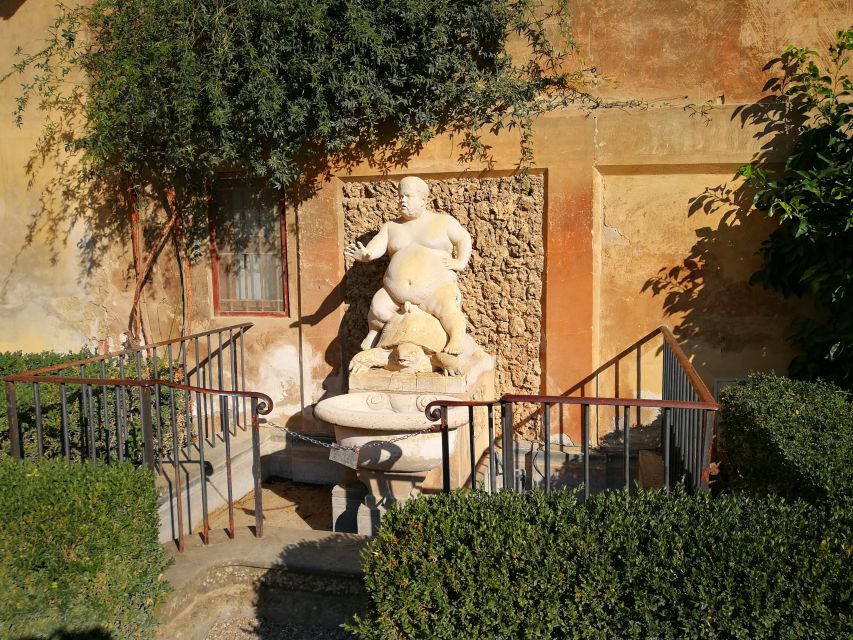
The meeting point is Piazza Pitti 1, at the main entrance to Pitti Palace. The tour is in English and includes a licensed guide.
Timed entry means you avoid waiting in the standard ticket line, which is useful when your Florence schedule is tight. You can cancel up to 24 hours in advance for a full refund, and reserve now while paying later, so the booking terms offer some flexibility.
The tour operates at set starting times, so check availability before planning the rest of your day. Wear comfortable shoes, especially if you want to reach the upper garden paths.
Some visitors used time after the guided portion to explore additional palace areas, including modern art, objects, and Italian fashion displays. Your exact time will depend on the schedule, opening arrangements, and how quickly the group moves, so treat that as a possible extra rather than the main promise of the tour.
Should you book it?
Book this tour if you want Pitti Palace to make sense rather than simply look grand. The Palatine Gallery can overwhelm you, and Boboli’s hills can test your legs, but the combination is unusually rewarding: first the Medici court indoors, then its formal garden outdoors.
At $115, you are paying for interpretation and time saved, not just admission. I think it is good value for a first visit, especially if you can secure a guide with the art background and patient style associated with Camilla, Sara, Silvia, or Federica. Skip it only if you prefer independent museum visits or cannot comfortably manage the garden’s slopes.
FAQ
How long does the Pitti Palace and Boboli Gardens tour last?
The tour lasts three hours.
What sites are included?
The timed entry ticket includes Pitti Palace, the Palatine Gallery, and Boboli Gardens.
Is the tour conducted in English?
Yes. The tour has a live English-speaking guide.
Where is the meeting point?
Meet at Piazza Pitti 1, at the main entrance to Pitti Palace.
Are the ticket lines skipped?
Yes. The activity includes skip-the-ticket-line entry with timed admission.
What should I wear for Boboli Gardens?
Wear comfortable shoes. The gardens include hills and sloping paths, and the walk can be strenuous for some people.
Museums with gardens around Florence
- Uffizi Gallery, Pitti Palace & Boboli Garden Entry Ticket
★ 4.0 · 11 reviews - Vienna: Skip-the-Line Sisi Museum, Hofburg and Gardens Tour
★ 4.8 · 5,918 reviews - Marrakech: Majorelle Garden, YSL, and Berber Museum Entry
★ 4.6 · 5,168 reviews - Rome: Borghese Gallery and Gardens Guided Small-Group Tour
★ 4.6 · 2,783 reviews
Newly planted garden visits around Florence
- Timed Entry Ticket to the Boboli Gardens★ 3.5 · 50 reviews
- Florence Cooking Class with Wine Pairing in Mirella’s Garden Home★ 5.0 · 29 reviews
- Pitti Palace and Boboli Gardens Private Tour★ 4.5 · 38 reviews
- Timed Entry Ticket to Pitti Palace and Boboli Gardens in Florence★ 3.5 · 118 reviews
- Market Tour & Traditional Tuscan cooking class in a garden★ 5.0 · 4 reviews
- Private Tour of Pitti Palace with Boboli Garden★ 5.0 · 28 reviews
- Palazzo Vecchio, Palazzo Pitti and Boboli gardens private tour★ 5.0 · 18 reviews
- Pitti Palace – Private Tour At Galleria Palatina Incl. Tkts To Boboli Gardens★ 4.5 · 7 reviews
Palace and Castle Gardens, bed by bed.
Paris: Versailles Palace and Gardens Full Access Ticket
Read our review →Versailles: Skip-the-Line Tour of Palace and Gardens Access
Read our review →
Vienna: Schönbrunn Palace & Gardens Skip-the-Line Tour
Read our review →
Granada: Alhambra & Gardens Tour w/Nasrid Palaces Option
Read our review →
From Paris: Versailles Palace & Gardens with Transportation
Read our review →
Florence: Reserved Entry Ticket to the Boboli Gardens
Read our review →
From Paris: Versailles Palace Guided Tour & Gardens Access
Read our review →Versailles Palace and Gardens Tour from Paris
Read our review →Lists this garden visit belongs to