
Review · THE UK
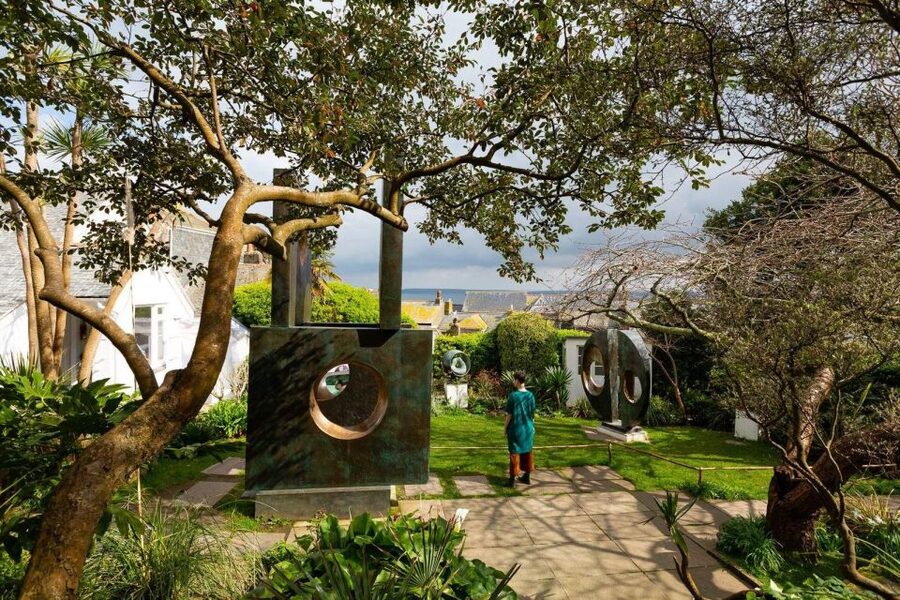
Barbara Hepworth Museum & Sculpture Garden: entry to site.
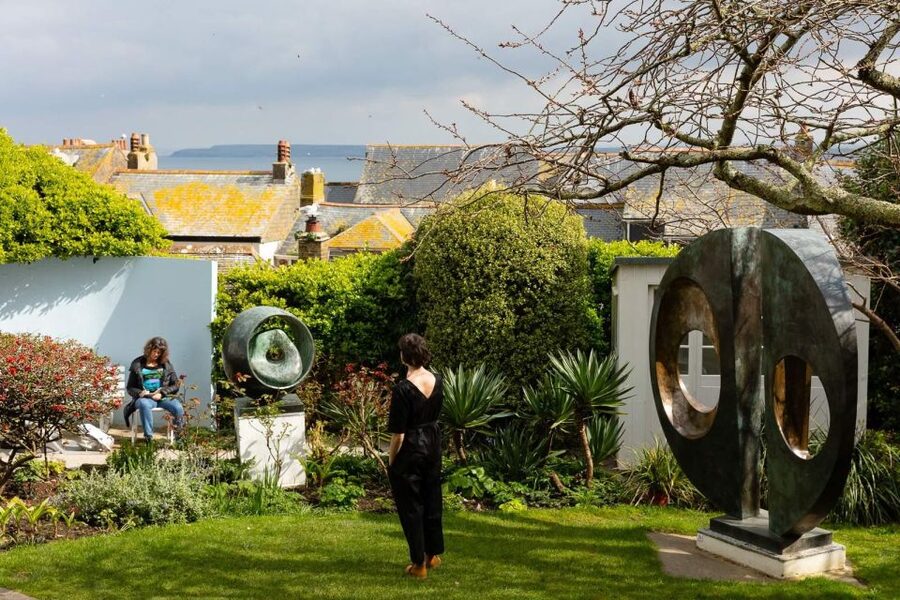
Barbara Hepworth’s former home in St Ives gives you something a gallery cannot: her sculptures remain in the rooms and garden where she lived and worked. You begin with archive photographs and career material, then move through her living space before reaching the subtropical garden, where larger works sit among the planting.
I especially like the link between the art and the place, and the fact that the site has been kept largely unchanged. The garden gives the visit a calm, personal feel. The main drawback is its small scale: there is no café, only one toilet, and the rules are strict about bags, food, cameras, and touching exhibits.
Key points to know
- See Hepworth’s former home: The museum occupies her original living area in St Ives.
- Follow her career through archive material: The admission area presents chronological photographs and objects from her working life.
- Walk among large sculptures outdoors: The subtropical garden provides the setting for several bigger works.
- Look toward the studios: The ticket includes views of Hepworth’s work studios, adding useful context to the garden pieces.
- Expect a focused visit: One visitor found an hour enough for a meaningful visit, though art lovers may want longer.
- Plan for a compact site: There is no café, the souvenir range is limited, and wheelchair access uses a side entrance arranged ahead of time.
Why Hepworth’s St Ives home matters
Barbara Hepworth is closely linked with modern art in St Ives, but this visit is not simply a display of famous objects in a neutral gallery. You see art in a domestic setting, with sculptures connected to the rooms, garden, and studios where her work took shape.
That setting changes how the pieces feel. Indoors, you see selected sculptures alongside paintings and drawings in her former living area. Outdoors, larger works have space around them, with plants softening the hard surfaces and changing the mood from room to room.
I like this kind of museum because it helps you understand the artist’s daily surroundings without turning the visit into a formal lecture. The information is present, but the site does not appear to overwhelm you with labels. You can look closely, pause, and make your own connections between the archive images, the indoor work, and the garden.
The museum also suits people who are not already experts in modern art. The abstract forms can seem puzzling when you first see them, but the combination of photographs, drawings, studio views, and finished pieces gives you several ways into Hepworth’s work.
Museums with gardens around the UK:
- Natural History Museum e Kensington Garden
★ 3.3 · 3 reviews - Vienna: Skip-the-Line Sisi Museum, Hofburg and Gardens Tour
★ 4.8 · 5,918 reviews - Marrakech: Majorelle Garden, YSL, and Berber Museum Entry
★ 4.6 · 5,168 reviews
Start with the archive photographs and career material
Your visit begins in the admission area, where chronological photographs and archive objects introduce Hepworth’s career. This is a useful first stop because it gives you a simple outline before you see the sculptures themselves.
The photographs help place the artist in time and show the development of her working life. They also prepare you for the home upstairs. Instead of entering a room full of unfamiliar abstract shapes with no context, you get a short visual introduction to the person who made them.
You can also learn about Hepworth and Ben Nicholson through the information presented on site. That material adds a personal and artistic dimension to the visit without requiring prior study.
I would not rush through this section. The garden is the part most likely to catch your eye, but the archive display helps make the rest of the experience more rewarding. If you have only a casual interest in modern art, spend a few minutes here before heading upstairs.
Upstairs in Hepworth’s former living area
The museum continues upstairs, in the part of the house that served as Hepworth’s living area. Here you see a selection of her abstract sculptures, paintings, and drawings.
The indoor rooms are important because they keep the visit tied to Hepworth’s everyday setting. You are not just looking at isolated art objects. You are seeing selected works in the home where she lived and worked in St Ives, and that makes the visit feel more direct and personal.
The collection here is not presented as a giant survey of every stage of her career. The strength is the setting and the close connection between the artist, the house, and the objects. If you want a large museum collection with many rooms and extensive displays, this will feel limited. If you want a concentrated look at Hepworth’s work in its original surroundings, the compact size is an advantage.
Give yourself time to look at both the sculptures and the drawings. The drawings and paintings can help you notice ideas that also appear in the three-dimensional pieces. Shapes, openings, balance, and the relationship between solid form and empty space become easier to consider when you can compare different types of work in one visit.
The subtropical garden and its larger sculptures
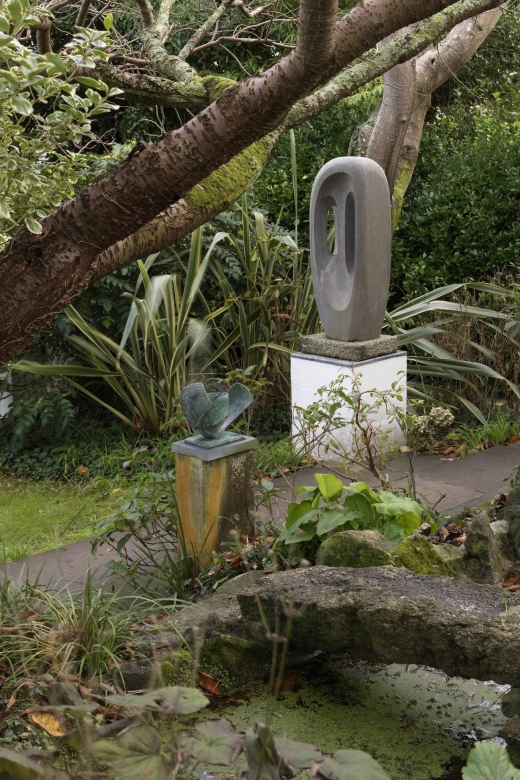
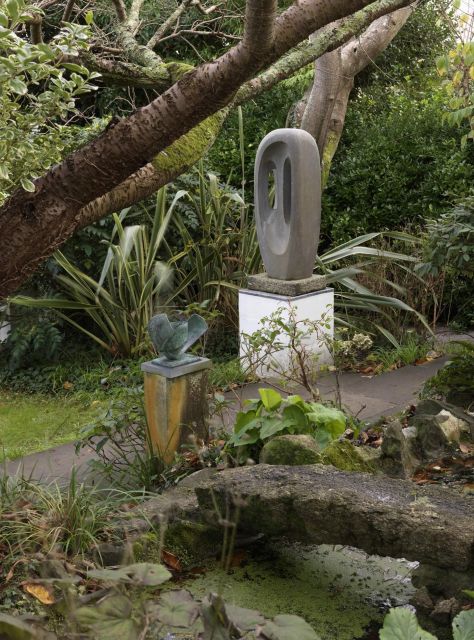
The garden is the main reason many people will want to come. Once outside, you see larger-scale sculptures placed among subtropical planting. The plants are not a plain backdrop. They alter the way you see the work, framing some pieces and giving others room to hold the eye.
I like the contrast here. Modern sculpture can seem severe in a white gallery, but in the garden the same broad forms have a different presence. Stone, metal, curves, openings, and shadows meet leaves and planting. The setting makes the works feel connected to daylight, weather, and the changing seasons.
You should take your time outside rather than treating the garden as a quick route between rooms. Walk slowly, look at each work from more than one angle, and pay attention to how the planting affects your view. The garden is not huge, so you do not need a whole day to cover it, but it rewards a quiet pace.
The site has been kept close to how it appeared when Hepworth lived and worked there. That is valuable for anyone interested in the working habits and surroundings of an artist. It also gives the visit a sense of place that a modern reconstruction could not easily provide.
There is a practical limit, though. Because the garden and home are relatively small, this is a focused stop rather than an all-day attraction. You may find an hour enough for a thoughtful visit, while a serious admirer of Hepworth’s work will likely want to linger over the details.
More gardens worth a morning in the UK:
- London: Kew Gardens Admission Ticket
★ 4.6 · 3,252 reviews - Kew Gardens Entrance Ticket
★ 4.0 · 1,055 reviews - The Kensington Palace Gardens Royal High Tea
★ 4.5 · 934 reviews - London: Kensington Palace Gardens Tour with Royal High Tea
★ 4.6 · 325 reviews
The studio views add useful context
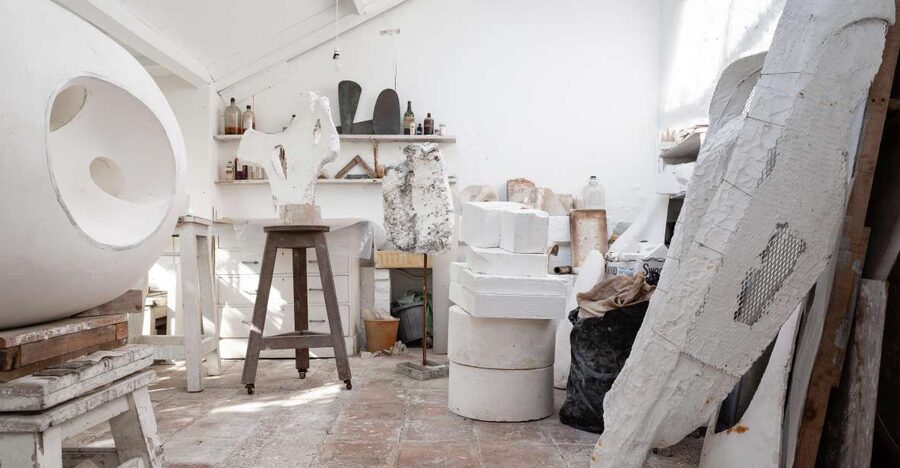
The ticket includes views of the work studios. Even without turning the visit into a full workshop tour, seeing where the work was made helps complete the picture.
Studios matter because sculpture is physical work. The scale of a finished piece, the tools involved, and the need for space all become easier to imagine when you can see the working environment. The studio views also connect the indoor collection with the larger pieces outside.
I would make a point of seeking out these views rather than focusing only on the garden. They are one of the details that separates this visit from a standard art museum stop. You are seeing not only finished objects, but also the surroundings associated with their making.
How long should you allow?
The ticket is valid for one day, so you have flexibility about when you visit within the available opening schedule. The experience itself is self-guided from the information provided, and no meeting point is required.
A visit can be fairly short. One person described spending a magical and inspiring hour at the museum and garden, which is a sensible amount of time for a careful first visit. I would allow at least an hour if you want to read the archive material, see the indoor rooms, view the studios, and walk through the garden without hurrying.
You might spend longer if you have a strong interest in Hepworth, abstract sculpture, or garden design. The site is small enough that you will not need to plan a full day around it, but the one-day validity makes it easy to fit into a wider St Ives schedule.
The garden can also change the pace of your day. After the tighter indoor rooms, the outdoor space offers somewhere to slow down and look. Do not expect extensive facilities or a long series of galleries. Expect a concentrated artistic visit with a strong sense of place.
Is the $13 entry good value?
At $13 per person, this is good value if you want to see Hepworth’s work in its original home and garden rather than only in a conventional gallery. The price covers the house, archive material, sculptures, paintings, drawings, garden, and views toward the studios.
The value comes from the combination. A ticket to a small garden alone might feel limited, and a short indoor display alone might not justify a special trip for everyone. Together, the house, work, and garden make a coherent experience.
The price is less attractive if you expect a large collection, a café, a long guided program, or extensive visitor facilities. There is no refreshment service, and the souvenir range is limited. Bring your expectations down to the right size, and the cost makes sense.
I would pair this visit with other St Ives sights rather than treating it as the only activity of the day. Its compact format works well as a focused art stop.
Practical rules that affect your visit
The museum keeps the site close to its original condition, so visitor controls are fairly strict. Food and drinks are not allowed, and there is no café on site. Large bags, oversize luggage, coolers, bikes, surfboards, skateboards, skates, and mobility scooters are not permitted.
You also cannot use drones, tripods, professional cameras, flash photography, or speakers. Smoking and vaping are prohibited. Do not touch the exhibits, climb, feed animals, litter, or bring pets, although assistance dogs are allowed.
These rules are easy to follow if you arrive with a small bag and plan to eat before or after your visit. The restriction on professional cameras and tripods may matter to photographers, so check your equipment before booking.
There is only one toilet on site. That is a small but useful detail to know, especially if you are planning a longer art day or visiting with children.
Unaccompanied minors are not permitted, and party groups, including bachelor and bachelorette groups, are not accepted. The setting is better suited to quiet visits than noisy group outings.
Accessibility and group size
Wheelchair access is available through a side-street entrance, but you need to arrange this ahead of your visit. That advance contact matters because the usual route may not be the route used for wheelchair entry.
The booking information describes a small group limited to nine participants. Since this is an entry experience rather than a named guided tour, the small-group limit should help keep the rooms and garden from feeling crowded, though you should still check the exact availability and starting arrangements when booking.
The site itself is compact, but compact does not automatically mean fully simple for every visitor. If you use a wheelchair, mobility aid, or have specific access needs, contact the provider before you go. Mobility scooters are not allowed, so this is especially important.
Who will enjoy this visit most?
You should book if you admire Barbara Hepworth, enjoy modern art, or like visiting artists’ homes and studios. The strongest appeal is the chance to see her work in the setting where she lived and worked, with the garden serving as part of the experience rather than a separate attraction.
It also suits people who like garden design. The subtropical planting is not just decoration. It changes the way the outdoor sculptures look and gives the visit a calm rhythm.
Families with older children may find the visit manageable, but the no-touch rule and quiet setting mean it is not designed as an active children’s attraction. Art students, photographers who can work within the camera rules, and visitors interested in St Ives’ artistic tradition should find plenty to consider.
You may want to skip it if you need a café, extensive toilets, a large collection, or a fully guided tour. You may also find it too brief if you are looking for a full-day attraction with lots of activities.
Should you book Barbara Hepworth Museum and Sculpture Garden?
I would book it if you want a personal, place-based look at Hepworth’s work. The house, studios, sculptures, and garden belong together, and that connection is the experience’s main strength.
The $13 price is fair for the combination of original rooms, archive material, indoor art, outdoor sculpture, and subtropical planting. Plan for roughly an hour or more, carry only what you need, and do not expect refreshments or a large shop.
This is not a grand museum. It is a small, carefully preserved artistic home. For Hepworth admirers and modern-art beginners alike, that focused scale is more likely to be a benefit than a problem.
FAQ
Where is the Barbara Hepworth Museum and Sculpture Garden?
It is in St Ives, in South West England, United Kingdom.
What does the entry ticket include?
The ticket includes entry to Barbara Hepworth’s original home and garden, archive information and images, abstract sculptures, paintings, drawings, the subtropical garden, and views of her work studios.
How much does entry cost?
The listed price is $13 per person.
How long is the ticket valid?
The ticket is valid for one day.
Is there a required meeting point?
No meeting point is required for this entry experience.
Is the site wheelchair accessible?
Yes, wheelchair access is available through a side-street entrance, but you need to arrange this ahead of your visit.
Are food and drinks allowed?
No. Food and drinks are not allowed, and the site does not have a café or refreshment facility.
Can I bring a large bag or luggage?
No. Luggage, large bags, oversize luggage, and coolers are not permitted.
Can I take photographs?
Flash photography, tripods, and professional cameras are not allowed. The provided information does not state a general ban on all ordinary photography, so check the site rules on arrival and do not touch the exhibits.
Are pets allowed?
Pets are not allowed, but assistance dogs are permitted.
Newly planted garden visits around the UK
- Kensington Palace VIP Garden Tour with Royal High Tea★ 4.5 · 71 reviews
- Secret Gardens of London Private Tour★ 5.0 · 13 reviews
- Sky Garden Access Ticket + 2 Course Dinner at Larch Restaurant★ 4.0 · 4 reviews
- Visit Kew Gardens & 3 Hour Westminster Walking Tour★ 5.0 · 6 reviews
- Secret Gardens of the City of London Private Tour★ 5.0 · 40 reviews
- RHS Garden Hyde Hall★ 4.5 · 3 reviews
- Sky Garden Access Ticket + 2 Course Breakfast at Larch Restaurant★ 3.0 · 11 reviews
- Kent, the Garden of England Independent Full Day Private Tour★ 4.0 · 3 reviews
UK Garden Tours, bed by bed.
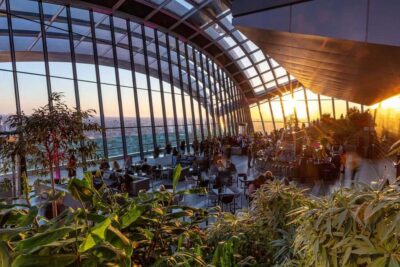
London: Sky Garden Early Access with Pastry and Hot Drink
Read our review →
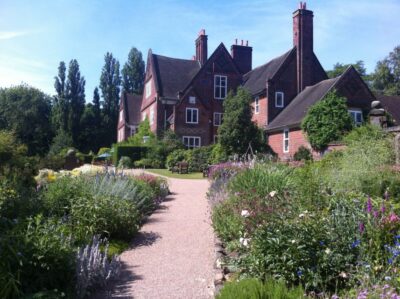
Birmingham: Winterbourne House and Garden Admission Ticket
Read our review →
Skip the Line: House and Garden Admission Ticket
Read our review →
VIP Kensington Palace Gardens Tour & Royal Tea Crown Experience
Read our review →Lists this garden visit belongs to