
Review · INDIA
Bangalore Walking Tours – Flower Market, PETE and more
Bangalore’s old city comes alive in its markets. This 3 km walk takes you from a Vishnu temple to Tipu Sultan’s palace, then through narrow shopping lanes and the flower market at KR Market. You get architecture, religion, trade, and street life in one compact outing.
I like the strong contrast between the stops, especially the calm temple and palace against the noise of KR Market. I also like having Jayanthi as a guide, since the tour depends on explanation as much as sightseeing, and she is described as patient, lively, and good at answering questions.
The main consideration is the walking itself. Two and a half hours through crowded lanes can feel longer than the stated distance, and the tour does not include bottled water. Wear sensible shoes and bring your own drink.
Key points to know before booking
- KR Market supplies the color and energy: The flower stalls, spices, vendors, and heaps of produce form the most memorable part of the walk.
- Tipu Sultan’s summer palace is the main paid sight: Palace entry is included, with time for its architecture, paintings, and story.
- Jayanthi leads a private group: You can ask questions and move at your group’s pace rather than following a large crowd.
- Chickpet adds everyday Bangalore: Tiny streets, textile shops, temple jewelry, and constant foot traffic show the city at work.
- The route begins and ends at Lakshmi Natraj Refreshments: The meeting point is in the old city, near public transportation.
- Plan for a market walk, not a polished sightseeing circuit: The appeal is the real street setting, with noise, crowds, and uneven moments.
Why this old-city walk works
This experience is a short introduction to Bangalore’s oldest quarters, known here as PETE. Rather than keeping you on broad roads between major monuments, it uses a compact walking route through places where worship, shopping, food, craft, and wholesale trade sit close together.
That mix is the point. You are not seeing a temple in isolation, then taking a vehicle to a palace, then visiting a market as a separate attraction. The route links them so you can notice the change from a sacred compound to a royal residence, then to crowded commercial lanes.
The tour lasts about two hours and thirty minutes. The stated distance is roughly 3 km, though the stop-and-start nature of market walking may make it feel more active than that figure suggests. One previous participant described the outing as involving around 10,000 steps, so I would treat this as a genuine walking tour, not a gentle stroll.
Because the activity is private, only your group participates. That matters in Chickpet and KR Market, where narrow lanes can make a large group awkward. It also gives you a better chance to ask about details you might otherwise miss, such as temple customs, palace design, or the purpose of different market sections.
More Flower Markets and Flower Fields in India
- Jaipur Tuk-Tuk Tour with Flower Market Visit
★ 5.0 · 124 reviews - Jaipur Tour by Tuk-Tuk or Car with Flower Market
★ 5.0 · 120 reviews - Jaipur: Half-Day Guided Sightseeing Tour with Flower Market
★ 4.9 · 119 reviews
Starting at Kote Venkataramana Temple
The walk begins at Kote Venkataramana Temple, an old Vishnu temple known for its architecture. You spend about 30 minutes here, with no separate admission charge.
This is a sensible opening stop. A temple gives you a quieter way to begin before the street noise builds. It also introduces the religious life of the old quarters, which helps explain why temples and commercial streets are so closely connected in this part of Bangalore.
The visit is not just a quick photograph from outside. Jayanthi explains the temple’s importance, its design, and the way a place of worship can remain active while adapting to city life. The supplied description points to the temple’s flexibility and energy, so expect interpretation about how it functions, not only a list of architectural features.
You should dress and behave respectfully at this stop. The information does not specify a dress code or shoe policy, so your guide can clarify what is required on the day. Since this is an active religious site, the pace and access may depend on what is happening there.
I like beginning here because it gives the rest of the route a useful frame. The palace shows royal power, while the temple shows a continuing religious tradition. Later, the market shows daily commerce. Those three settings make Bangalore’s older center easier to understand.
Tipu Sultan’s summer palace and fort
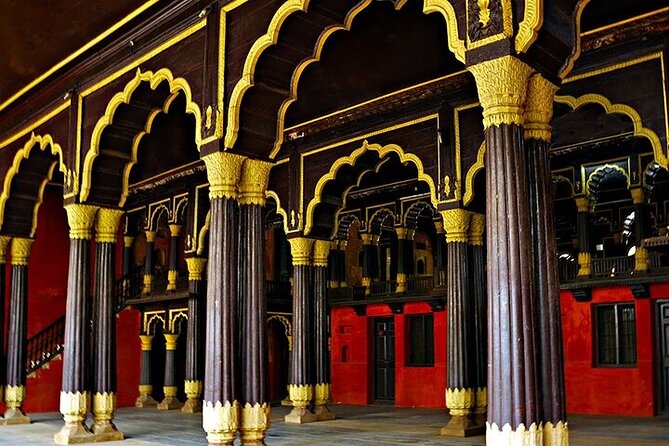
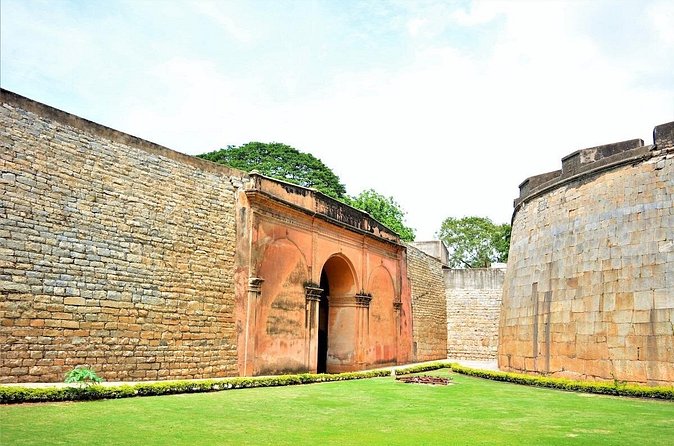
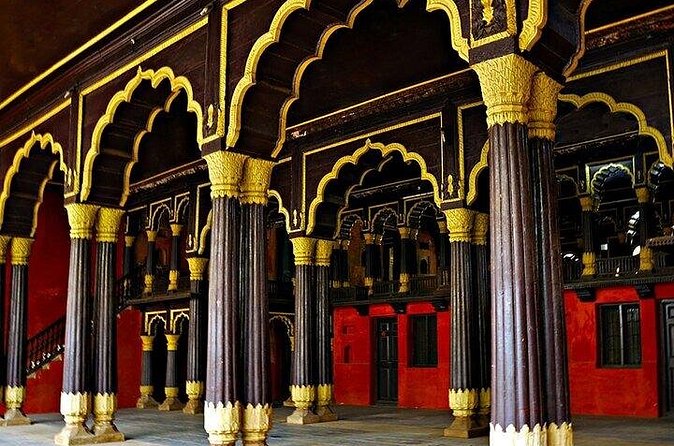
The second stop is Tipu Sultan’s summer palace and fort, with about 50 minutes allotted and entry included in the price. This is the longest scheduled visit, and rightly so.
The palace is presented as a peaceful royal retreat, with attention to its architecture, paintings, and the story of Tipu Sultan. The building offers a clear change of mood after the temple. Instead of the close, active setting of worship, you move into a site shaped by royal residence and military history.
You should expect the palace to be an interpretive stop rather than a huge complex filled with rooms. The value comes from understanding what you are seeing. Jayanthi’s explanation helps connect the structure, its decoration, and Tipu Sultan’s role as a Muslim ruler in the region.
The palace and fort also add historical balance to the market portion of the tour. If you only visited KR Market, you would see present-day trade but have less sense of the political world that shaped Bangalore. If you only visited the palace, you would miss the living city around it.
The 50-minute time slot is useful for a first look, though anyone wanting a long, detailed study of every painting may find it brief. This tour is designed to connect several sights in one morning or afternoon, not to spend half a day at the palace alone.
The entry fee is included, so you do not need to budget a separate admission charge for this stop. That is one reason the price makes more sense when you value a guided introduction rather than simply paying for a walk through the streets.
Chickpet’s narrow lanes and textile shops
After the palace, the route moves into Chickpet. Here the character changes again. You walk through small streets lined with petty shops, textiles, people moving between stores, and the everyday business of the old city.
Chickpet is important because it gives you a close look at Bangalore as a working commercial center. The appeal is not a single grand building. It is the density of activity: shopfronts, fabrics, color, foot traffic, and lanes that feel shaped by trade rather than by modern traffic planning.
The route then returns toward Nagarath Street, where you see temple jewelry before the walk ends. This is a particularly useful detail for anyone interested in Indian craft and religious culture. Temple jewelry has a distinctive visual role, and seeing it in a shopping lane gives you a better sense of how traditional designs remain part of commercial life.
This section may be the least comfortable for people who dislike crowds or tight spaces. The lanes are small, and the description makes clear that you are walking amid active shops rather than through a quiet heritage quarter. You may need to pause often, stay close to your group, and accept that the pace will be shaped by other people.
That is also what makes Chickpet worthwhile. I would not book this tour expecting a neat, silent historic district. Book it if you want to see how an old quarter functions when it is still used every day.
Same season, a different set of beds:
- Private Jaipur Full-Day Tour with Block Printing
★ 5.0 · 206 reviews - Private Custom Full Day Sightseeing Tour of Kolkata
★ 5.0 · 128 reviews - Jaipur: Half or Full Day Sightseeing Tour with Flower Market
★ 5.0 · 94 reviews - Delhi: Yoga in Lodhi Garden
★ 4.9 · 53 reviews
KR Market, where the tour reaches full volume
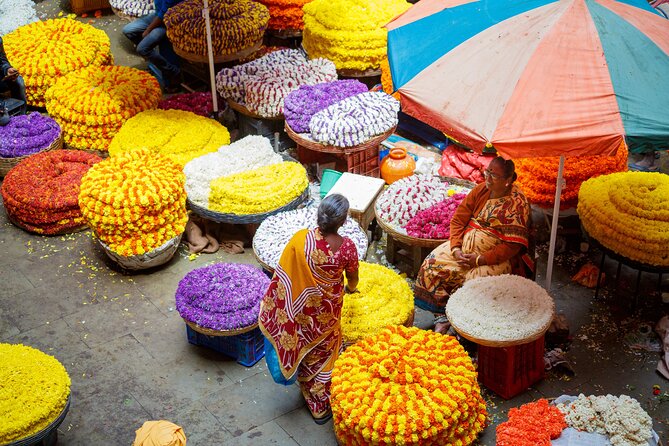
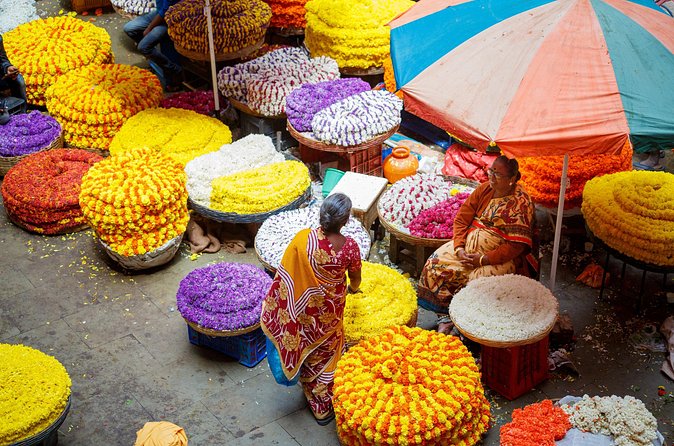
KR Market is the final major stop and one of the strongest reasons to choose this experience. It is described as Bangalore’s biggest market, with vendors, noise, flowers, spices, and piles of colorful goods.
The flower market is the visual centerpiece. Stalls filled with flowers bring strong color and scent to a setting that can otherwise feel crowded and rough around the edges. The contrast is part of the experience: the market is noisy and practical, but the flowers add beauty and ceremony.
You also see spices and heaps of produce, giving the market a wider context than a flower-only visit. This is a place of trade, not a display arranged for sightseeing. That means you may find the setting messy, loud, and fast-moving. Those qualities are not flaws to be hidden. They are central to seeing the market as a working part of Bangalore.
The flower market received the strongest praise across the supplied comments. It was repeatedly described as fantastic or mind-blowing, and that enthusiasm is easy to understand from the way the stop is structured. You are not simply shown a decorated stall. You approach the market after seeing the temple, palace, and lanes, so the flowers become a vivid final burst of color.
Bring your phone or camera if you want pictures, but remain considerate. The tour information does not promise special photography access, so follow Jayanthi’s instructions and avoid blocking sellers or buyers.
What Jayanthi adds to the route
A walk through old Bangalore can be confusing without context. Many details pass quickly: a shrine, a shop sign, a type of jewelry, a palace painting, or a market product. Jayanthi’s role is to explain what connects these details.
The comments about her are unusually consistent. She is described as patient, humble, friendly, lively, and good at answering questions. One person specifically praised the way her explanations brought history, architecture, and the market together.
That matters because this is not a tour built around one famous monument. The route has four different kinds of stop, and the transitions are where a guide earns the fee. You want someone who can move from temple etiquette to palace history, then explain street commerce without making the whole walk feel like a lecture.
The private format helps. You can ask for clarification, spend a little more time on a subject that interests you, or tell the guide if the pace is too quick. The exact level of flexibility is not specified, so do not assume every stop can be extended, but a private group should make conversation easier than a large shared tour.
Price, pace, and practical value
The cost is $79.33 per person. That is not a bargain-priced city walk, especially since the activity lasts about two and a half hours and most stops do not charge an admission fee.
The value depends on what you want from the outing. If you only want to wander through KR Market, you can do that without paying for a tour. If you want the palace entrance, a clear route through several old neighborhoods, and a guide who explains the religious, royal, and commercial settings, the price is easier to justify.
The private format is the biggest value factor. You are paying for a focused experience for your own group, not just access to a public walk. That makes the tour more appealing for couples, families, or small groups who prefer to ask questions and avoid a fixed large-party pace.
The tour is booked, on average, eight days ahead. That suggests you should not leave it until the last minute if this is important to your schedule. Confirmation arrives within 48 hours, subject to availability.
The walk starts and finishes at Lakshmi Natraj Refreshments, at 126 Dharmaraya Swamy Temple Road in the old city. The restaurant is a practical meeting landmark, and returning to the same place makes onward planning simpler. The meeting point is near public transportation, but the exact route from your accommodation is not provided.
Bottled water is not included. Bring your own, since the combination of walking, market activity, and Bangalore’s weather can make a drink useful. Wear comfortable shoes, and keep your belongings secure in crowded areas.
The tour requires good weather and a minimum number of participants. If poor weather or insufficient participation causes a cancellation, you are offered another date or experience, or a full refund.
Who should book this Bangalore walk
I would choose this tour if you want a first look at Bangalore’s old center and prefer local streets to a list of isolated monuments. It suits anyone interested in architecture, religious sites, market life, textiles, flowers, and the story of Tipu Sultan.
It is also a good fit if you want a guide who can answer questions along the way. The route has enough variety to keep a first-time visitor interested, while the private format gives you a more personal feel.
You may want something else if you dislike crowds, noise, narrow streets, or walking through active markets. It is not a polished palace-only tour, and it is not designed as a slow architectural study. The market and Chickpet sections are active, crowded, and sometimes physically demanding.
Families and older participants should consider the walking conditions carefully. The information says most people can participate, but the route includes narrow lanes and market crowds. Anyone who needs a slower pace should discuss that with the operator before booking.
Should you book it?
Book this tour if you want Bangalore to feel like a living city rather than a set of monuments. The flower market is the standout moment, but the route works because the temple, palace, Chickpet lanes, and market give each other meaning.
At $79.33, it makes the most sense for people who value a private guide and included palace entry. Jayanthi’s patient explanations are an important part of the experience, particularly for visitors who want help understanding what they are seeing.
Skip it if you want a quiet, air-conditioned sightseeing trip or a long, detailed visit to one building. Choose it if you are ready for noise, color, tight lanes, and a direct look at old Bangalore’s daily life.
FAQ
How long does the Bangalore walking tour last?
The tour lasts approximately 2 hours and 30 minutes.
How far do you walk?
The route is about 3 km, though one account described the outing as involving roughly 10,000 steps.
Is the tour private?
Yes. Only your group participates in the private tour or activity.
Where does the tour start and finish?
It starts and ends at Lakshmi Natraj Refreshments, 126 Dharmaraya Swamy Temple Road, Kumbarpet, Ganigarpet, Nagarathpete, Bengaluru, Karnataka 560053.
What admission is included?
Entry to Tipu Sultan’s palace and fort is included. The Kote Venkataramana Temple, Chickpet, and KR Market stops do not list a separate admission charge.
Is bottled water provided?
No. Bottled water is not included, so you should bring your own.
Can I cancel for a full refund?
Yes, if you cancel at least 24 hours before the experience start time. Cancellations made within 24 hours are not refunded, and changes within that period are not accepted.
Newly planted garden visits around India
- Private Custom Full Day Sightseeing Tour of Kolkata★ 5.0 · 128 reviews
- Flower Market Colors and Ganges Ghat Experience★ 5.0 · 2 reviews
- Kolkata’s Flower Market – Hooghly’s Flower Fest Tour★ 5.0 · 35 reviews
- Mandore Garden Walking Tour★ 4.0 · 2 reviews
- Jaipur City Tour with Traditional Flower Market Visit★ 5.0 · 7 reviews
- Jaipur Full-Day Heritage Tour with Guide★ 5.0 · 18 reviews
- Jaipur Sunrise Tour with Morning Flower Market Walk★ 5.0 · 16 reviews
- Jaipur Half-Day Tour with Flower Market and Block Printing★ 5.0 · 4 reviews
Flower Markets and Flower Fields, bed by bed.
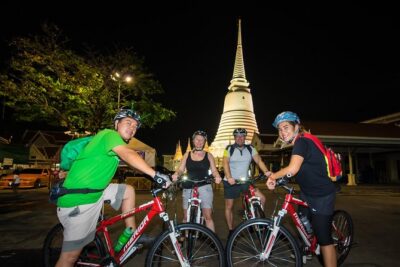
Bangkok: Night Bike Tour with Temples & Flower Market Visit
Read our review →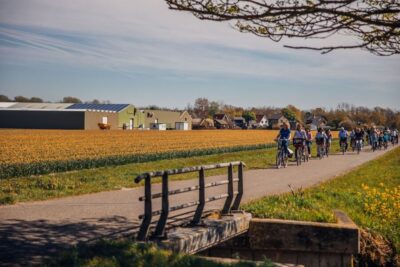
Keukenhof: Flower Fields Small-Group Cultural Bike Tour
Read our review →
Kolkata’s Flower Market – Hooghly’s Flower Fest Tour
Read our review →
Amsterdam: Half-Day Flower Fields and Keukenhof Bicycle Tour
Read our review →
Flower Market & Floral Art: Multilingual Private Tour [EN/others]
Read our review →
Cebu: City Highlights with Sirao Flower Garden Visit
Read our review →
Bangkok Wat Pho and Flower Market Historical Walking Tour
Read our review →
Lists this garden visit belongs to