
Review · JAIPUR
Jaipur City Tour with Traditional Flower Market Visit
Jaipur’s best opening scene is not behind a palace gate. It is the morning flower market, where sellers arrange garlands and produce for local buyers as the Pink City gets moving. Choose the 7 to 8 AM departure, then walk from Hawa Mahal through an 18th-century heritage building to the flower and vegetable stalls before stopping for masala chai and a samosa or kachori.
I like the private car and flexible scale. You travel with only your own group, get hotel, airport, or railway station pickup, and can spend your day with a local guide rather than sorting out Jaipur’s spread-out sights alone. I also like the range: Amer, stepwells, royal tombs, palaces, an observatory, a museum, and a Hindu temple all fit into one long day.
The catch is simple: nine or ten hours is a lot of ground to cover, and the price does not include monument admission. The advertised rate is $13.59 per group of up to three, but combined entry fees are listed at about $30 per person, with camera fees and tips extra. You should confirm the final cost and decide which stops matter most before setting out.
Key points to know before booking
- The flower market requires the 7 to 8 AM start, not a later departure.
- Vinod is a name worth requesting, if available. Several guests singled him out for his warmth, humor, advice, and organization, though the provider may assign another driver or guide.
- The day is private, so your group does not share the car with strangers.
- Amer, Panna Meena Ka Kund, and Jal Mahal give you three very different views of Jaipur before the city-center monuments.
- Tea, water, and a local snack are included, while admission tickets, camera charges, and gratuities are not.
- The itinerary is ambitious, so you may need to choose between lingering at major monuments and fitting in every listed stop.
A market-first start in old Jaipur
Your driver picks you up in an air-conditioned car from a hotel, airport, or railway station in Jaipur. The early departure matters. Jaipur is easier to face before the day becomes hot and before the city’s roads fill with traffic, and the flower market gives you a local scene that a standard palace circuit can miss.
The tour first takes you to Hawa Mahal for a photo stop. From there, you walk toward the flower and vegetable market, passing an 18th-century heritage building on the way. This part is not designed as a polished show for tourists. You see how flowers and vegetables are arranged, sold, and carried in everyday Jaipur.
I would wear comfortable shoes and bring water, even though bottled water is provided. The market visit involves walking, and the ground may be uneven or crowded. Keep your camera ready, but ask before photographing sellers at close range. The point is to observe local trade respectfully, not to turn every person into a backdrop.
After the market, you stop at an old local food shop for masala chai and a snack. The included choice is a samosa or kachori, with lassi or coffee also listed among the refreshments. This is a small part of the day, but it helps connect the grand monuments with the food and routines of the city.
If you select a later time, the market visit is not part of the plan. That is the main decision to make when booking. For me, the early start gives this tour more character, while the later option may suit you if you value sleep over a market walk.
More Flower Markets and Flower Fields in India
- Jaipur Tuk-Tuk Tour with Flower Market Visit
★ 5.0 · 124 reviews - Jaipur Tour by Tuk-Tuk or Car with Flower Market
★ 5.0 · 120 reviews - Jaipur: Half-Day Guided Sightseeing Tour with Flower Market
★ 4.9 · 119 reviews
Amer Town and the royal side of Jaipur
After the morning food stop, the car heads toward Amer Town, about 11 kilometers from Jaipur. Amer is known for Rajput and Mughal design, with palaces, temples, carved details, and old bazaars. This is the section of the day where Jaipur’s royal past feels most concentrated.
The tour description points to the Sheesh Mahal, or Mirror Palace, and the Sila Devi Temple. The exact amount of time at each site can vary, so ask your guide at the start how the schedule will work. If you want a detailed palace visit rather than a quick circuit, Amer deserves your attention.
A private guide is especially useful here because the architecture can look like a maze of courtyards, gateways, halls, and carved surfaces. You can ask why Rajput and Mughal elements appear together, or which sections remain in use. The included local guide is a practical advantage, but the quality of your day depends on who is assigned and how much explanation you prefer.
The tour does not promise that every entry ticket is included. Combined admission to popular Jaipur monuments is listed at about $30 per person, and camera fees may apply. Check which ticket covers Amer and the other sites before you pay, since the low headline price can look very different once entrance charges are added.
Panna Meena Ka Kund, a quieter stop with a big design
Near Amer, the tour visits Panna Meena Ka Kund, a 16th-century stepwell located in the shadow of a famous fortress. Its repeated stairways create a striking geometric pattern, and the site offers a change of pace from palace rooms and formal courtyards.
This stop is valuable because it shows a practical side of old Rajasthan. A stepwell was not merely decorative. Its design helped people reach water as the level changed, while the surrounding structure provided a place for people to gather.
You may find this stop less demanding than the major palace complexes, but do not assume it will be empty or easy to photograph from every angle. The itinerary calls it a little-known attraction, not a private site. Listen to local instructions and avoid climbing into areas that are closed.
Jal Mahal and Jaipur’s most famous water view
The route then returns toward the city and stops at Jal Mahal. The palace sits in the middle of Man Sagar Lake, making it one of Jaipur’s most recognizable views. From the shore, the water and palace create a sharp contrast with the dry, built-up city around them.
Jal Mahal is mainly a viewing stop in this itinerary. The information provided does not promise interior access, so plan on seeing and photographing the palace from outside rather than touring its rooms.
This is a good moment to keep the day moving. You get the view without spending the time required for a full palace visit, leaving more room for the City Palace, Jantar Mantar, and the other city sights. If photography matters to you, ask the driver where the car will stop and how long you have.
More Flower Markets and Flower Fields in Jaipur:
- Jaipur: Half or Full Day Sightseeing Tour with Flower Market
★ 5.0 · 94 reviews - Jaipur Sunrise Tour with Morning Flower Market Walk
★ 5.0 · 16 reviews - Jaipur Nahargarh Fort Sunrise or Sunset Tour with Flower Market
★ 5.0 · 9 reviews - Jaipur Half-Day Tour with Flower Market and Block Printing
★ 5.0 · 4 reviews
Royal Gaitor beneath the Nahargarh hills
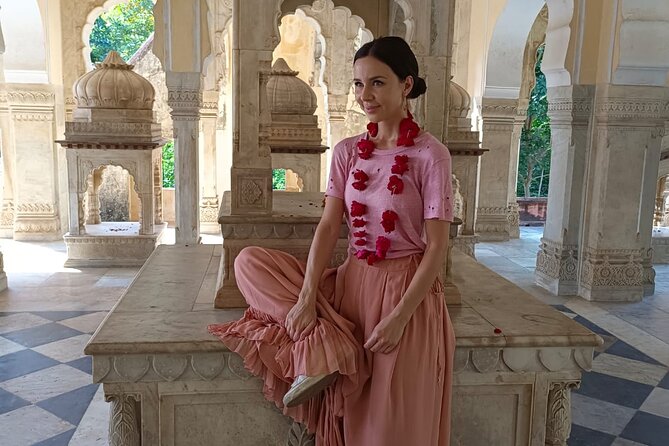
Royal Gaitor sits at the foothills of Nahargarh and contains ornate cenotaphs for Jaipur’s former rulers, including Maharaja Pratap Singh, Madho Singh II, and Jai Singh II. These memorials are built from stone and feature detailed carving.
The cenotaph of Maharaja Jai Singh II is described as the most impressive, with a dome supported by 20 carved pillars. This stop gives you a quieter look at royal memorial architecture than the grand palace compounds. I would pay attention to the carved stonework and the setting rather than rushing through for another quick photograph.
It is also one of the itinerary’s more unusual choices. Many first-time Jaipur programs focus only on Amer Fort, City Palace, and Hawa Mahal. Royal Gaitor adds a calmer monument and helps explain how Jaipur’s rulers were remembered after death.
Hawa Mahal, City Palace, and Jantar Mantar
The tour returns to Hawa Mahal, the Wind Palace, after using it as the starting point for the market walk. Its five-story facade was designed with many openings, allowing royal women to observe street life without being seen from outside. The building is one of Jaipur’s most familiar sights, but a guide can help you look beyond the postcard view.
The description makes a dramatic claim about its construction and shape, including that it was built without a foundation and leans at an angle. Treat those details as talking points to clarify with your guide rather than as the main reason to visit. The practical highlight is the facade, the street setting, and the story of how it was used.
City Palace lies inside Jaipur’s walled city. Maharaja Sawai Jai Singh II founded the complex, which combines Mughal and Rajput design. The royal family still occupies a private section, while other areas are open to the public.
This is one of the places where your admission budget matters. City Palace can require its own ticket or form part of a combined ticket, and camera charges may be separate. If you are interested in royal rooms, courtyards, textiles, arms, or decorative arts, tell your guide early so you do not spend the whole visit on a fast exterior circuit.
Jantar Mantar offers a different kind of experience. Built in the early 18th century, it contains about 20 large fixed instruments used for astronomical observation. The instruments can look abstract until someone explains how their angles, shadows, and positions worked.
I like placing Jantar Mantar beside the palaces because it shows Jaipur as more than a royal photo set. The city also supported serious scientific work. Give this stop time if you enjoy learning how buildings and measurements were used, not just looking at decorated walls.
Sargasuli Tower and Albert Hall Museum
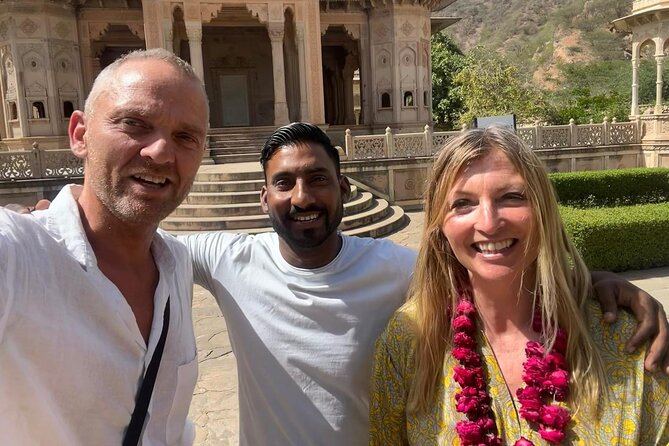
Isarlat, also called Sargasuli Tower, is a seven-story monument built by Sawai Ishwari Singh in 1749. From the top, you can see across the city, making it a useful stop for understanding Jaipur’s layout.
The tower is not just another palace facade. Its height gives you a wider view of the Pink City and helps connect the separate stops on the itinerary. Ask about opening access on the day, since the schedule lists the monument but does not explain how long you will spend inside.
Albert Hall Museum is Rajasthan’s oldest museum and serves as the state museum. It sits in Ram Niwas Garden outside the old city wall, opposite New Gate, in an Indo-Saracenic building.
The tour’s broad list of stops means the museum may be a shorter visit than a museum specialist would want. If you enjoy collections and architecture, tell the guide that you would rather spend time here than add an extended shopping stop. If museums are not your priority, the building itself still makes a worthwhile exterior sight.
Galta Ji Temple and the optional market stop
Galta Ji is an ancient Hindu pilgrimage site about 10 kilometers from Jaipur. A series of temples sits in a gap between hills, with natural spring water flowing into sacred bathing tanks. The route can continue uphill to a temple with broad views over the valley and Jaipur’s fortifications.
This stop is more religious than the palace visits. Dress respectfully, follow local instructions, and remember that the water tanks are sacred places for pilgrims. The site may also require more walking than a roadside photo stop, so be realistic about your energy late in a nine or ten-hour day.
The tour can also take you to Jaipur’s markets after the sightseeing. The listed shopping choices include fabrics, sandals, bags, and other goods. This can be useful if you want practical souvenirs, but shopping time changes the balance of the day.
I would decide in advance if you want to shop. A private car makes it easier to ask for a market visit, but low prices do not automatically mean the best value. Compare goods, ask about prices clearly, and do not feel obliged to buy. If your priority is monuments, use this time for a longer stop at City Palace, Amer, or the museum instead.
What the $13.59 price really means
At $13.59 per group of up to three, the advertised price is unusually low for a private car, driver, guide, fuel, parking, and pickup. That makes the tour attractive for a couple or small family, especially when the cost is divided among three people.
Still, the headline number is not the complete day’s budget. Admission fees are listed separately at about $30 per person for combined entry to popular Jaipur monuments. Camera fees may apply, and tips are not included. The total can therefore be several times the starting price.
The included items are useful: private transport, fuel, parking, bottled water, hotel or station pickup and drop-off, a local guide, and tea, coffee, lassi, and a snack. You are paying mainly for convenience and coverage, not for a fully ticketed package.
The private format is the real value. You avoid arranging several taxis across a wide city, and you can ask to adjust the pace. The driver returns you to your hotel or another desired location in Jaipur at the end.
Who will get the most from this day
I would choose this tour if you have one full day in Jaipur and want the major sights plus a local morning experience. It suits couples, families, and small groups who prefer a private car to a large coach.
It also works well if you want to ask questions as you go. The tour has a guide, and past feedback repeatedly highlights Vinod as friendly, funny, helpful, and attentive. He is praised for advice about eating, shopping, and places to stay, and one long-time customer returned to him on a later Jaipur visit. You should request Vinod if he is available, but do not assume he is guaranteed.
This is less ideal if you want a slow, specialist tour of every palace room and museum collection. The schedule covers many sites, and some stops may be brief. I would identify your top three priorities before the car leaves, then ask the guide to protect time for them.
The tour requires reasonable walking, especially for the market, stepwell, temple, and monument grounds. Most people can participate, but the information provided does not promise special accessibility arrangements. Ask before booking if your group has mobility needs.
Final verdict: a strong first day, with a few checks
I would book this tour for a first look at Jaipur, especially with the 7 to 8 AM start. The flower market, chai stop, private car, and mix of famous and less common sights give the day more range than a simple palace shuttle.
Before paying, confirm the assigned guide, the exact pickup time, which admission tickets you need, and how much time is planned at your top sights. If you accept that entrance fees are extra and the itinerary will be busy, this is a useful, good-value way to get oriented in the Pink City. If you want slow palace study, choose fewer stops and negotiate the focus with your guide.
Free cancellation is available up to 24 hours before the start time. The experience may be rescheduled or refunded if poor weather or an insufficient number of participants causes cancellation.
FAQ
What is included in the Jaipur city tour?
The tour includes private transportation, fuel, parking charges, bottled water, hotel, airport, or railway station pickup and drop-off, a local guide, and tea, coffee, or lassi with a samosa or kachori.
Is the flower market visit included with every departure time?
No. The flower and vegetable market visit is offered when you select the 7:00 to 8:00 AM time slot.
Are Jaipur monument entrance fees included?
No. Combined entry fees for popular Jaipur monuments are listed at about $30 per person. Camera fees are also not included.
How long does the tour last?
The tour lasts approximately nine to ten hours.
Is this a private tour?
Yes. Only your own group participates, with up to three people covered by the listed group price.
Can I cancel for a full refund?
Yes, if you cancel at least 24 hours before the experience start time. Cancellations or changes made less than 24 hours ahead are not refundable.
Newly planted garden visits around Jaipur
- Jaipur Sunrise Tour with Morning Flower Market Walk★ 5.0 · 16 reviews
- Jaipur Full-Day Heritage Tour with Guide★ 5.0 · 18 reviews
- Jaipur Half-Day Tour with Flower Market and Block Printing★ 5.0 · 4 reviews
- Jaipur Tour with Monkey Temple and Block Print Experience★ 5.0 · 6 reviews
- Jaipur: Shopping Tour with Blue Poetry & Printing Workshop & Rugs★ 5.0 · 42 reviews
- Jaipur Half-Day Tour with Flower Market & Sunset Views★ 5.0 · 2 reviews
- Jaipur Half-Day Tour with Flower Market by Tuk-Tuk or Car★ 5.0 · 2 reviews
- Jaipur Nahargarh Fort Sunrise or Sunset Tour with Flower Market★ 5.0 · 9 reviews
Flower Markets and Flower Fields, bed by bed.
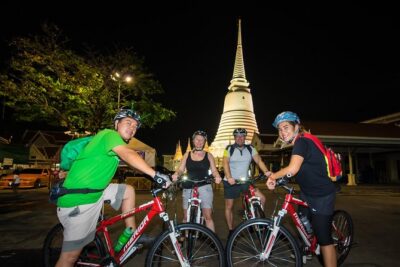
Bangkok: Night Bike Tour with Temples & Flower Market Visit
Read our review →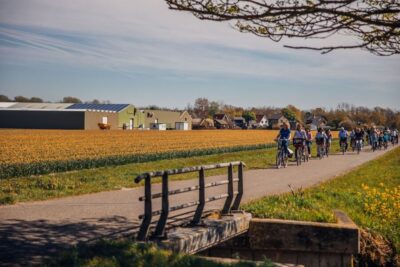
Keukenhof: Flower Fields Small-Group Cultural Bike Tour
Read our review →
Kolkata’s Flower Market – Hooghly’s Flower Fest Tour
Read our review →
Amsterdam: Half-Day Flower Fields and Keukenhof Bicycle Tour
Read our review →
Flower Market & Floral Art: Multilingual Private Tour [EN/others]
Read our review →
Cebu: City Highlights with Sirao Flower Garden Visit
Read our review →
Bangkok Wat Pho and Flower Market Historical Walking Tour
Read our review →
Lists this garden visit belongs to