
Review · INDIA
Mandore Garden Walking Tour
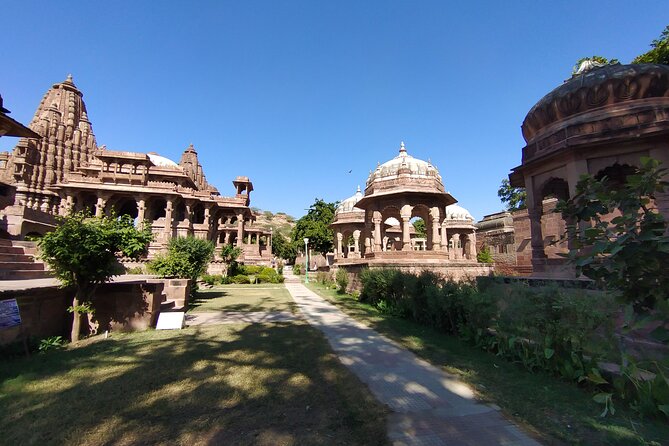
Mandore Garden is more than a pleasant patch of green outside Jodhpur. It is the remaining piece of an abandoned royal capital, with carved stone cenotaphs, temple details, and fort ruins spread across a site shaped by centuries of conflict. The setting gives you a useful counterpoint to Mehrangarh Fort: Mandore shows what came before the hilltop capital took over.
I like the private format, since your group can move at its own pace, and I like the mix of monuments and gardens rather than a single formal building. The low $16 price is also appealing for a two-hour outing. The drawback is transport: you must make your own way to the Mandore Garden bus stop, and the site requires moderate physical fitness.
Key points to know before you book
- A former royal capital: Mandore served Jodhpur’s rulers before the capital moved to safer Mehrangarh Fort in 1459.
- Three main sights: The walk includes the Hall of Heroes, old fort ruins, and royal cenotaphs.
- Private for your group: You will not be combined with strangers.
- A garden with character: Expect stone monuments, temple details, gardens, high terraces, and monkeys.
- Two hours on foot: Bottled water is included, but private transportation is not.
- Flexible cancellation: You can receive a full refund if you cancel at least 24 hours before the start time.
Why Mandore matters beside Mehrangarh Fort
Most first visits to Jodhpur center on Mehrangarh Fort, and for good reason. It dominates the city from its rocky height. Mandore helps explain why that fort became so important.
Mandore was once the capital of the Jodhpur kings. Its position and defenses were not enough to prevent repeated threats, including invasions connected with the Muslim rulers of Gujarat and Malwa. In 1459, the capital moved to the hilltop site that offered better protection. Mandore was then abandoned, leaving its surviving structures to weather over time.
That story gives the garden more weight than its name suggests. You are not simply walking among decorative pavilions. You are seeing the remains of a former center of power, after the royal court and much of the town had moved away.
I like this kind of historical setting because the evidence is spread across the grounds. You can look at a memorial, then a temple, then a rough stretch of old fort masonry and begin to picture how the town once worked. It is less polished than a major palace complex, but that is part of its appeal.
Mandore is about five and a half miles north of Jodhpur. The distance is manageable, but the tour does not include private transportation, so you need to arrange your own ride to the Mandore Garden bus stop.
More gardens worth a morning in India:
- Jaipur Tuk-Tuk Tour with Flower Market Visit
★ 5.0 · 124 reviews - Jaipur Tour by Tuk-Tuk or Car with Flower Market
★ 5.0 · 120 reviews - Jaipur: Half-Day Guided Sightseeing Tour with Flower Market
★ 4.9 · 119 reviews
Starting at the Mandore Garden bus stop
The meeting point is Mandore Garden Bus Stop, Mandore, Jodhpur, Rajasthan 342007. The tour ends at the same place, which keeps the plan simple once you arrive.
The listed opening hours are 8:30 AM to 8:00 PM, Monday through Sunday, for the stated operating period. Your booked start time still matters, so check the confirmation carefully rather than assuming you can arrive at any hour.
A morning visit should be easier in practical terms, especially for a walking tour in Rajasthan. The supplied details do not promise a morning start, shade conditions, or a particular guide, so you should confirm the meeting time and prepare for outdoor walking. Bottled water is provided, but it is sensible to dress for sun and bring anything else you personally need.
The private setup is useful here. Mandore is not a compact single monument with one obvious route. Your guide can help connect the different parts of the garden and explain why the ruins, temples, and memorials belong to the same royal story.
The Hall of Heroes and its carved figures
The Hall of Heroes is one of the named stops on the walk. Its value is visual as well as historical. This is a place where the old kingdom’s heroic ideals were represented in stone, giving you a clearer sense of the figures and traditions that mattered to Jodhpur’s rulers.
The available information does not give a detailed list of every figure or carving, so I would not book this expecting a formal art-history lecture on a fixed set of statues. Instead, think of the hall as an important stop within a wider open-air site.
The garden setting changes how you read the monument. You are not moving through a series of sealed rooms. You are walking between structures, with open space and other remains around you. That makes the visit feel closer to exploring an old town than touring a single museum.
A private tour should help if you want to pause over details. The stone buildings and temple decoration are among the features most likely to reward a slower look. One written account specifically praised the details in the temples, which is useful advice: do not rush from one large structure to the next.
Old fort ruins and the move to Mehrangarh
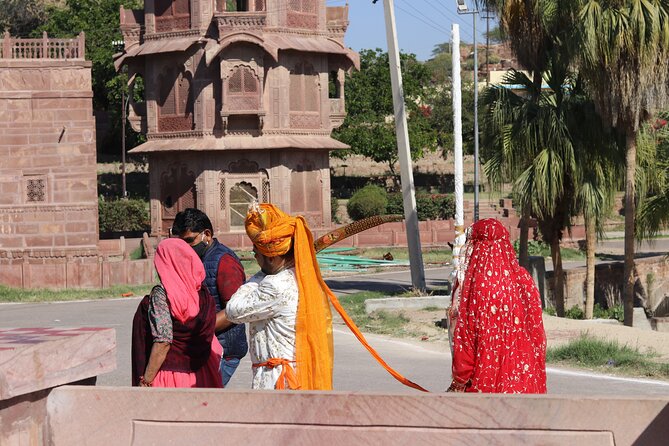
The ruins of the old fort form another central stop. They are not presented as a complete fortress like Mehrangarh, and that difference matters. You should expect surviving fragments and traces rather than a fully restored palace complex.
The ruins become more interesting when you know why Mandore lost its capital status. The move to Mehrangarh was a defensive decision, not simply a change of royal taste. Mandore’s remains show the older center after that decision had reshaped Jodhpur’s political geography.
I like this stop for the context it adds. If you visit Mehrangarh without seeing Mandore, you see the powerful replacement. At Mandore, you see the place that was left behind.
Do keep your expectations measured. The site is described as ancient and partly ruined, so it will not offer the same level of intact interiors, displays, or polished presentation found at major palace attractions. For some people, that is the best reason to visit. For others, the loose arrangement of ruins may feel less immediately dramatic.
Same season, a different set of beds:
- Private Jaipur Full-Day Tour with Block Printing
★ 5.0 · 206 reviews - Private Custom Full Day Sightseeing Tour of Kolkata
★ 5.0 · 128 reviews - Jaipur: Half or Full Day Sightseeing Tour with Flower Market
★ 5.0 · 94 reviews - Delhi: Yoga in Lodhi Garden
★ 4.9 · 53 reviews
Cenotaphs, temples, and high stone terraces
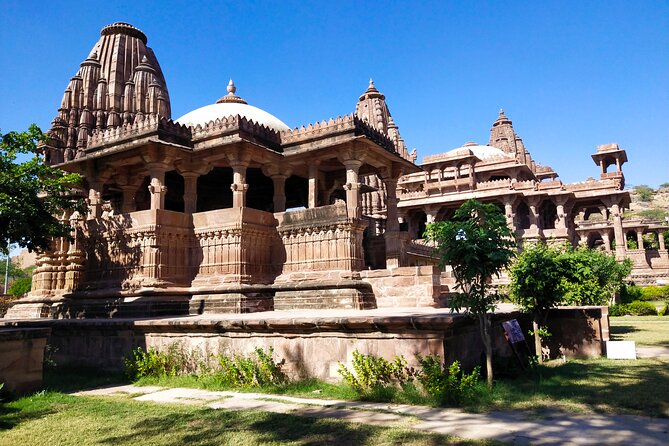
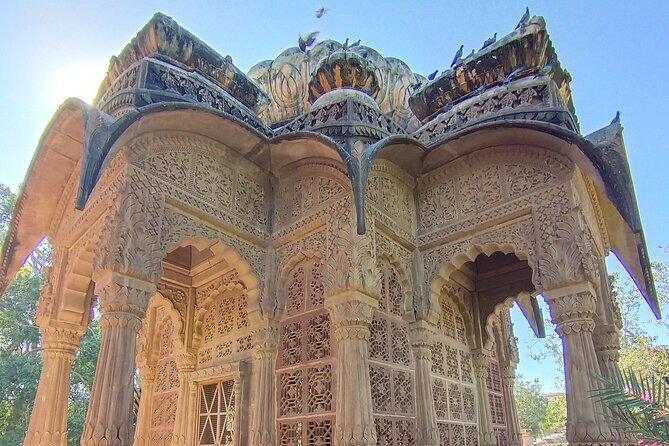
The cenotaphs are among Mandore Garden’s most striking features. These memorial structures honor members of the former royal family and give the garden a strong architectural identity. Their stone forms and carved details are the kind of sights that encourage you to stop, look upward, and examine the workmanship.
The gardens also contain ancient temples and high-rock terraces. Together, these features create variety within a two-hour walk. You move from memorial architecture to religious detail, then toward elevated stone areas and older remains.
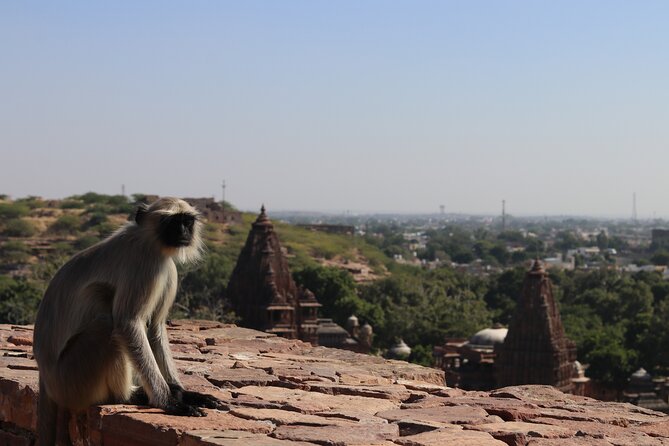
A written account also describes beautiful stone buildings and a garden populated by many monkeys. The monkeys are part of the atmosphere, but they are still wild animals. Keep food secured and give them space. The tour information does not promise animal encounters, so treat them as a possible feature rather than a planned attraction.
The combination of greenery, old stone, and carved temple surfaces is one of the tour’s strongest points. You get photographs and visual interest, but you also get a better feel for how the abandoned town has been absorbed into a public garden.
A museum is present at the site, but it may not be open. One account found it closed, and the tour does not list museum admission as part of the experience. Plan around the outdoor monuments instead of treating the museum as essential.
A garden visit with more than monuments
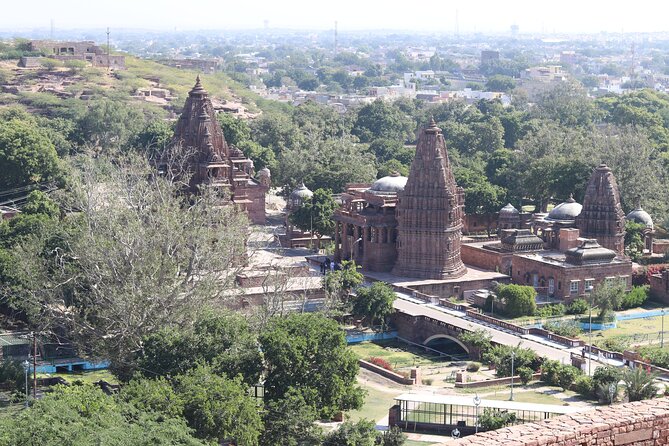
Mandore works because the setting is not only architectural. The gardens soften the ruins, while the ruins give the gardens a sense of place. You can pause among planted areas, then turn toward a memorial or temple covered in old stonework.
A toy train has also been noted at the site. It may appeal to families, but its operation is not included in the tour details, so do not count on a scheduled ride. The walking experience itself is the reliable core of the outing.
This mix makes Mandore a practical choice if you want a break from Jodhpur’s dense urban sights. You are still seeing a major historical site, but the pace is likely to feel less concentrated than a fort interior. The tradeoff is that the garden can require more interpretation. Without context, a visitor may see attractive structures without understanding the former capital that surrounded them.
That is where a private guide has real value. Since only your group participates, you can ask about the monuments that catch your eye rather than following a large group’s fixed rhythm.
What the $16 price really buys you
At $16 per person, the tour is priced as an affordable guided introduction to Mandore. The admission ticket is included, and bottled water is supplied. For a private two-hour visit, that is a reasonable rate if you want historical explanation rather than simply entering the garden on your own.
The price does not cover private transportation. This is the main cost consideration. You must get to the bus stop independently, and your total spending will be higher if you need a separate taxi or other ride from Jodhpur.
The tour is booked, on average, 59 days ahead. That suggests you should reserve early if your Jodhpur dates are fixed, especially since the experience is private and limited to your own group. Still, the rating is based on only two written ratings, so I would treat the available feedback as useful but limited.
The value is strongest for someone who likes guided context, carved architecture, and historic ruins. If you only want a quick garden stroll, paying for a private guide may be less important. If you want to understand why Mandore was abandoned and how it relates to Mehrangarh, the fee makes more sense.
How demanding is the two-hour walk?
The listed duration is about two to three hours, with two hours assigned to the main garden visit. That is long enough to see the named sights without turning the outing into a full-day commitment.
You need moderate physical fitness. The site includes garden paths, ruins, and high-rock terraces, so you should expect regular walking and some uneven ground. The supplied information does not specify step-free routes, seating, or accessibility services, so anyone with mobility concerns should ask the provider before booking.
Wear footwear suited to outdoor walking. The exact route may vary, but the experience is not designed as a vehicle tour. Since transport is not included and the tour returns to its starting point, you can plan the rest of your day around the same general part of Jodhpur.
The tour requires good weather. If poor weather forces cancellation, you are offered another date or a full refund. You can cancel for a full refund up to 24 hours before the start time. Changes or cancellations inside 24 hours are not accepted and are not refunded.
Who will get the most from this experience?
I would choose this tour if you have already planned time for Mehrangarh Fort and want to understand the older capital that came before it. The two sites tell a stronger story together than either one does alone.
It also suits you if you enjoy:
- Open-air ruins rather than fully restored interiors
- Stone memorials and detailed temple decoration
- A private pace with your own group
- Gardens mixed with historical structures
- A short cultural outing outside central Jodhpur
Families may like the gardens, monkeys, and possible toy train, though the tour itself is a walking history experience rather than a dedicated children’s activity. Photography-minded visitors should find plenty of stone architecture and changing views across the grounds.
I would think twice if you need a fully accessible route, dislike uneven outdoor sites, or expect a large museum collection and intact palace rooms. Mandore is best approached as an atmospheric ruin complex with important monuments, not as a replacement for Mehrangarh Fort.
Should you book the Mandore Garden walk?
Book it if you want a reasonably priced, private look at Jodhpur’s former capital. The cenotaphs, temples, old fort ruins, and garden paths give you more variety than a simple park visit, while the connection to the move toward Mehrangarh adds useful historical context.
The strongest reasons to go are the private format, the carved stone buildings, and the chance to see a quieter side of Jodhpur. The main cautions are the need to arrange your own transportation, the moderate walking requirement, the possibility of a closed museum, and the limited number of ratings available for judging the service.
For most people with a free half-day, Mandore is a worthwhile addition to Jodhpur. Just set your expectations correctly: you are coming for an abandoned royal town’s surviving monuments and atmosphere, not a perfectly restored palace.
FAQ
Where does the Mandore Garden walking tour start?
The tour starts at Mandore Garden Bus Stop in Mandore, Jodhpur, Rajasthan 342007, India.
Where does the tour end?
The activity ends back at the meeting point at Mandore Garden Bus Stop.
How long does the tour last?
The visit to Mandore Garden lasts about two hours, while the overall experience is listed as approximately two to three hours.
What sights are included?
The walk includes the Hall of Heroes, the ruins of the old fort, and the cenotaphs. The garden also contains ancient temples and high-rock terraces.
Is transportation included?
No. Private transportation is not included, so you must make your own way to the Mandore Garden bus stop.
Is the tour private?
Yes. Only your group participates in this private activity.
What is the cancellation policy?
You receive a full refund if you cancel at least 24 hours before the experience starts. Cancellations or changes made within 24 hours are not accepted and are not refunded. If poor weather causes cancellation, you are offered another date or a full refund.
Newly planted garden visits around India
- Private Custom Full Day Sightseeing Tour of Kolkata★ 5.0 · 128 reviews
- Flower Market Colors and Ganges Ghat Experience★ 5.0 · 2 reviews
- Kolkata’s Flower Market – Hooghly’s Flower Fest Tour★ 5.0 · 35 reviews
- Jaipur Sunrise Tour with Morning Flower Market Walk★ 5.0 · 16 reviews
- Jaipur City Tour with Traditional Flower Market Visit★ 5.0 · 7 reviews
- Jaipur Full-Day Heritage Tour with Guide★ 5.0 · 18 reviews
- Jaipur: Shopping Tour with Blue Poetry & Printing Workshop & Rugs★ 5.0 · 42 reviews
- Jaipur Half-Day Tour with Flower Market and Block Printing★ 5.0 · 4 reviews
India Garden Tours, bed by bed.

Private Jaipur Full-Day Tour with Block Printing
Read our review →
Private Custom Full Day Sightseeing Tour of Kolkata
Read our review →
Jaipur: Shopping Tour with Blue Poetry & Printing Workshop & Rugs
Read our review →
Kolkata’s Flower Market – Hooghly’s Flower Fest Tour
Read our review →
Delhi Street Art Walk in Lodhi Art District with Chai & Food
Read our review →


Jaipur Sunrise Tour with Morning Flower Market Walk
Read our review →Lists this garden visit belongs to