
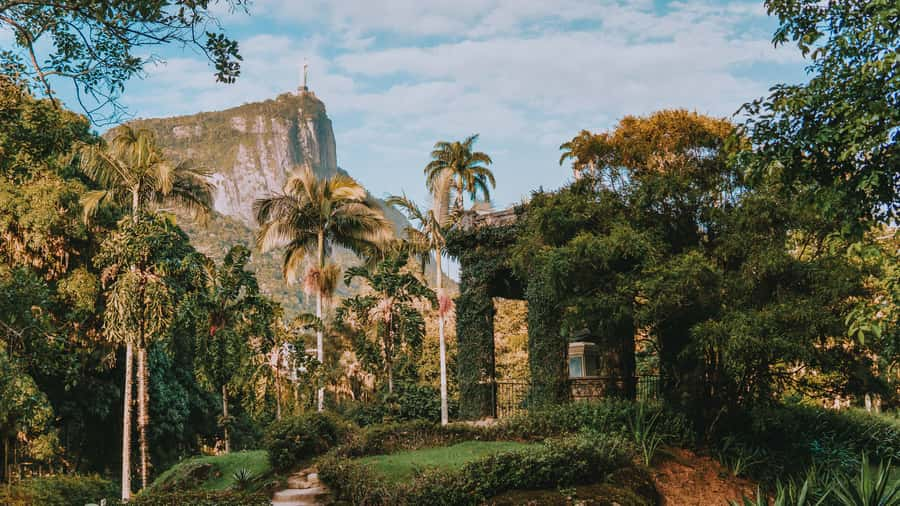
Review · RIO DE JANEIRO
Rio de Janeiro: 4-Hour Botanical Garden & Tijuca Forest Tour
Rio’s wild side begins surprisingly close to the city’s beaches. This half-day tour moves from the carefully tended paths of the Botanical Garden to the forested roads and simple trails of Tijuca National Forest, with a waterfall, mountain views, and São Conrado beach along the way.
I like the contrast between the garden’s imperial palms and orchid houses, and the rougher, more natural feel of Tijuca Forest. I also like the chance to see Rio from Vista Chinesa, where Christ the Redeemer, Sugarloaf Mountain, forest, and ocean line up in one broad view.
The main catch is timing. The advertised activity lasts four hours, but hotel pickup, traffic, and return travel can make the full outing much longer. Vista Chinesa is also removed from the route on Saturdays and Sundays, with no discount.
Key points to know before booking
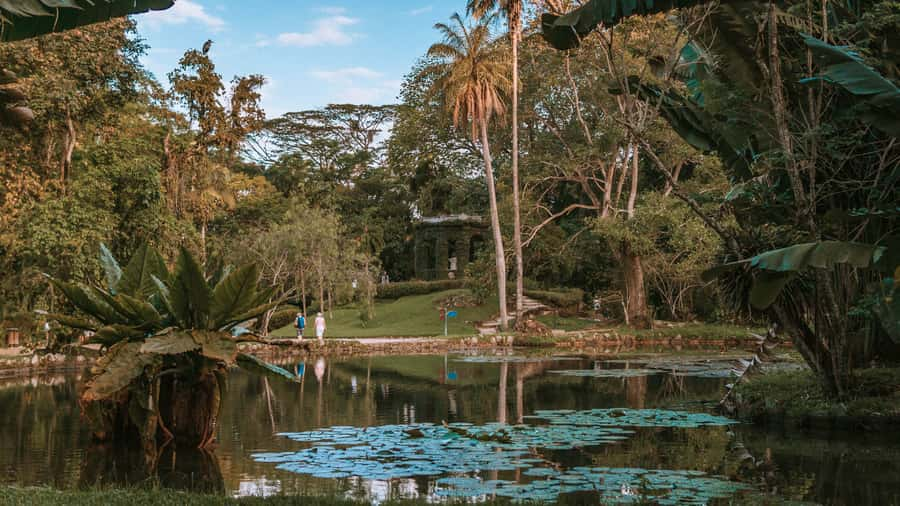
- Brazilwood and giant water lilies: The garden introduces you to plants tied to Brazil’s identity, along with Turtle Lake and floating water lilies.
- Orchidarium and Bromeliad house: These indoor displays add welcome shade and give the garden visit more variety than a simple walk outdoors.
- Vista Chinesa reaches 388 meters: On weekdays, you can see the ocean, mountains, forest, Christ the Redeemer, and Sugarloaf Mountain from one lookout.
- Tijuca includes a short forest trail: Expect an easy walk, Taunay Waterfall, and an introduction to Atlantic Forest plants and animals.
- Guides shape the experience: Guides such as Alexia, Newton, Vicente, Diogo, and Alan Denis have been praised for mixing nature with Rio’s history and daily life.
- Bring your own snack: Food and drinks are not included, and on-site kiosks may be closed.
From imperial palms to Atlantic Forest
This tour works because it gives you two very different views of Rio’s nature in a single morning or afternoon. The Botanical Garden is ordered, shaded, and full of labeled plant collections. Tijuca National Forest feels more untamed, with steep green slopes, damp air, and roads winding through the hills.
You begin at the Botanical Garden, where the guide leads you through several specific areas rather than simply turning you loose among the paths. That matters if you want context. The garden can be pleasant to stroll through on your own, but a guide helps connect the plants to Brazil’s culture, colonial past, and present-day city.
The pace is generally suited to people who want to walk and listen rather than race from one photo stop to another. Still, you should wear proper shoes. The garden paths are easier than the forest trail, and weather can make any outdoor walk less comfortable.
More Botanical Gardens in the world:
- Osaka: teamLab Botanical Garden Entry Ticket
★ 4.5 · 1,710 reviews - Blanes: Marimurtra Botanical Garden Entry Ticket
★ 4.7 · 998 reviews - Malta: Mdina, Dingli Cliffs and San Anton Botanical Gardens
★ 4.3 · 991 reviews
What to see in Rio’s Botanical Garden
The first section focuses on the garden’s plant collections and small features. The Sensory Garden gives you a more hands-on way to experience plant life, while Turtle Lake adds a quiet water stop among the greenery.
One of the most meaningful plants here is the Brazilwood tree, the tree associated with the country’s name. It is not just another item on a botanical checklist. Seeing it helps tie the garden to Brazil itself, and the guide can explain why the tree matters.
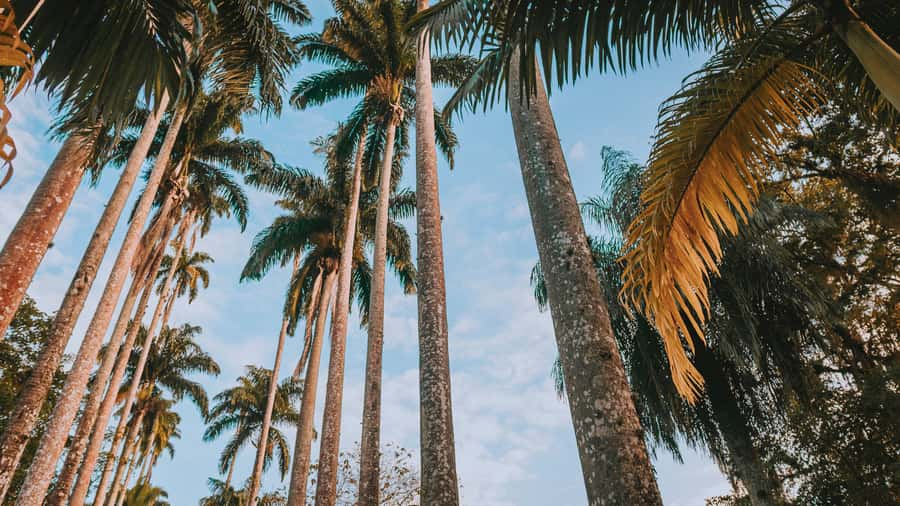
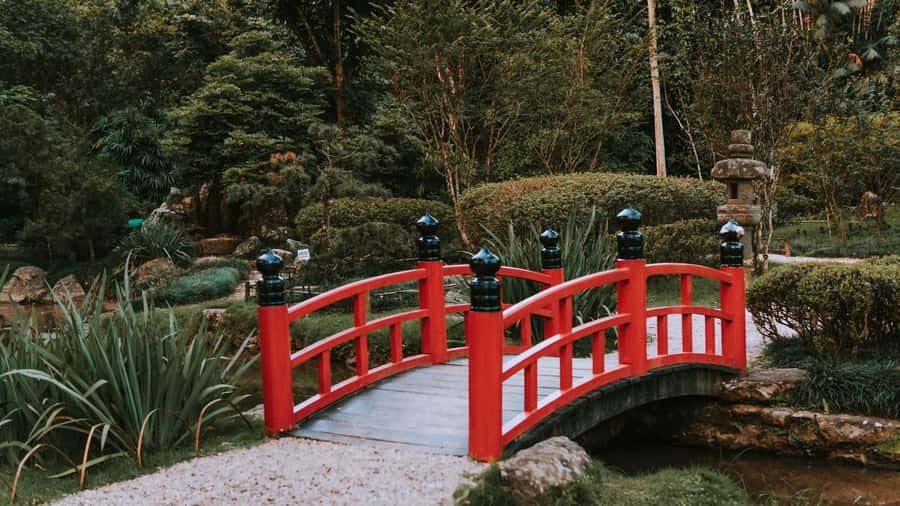
The garden’s imperial palm trees are another memorable sight. These tall palms form an impressive route toward the Orchidarium and Bromeliad house. Their height and regular spacing give this part of the visit a formal, almost ceremonial feel, which contrasts nicely with the forest later in the tour.
The Orchidarium is especially useful on a hot day. You get a break from direct sun while seeing a wide range of orchids. The Bromeliad house adds another change of texture and color. One visitor found the orchid collection open and full of varieties, while another felt that some outdoor areas looked dry and were not well maintained. I would set your expectations accordingly: the garden can be beautiful, but its condition may vary with season and weather.
The giant water lilies are another highlight. Their broad leaves floating on the water are easy to appreciate even if you are not a plant specialist. Ask your guide about the plants as you go, since the quality of the explanation can make the garden feel either like a pleasant park or a proper introduction to Brazilian flora.
Vista Chinesa and the weekday view
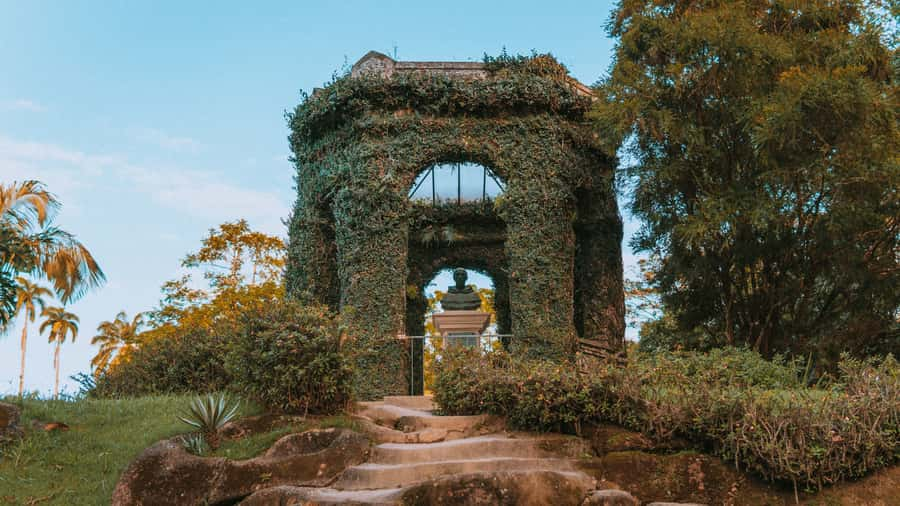
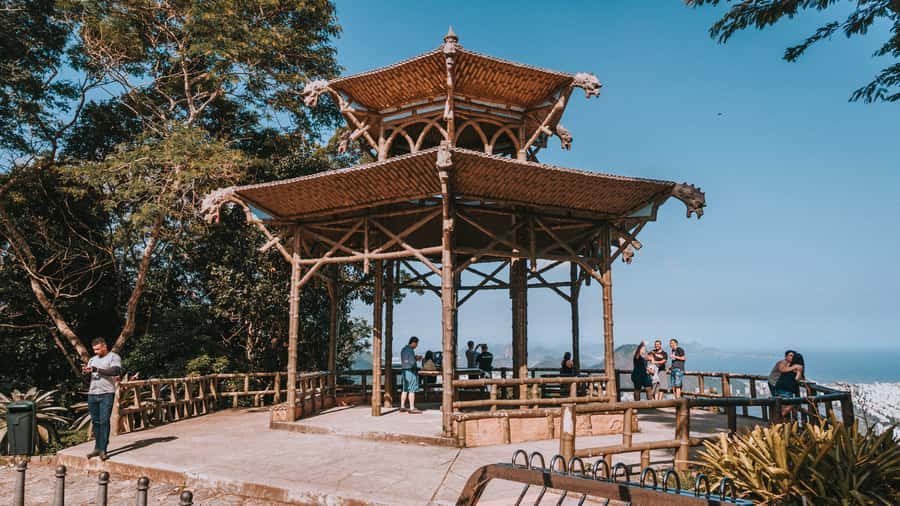
After the garden, the route climbs toward Vista Chinesa, a gazebo at about 388 meters above sea level. The view is one of the tour’s strongest reasons to book on a weekday.
From the lookout, you can see mountains, forest, and ocean spread across Rio. Christ the Redeemer and Sugarloaf Mountain are also visible in the distance, giving you a useful sense of how the city’s major sights fit together. This is not just a quick photo stop. It helps you understand Rio’s unusual shape, where dense urban areas sit beside steep hills and large areas of forest.
The practical warning is important: Vista Chinesa is open to this route during the week only. On Saturdays and Sundays, vehicles cannot use the highway, so the lookout is removed from the itinerary. There is no price reduction when that happens.
Weather also matters. Fog and rain can soften or block the distant views. That does not ruin the forest portion, but it can reduce the payoff at the gazebo. If a clear panorama is high on your list, a weekday with a good forecast gives you the best chance.
Walking through Tijuca National Forest
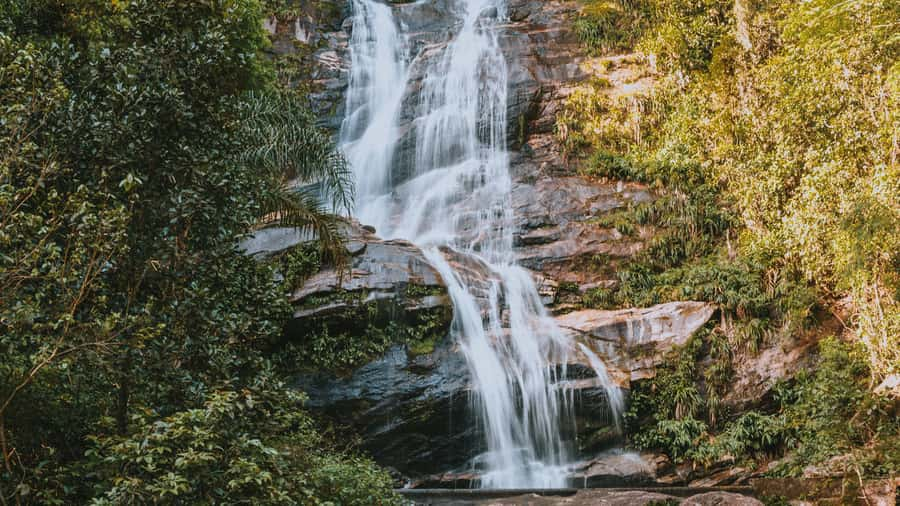
Tijuca National Forest gives the tour its strongest sense of escape from the city. You are still in Rio, but the trees, hills, and winding roads make the urban area feel far away for a while.
The walk includes a simple trail and time near Taunay Waterfall. This is not presented as a demanding hike. You should still expect uneven ground, sun, insects, and weather changes. Comfortable shoes, sunscreen, insect repellent, and a light jacket are sensible choices.
The guide explains the Atlantic Forest, including its plant life and animal life. This is where guide quality matters most. Several guides, including Newton, Alexia, Alan Denis, and Vicente, have been praised for combining nature information with stories about Rio, Brazilian history, art, culture, and ordinary life. That wider commentary can turn a short trail into a better understanding of the city.
I would not book this as a serious wildlife excursion. The provided route includes a short trail and a few selected stops, not a long trek or a dedicated animal-watching session. One person felt the forest portion included only a few stops, while others found the scenery breath-taking. The tour is best for a broad introduction to the forest, not for anyone seeking a full-day hike.
More gardens worth a morning in the world:
- Paris: Versailles Palace and Gardens Full Access Ticket
★ 4.6 · 41,579 reviews - Amsterdam: Keukenhof Entry & Shuttlebus with Flexible Return
★ 4.7 · 11,891 reviews - Versailles: Skip-the-Line Tour of Palace and Gardens Access
★ 4.7 · 10,429 reviews - Marrakesh: Majorelle Garden Entry Tickets
★ 4.5 · 9,651 reviews
Passing São Conrado beach
Once you return to the vehicle, the route passes São Conrado beach. The stop is mainly about the view and the activity overhead. This is a well-known launch area for hang gliders and paragliders, so you may see them moving above the coast.
It is a fitting final scene because it brings the tour back from forest to sea. You have spent the earlier part of the day among palms, orchids, and trees, then looked down on Rio from the hills. At São Conrado, you see the city’s outdoor life in a different form.
Do not treat this as a beach day. The information provided describes passing by the beach to observe the gliders and paragliders, not a swimming stop or long stay on the sand. If you want beach time, plan that separately.
How much time the tour really takes

The stated duration is four hours, but I would treat that as the planned touring time rather than a firm door-to-door promise. Pickup takes place before the activity start time, and hotel return depends on traffic and the number of pickups.
One person reported nearly six hours from leaving the hotel to getting back. That may not be typical, but it is a useful warning if you have a flight, cruise departure, restaurant booking, or another timed activity afterward. Rio traffic can change the day quickly.
Pickup and drop-off are included for hotels in Copacabana, Leme, Ipanema, and Leblon. If you stay outside those areas, the operator provides a nearby pickup point and time instead. You should confirm the departure details if they are not sent to you.
Transportation is by air-conditioned vehicle. One person found the vehicle a little dated and felt there was more driving than expected. For a route joining the garden, hillside lookout, forest, and coast, driving is unavoidable, but it is worth knowing that the tour is not four straight hours of walking.
Guides, languages, and group experience

The guide is a major part of the value. Commentary is offered in English, Spanish, and Portuguese. The strongest guide feedback centers on people who do more than name plants. Newton is praised for broad explanations and clear English, Alexia for energy and attention to the group, Vicente for humor and Brazilian history, and Alan Denis for linking the sights to Rio’s wider story.
Diogo and driver Anderson were also singled out for making the outing smooth, while Felipe received praise as a careful driver. These names reflect the range of staff you might be assigned, not a guarantee that a particular person will lead your departure.
This is a shared tour, so the experience depends partly on the group. A good guide keeps people together, explains the route, and leaves time for photographs. Alexia, for example, was praised for making sure no one was lost and for taking pictures. If you prefer to stop whenever you want or spend a long time at one plant house, a private tour may suit you better. One couple said they would have paid more for a private version.
Is $51 a fair price?
At $51 per person, the price is reasonable if you want transportation, a guide, and several nature stops without arranging separate taxis or admission yourself. You are paying for a connected route through three different settings: the garden, the forest, and São Conrado, with Vista Chinesa added on weekdays.
Check which booking option you select. Entrance to the Botanical Garden is included only with the option that says so. If you choose the version without admission, you must buy the ticket at the ticket office, and payment is cash only.
Food and drinks are not included. Bring water and a small snack, especially since kiosks may be closed. There is no food stop built into the route, and waiting until the end can make the longer door-to-door timing feel harder.
The tour gives better value to first-time visitors who want an overview than to repeat visitors with a narrow goal. You get a guided introduction to Rio’s plant life and forest, plus several strong viewpoints, but not a long botanical study or serious hike.
What to bring for a comfortable outing

Wear comfortable shoes with enough grip for a simple forest trail. Sunglasses, a sun hat, sunscreen, insect repellent, and weather-appropriate clothing all make sense.
Bring a jacket even if the day begins hot. The forest and higher lookout can feel different from the beach areas, and rain or fog can appear during the route. A small snack is also wise because food and drinks are not included and kiosks may be closed.
Keep your camera ready, but do not spend the whole day looking through it. The garden’s palms, the orchid displays, Taunay Waterfall, Vista Chinesa, and the gliders over São Conrado all offer different kinds of photographs.
Who should book this Rio nature tour?
I would recommend it to you if you want a manageable introduction to Rio’s natural side, especially if you are staying in the South Zone and prefer an organized half-day outing. It suits couples, families with older children, and anyone who wants city views without planning several separate journeys.
It is also a good choice if you enjoy learning while you walk. The best guides add useful context about Brazilian history, local culture, and city life rather than limiting the talk to plant names.
I would hesitate if you need a strict four-hour schedule, dislike vehicle time, or want a demanding forest hike. I would also choose a weekday if Vista Chinesa is important to you. On weekends, you lose that lookout and the panorama of Christ the Redeemer, Sugarloaf Mountain, forest, and ocean.
Should you book it?
Book this tour if you want a practical mix of garden, forest, waterfall, mountain views, and coast for $51, and you are comfortable with a flexible timetable. Choose a weekday for the full route, confirm whether Botanical Garden admission is included, and bring snacks.
Skip it if your priority is a long hike, a private pace, or guaranteed time at every stop. For most first-time visitors who want Rio beyond the usual monuments, the combination is strong, and the guides can add the local detail that makes the four-hour route worthwhile.
FAQ
How long is the Rio Botanical Garden and Tijuca Forest tour?
The stated activity duration is four hours. Hotel pickup occurs before the activity start time, and the total time from hotel departure to return can be longer because of pickups and traffic.
What languages are available?
Live guide commentary is available in English, Spanish, and Portuguese.
Is hotel pickup included?
Pickup and drop-off are included for hotels in Copacabana, Leme, Ipanema, and Leblon. If you stay outside those areas, you will be given the nearest pickup point and time.
Is entrance to the Botanical Garden included?
It depends on the option you book. The option without garden admission requires you to buy a ticket at the ticket office, with cash only.
Is Vista Chinesa included on weekends?
No. On Saturdays and Sundays, Vista Chinesa is removed from the route because vehicles are not allowed on the highway. There is no discount or refund for this change.
What can I see at the Botanical Garden?
The route includes the Sensory Garden, Brazilwood, Turtle Lake, giant water lilies, imperial palm trees, the Orchidarium, and the Bromeliad house.
Is the Tijuca Forest walk difficult?
The tour includes a simple trail through Tijuca National Forest. Comfortable shoes are recommended, but the activity is not described as a demanding hike.
Does the tour include food or drinks?
No. Food and drinks are not included, so bringing a snack and your own water is sensible.
Does the tour stop at São Conrado beach?
The vehicle passes by São Conrado beach, where you may observe hang gliders and paragliders. The route does not describe a beach swimming stop.
Can I cancel for a full refund?
You can cancel up to 24 hours in advance for a full refund. The activity also offers a reserve-now, pay-later option.
Newly planted garden visits around the world
- Sunday Market and Gardens Tour★ 4.0 · 10 reviews
- Funchal Old Town & Palheiro Gardens Private Tuk Tuk Tour★ 5.0 · 8 reviews
- Botanical Trails of Madeira. Mountain biking Trail Experience★ 5.0 · 42 reviews
- Monte Tropical Garden & Toboggans private Tuk-Tuk tour★ 5.0 · 25 reviews
- Kensington Palace VIP Garden Tour with Royal High Tea★ 4.5 · 71 reviews
- Private Half-Day Tour to Monet’s Garden in Paris★ 5.0 · 3 reviews
- Madeira Botanical Gardens and Old Town Tuk Tuk Tour by MadTuk★ 4.5 · 7 reviews
- Secret Gardens of London Private Tour★ 5.0 · 13 reviews
Botanical Gardens, bed by bed.

Blanes: Marimurtra Botanical Garden Entry Ticket
Read our review →
Malta: Mdina, Dingli Cliffs and San Anton Botanical Gardens
Read our review →
Princeville Botanical Gardens Tour and Chocolate Tasting Ticket
Read our review →
Icod de los Vinos: Dragon Tree & Botanical Garden Ticket
Read our review →
Maleny Botanic Gardens Bird Aviary Experience Ticket
Read our review →
Big Island Waterfalls Tour with Swimming and Botanical Garden
Read our review →
Lists this garden visit belongs to