
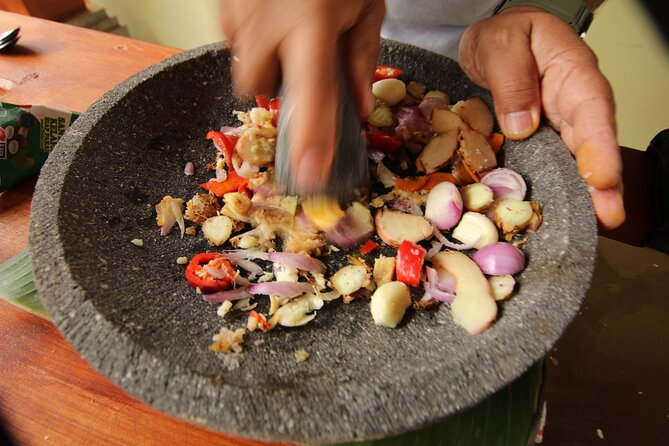
Review · INDONESIA
Spice Garden, Jamu & Cooking Class in Bali Village
The best part of this Balinese cooking class happens before the meal. You walk through rice terraces near Mt. Batukaru, pick herbs from a garden, meet village farmers, and learn to cook over an open bamboo fire. The food matters, but the setting and the people give the morning its real character.
I especially like the small maximum group of 12, which keeps the class personal, and the chance to make two kinds of Jamu rather than simply watching a demonstration. The visit also includes Rindik music, a farm, rice planting, animals, stingless bees, and an optional hot-spring bath. The main consideration is location: this is a mountain-village outing, not a quick class near a beach resort, and the 30-minute downhill walk may not suit everyone.
Key points
- Cooking over bamboo fire: Prepare a full Balinese meal in the open-air Paon Bali kitchen, including Sate Lilit and Lak Lak dessert.
- Jamu from fresh ingredients: Make two traditional herbal drinks, with fruit and Jamu tasting included.
- Rice-terrace setting: Walk through the village near Mt. Batukaru, meet farmers, and pick herbs from the garden.
- More than a cooking class: Play Rindik, visit farm animals and Trigona beehives, and try rice planting.
- A filling half-day: Lunch, a recipe book by email, a personal certificate, and a farewell gift are included.
- Practical limits: The activity starts at 9:00 a.m., lasts about four and a half hours, and requires good weather.
A village morning near Mt. Batukaru
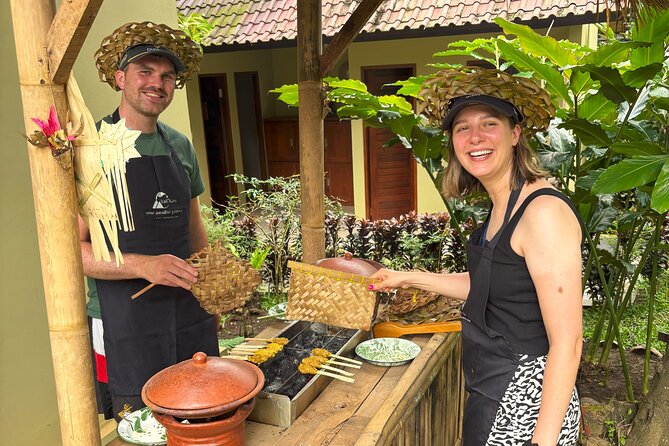
This is not a polished kitchen class designed to keep you indoors. The day unfolds around BalikaruBelulang Bali in Mengesta, in Tabanan Region, where village homes, rice terraces, gardens, farms, and mountain views provide the setting.
You begin at 9:00 a.m. with a welcome drink and a guided look at the herb and spice garden. That first stop helps you understand the food you will later prepare. Instead of seeing spices as anonymous ingredients in small bowls, you can connect them with the plants growing around the village.
The pace should feel social rather than rushed. The group limit is 12 people, and an English-speaking guide leads the main program. Other languages can be arranged for an additional charge, but the supplied details do not identify specific guides by name.
One practical point matters here: the meeting point is also the end point. You need to make your own way to BalikaruBelulang Bali, Mengesta, Penebel, Tabanan. The experience does not include a separate transportation service in the information provided, so check your route carefully before booking.
More Spice and Herb Gardens in Indonesia:
- Ella : Cooking class with amazing Spice Garden Tour
★ 5.0 · 239 reviews - Alcamo Farm Animals and Aromatic Garden
★ 4.0 · 45 reviews - Day Tour to Elephant Orphanage / spice garden
★ 5.0 · 20 reviews
Walking the rice terraces and gathering herbs
The short walk through the terraces gives the cooking class a useful sense of place. You meet farmers, see how food production fits into village life, and pick fresh herbs from the garden before entering the kitchen.
A soft trek of about 30 minutes downhill is included, with mountain views along the way. Downhill walking can sound easy, but uneven village paths may still require sensible footwear. Slippers are permitted under the stated dress guidance, yet sturdy sandals or comfortable walking shoes would be a wiser choice for the terrace section.
This part of the morning is valuable because it changes how you think about the meal. You are not simply following a recipe in a tourist kitchen. You are seeing the plants, farms, and daily routines that surround the food.
The walk is also one reason this class may not suit every visitor. The activity is not presented as a strenuous hike, but anyone with mobility concerns should consider the downhill section before booking. The supplied information does not specify the exact return route or whether assistance is available.
Learning Rindik before the cooking begins
Before the main food preparation, you learn to play the Rindik, a traditional bamboo instrument associated with farmers. This is a small but memorable addition, particularly if you want cultural contact beyond food.
The Rindik session gives the group a relaxed way to meet the local hosts. It also reflects the wider character of the day: music, farming, cooking, and family life are treated as connected parts of village culture.
Do not expect a formal concert or a long music lesson. The information describes an opportunity to learn the instrument, not a full performance workshop. Think of it as a hands-on introduction before everyone moves toward the open kitchen.
Making two kinds of Jamu
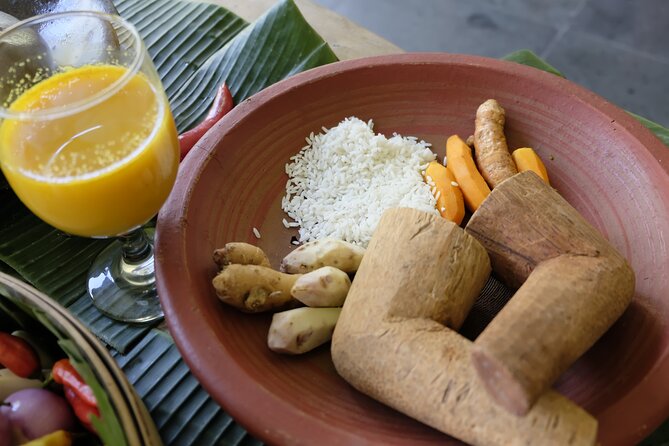
Jamu is Indonesia’s traditional herbal drink, and this class gives it a central role. You prepare two varieties and taste both Jamu and fresh fruit.
This is one of the strongest parts of the program for anyone interested in Balinese ingredients and everyday food customs. You get to handle the ingredients and see how a drink can be made from plants, spices, and fruit rather than from a packet or bottle.
The experience also includes fruit tasting, with mangosteen specifically mentioned as one of the fruits served. You may find this especially useful if you are visiting Bali during a short stay and want an introduction to local flavors without committing to a separate market tour.
Claims about Jamu being healthy should be treated sensibly. The drink is presented as a traditional herbal beverage, and the hosts refer to its health value, but this is a cultural food experience, not medical advice. Enjoy the flavor and the tradition without assuming that every health claim applies to you.
Cooking classes with a garden harvest around Indonesia:
- Anggrek Putih Lombok Cooking Class
★ 5.0 · 253 reviews - Balinese Vegan Cooking Class with Fresh Harvesting & Garden Tour
★ 5.0 · 86 reviews - From Garden to Table: Indonesian Cooking Class in Yogyakarta
★ 4.9 · 24 reviews - Chiang Mai: Cooking Class, Market & Thai Herbs Garden Tour
★ 4.9 · 4,824 reviews
Cooking lunch in Paon Bali
The central cooking session takes place in Paon Bali, an open-air kitchen guided by the local chef. You prepare a full Balinese meal, then eat what you have made for lunch.
The menu includes Nasi Campur Tumping, Sate Lilit, and Lak Lak. Sate Lilit is grilled at Gerobak, the live bamboo grill, while Lak Lak, a traditional Balinese dessert, is cooked in a clay pot.
That mix gives the class useful variety. You work with a main meal, a grilled dish, and a dessert prepared with an older cooking method. Open-air cooking also means the surroundings remain part of the experience. Nature sounds, family conversation, and the smell of food over the fire replace the quiet, controlled atmosphere of a standard cooking studio.
You should arrive hungry. The meal is described as a full lunch, and one useful warning is that there is plenty to eat. Since you prepare the dishes yourself, the class has more value than a simple lunch stop, but you should also expect time spent chopping, mixing, shaping, grilling, and waiting for food to cook.
The cooking is supported by the team, so you do not need to be an expert. Still, the exact amount of hands-on work may depend on the group and the pace of the kitchen. If you want to do every step yourself, say so early and take an active role.
Farm animals, bees, and rice planting
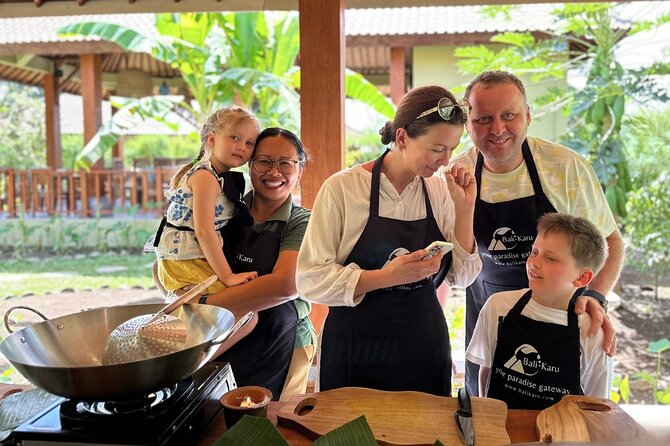
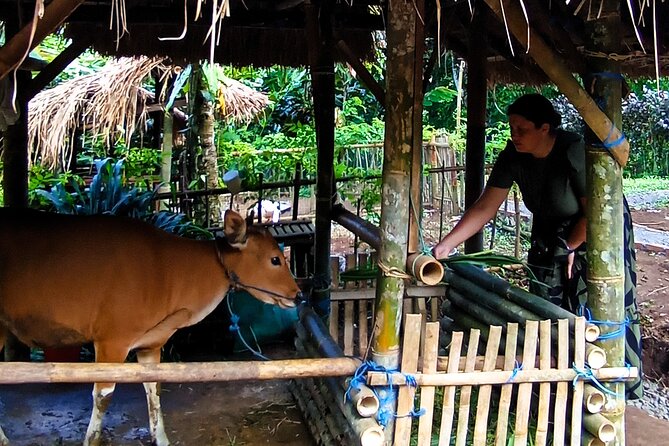
After lunch, the program continues at Balikaru farm. You can see the animals, feed the cow named Manis, and visit Trigona beehives.
The stingless bees are a distinctive feature. Their honey is described as rare and healthy, and the visit offers a look at a small-scale farm activity that most food classes would skip. It adds a practical link between the ingredients on the table and the work required to produce them.
You can also help with rice planting. This is a brief activity rather than a full farming day, but it gives you a direct feel for one of the most recognizable parts of Balinese agriculture.
The farm section makes the outing especially suitable for families and for anyone who wants a broader village visit. If your main goal is advanced cooking technique, some of this time may feel like a detour. If you want to understand how food fits into rural life, it adds real value.
Visiting a traditional compound and hot spring
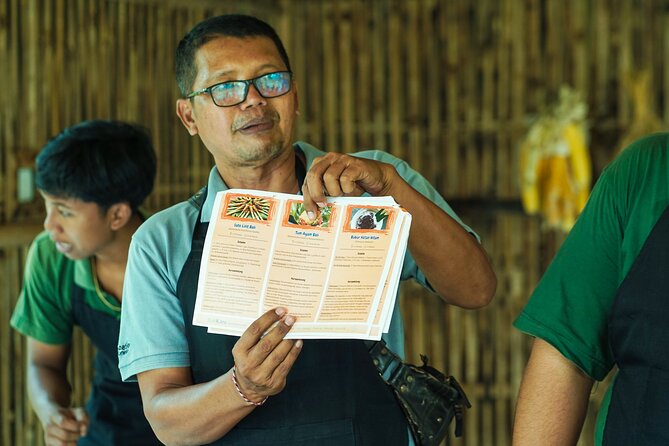
The route includes a visit to an authentic Balinese compound in the mountain village. This gives you another view of local life after the farm and cooking activities.
A visit to Belulang Hot Spring is also included, with bathing listed as optional. The details do not specify whether towels, changing facilities, or bathing supplies are provided, so ask before you rely on the hot spring as part of your plan.
The optional bath is best treated as a pleasant extra, not the main reason to book. The cooking, village walk, and farm activities form the core of the day. If you do want to bathe, bring whatever personal items you need and follow local expectations at the site.
Dress respectfully from the start. The stated guidance is clear: topless clothing and beachwear are offensive in this traditional village setting. Shirts, pants, and slippers are acceptable, but modest clothing is the better choice for visiting homes, farms, and the compound.
What the $55 price includes
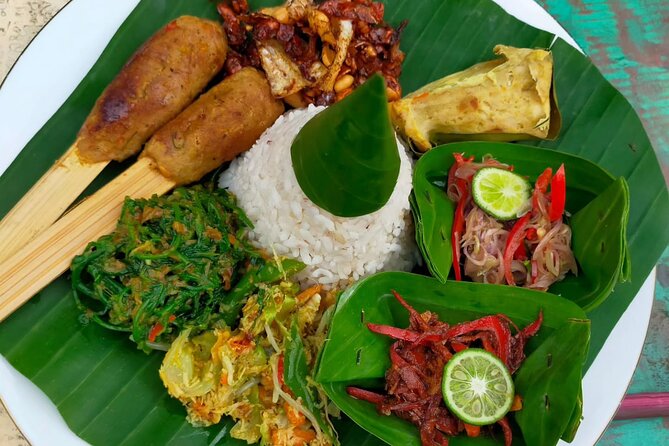
At $55 per person, this is good value if you use the whole program. You are paying for about four and a half hours that combine a cooking class, lunch, Jamu preparation, a garden tour, music, a farm visit, a rice-planting activity, a village compound, and an optional hot spring.
The included meal is important. You are not paying $55 for a short demonstration followed by a small tasting plate. You prepare and eat Nasi Campur Tumping, Sate Lilit, and Lak Lak, with fruit and Jamu tasting along the way.
The price also includes an English-speaking guide, a welcome drink, the farm and beehive visit, and a personal cooking certificate. A recipe book is sent by email after the tour, which gives you a chance to repeat some of the dishes at home. A farewell gift is included as well.
Drinks beyond those listed, tips, and personal expenses are extra. Group discounts are available, so this may work particularly well for families or friends booking together. Other languages cost more.
The value is weaker if you only want a quick cooking lesson and do not care about village activities. In that case, you may prefer a shorter class closer to your accommodation. For a full cultural morning with food and local contact, the price is reasonable.
Who will enjoy this Balinese cooking class?
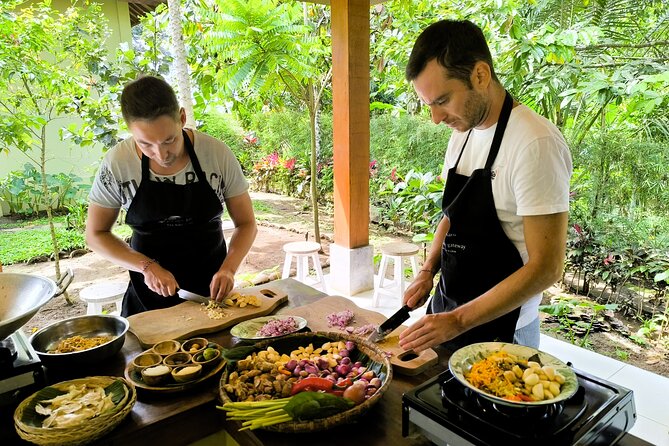
I would recommend it to you if you like active cultural experiences, local food, small groups, and time outdoors. It suits people who want to meet village families rather than remain in a resort setting.
It is also a good match for families, provided everyone is comfortable with the walk and the open-air format. Children may enjoy the Rindik, cow, bees, rice planting, and dessert preparation, though the supplied information does not give a minimum age.
Food lovers will appreciate the range of activities. You do not just cook one dish. You make Jamu, work with herbs and spices, prepare several dishes, grill Sate Lilit, and cook Lak Lak in a clay pot.
I would think twice if you need a highly structured, indoor activity, dislike walking, or want guaranteed sunshine. The class requires good weather, and poor conditions can lead to a different date or a full refund.
The group size is a major advantage. With no more than 12 people, you have a better chance to ask questions and get help at the stove than in a large commercial class. The team is described as friendly and willing to help, which matters when you are working with unfamiliar recipes and cooking methods.
Booking, cancellation, and practical details
Confirmation is provided when you book, and mobile tickets are available. The activity starts at 9:00 a.m. and ends back at the meeting point after roughly four and a half hours.
You can cancel for a full refund up to 24 hours before the start time. Cancellations or changes made less than 24 hours ahead are not accepted for a refund. Cutoff times follow local Bali time.
The experience depends on good weather. If it is canceled because of poor conditions, you are offered another date or a full refund.
Vegetarian dietary needs can be accommodated if you provide the information when booking. Other dietary requirements should also be stated in the special-requirements field. Service animals are allowed.
Should you book it?
Book this class if you want Bali beyond temples, pools, and restaurant tables. The strongest reason to go is the combination of cooking with village life: rice terraces, garden herbs, Jamu, bamboo fire, farm animals, bees, music, and family conversation all fit into one morning.
The biggest caution is the setting. You must reach a mountain village, follow a downhill trail, dress modestly, and accept that weather can affect the plan. This is not the easiest choice for someone seeking a short, polished class near the coast.
For most visitors who value food, local contact, and a full half-day of varied activities, $55 is a fair price. Bring an appetite, wear practical clothes, and leave room in your schedule for the village to set the pace.
FAQ
How long does the cooking experience last?
The activity lasts approximately four hours and 30 minutes. It starts at 9:00 a.m. and ends back at the meeting point.
Where does the experience begin and end?
It begins and ends at BalikaruBelulang Bali, Mengesta, Penebel, in the Tabanan Region of Bali.
What food will I prepare?
You prepare Nasi Campur Tumping, Sate Lilit, and Lak Lak dessert. You also make two kinds of Jamu and take part in fruit and Jamu tasting.
Is lunch included?
Yes. Lunch is the Balinese meal you prepare during the cooking class, along with dessert.
Can vegetarian dietary needs be accommodated?
Yes. Vegetarian needs can be accommodated, but you should provide dietary information when booking.
Is the hot-spring visit required?
No. The visit to Belulang Hot Spring is included, but bathing there is optional.
What happens if the weather is poor?
The experience requires good weather. If it is canceled because of poor conditions, you can choose another date or receive a full refund.
Newly planted garden visits around Indonesia
- Full Day Bogor Botanical Garden And Puncak Highland Tour★ 3.5 · 3 reviews
- Bogor Botanical Garden, City and Miniature Park in Heritage★ 5.0 · 5 reviews
- Bogor Botanical Garden & Rainforest Trekking to Hidden Waterfall★ 5.0 · 58 reviews
- Mt. Merapi Majesty: Soft Trek and Botanic Village Tour★ 5.0 · 5 reviews
- Jakarta Bogor Botanical Garden, Waterfall and Rice Terrace★ 4.8 · 38 reviews
- Jakarta: Botanical Garden & Rainforest Trekking to Waterfall★ 4.9 · 7 reviews
- From Jakarta: Bogor Botanical Garden, Ricefield, & Waterfall★ 5.0 · 3 reviews
- Jakarta : Botanical Garden, Waterfalls, and Rice Fields Tour★ 4.9 · 5 reviews
Spice and Herb Gardens, bed by bed.



Penang Round Island Tour With Tropical Spice Garden & Entopia Butterfly Farm
Read our review →
Penang: Tropical Spice Garden Entrance Ticket & Guided Tours
Read our review →
Kobe: Guided Tour of Nunobiki Waterfalls and Herb Garden
Read our review →
Grenada: Spice and Herb Garden Tour with Beach Visit
Read our review →
Aromatic Experience in the Medicinal Garden in Ibiza
Read our review →
Sri Lanka: Ceylon Cinnamon Experience & Spice Garden Tour
Read our review →Lists this garden visit belongs to