
Review · HUNGARY
Secret Gardens and Squares Downtown | Walking Tour of Budapest
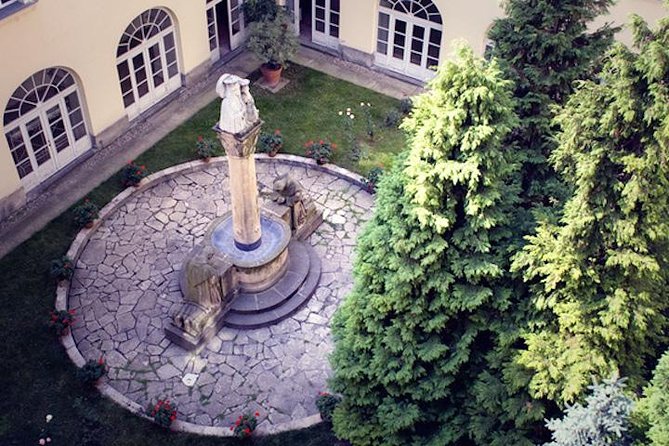
Budapest keeps some of its best spaces behind battered facades and heavy doors. This 2.5-hour walking tour takes you into private courtyards and inner gardens that you would almost certainly pass without noticing, then connects those quiet places with stories of love, death, triumph, and failure.
I like two things here: the chance to see parts of Budapest that are normally closed to the public, and the focus on how the city’s buildings, plants, and courtyards developed. The possible drawback is that the exact gardens are not named in advance, so the experience depends on which private spaces are accessible that day.
Key Points
- Private courtyards: Enter inner gardens and residential spaces that are usually closed to the public.
- A quieter side of central Budapest: Move away from the obvious sights and look behind old street facades.
- Stories tied to real places: Hear about former residents, local events, buildings, and botanical curiosities.
- Small maximum group: The tour accepts no more than 20 people, which matters when entering narrow courtyards.
- Simple morning schedule: Meet at 10:00 at Kamermayer Károly tér and finish at Kálvin tér.
- Refreshments included: Light refreshments are provided during the walk, along with local taxes and a guide.
Budapest Behind the Facade
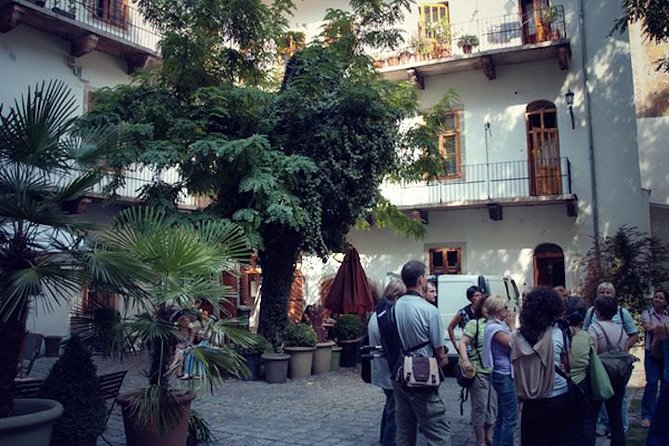
The appeal begins before you enter a garden. From the street, you may see only a worn facade, an unremarkable gateway, and a large double door. Inside, the space can change completely, with old trees, flowers, passageways, and courtyards tucked among apartment buildings.
That contrast is the point. Budapest is often appreciated through its grand boulevards, historic architecture, thermal baths, and river views. This tour asks you to pay attention to the spaces between those familiar sights, especially the private interiors hidden behind ordinary entrances.
You are not simply looking at plants. The gardens are used as a way to read the city. Buildings, courtyards, and vegetation reveal how residents lived, how properties were arranged, and how Budapest changed over time.
More gardens worth a morning in the world:
- Paris: Versailles Palace and Gardens Full Access Ticket
★ 4.6 · 41,579 reviews - Amsterdam: Keukenhof Entry & Shuttlebus with Flexible Return
★ 4.7 · 11,891 reviews - Versailles: Skip-the-Line Tour of Palace and Gardens Access
★ 4.7 · 10,429 reviews
Starting at Kamermayer Károly tér
The tour begins at 10:00 in Kamermayer Károly tér, in central Budapest. You should plan to arrive early enough to find the meeting point without rushing, particularly if you are coming by public transportation.
The starting area gives the walk a practical advantage. You begin in the center rather than spending part of the paid tour getting from a distant meeting point to the main area of interest. Transportation to and from the attractions is not included, so you are responsible for reaching the start and continuing from the finish.
At the beginning, expect an introduction to the theme of the walk rather than a long list of standard sights. The guide sets up the idea that Budapest’s public face is only part of the city. The real subject is what lies behind it.
Entering Courtyards Usually Closed to the Public
The most valuable part of the experience is access. Several private courtyards and gardens are otherwise unavailable to the public, giving you a look at spaces that are not part of the usual sightseeing circuit.
Exact stops are not supplied ahead of time, and access to private property can depend on availability. That uncertainty is worth keeping in mind. You are buying a guided route built around special access, not a fixed checklist of famous addresses.
Once inside, the pace should feel different from a conventional city walk. A courtyard gives you room to pause and look upward at the buildings, study the plants, and notice how apartments gather around an inner space. The guide explains why these areas matter instead of treating them as quick photo stops.
This is also where the tour’s quieter character becomes clear. Budapest’s main streets can be busy, but an inner garden may feel sheltered and still. You get a better sense of how an urban home worked beyond its street-facing rooms.
Old Trees, Flowers, and Botanical Curiosities
Plants are not just decoration on this walk. The tour includes information about Budapest’s botanical curiosities and the role of gardens in the city.
You might learn why a particular tree or plant is unusual, how it suits the courtyard setting, or what its presence tells you about the people who lived there. The supplied details do not identify specific species, so you should not book this expecting a formal botanical lecture. Instead, the plant life adds another layer to the architecture and local stories.
I like this approach because it keeps the tour grounded in physical details. A building’s history can feel abstract when you hear dates and names on a busy street. In a garden, an old tree, flower bed, or shaded corner gives the story something you can actually see.
The garden theme also makes this a good choice for anyone who has already seen Budapest’s major monuments. You still learn about the city, but through courtyards and living spaces rather than another procession of grand public buildings.
Same season, a different set of beds:
- Marrakesh: Majorelle Garden Entry Tickets
★ 4.5 · 9,651 reviews - Vienna: Schönbrunn Palace & Gardens Skip-the-Line Tour
★ 4.7 · 7,739 reviews - Granada: Alhambra & Gardens Tour w/Nasrid Palaces Option
★ 4.2 · 7,022 reviews - From Paris: Versailles Palace & Gardens with Transportation
★ 4.6 · 6,222 reviews
Stories of Former Residents
The guide links the settings to tales of past residents and earlier chapters of Budapest. These stories include love and death, success and defeat, and the personal events that give old buildings a human scale.
The strongest part of this style of tour is the connection between place and story. Instead of hearing about an anonymous apartment block, you learn that an interior space has been connected with people who lived, worked, struggled, or celebrated there.
One five-star evaluation singled out the guide’s engaging manner and the way the stories made the past feel close to the present. That is a useful clue about what to expect: this is designed as a storytelling walk, not a dry architecture class.
The guide’s skill matters here. A courtyard can be attractive on its own, but the explanation is what turns it into a meaningful stop. The available information does not give the guide’s name, so you cannot select the tour based on a particular individual. The listed provider is Sétapálca Kft.
Learning How Budapest’s Houses Were Built
Architecture receives serious attention during the walk. You can expect explanations of how the houses were arranged and developed, especially the relationship between the street facade and the inner courtyard.
That detail is useful because Budapest’s buildings can look similar from outside. Once you understand the design of the inner spaces, you begin to see why a plain entrance may lead to a large residential complex or garden.
One positive account specifically praised seeing courtyards that were not open to the public and learning how the houses were built. That combination is important. Access alone would make an interesting photo opportunity, but the architectural explanation helps you understand what you are seeing.
A less enthusiastic four-star assessment found the guide well informed but felt the experience did not fully match the promise of the description. I would read that as a warning to keep expectations measured. You should expect worthwhile access and city context, but not assume every stop will be dramatic or every garden will look perfectly maintained.
A Route Through the Heart of Budapest
The walk ends at Kálvin tér, another central location. The route therefore works well as part of a day of sightseeing, since you finish in an area with public transportation and further city access.
The total duration is approximately two and a half hours. That is long enough to visit several courtyards and build a proper narrative, but short enough to fit around an afternoon museum, meal, or other Budapest plan.
You will be on foot for the whole activity. A moderate level of physical fitness is requested, so this is not the right choice if you need a seated tour or find two and a half hours of walking difficult. The available information does not specify the number of stairs, pavement conditions, or seating at each stop, so ask the provider if those details are important for you.
The group maximum is 20 people. That is not an intimate private tour, but it is more manageable than a large sightseeing group, especially when the guide is speaking inside a narrow courtyard. If all 20 places are filled, you may need to position yourself near the guide to hear clearly.
Light Refreshments Along the Way
Light refreshments are included. This is a small benefit, but it improves the rhythm of a morning walk, especially if you have not yet stopped for coffee or a snack.
The description does not specify the type, quantity, or location of the refreshments. Do not treat them as breakfast or a meal. If you need food for medical, dietary, or personal reasons, bring what you require.
The refreshments also provide a natural pause in a tour that is otherwise built around walking and listening. You get a moment to absorb the setting instead of moving from one explanation to the next.
Who Will Get the Most From This Walk
I would choose this tour if you have already seen some of Budapest’s standard landmarks and want a less obvious angle on the city. It is also a good first-day option if you prefer to understand a place through local stories, residential architecture, and small details.
You will get the most from it if you enjoy:
- Courtyards and old buildings more than major monuments
- Personal stories connected to specific places
- Gardens, trees, and urban plant life
- Walking tours with explanation rather than constant photography
- Access to places you cannot enter independently
It may not suit you if you want a fast overview of Budapest’s main attractions. You will not be visiting the city’s headline sights as the main purpose of the activity, and the exact private gardens are not guaranteed as a fixed published list.
The English-language format makes the tour straightforward for English speakers. Service animals are allowed, and the starting and ending points are near public transportation.
Is $47.66 a Fair Price?
At $47.66 per person, this is not the cheapest way to spend a morning in Budapest. You can walk many central streets for free, and public courtyards or parks may cost nothing when they are open to everyone.
The price makes more sense when you focus on access. You are paying for an English-speaking local guide, the chance to enter private spaces, the interpretation of buildings and plants, light refreshments, and a route designed around places you would not easily find on your own.
For me, the value depends on your sightseeing style. If you want famous sights and a broad overview, spend the money elsewhere. If private access and unusual city stories are your priority, the cost is reasonable for a two-and-a-half-hour guided experience.
The rating is 4.6 from five evaluations, which suggests a strong overall response but is still a small sample. I would place more weight on the specific pattern: the access and storytelling receive the strongest praise, while the main caution is that the result may not feel as expansive as the description suggests.
Booking, Timing, and Cancellation
Confirmation is sent within 48 hours of booking, subject to availability. Since some spaces are private, availability matters more here than it would on a standard public walking route.
Free cancellation is available if you cancel at least 24 hours before the local start time. Cancellations or changes made less than 24 hours before the start are not refunded or accepted.
You receive a mobile ticket, and the tour is offered in English. Transportation to and from the route is not included, so check how you will reach Kamermayer Károly tér by 10:00 and how you want to continue after arriving at Kálvin tér.
Should You Book the Secret Gardens Tour?
Book it if you want access, atmosphere, and stories rather than a checklist of Budapest icons. The private courtyards are the strongest reason to go, and the explanations of house design and plant life give the walk more substance than a simple stroll through attractive gardens.
I would skip it if you need a precise itinerary with named stops or if two and a half hours of walking feels demanding. The tour’s appeal depends on the gardens available that day and on how much you enjoy the guide’s storytelling.
For the right reader, this is a smart way to see Budapest from the inside out. You begin with an ordinary door, enter a less familiar part of the city, and finish with a better understanding of how Budapest’s buildings and residents shaped the spaces behind the street.
FAQ
How long is the Secret Gardens and Squares Downtown tour?
The tour lasts approximately 2 hours and 30 minutes.
Where does the tour start?
It starts at Kamermayer Károly tér, 1052 Budapest, Hungary.
What time does the tour begin?
The scheduled start time is 10:00 am.
Where does the tour end?
The tour ends at Kálvin tér in Budapest.
Is the tour offered in English?
Yes. The experience is offered in English.
Are refreshments included?
Yes. Light refreshments, local taxes, and a local guide are included.
How many people can join the tour?
The maximum group size is 20 people.
Newly planted garden visits around the world
- Sunday Market and Gardens Tour★ 4.0 · 10 reviews
- Monte Tropical Garden & Toboggans private Tuk-Tuk tour★ 5.0 · 25 reviews
- Funchal Old Town & Palheiro Gardens Private Tuk Tuk Tour★ 5.0 · 8 reviews
- Botanical Trails of Madeira. Mountain biking Trail Experience★ 5.0 · 42 reviews
- Kensington Palace VIP Garden Tour with Royal High Tea★ 4.5 · 71 reviews
- Private Half-Day Tour to Monet’s Garden in Paris★ 5.0 · 3 reviews
- Madeira Botanical Gardens and Old Town Tuk Tuk Tour by MadTuk★ 4.5 · 7 reviews
- Secret Gardens of London Private Tour★ 5.0 · 13 reviews