

Review · AUSTRIA
Salzburg: Old Town, Mozart, & Mirabell Gardens Walking Tour
Salzburg’s best introduction may be a walk that links its two big personalities: Mozart the musical prodigy and Salzburg the movie-famous Baroque city. In two hours, you move from Mirabell Palace and its Do-Re-Mi settings across the Salzach River and into the Old Town, finishing beneath Hohensalzburg Fortress.
I like two things especially. First, the route gives you useful orientation quickly, ending at Kapitelplatz near the funicular and several major sights. Second, the guides tend to make the history lively, using local stories, Sound of Music references, humor, and practical advice about what to see next. Annabelle, Andreas, Florian, Norbert, and several other guides have been praised for keeping the walk engaging.
The main drawback is the pace. You cover a lot of ground and stop often, so this is an overview rather than a slow inspection of every building. Hot sun, rain, crowded squares, and uneven paving can also make the two hours more tiring than the simple itinerary suggests.
Key points at a glance

- Mirabell Gardens opens the tour with movie locations: See the steps, paths, and views linked with The Sound of Music.
- Mozart appears in several forms: Learn about his birthplace, family connections, homes, and musical career.
- The route packs in Salzburg’s major sights: See the Cathedral, Kollegienkirche, Residenzplatz, Getreidegasse, and Kapitelplatz.
- Guides add useful local direction: Expect suggestions for the fortress, museums, food, drinks, and things to do after the walk.
- The end point is well chosen: Kapitelplatz puts you close to the fortress funicular and central Old Town sights.
- Plan for real walking: Comfortable shoes, light luggage, and weather-ready clothing matter.
Why this two-hour route works in Salzburg

Salzburg is compact, but its sights do not all sit in one neat square. Mirabell Palace lies across the river, while Mozart’s Birthplace and the grand churches are in the Old Town. This tour stitches those areas together on foot, giving you a useful mental map before you explore on your own.
The walk starts at the main entrance of Salzburg Congress, opposite the HYPERION Hotel on Rainerstraße. Look for the flagpoles between the Congress building and Kurgarten Park. Arrive at least 10 minutes early. Late arrivals cannot join, and the tour does not provide storage for luggage, scooters, baby carriages, large bags, or extra clothing.
The tour costs $45 per person. That is fair if you want a live introduction and practical guidance rather than simply a route to follow with an audio app. You are paying for the guide’s storytelling, answers to questions, and help making sense of Salzburg’s churches, music, rulers, and film connections. The value is strongest if you take the walk near the start of your stay, then use the final suggestions to plan the rest of your time.
More gardens worth a morning in Austria:
- Vienna: Schönbrunn Palace & Gardens Skip-the-Line Tour
★ 4.7 · 7,739 reviews - Vienna: Skip-the-Line Sisi Museum, Hofburg and Gardens Tour
★ 4.8 · 5,918 reviews - Vienna: Skip-the-Line Schönbrunn Palace & Gardens Tour
★ 4.8 · 5,411 reviews
Mirabell Palace and the garden scenes
The first proper stop is Mirabell Palace, followed by roughly 30 minutes in Mirabell Gardens. This is a pleasant way to begin because the gardens offer open views, formal planting, sculptures, and a clear look toward the Old Town and fortress.
For film fans, this is the moment to connect Salzburg with The Sound of Music. The gardens were used for the famous Do-Re-Mi sequence, and the guide points out the locations and visual cues that make the scenes recognizable. You do not need to be a devoted fan to enjoy this part. The movie references add a light pop-culture layer to a place that otherwise might feel like a formal palace garden.
The 15-minute palace photo stop is brief. Do not expect a full palace tour or time to study every detail inside. The real focus is the exterior setting and the gardens, where you can take photographs and hear how the city was used on screen.
This part can be especially enjoyable with a lively guide. Annabelle has been praised for singing pieces from The Sound of Music, while other guides have used humor and clear visual references. The style can vary from one departure to another, but the route gives the guide good material to work with.
The garden experience changes by season. From late November into early January, the route may include a local Christmas market instead. The gardens are partly closed in winter, and extreme weather such as snow can lead to an alternative route. Spring through autumn is the safest choice if the gardens are a priority.
Crossing to Mozart’s Getreidegasse

From Mirabell, the walk crosses the Salzach River toward the Old Town. This transition matters because you move from a spacious garden setting into Salzburg’s tighter medieval and Baroque center.
The route follows Getreidegasse, one of the city’s best-known streets. Its ornate shop signs, narrow frontage, and busy foot traffic create the classic Salzburg feel, but you should not expect a quiet stroll. Special events, festivals, and musical performances can make the public squares and central streets crowded.
Mozart’s Birthplace is the major stop here. The tour includes sightseeing outside the building, not admission to the museum. You will hear about Mozart’s early life and career, and the guide may connect the birthplace with other Mozart locations in the city.
That distinction is useful. If you want to see the interior museum, you will need to return separately and arrange your own admission. The walk gives you context first, which can make a later museum visit more rewarding. It also keeps the main tour moving, an important point when the schedule has so many stops.
Several people who work in music have found this section particularly worthwhile because the guide does more than point at a birthplace. You get a broader picture of Mozart’s family, homes, professional life, and place in Salzburg’s identity. The exact depth depends on the guide and the questions you ask.
Kollegienkirche and Salzburg’s Baroque center
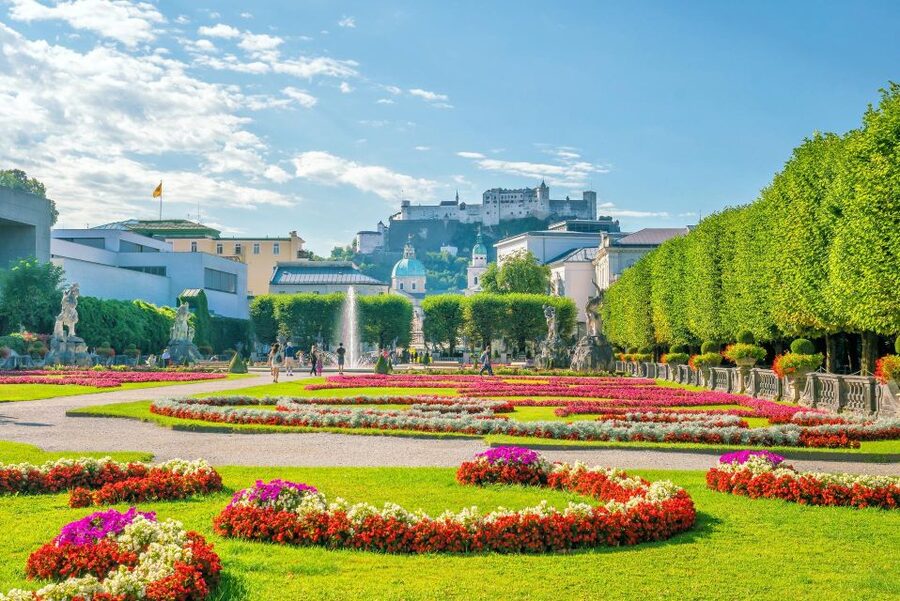
The next major stop is Kollegienkirche, or the University Church. You have about 20 minutes for sightseeing here. The church’s large white interior and strong Baroque design provide a sharp contrast with the narrow streets outside.
This is one place where a guide helps you notice what a quick solo walk can miss. Salzburg’s center is full of grand facades, domes, and churches, and after a while they can blur together. A good explanation gives each building a role in the city’s story.
The guide may also connect the church to Salzburg’s former religious and political power. The city’s appearance was shaped by its archbishops, and the tour places that influence beside Mozart’s more personal story. You see how music, faith, wealth, and authority all helped shape the city center.
There is a practical limitation. Twenty minutes is enough for an introduction and photographs, but not for a careful study of every side chapel or artwork. If you find the church especially appealing, note its location so you can return when the group walk is over.
Same season, a different set of beds:
- Vienna: Skip the Line Schönbrunn Palace and Gardens Guided Tour
★ 4.5 · 1,540 reviews - Vienna: Schönbrunn Palace & Garden Skip-the-Line Guided Tour
★ 4.1 · 1,240 reviews - Vienna: Skip-the-Line Schönbrunn Palace and Gardens Tour
★ 4.8 · 1,089 reviews - Vienna: Skip-the-Line Schönbrunn Palace & Gardens Tour
★ 4.5 · 845 reviews
Salzburg Cathedral and Residenzplatz

Salzburg Cathedral receives another 20-minute sightseeing stop. Its scale is impressive, especially after the smaller streets and enclosed passageways of the Old Town. The guide explains its role among Salzburg’s major landmarks and helps you read the square as more than a grand backdrop.
Residenzplatz follows, with another 20 minutes. This is one of Salzburg’s most important public spaces, surrounded by stately buildings and a strong sense of ceremony. It is the sort of place that can look familiar in photographs but feel much larger when you are standing in it.
This section is also where the tour’s history becomes more serious. Guides have discussed the privileges and excesses of the archbishops, the city’s wartime experience, and the changes Salzburg has gone through. That mix keeps the walk from becoming only a parade of pretty facades.
Crowds can affect the experience. Public events and performances may make it harder to hear, and a group of up to 25 people needs to stay together. One useful habit is to remain close to the guide at crossings and in busy squares. Some guides use a blue umbrella to stay visible, a small but practical help when the Old Town fills up.
Kapitelplatz and the fortress view
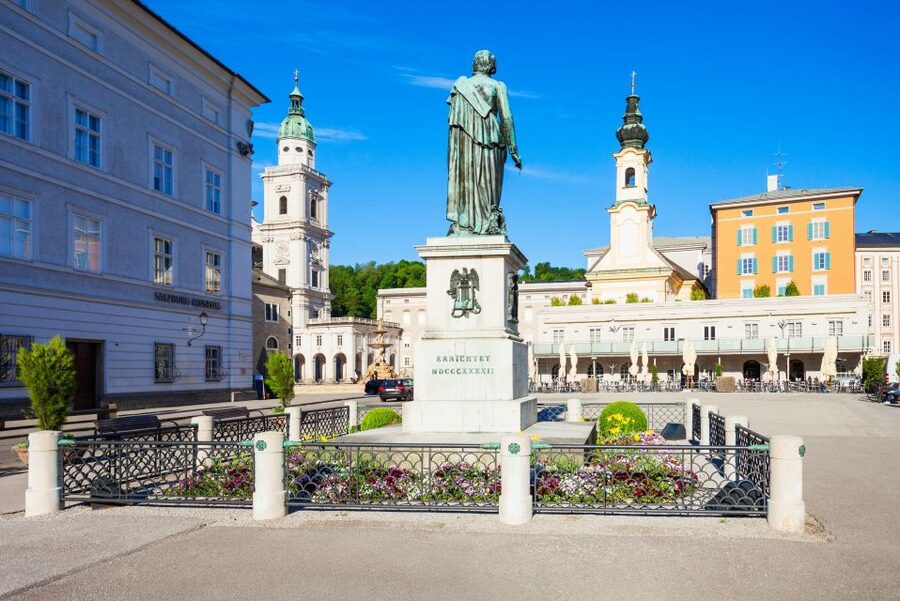
The tour finishes at Kapitelplatz, near the base of Hohensalzburg Fortress. This is one of the best choices on the route because it leaves you in a useful part of the city rather than sending you back to the starting point.
From here, you can get a strong photograph of the hilltop fortress and decide what to do next. Several guides have offered suggestions about taking the funicular, visiting the fortress, seeing a modern art museum, returning to Mozart-related sites, or finding a place to eat and drink.
The tour does not include the fortress or its funicular. That is worth remembering when planning your day. The walk gives you the view and the location, then leaves the next decision to you.
Kapitelplatz also works well as a meeting point for the rest of your Salzburg visit. You are already in the Old Town, close to the Cathedral and other central sights. If this is your first morning in the city, the ending helps you get your bearings fast.
The guides make the biggest difference
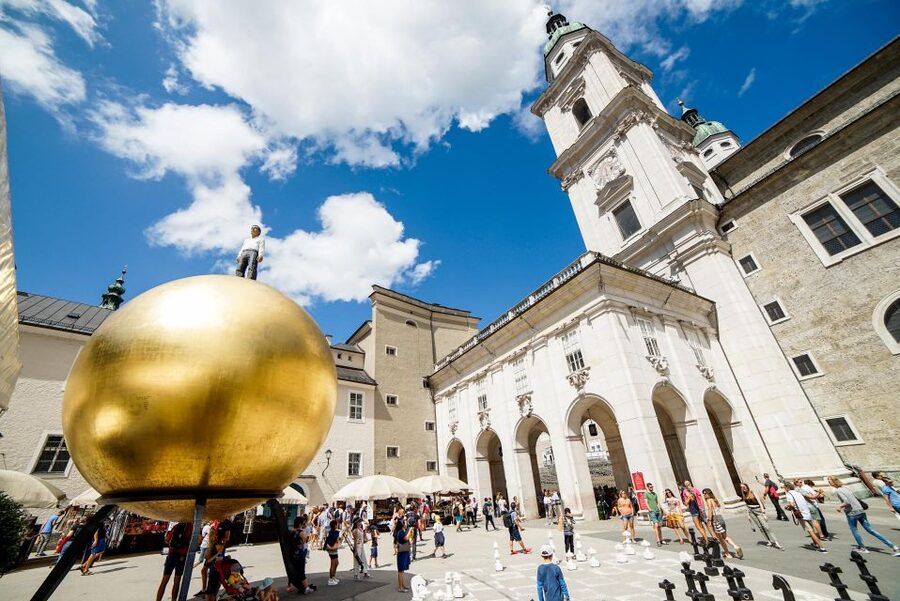
The strongest feature of this experience is the guide rather than any single admission or attraction. The route itself is easy to find. The value comes from having someone explain why the buildings matter, answer questions, and point out small details along the way.
Guides named in the tour feedback include Annabelle, Andreas, Andres, Florian, Norbert, Heiko, Erhard, Gabriela, Elisabeth, and Andrea. Individual styles differ. Some use plenty of humor, some focus on local anecdotes, and others give a brisk, fact-packed introduction.
Annabelle has been praised for her energy, clear explanations, humor, and occasional singing. Andreas has been described as patient and willing to let people ask questions. Florian has brought humor to the walk, while Norbert has shared small stories about Salzburg’s romantic side. These details suggest a tour culture that values personality, not just memorized dates.
A few practical points are worth keeping in mind. Large groups can make it harder to hear, especially in open squares or near traffic. One participant found the guide occasionally difficult to hear, and another felt the walk moved too quickly. If you have a question, ask it early rather than waiting until the end.
Walking conditions, weather, and group size
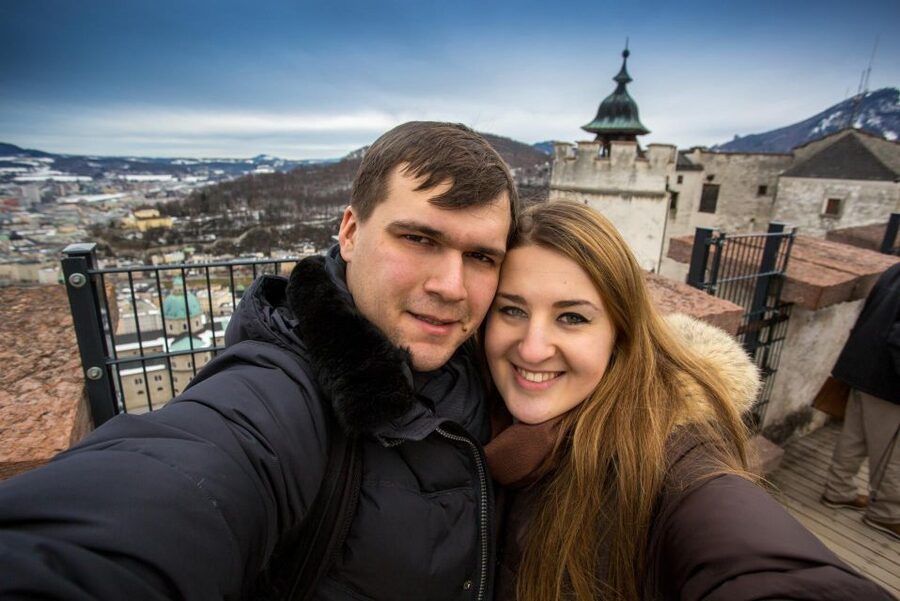
The route lasts two hours and takes place entirely on foot. Salzburg’s center includes uneven surfaces, busy pedestrian streets, and periods of standing while the guide talks. Wear shoes you can walk in comfortably.
The tour runs in sun and rain. Bring weather-appropriate clothing and check the forecast before leaving. In summer, the open sections of Mirabell Gardens and public squares can feel hot, with limited shade. In wet weather, an umbrella or rain jacket helps, though large umbrellas and extra bags may not be practical in a group.
The maximum group size is 25. That is not an intimate private walk, but it is still manageable if the guide keeps people together. Guides have been praised for using clear meeting points and visible signals, including a blue umbrella, when streets are crowded.
This tour is not suitable for people with mobility impairments. It is also not suitable for pets, luggage, large bags, scooters, or baby carriages. If you need frequent seating or a slower pace, a private or specially adapted option would be more appropriate.
Who will get the most from the $45 price

I would choose this tour if Salzburg is new to you and you want the major story in one efficient walk. It suits families, solo visitors, history fans, music lovers, and anyone with only a short stay.
It is also useful after arriving from another city because the route gives you a practical sense of direction. By the end, you know where Mirabell, Getreidegasse, the Cathedral, Residenzplatz, and the fortress sit in relation to one another.
The price is less compelling if you already know the Old Town well or plan to spend all your time inside museums. The tour does not include admission to Mozart’s Birthplace, the Cathedral museum areas, or Hohensalzburg Fortress. You are buying a guided overview, not a collection of entry tickets.
For most first-time visitors, the balance works. You see a lot, hear context that is hard to pick up from a map, and receive suggestions for the rest of the day. The main tradeoff is depth. You will leave with a clear framework, then need to return on your own for the places that deserve more time.
FAQ
Where does the Salzburg walking tour meet?
Meet at the main entrance to Salzburg Congress, opposite the HYPERION Hotel at Rainerstraße 3. Wait under the flagpoles between the Congress building and Kurgarten Park.
How early should I arrive?
Arrive 10 minutes before the scheduled start. Latecomers cannot join the tour and will not receive a refund.
What language is the tour conducted in?
The live commentary is in English only, with one selected language used during the tour.
Does the tour include entry to Mirabell Palace?
The experience includes free entry to Mirabell Gardens and a photo stop at Mirabell Palace. It does not list interior entry to the palace.
Does the tour enter Mozart’s Birthplace?
The itinerary includes sightseeing at Mozart’s Birthplace. Admission to the museum is not included.
Does the tour include Hohensalzburg Fortress?
No. The walk finishes at Kapitelplatz, where you can see the fortress and reach the funicular, but fortress entry and the funicular are not included.
What happens if the weather is bad or the gardens are closed?
The tour runs in sun and rain, so wear suitable clothing. In extreme weather, such as snow, an alternative route may replace the garden visit. The gardens are partly closed in winter, and from November 21 to January 5 the route may include a local Christmas market instead.
Should you book it?
Book this walk if you want a lively first look at Salzburg, especially early in your stay. The combination of Mirabell Gardens, Mozart, The Sound of Music, grand churches, and the fortress view gives you a broad introduction without wasting a day.
Skip it if you want long museum visits, a very slow photographic walk, or a route designed around mobility needs. Otherwise, $45 is a reasonable price for two hours of orientation and storytelling, provided you arrive ready to walk, accept a brisk pace, and return later to the sights that catch your eye.
Newly planted garden visits around Austria
- Vienna: Schönbrunn Palace Gardens Private Guided Tour★ 4.9 · 28 reviews
- Salzburg Tour: Mirabell Gardens, Sound of Music, Mozart★ 4.8 · 24 reviews
- Schönbrunn Palace & Gardens Tour★ 4.2 · 42 reviews
- Salzburg Old Town Walking Tour, Mozart, Mirabell Gardens★ 4.5 · 201 reviews
- Skip-the-Line Sisi Museum, Hofburg and Gardens Tour Vienna★ 4.5 · 449 reviews
- Vienna: Skip-the-Line Schönbrunn Palace & Gardens Tour★ 4.5 · 845 reviews
- Vienna: Skip-the-Line Schönbrunn Palace and Gardens Tour★ 4.8 · 1,089 reviews
- Vienna: Schönbrunn Palace & Garden Skip-the-Line Guided Tour★ 4.1 · 1,240 reviews
Austria Garden Tours, bed by bed.
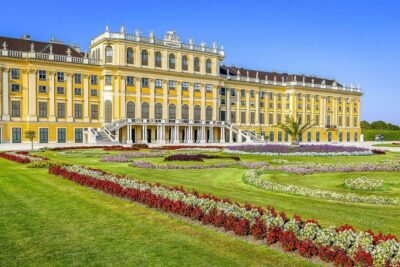
Vienna: Schönbrunn Palace & Gardens Skip-the-Line Tour
Read our review →
Vienna: Skip-the-Line Sisi Museum, Hofburg and Gardens Tour
Read our review →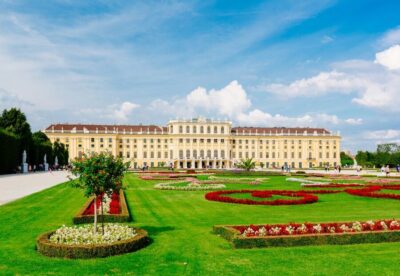
Vienna: Schönbrunn Palace & Garden Skip-the-Line Guided Tour
Read our review →
Salzburg Old Town Walking Tour, Mozart, Mirabell Gardens
Read our review →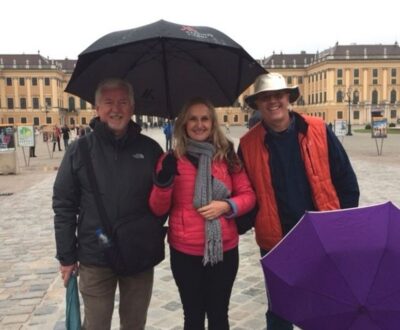
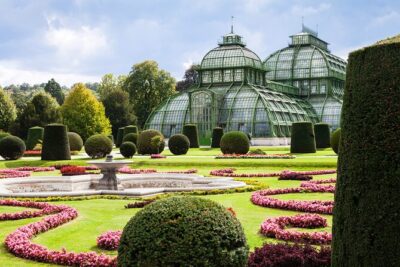
Vienna: Schönbrunn Palace Gardens Private Guided Tour
Read our review →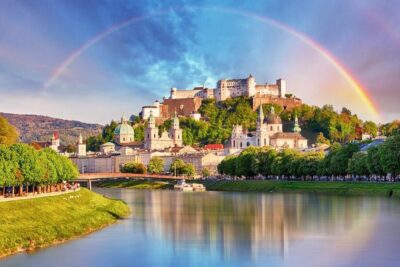
Salzburg Tour: Mirabell Gardens, Sound of Music, Mozart
Read our review →Lists this garden visit belongs to