
Review · PARIS
Paris: Musée de Montmartre and Gardens Entry Ticket
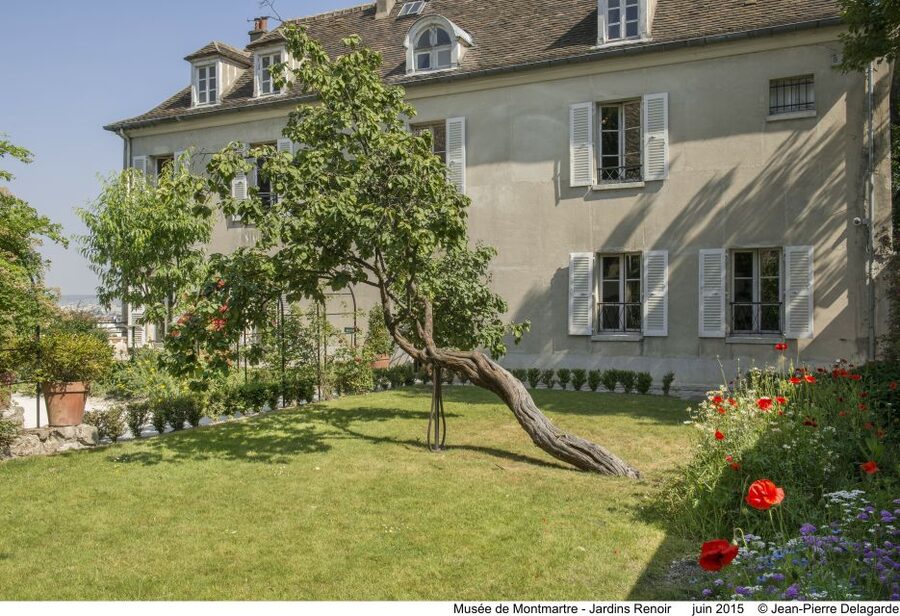
Montmartre’s story is told unusually well inside the Bel Air House, a seventeenth-century building once linked with artists and now part of the Musée de Montmartre. Rather than racing from landmark to landmark, you get a quiet look at the district’s old mills, cabarets, studios, painters, and performers. I especially like the 90-minute audio guide and the chance to wander beyond it at your own pace.
I also like the Renoir Gardens, where the museum’s art feels connected to the place itself, and the clear focus on Montmartre’s creative life. The main drawback is that the museum is smaller and less straightforward than a major Paris art museum. Some rooms are easy to miss, and parts of the visit lead through or near the café. The walk up to the museum can also feel like a trek.
Key points to know before you go
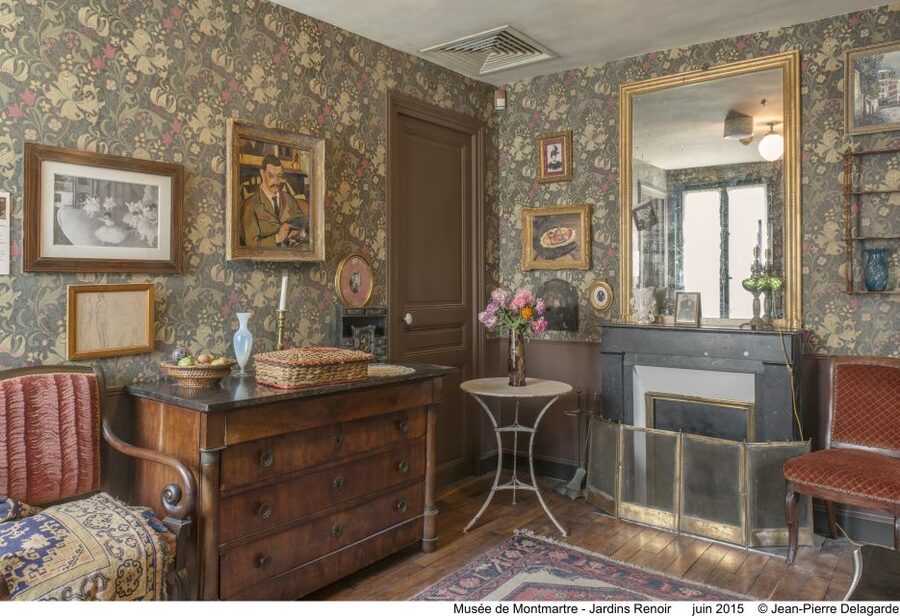
- A seventeenth-century setting: The Bel Air House is presented as the oldest building in Montmartre.
- A local story, not just an art display: You learn how Montmartre changed after its annexation to Paris and why artists moved there.
- Cabaret history in detail: The Chat Noir, shadow theater, Moulin Rouge performers, and Toulouse-Lautrec all have a place here.
- Gardens included: Your ticket covers the Renoir private garden, museum grounds, and access to the café.
- About 90 minutes with the audio guide: You can stay longer to see temporary exhibitions and explore at your own speed.
- A calm alternative to crowded sights: The museum offers a slower, more intimate Montmartre experience than the district’s busiest streets.
Why the Musée de Montmartre feels different
Montmartre is often reduced to Sacré-Cœur, portrait artists, souvenir shops, and steep streets. Those are part of the picture, but the Musée de Montmartre explains what made the district so important before it became one of Paris’s most visited neighborhoods.
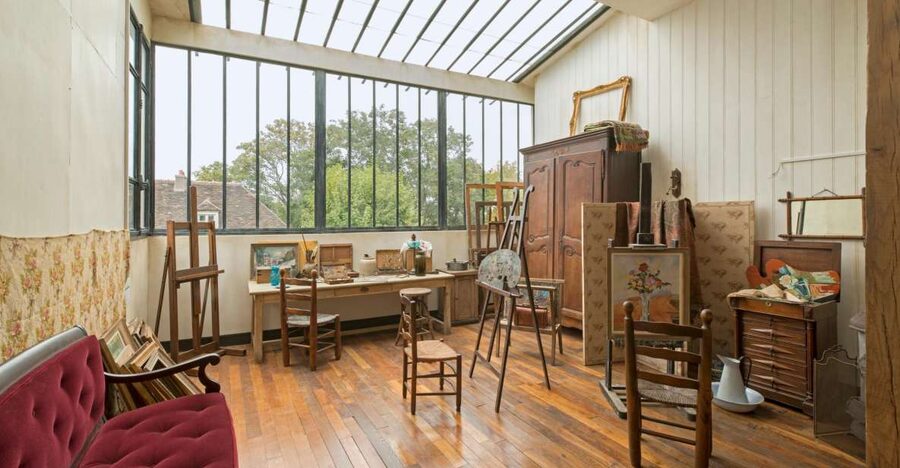
The museum occupies buildings connected with artists and the old village of Montmartre. The Bel Air House dates from the seventeenth century, giving the visit a physical link to the district before cafés, cabarets, and studios took over. I like that you are not looking at paintings in a neutral modern box. The rooms help explain how people lived and worked here.
The story becomes especially interesting in the nineteenth century. Montmartre was once countryside on the edge of Paris. After it was annexed to the city, urban Paris pressed into the area. Artists began moving in around 1870, and cafés and cabarets multiplied during the 1880s.
That change matters because Montmartre became more than a place where painters rented cheap rooms. It developed into a meeting point for theater, music, dance, circus acts, poetry, and visual art. The museum gives you enough context to understand why so many creative figures gathered here.
Garden entry tickets around Paris:
- Paris: Versailles Palace and Gardens Full Access Ticket
★ 4.6 · 41,579 reviews - From Paris: Versailles Palace Self Guided & Gardens tickets
★ 4.4 · 1,100 reviews - Paris: Louvre Museum Entry Ticket and Garden Walking Tour
★ 4.2 · 326 reviews
Entering the Bel Air House
You show your voucher at the museum entrance and go directly inside, avoiding the ticket line. That does not mean every visit is instant, since the museum can still have a short wait at busy times, but it is a useful advantage when you are planning a full day in Paris.
The first impression is intimate. This is not a vast collection that requires hours of marching through galleries. Instead, you move through historic rooms and exhibition areas that focus on Montmartre’s people and places.
The audio guide is designed to take about 90 minutes. I would use it as a framework rather than a strict timetable. Listen to the main sections, pause when something catches your eye, and then allow time afterward for the garden and any temporary exhibition.
Signage can require attention. One part of the museum may lead through the café area, and it is possible to overlook rooms if you follow the visit too quickly. Give yourself time to check the signs and look around before assuming you have seen everything.
From countryside to Paris district
The museum’s best contribution is its explanation of how Montmartre changed. The district did not simply become artistic by accident. Its position outside central Paris, its old village character, and its changing relationship with the city all helped shape its appeal.
The annexation to Paris brought a sharper contrast between the old countryside and the expanding city. The museum helps you picture that moment when Montmartre’s rural identity began to be overtaken by urban growth.
Then came the artists. From about 1870 onward, painters and other creative people moved into the area. By the 1880s, cafés and cabarets were multiplying. These venues gave artists somewhere to meet, perform, argue, drink, and display new work.
I find this more useful than a simple list of famous names. You begin to see Montmartre as a working community, not just a backdrop for paintings. The district’s artistic identity came from constant contact among performers, writers, musicians, dancers, and painters.
The Chat Noir and Montmartre’s cabaret life
The Chat Noir receives particular attention, and rightly so. This celebrated cabaret hosted performances of shadow theater, an art form created in 1866 by Henri Rivière and Henry Somm.
The shadow theater is a fine example of Montmartre’s willingness to mix forms. It was not only a place for traditional stage performances. Silhouettes, projected images, music, spoken text, and satire all belonged to the same creative world.
The museum also brings in the wider entertainment scene. Theater, music, circus, and dance all played a role in the district. Aristide Bruant and Yvette Guilbert recited their texts, while performers such as La Goulue, La Môme Fromage, and Grille d’Egouts appeared at the Moulin Rouge.
Toulouse-Lautrec repeatedly captured this world. His work is valuable here because it connects the people in the galleries with the stages and cabarets nearby. You are not just seeing famous art. You are learning what the art was looking at.
For me, this section is one reason the museum works well for people who know only the postcard version of Montmartre. It gives substance to the cabaret posters and makes the district’s nightlife feel less like a tourist invention.
More gardens worth a morning in Paris:
- Versailles: Skip-the-Line Tour of Palace and Gardens Access
★ 4.7 · 10,429 reviews - From Paris: Versailles Palace & Gardens with Transportation
★ 4.6 · 6,222 reviews - From Paris: Versailles Palace Guided Tour & Gardens Access
★ 4.7 · 3,574 reviews - From Paris: Giverny, Monet’s Home & Gardens Half-Day Trip
★ 4.5 · 2,887 reviews
Artists at 12 Cortot
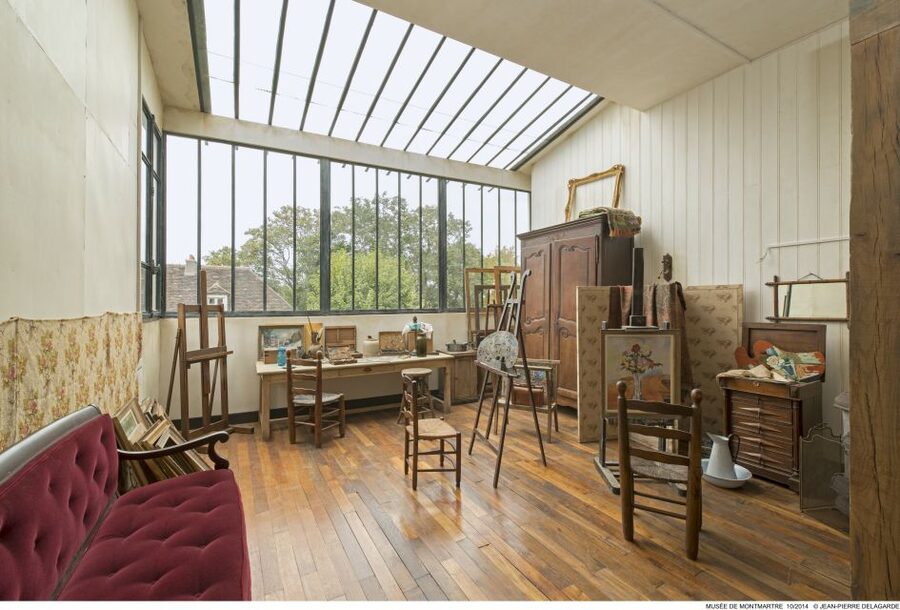
The address 12 Cortot is central to the museum’s sense of place. The artists’ studios there witnessed the arrival of several painters, many of whom painted the building and their surroundings.
That detail makes the visit personal. A studio is not simply a location on a map. It suggests cramped working space, shared buildings, unfinished canvases, and artists observing the same windows, gardens, and streets from different angles.
The museum uses these connections to show how Montmartre shaped the people who lived there. You can look at the artwork and then think about the rooms, gardens, and neighborhood outside the frame.
The collection is not limited to one artist or one style. It presents the district through paintings, photographs, and material connected with its cultural life. If you come expecting only impressionist masterpieces, adjust your expectations. The point is the story of Montmartre and its creative circles, not a greatest-hits gallery.
The Renoir Gardens and Montmartre vineyard
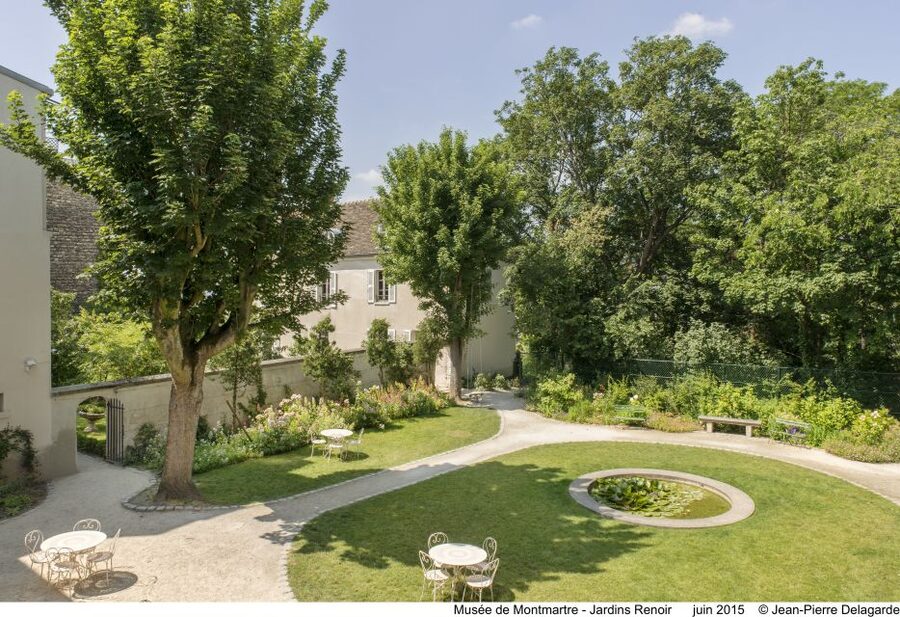
The gardens are one of the strongest parts of the visit. Your ticket includes access to the Renoir private garden, where flowers and greenery provide a peaceful break from Montmartre’s crowded streets.
The garden is especially useful if you have already spent the morning climbing stairs and moving through busy lanes. You can slow down, look back at the museum buildings, and consider the setting that artists painted.
The Montmartre vineyard is also part of the view into the district’s older identity. It reminds you that this area was once more rural than urban. Even a short look at the vines helps connect the museum’s story of mills, gardens, and countryside with present-day Montmartre.
Do not treat the gardens as a quick photo stop. I would allow at least 20 to 30 minutes, more if the weather is pleasant. They remain attractive outside the main spring and summer season, and the experience is not dependent on perfect sunshine.
The grounds are also a good reason to visit even if you are less interested in every painting. The combination of old buildings, plants, and the vineyard gives the museum a sense of place that many indoor attractions lack.
Café Renoir and a sensible pause
Café Renoir is open from 11:00 AM to 6:00 PM, and access to the café is included as part of the museum setting. It can make the visit feel less hurried, especially if you want a light break before or after the galleries.
The café has also been described as a pleasant place for lunch or a drink in the gardens. One particularly practical detail: the hot chocolate has earned a good reputation. If you are visiting with children, do not count on the café as your only meal plan, since the menu may not suit picky eaters.
The café can occasionally close for a private event. That is worth keeping in mind when planning your day. The museum visit still works without it, but you should not build your entire schedule around eating there.
The café’s position can also cause some confusion. Parts of the museum route pass through or near it, so keep an eye on the signage. If you think you have finished, check whether there are more rooms beyond the café area.
Temporary exhibitions add value
The ticket covers both the permanent collection and temporary exhibitions. These changing displays can make a second visit worthwhile, or simply add more substance if the permanent collection is smaller than you expected.
Past temporary exhibitions have included focused presentations of artists such as Maximilien Luce and Herbin. These shows can be extensive, with enough work to show how an artist’s style developed over time.
The temporary gallery is also useful for visitors who want more art after the Montmartre history sections. The permanent displays explain the district, while the changing exhibitions may offer a closer look at one artist, movement, or theme.
Because exhibitions change, you should check what is showing before you book if a particular artist is your main reason for going. The permanent collection and gardens remain the reliable core of the visit.
Timing, opening hours, and accessibility
The museum is open from 10:00 AM to 7:00 PM. Last entry is 45 minutes before the halls close, so arriving close to closing time leaves too little room for the audio guide, gardens, and temporary rooms.
I would plan for at least two hours if you want a relaxed visit. The audio guide alone takes about 90 minutes, and you will want additional time for the gardens, café, and rooms that are easy to overlook.
The ticket is valid for one day, so you are not pushed into a short timed visit. That makes it easier to fit the museum between other Montmartre stops. A morning visit can leave you free for the neighborhood afterward, while an afternoon visit works well after exploring the streets and Sacré-Cœur area.
The museum is wheelchair accessible. The approach through Montmartre can involve an uphill walk, however, so consider that when planning your route and pace.
There is no live guide. Instead, the audio guide supplies the historical explanation. That suits me when I want to stop often or move at my own pace, but you may prefer a live guide if you want to ask questions or have someone interpret the exhibits for you.
Is $16 a fair price?
At $16 per person, I consider this a good-value Paris museum ticket if you plan to use the full visit. You get the permanent collection, temporary exhibitions, gardens, café access, the Renoir private garden, and the audio guide.
The value is strongest when you care about Montmartre itself. If you only want a quick look at famous paintings, a larger art museum may offer more works. Here, you are paying for a focused account of one neighborhood and the setting in which its artists lived.
The garden adds real value because it gives you a quiet place to pause, not just another indoor gallery. The temporary exhibition can also extend the visit beyond the basic 90-minute audio route.
The ticket becomes less useful if you are rushing through Paris or have no interest in local history, cabarets, or artists’ lives. This is a slow, place-focused museum. It rewards attention rather than speed.
Free cancellation up to 24 hours in advance and the option to reserve now and pay later make the booking less rigid. Those policies matter if your Paris schedule is still shifting.
Who should visit the Musée de Montmartre?
I would recommend it to anyone who wants more than the standard Montmartre photo stops. It is a particularly good fit for:
- Art lovers who want context around impressionist and modern artistic life
- Visitors curious about the Chat Noir, Moulin Rouge performers, and Toulouse-Lautrec
- People who prefer smaller museums to crowded national collections
- Families who need a calm garden break, with the warning that café food may not suit every child
- Repeat Paris visitors looking for a quieter side of Montmartre
- Anyone who enjoys historic buildings as much as individual artworks
I would be more cautious if you have very little time in Paris and have not yet seen the city’s major museums. The Musée de Montmartre is rewarding, but its appeal depends on your interest in one district.
Should you book it?
Book this ticket if you want to understand why Montmartre became a center for painters, cabaret performers, musicians, and theatrical experiment. The Bel Air House, the Chat Noir material, the artists’ studios, and the Renoir Gardens work together to create a thoughtful visit.
I especially recommend it for a two-hour pause in a busy Montmartre day. Go slowly, use the audio guide, check every room, and leave time for the garden. Skip it only if your schedule is extremely tight or you want a large collection of major European paintings rather than a focused portrait of one Paris neighborhood.
FAQ
How long does the visit take?
The audio guide lasts about 90 minutes, but you can stay longer and explore the museum, temporary exhibitions, gardens, and café at your own pace.
What does the ticket include?
It includes entry to the permanent and temporary exhibitions, museum gardens, the Renoir private garden, café access, and an audio guide.
Is there a live guide?
No. The experience includes an audio guide, but not a live guide.
What are the museum’s opening hours?
The museum is open from 10:00 AM to 7:00 PM. Last entry is 45 minutes before the halls close.
When is Café Renoir open?
Café Renoir is open from 11:00 AM to 6:00 PM.
Is the museum wheelchair accessible?
Yes, the museum is wheelchair accessible.
Can I cancel the booking?
Yes. You can cancel up to 24 hours in advance for a full refund. You can also reserve now and pay later.
Newly planted garden visits around Paris
- Private Versailles, Gardens, Trianon from Paris by Mercedes★ 4.4 · 20 reviews
- Private Guided Tour of Luxembourg Gardens & Panthéon Tickets★ 5.0 · 2 reviews
- Private Giverny Monet’s House & Gardens Trip from Paris★ 4.9 · 11 reviews
- Paris Secret Gardens 1.30 hour long Walking Tour★ 4.2 · 11 reviews
- Paris: Skip-the-Line Eiffel Tower and Trocadero Gardens Tour★ 4.3 · 47 reviews
- Paris: Private photo shooting at the Luxembourg Garden★ 5.0 · 10 reviews
- Paris: Giverny Gardens Day Trip with Professional Tour Guide★ 4.4 · 5 reviews
- Orangerie Museum & Tuileries Garden Tour★ 5.0 · 3 reviews
France Garden Tours, bed by bed.
Paris: Versailles Palace and Gardens Full Access Ticket
Read our review →Versailles: Skip-the-Line Tour of Palace and Gardens Access
Read our review →
From Paris: Versailles Palace & Gardens with Transportation
Read our review →
From Paris: Versailles Palace Guided Tour & Gardens Access
Read our review →Versailles Palace and Gardens Tour from Paris
Read our review →
From Paris: Giverny, Monet’s Home & Gardens Half-Day Trip
Read our review →
Nice: Gorges of Verdon and Fields of Lavender Tour
Read our review →
Versailles Full Day Bike Tour with Palace, Gardens, & Picnic
Read our review →Lists this garden visit belongs to