
Review · MALTA
Mysterium Fidei Monastery & Secret Garden in Valletta
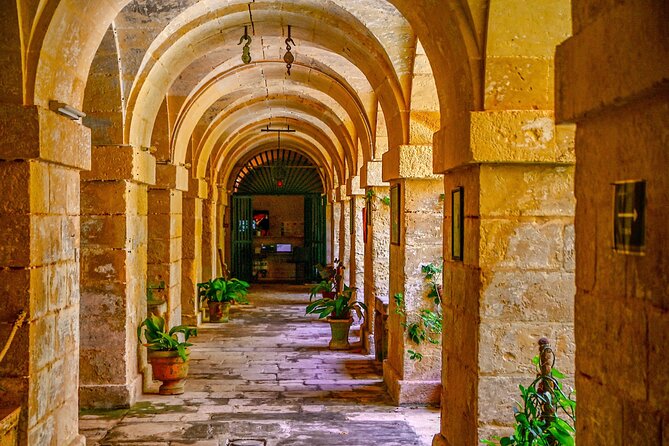
The most unusual part of Mysterium Fidei is the chance to enter a Secret Garden that was closed to the public for more than 400 years. Inside St. Catherine’s Monastery, you can see the plain rooms, kitchens, washrooms, and crypts connected with the lives of cloistered nuns.
I like the quiet garden and the preserved everyday spaces most. You are not just looking at grand church art. You are seeing where women cooked, slept, washed, prayed, and were laid to rest. The main limitation is clear: visitors stay on the ground floor, so much of the working monastery remains closed.
Key points to know before you go
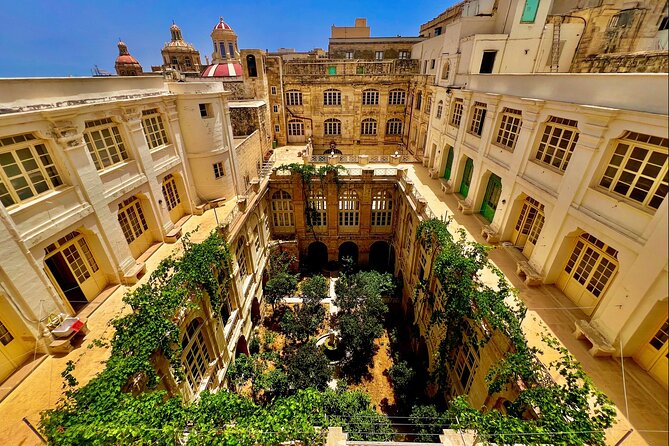
- The garden was closed for over 400 years: This is a rare chance to enter a private enclosed space in central Valletta.
- Original working rooms remain: Kitchens, bedrooms, washrooms, a chapel, and crypts help explain daily monastic life.
- The visit is self-guided: An English audio guide provides the story of the rooms and the nuns who lived there.
- The upper floors are closed: The monastery remains an active closed cloister, so the visit is limited to accessible ground-floor areas.
- Plan on 30 minutes to 1.5 hours: The length depends on how much time you spend reading, listening, taking photos, and sitting in the garden.
- The price is modest: At $12.10 per person, it works best as a focused historical stop rather than a full-day attraction.
Entering St. Catherine’s Monastery in Valletta
Mysterium Fidei sits in the heart of Valletta, inside St. Catherine’s Monastery. The setting matters. Valletta is compact and full of churches, palaces, museums, and stone streets, yet this site gives you a different kind of historical experience: a look at private religious life behind monastery walls.
St. Catherine’s Monastery dates to 1575 and was associated with female orphans. Over time, it became a home for women who chose the life of a cloistered nun. When they joined, they took vows that meant they would not leave the monastery. Their lives were built around prayer, work, and self-sufficiency, away from ordinary contact with the outside world.
You enter through the area known as Mysterium Fidei, a name linked with the mystery of faith. The visit is not presented as a conventional guided walk with a live guide. Instead, an English audio guide helps explain what you are seeing as you move through the rooms.
That format suits this place. The rooms are small and quiet, and you can pause when something catches your attention. You are free to move at your own pace rather than keeping up with a group.
More gardens worth a morning in the world:
- Paris: Versailles Palace and Gardens Full Access Ticket
★ 4.6 · 41,579 reviews - Amsterdam: Keukenhof Entry & Shuttlebus with Flexible Return
★ 4.7 · 11,891 reviews - Versailles: Skip-the-Line Tour of Palace and Gardens Access
★ 4.7 · 10,429 reviews
The Secret Garden after four centuries
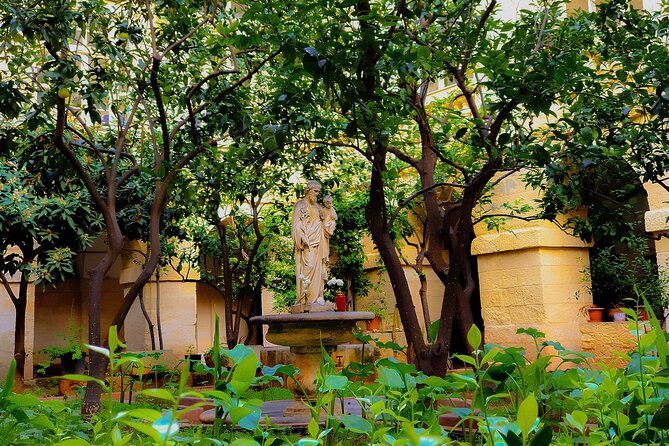
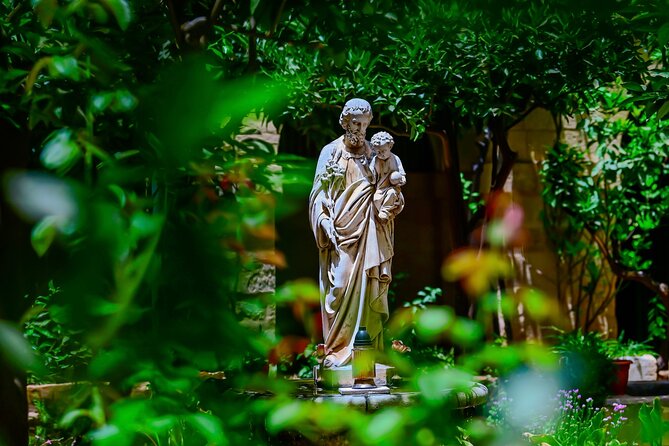
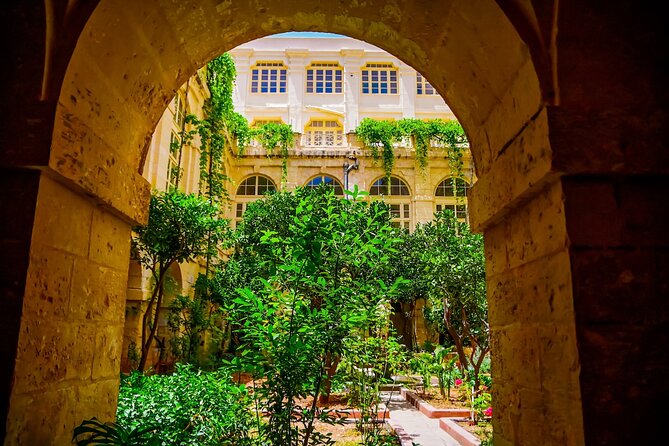
The garden is the emotional center of the visit. It is enclosed, quiet, and surprisingly private for a site in central Valletta. You step away from the city’s streets into a small green space that once belonged only to the monastery community.
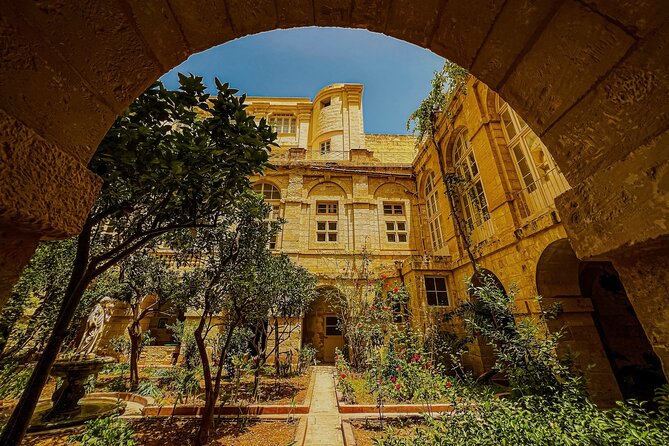
Do not picture a huge formal garden. One important point is its size: it is tiny. That is not a flaw if you understand what you are visiting. This is a secluded monastic courtyard, not a botanical garden or a major public park.
I like the way the garden gives you a sense of what cloistered life meant. The nuns did not simply live near a garden. This enclosed space was part of a world designed to keep them within the monastery. It offered air, light, plants, and a little contact with the natural world without opening the community to the street outside.
You can use the audio guide to learn how the garden fits into the story of the monastery. Take your time here. The space is particularly good for photographs, but its value is not only visual. It gives you a quiet pause after the tighter interior rooms.
The garden may also contain signs of the small animal life kept within the monastery. Details recorded about the site include two turtles and a cat, along with a rabbit in a pen. The rabbit may be an uncomfortable sight for some people because it reflects Maltese food traditions. It is worth knowing this before you arrive if you are sensitive to that kind of detail.
Kitchens, bedrooms, and washrooms left in place
The strongest part of Mysterium Fidei is the ordinary nature of what you see. Grand churches can show you what a society wanted to display. Rooms such as kitchens and washrooms show you how people actually lived.
The original kitchens help explain the monastery’s self-sufficient routine. You can consider the amount of work needed to feed a community that was largely separated from the outside world. Cooking was not a background task. It was central to the running of the monastery.
The bedrooms and living quarters are plain. That plainness is useful. It keeps the story focused on discipline and routine rather than decoration. You get a sense of the limited private world available to women who had committed themselves to the cloister.
The washrooms add another layer. They are not the sort of rooms most historic sites highlight, but they make the visit more human. You see the practical side of monastic life, not just its religious ideals.
The audio guide helps connect these spaces. Without explanation, a small room can look like an empty stone chamber. With context, it becomes part of a system of work, prayer, silence, and separation.
I recommend listening carefully instead of rushing through the rooms. The attraction is compact, and you will not lose much time by stopping to understand how each space worked.
The crypt and the monastery’s final resting place
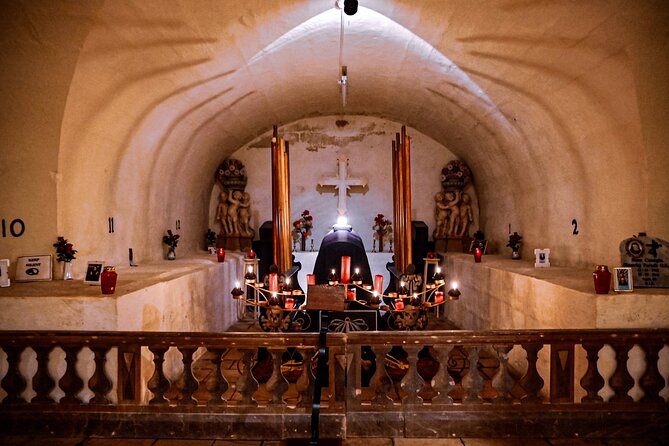
The crypt is one of the most memorable parts of the visit. It served as the final resting place for the sisters, who were buried within the walls of the monastery.
This detail makes the idea of the closed cloister especially powerful. The nuns’ separation from the outside world did not end simply because their lives ended. Their burial place remained within the monastery they had chosen as their home.
The crypt is not a grand royal tomb. Its impact comes from its direct connection to the women who lived above it. You are seeing the last part of a life that was spent in the same enclosed community.
For some people, this will be the most moving room on the route. For others, it may feel stark. The site does not hide the severity of the vows or the narrow limits of monastic life. I appreciate that honesty, but you should know that this is a reflective historic visit, not a light sightseeing stop.
The monastery also holds a relic associated with the Holy Cross, described as being certified authentic under a Vatican seal. If religious objects matter to you, this adds another point of interest. If your main interest is architecture and social history, the daily-life rooms and crypt will probably hold your attention longer.
Same season, a different set of beds:
- Marrakesh: Majorelle Garden Entry Tickets
★ 4.5 · 9,651 reviews - Vienna: Schönbrunn Palace & Gardens Skip-the-Line Tour
★ 4.7 · 7,739 reviews - Granada: Alhambra & Gardens Tour w/Nasrid Palaces Option
★ 4.2 · 7,022 reviews - From Paris: Versailles Palace & Gardens with Transportation
★ 4.6 · 6,222 reviews
What the audio guide adds
The English audio guide is important because there is no indication of a named live guide leading the visit. It gives you the background needed to understand the rooms and the story of the cloistered nuns.
The guide covers the various spaces and makes the experience more personal. You learn to see the monastery as a functioning home rather than a collection of old rooms.
This is also a good format for a place that still operates as a monastery. You can listen quietly, stop when needed, and avoid adding a large group to a working religious setting.
The audio format has limits. It will not answer a question in the moment, and your visit may feel less social than a live tour. If you want a guide to discuss architecture, Maltese religious history, or the lives of particular nuns, this is not that kind of outing.
Still, for a short visit, the audio guide does its job. It gives structure without forcing you through the site at a fixed pace.
The important restriction: only the ground floor
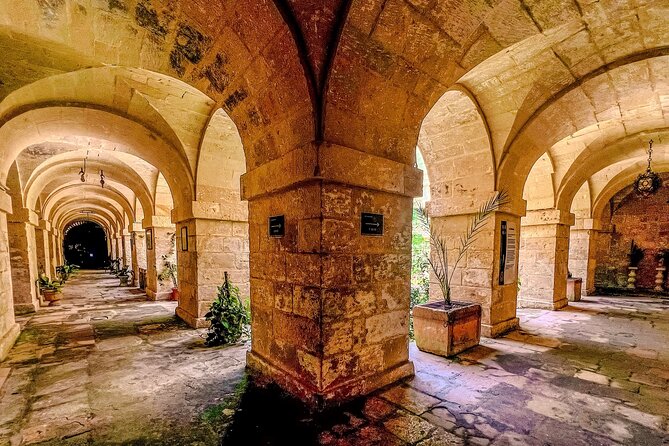
Set your expectations before booking. The upper floors are not open to the public because the monastery remains a closed cloister. Nuns still live there, and their privacy is part of the reason access is limited.
You can visit the ground-floor areas, garden, and crypt, but you cannot explore the complete building. This explains why some photographs may suggest more of the monastery than you can see in person.
I see this restriction as both a drawback and part of the site’s meaning. You do not get a full architectural tour, but you do encounter a living religious institution rather than a building emptied for display.
If you are booking mainly for broad views, upper-level rooms, or a large collection of objects, choose another Valletta attraction. If you want an honest look at a working cloister and accept that some doors must stay closed, the limited access makes sense.
How long the visit takes
The stated visit time ranges from 30 minutes to 1 hour and 30 minutes. Most people can see the main rooms and garden in under an hour, but you can stretch the visit by listening to every audio section and spending time in the courtyard.
I would allow about an hour if your Valletta schedule is busy. That gives you enough time to move slowly, take photographs, and absorb the crypt and garden without turning the stop into a rushed tick on a list.
You may need less time if you are mainly interested in the garden and a quick look at the rooms. You may want the full 90 minutes if religious history, old domestic spaces, or photography are high on your list.
The short duration makes Mysterium Fidei easy to pair with other Valletta sights. It is a focused stop, not a full morning or afternoon program.
Is $12.10 a fair price?
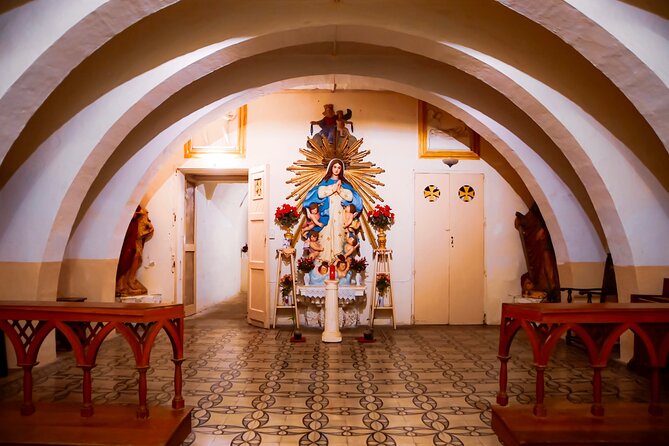
At $12.10 per person, the admission is reasonable if you value access to a normally closed religious site and a self-guided explanation of its history. You are paying for the setting, the preserved rooms, the garden, and the chance to enter a space that was inaccessible to the public for centuries.
The value becomes less clear if you expect a large museum, many decorated rooms, or a long guided tour. The garden is small, the visit remains on the ground floor, and some parts of the monastery are unavailable.
I would compare it with the cost of a short museum visit in Valletta. At this price, it works well as an atmospheric stop between larger sights. It is less convincing as your only paid cultural activity in the city.
The strongest value comes from the combination of access and atmosphere. You see original working areas, not just restored displays. You also get a chance to sit in a quiet courtyard in one of Malta’s busiest historic cities.
Practical details for planning your stop
The experience is offered daily from 10:00 a.m. to 5:00 p.m. for the stated operating period, from January 6, 2025, through May 31, 2026. Check the opening details when arranging a later visit, since operating dates can change.
You receive a mobile ticket, and the experience is offered in English. The site is near public transportation, and confirmation is provided at booking.
Most people can participate, and service animals are allowed. The provided details do not give a full accessibility description for every room, so you should check directly if you need specific information about steps, surfaces, or access inside the monastery.
The cancellation policy is flexible if your plans change. You can cancel up to 24 hours before the start time for a full refund. Changes or cancellations made less than 24 hours before the start are not accepted for a refund.
Wear comfortable shoes for Valletta’s streets, and keep your camera ready. Photography is one of the pleasures here, especially in the garden and the old interior spaces. Do not let the camera distract you from the audio guide, since the story is what gives the rooms their meaning.
Who will enjoy Mysterium Fidei most?
I would recommend this stop to you if you like:
- Religious history and working monasteries
- Small historic interiors with original domestic features
- Quiet courtyards and reflective places
- Audio-guided visits at your own pace
- Photography in unusual Valletta settings
- Short attractions that fit between larger sightseeing stops
Families may appreciate the animals and the unusual setting, although the crypt and strict monastic history may not hold every child’s attention. The site can also suit visitors who want a break from churches and palaces but still want a historic experience.
You should think twice if you need a large garden, sweeping city views, or access to several floors. The garden is small, and you cannot see the upper level where the nuns continue their cloistered life.
Should you book Mysterium Fidei?
Book it if you want a brief, unusual look at how cloistered women lived in Valletta. The original kitchens, bedrooms, washrooms, and crypt give the visit substance, while the garden provides a calm place to pause.
Do not book it expecting a grand museum or a complete monastery tour. The ground-floor limit is real, and the garden will take only a short time to explore.
At $12.10, I think it is a good-value addition to a day in Valletta, especially for visitors interested in social history, religious life, and preserved everyday spaces. Give it about an hour, listen to the English audio guide, and treat the quiet garden as part of the story rather than the whole attraction.
FAQ
Where is Mysterium Fidei located?
Mysterium Fidei is inside St. Catherine’s Monastery in the heart of Valletta, Malta.
How much does admission cost?
The listed price is $12.10 per person, with admission included.
How long does the visit take?
The approximate duration is 30 minutes to 1 hour and 30 minutes.
Is the experience guided?
The visit includes an English audio guide. The supplied information does not name a live guide.
What can I see inside the monastery?
You can see original kitchens, bedrooms, washrooms, a chapel, the Secret Garden, and the crypts where the sisters were laid to rest.
Can I visit the upper floors?
No. Visitors can explore the ground-floor areas, while the upper floors remain closed because the monastery is an active closed cloister.
When is Mysterium Fidei open?
The listed hours are Monday through Sunday, 10:00 a.m. to 5:00 p.m., for the operating period from January 6, 2025, through May 31, 2026.
Is the experience available in English?
Yes. It is offered in English, including the audio guide.
Can I cancel for a refund?
Yes. You can cancel at least 24 hours before the experience starts for a full refund. Cancellations or changes made less than 24 hours before the start are not accepted for a refund.
Newly planted garden visits around the world
- Sunday Market and Gardens Tour★ 4.0 · 10 reviews
- Botanical Trails of Madeira. Mountain biking Trail Experience★ 5.0 · 42 reviews
- Monte Tropical Garden & Toboggans private Tuk-Tuk tour★ 5.0 · 25 reviews
- Funchal Old Town & Palheiro Gardens Private Tuk Tuk Tour★ 5.0 · 8 reviews
- Kensington Palace VIP Garden Tour with Royal High Tea★ 4.5 · 71 reviews
- Private Half-Day Tour to Monet’s Garden in Paris★ 5.0 · 3 reviews
- Madeira Botanical Gardens and Old Town Tuk Tuk Tour by MadTuk★ 4.5 · 7 reviews
- Secret Gardens of London Private Tour★ 5.0 · 13 reviews
Malta Garden Tours, bed by bed.

Malta: Mdina, Dingli Cliffs and San Anton Botanical Gardens
Read our review →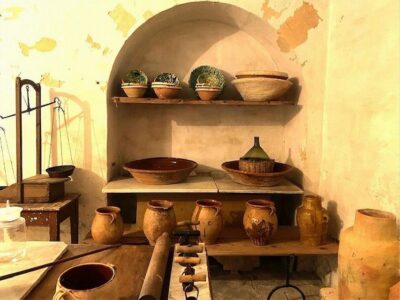
Valletta: Monastery and Secret Garden Entry Ticket
Read our review →
Mdina, Rabat, Dingli cliffs, San Anton gardens, Ta’ Qali & Mosta guided tour
Read our review →

Malta: Dingli Cliffs & Buskett Gardens Segway Tour
Read our review →
Scenic Tour by Vintage Bus to Buskett Garden & Dingli Cliffs
Read our review →
The Limestone Heritage Park and Gardens (Entry Ticket)
Read our review →Lists this garden visit belongs to