
Review · SOUTH KOREA
Gyeongju Cherry Blossom Day Tour from Busan (2~3 spring spots)
Gyeongju in spring is Korea at its most photogenic: pale cherry trees frame ancient tombs, tiled Hanok roofs, bridges, temples, and old royal sites. This day tour from Busan visits two or three blossom spots, chosen according to flower conditions on the day, so you spend your time where the spring show is strongest.
I like the simple $55 price, which covers transportation and any admission fees, and I like the chance to see both flowers and Silla-era sights in one day. The tradeoff is that the route is not fixed, and traffic, weather, and peak blossom crowds can change the plan.
Key points to know
- The route follows the flowers: Your 2 to 3 stops are selected from popular Gyeongju sites based on bloom and road conditions.
- You see more than cherry trees: Expect a mix of royal tombs, temples, Hanok streets, bridges, forests, and lake views.
- The day is long: Plan on roughly 9 to 11 hours from Busan, with about 5 hours set aside for Gyeongju sightseeing.
- Several Busan departure points are offered: This makes the tour easier to join if you are not staying near one central meeting place.
- English and Chinese-speaking staff are included: Guides connected with the tour include Lucy, David, Danny, and Bobby, though assignments can vary.
- The group can reach 43 people: The coach keeps the price low, but this is not a private or highly flexible outing.
Why Gyeongju is worth the long spring day
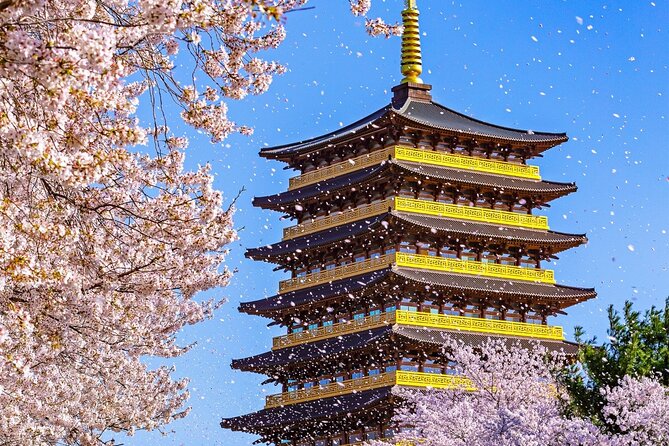
Gyeongju was the capital of the Silla kingdom for centuries, and its old royal center is scattered through the modern city. That gives the cherry blossom season a special setting. You are not simply walking beneath rows of trees. You may be looking across flowers toward a burial mound, a stone observatory, a traditional roof, or a restored bridge.
That mix is the main reason I would choose Gyeongju over a simple flower-viewing park. The trees soften the old monuments, while the historic sites give your photographs a clear sense of place. You can also find snack stalls and small souvenir stands near some stops, adding a little local color to what might otherwise be a quick photo visit.
The timing matters. Spring bloom dates shift with weather, and this tour does not promise one rigid route. Instead, the operator can choose from a long list of Gyeongju spots. That flexibility is useful when one area is past its best while another is just opening.
It also means you should not book this tour expecting a precise checklist. You are buying a guided blossom day, not a guaranteed visit to every location named in the description.
More Cherry Blossom Tours in South Korea
- Jeju East: Cherry Blossom Early Bird Tour with Hotel Pickup
★ 4.8 · 21 reviews - Jinhae Cherry Blossom Day trip from Busan – A Spring Adventure!
★ 4.5 · 13 reviews - Jinhae Cherry Blossom Festival Gyeonghwa Stn Day Tour from Busan
★ 4.5 · 13 reviews
What the 9 to 11 hour day looks like
You depart from one of several convenient locations in Busan, then travel by arranged transportation toward Gyeongju. The exact departure point and timing are provided with your booking confirmation, so check those details carefully before the morning of the tour.
The entire outing takes around 9 to 11 hours. Roughly five hours are allocated to the Gyeongju portion, while the remaining time covers the journey between Busan, the selected sites, and the return. Traffic can affect the schedule, especially during the short period when cherry blossoms are at their peak.
The long day is the price of seeing Gyeongju from Busan without changing hotels. I would set aside the full day and avoid booking an evening activity that requires a strict arrival time. A delayed return would not be unusual if roads are crowded or the group needs extra time at a popular stop.
Transportation is included, as are admission fees when a selected attraction charges one. Meals are not included, so you should budget for lunch, drinks, and snacks. Food stalls may appear near the blossom areas, but the tour does not promise a specific meal stop.
How the flexible 2 to 3 spot plan works
The operator selects two or three places from a large group of possible spring sites. The choice depends on daily flower conditions, traffic, weather, and the location of attractions.
That plan makes practical sense. Cherry trees do not bloom evenly across a whole region, and a fixed itinerary can leave you visiting a pretty place after the petals have started to fall. A condition-based route gives the staff a better chance of finding good color on the day you arrive.
The downside is control. You may have one favorite site in mind and not visit it. If you want to see Bulguksa Temple, Woljeonggyo Bridge, and Daereungwon in one exact sequence, this tour cannot promise that. If your priority is simply seeing Gyeongju at its spring best, the flexible format works better.
The group size can reach 43 people. That is a fairly large coach outing, but it helps explain the modest price. Keep track of meeting times and stay close to the group at each stop. Large groups can take longer to gather, especially around popular photo areas.
Bomun Lake and the tourist complex
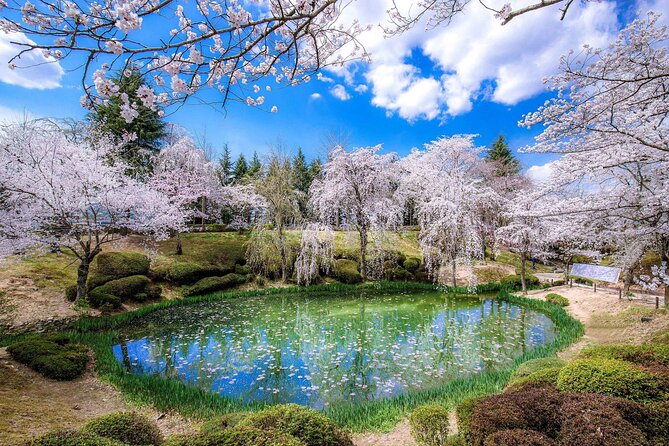
Bomun Lake is one of the better choices when you want open views and plenty of flowering trees. The surrounding Bomun Tourist Complex is a major leisure area, so it offers a different feel from Gyeongju’s tombs and old streets.
I would expect this stop to be good for broad photographs, easy walking, and a sense of the season beyond the old city center. The lake gives the trees more space around them, while the tourist area may offer places to pause and find snacks.
The tradeoff is that Bomun is not the most intimate historic setting. If your main goal is ancient architecture, a temple, royal tomb road, or old bridge may feel more memorable. Still, it can be a useful part of a mixed route, particularly when the flowers are strongest around the lake.
Same season, a different set of beds:
- Mt. Seorak+Nami Island+Garden of Morning Calm Day Trip from Seoul
★ 5.0 · 959 reviews - Seoul: Nami Island and Garden of Morning Calm opt Railbike
★ 4.6 · 907 reviews - From Seoul: Nami Island, K-drama Garden & Rail Bike Day Tour
★ 4.6 · 724 reviews - Seoul: Mt.Seorak, Nami Island & Korean Garden, No Shopping
★ 4.8 · 614 reviews
Daereungwon Stone Wall Road and royal tomb country
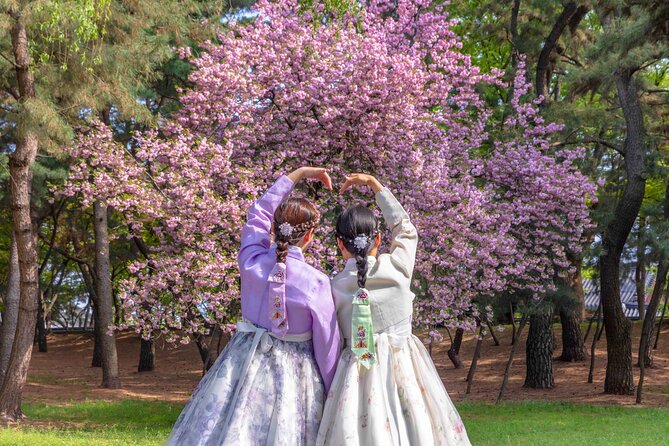
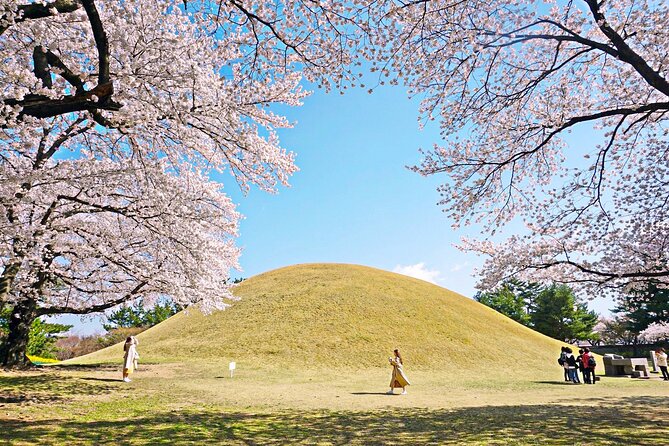
Daereungwon is known for its large rounded burial mounds from the Silla period. Along the stone wall road, cherry trees can create a striking contrast with the smooth green mounds and old masonry.
This is one of the places I would hope to see on the tour. It combines a clear historical setting with an easy visual subject: blossoms beside a wall, with ancient tombs rising behind it. You get more than a generic park photograph.
The area can also be popular during peak spring weekends. A large group may need to move together rather than linger at every tree. If you want quiet, unhurried photography, keep your expectations modest. The tour is designed to show you several highlights, not give you a full afternoon at one wall.
Cheomseongdae, Gyerim Forest, and Silla Wanggyeong Forest
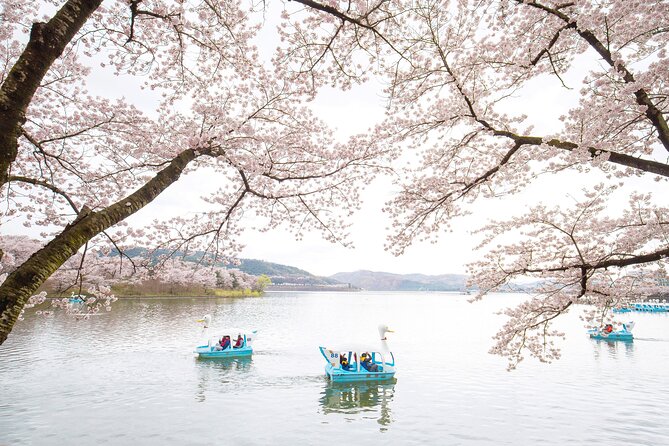
Cheomseongdae Observatory is one of Gyeongju’s best-known ancient landmarks. Its stone form is compact, so the surrounding spring scenery matters as much as the structure itself. Cherry trees and open grounds can make this a pleasing stop for photographs.
Nearby Gyerim Forest offers a more wooded setting. It is associated with old Silla stories and gives you a break from open roads and built-up areas. Silla Wanggyeong Forest also fits the tour’s theme of combining flowers with reminders of the former capital.
These sites are especially useful if you want variety. One stop may give you an old stone monument, another a tree-lined path, and another a broader view of the historic center. The drawback is that the exact combination is not guaranteed, and the time at each site may be limited by traffic and group movement.
Woljeonggyo Bridge and the old-city views
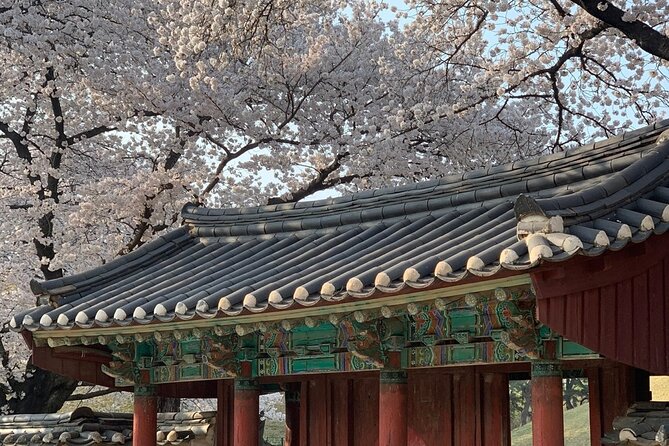
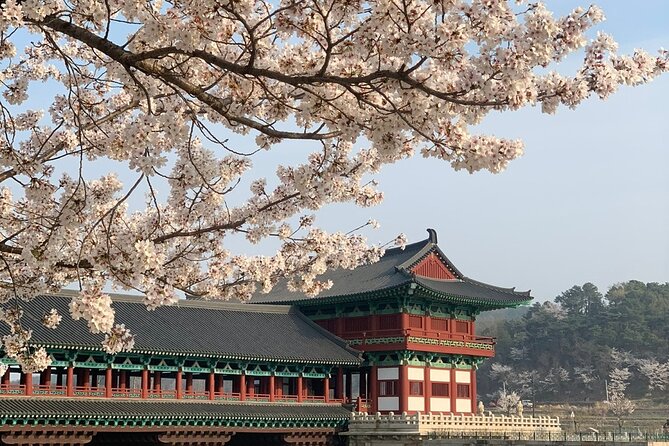
Woljeonggyo Bridge is a restored wooden bridge with traditional Korean design. Cherry blossoms around the bridge can produce some of the tour’s strongest images, especially if you want Hanok-style architecture rather than only trees and open fields.
I like this kind of stop because it gives the spring scenery a strong frame. The bridge, tiled roofs, and flowers tell you something about Gyeongju’s connection between modern restoration and ancient Silla identity.
You may find stalls selling snacks or small souvenirs around popular areas. These are pleasant extras, but they are not included in the tour price, and the selection can change. Bring some Korean won if you want to buy something, though the supplied information does not specify payment methods or prices.
Bulguksa Temple and the forested temple setting
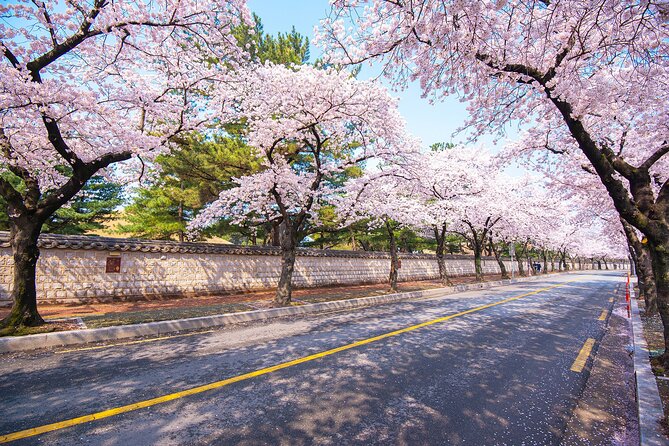
Bulguksa Temple is the most substantial religious and architectural option on the list. It offers stone details, traditional buildings, and a setting that feels different from the central city sites.
Cherry blossoms can make the approach and grounds particularly attractive in spring. The temple also gives the day more depth. You are not only looking at flowers, but connecting them with one of Korea’s best-known historic places.
The practical concern is distance and timing. Bulguksa is not interchangeable with a quick central-city photo stop. If traffic is heavy, reaching it can affect how long the group spends elsewhere. The tour includes admission fees if required, which is helpful, but you should still follow the guide’s time instructions closely.
Hwangnidan-gil, Hwangnyongwon, and Heungmu-ro
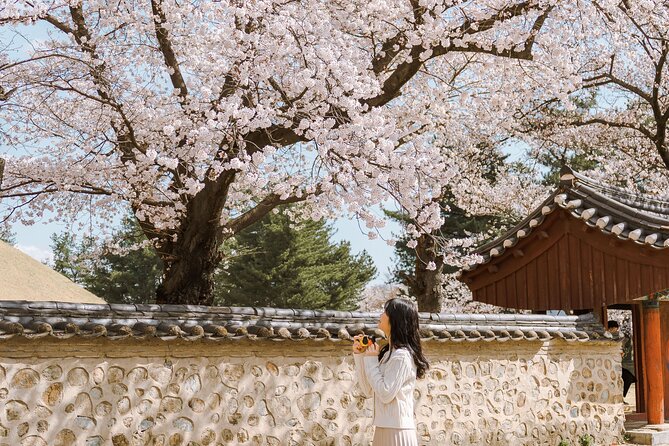
Hwangnidan-gil brings a more modern, fashionable side of Gyeongju into the day. Its traditional-style buildings, cafés, shops, and food options make it a useful contrast to temples and royal sites. Cherry trees here can frame Hanok-style streets and give you a chance to browse rather than only take landscape photographs.
Hwangnyongwon offers another setting tied to Gyeongju’s old capital story, while Heungmu-ro is known as a popular spring road. Roads lined with blossoms can be beautiful, but they are also vulnerable to traffic and crowds. You may spend part of the stop walking, waiting, or taking quick photographs rather than enjoying a quiet road.
These locations are good choices for visitors who want a blend of history, shopping, cafés, and seasonal scenery. They may be less satisfying if you want a strictly archaeological tour.
Guides, language, and the human side of the day
English and Chinese-speaking staff are included. Guides associated with this experience include Lucy, David, Danny, and Bobby, though the person assigned to your departure can change.
The guide adds real value on a day that could otherwise become a series of flower stops. Lucy is described as funny and informative, with explanations about Korea and the Silla kingdom. David is associated with an organized start and practical help for a family traveling with a three-year-old child. Danny and Bobby are also named as guides who helped make the day more enjoyable.
I would not treat any one guide as guaranteed. Instead, think of the tour as having a staff team with experience handling both history and logistics. The strongest benefit is having someone explain what you are seeing and keep a large group moving on time.
Families can take part, and the organized transport may make a spring day easier with a young child. Still, this is a long outing. A child who needs frequent breaks may find the 9 to 11 hour schedule tiring, particularly if traffic stretches the day.
Is $55 a fair price?
At $55 per person, the tour is reasonably priced for a full-day trip from Busan. Transportation is included, and admission fees are covered when applicable. That removes two costs that can add up when you arrange the route yourself.
The value is strongest if you want convenience. You do not need to work out the best blossom locations, compare local transport connections, or manage the return journey. You also get English or Chinese-speaking staff and a route adjusted for conditions.
The value is weaker if you already know Gyeongju well or want complete freedom. You will follow a group schedule, share the vehicle with as many as 42 other people, and accept whichever two or three locations are selected.
Meals and personal spending are extra. I would carry money for food, drinks, and small purchases, while remembering that the price does not include travel insurance.
Practical advice before you book
Book early if your dates are fixed. The experience is booked an average of 19 days ahead, which suggests that peak spring dates can fill before the blossom forecast is certain.
Wear comfortable shoes. The tour includes historic areas, roads, temple grounds, forests, and open tourist sites, so you should expect to walk at several stops. Exact walking distances are not provided, but this is not a coach-only sightseeing day.
Keep your phone charged. Cherry blossoms, bridges, tombs, Hanok streets, and temple buildings create many photo opportunities. A mobile ticket is provided, so make sure your booking information is easy to show at departure.
The operating period can change because of weather. The route can also change due to attraction location, traffic, and daily conditions. I would choose a day when you have some flexibility after the tour rather than planning a critical connection that evening.
Free cancellation is available if you cancel at least 24 hours before the start time. Changes or cancellations made within 24 hours are not accepted for a refund.
Who should choose this Gyeongju blossom tour?
I would choose it if you are staying in Busan, have one spring day available, and want a guided introduction to Gyeongju without planning the transport yourself. It is also a good match if you want variety: flowers, royal tombs, temples, Hanok streets, bridges, and food stalls in one outing.
Families may appreciate the organized structure, and first-time visitors can benefit from having the Silla sites explained. The moderate price also suits anyone who wants to control costs while still seeing more than one part of the city.
I would hesitate if you need a fixed itinerary, dislike long coach days, or want quiet time for careful photography. A private outing or independent visit would give you more control, but likely at a higher cost and with more planning.
Should you book it?
Book this tour if the blossoms are your main reason for visiting Gyeongju and you are happy to let the staff choose the best two or three sites on the day. The combination of transport, seasonal route planning, history, and a $55 price makes it a practical Busan day trip.
Skip it if you need a guaranteed visit to one exact attraction or want to set your own pace. For most first-time visitors during cherry blossom season, though, the flexible route is a sensible trade. You see Gyeongju’s flowers in their historic setting without spending your day solving transport details.
FAQ
Where does the tour depart from?
The tour departs from multiple convenient locations in Busan. Your booking confirmation provides the relevant departure information.
How long does the experience last?
The full experience lasts approximately 9 to 11 hours. Around five hours are allocated to visiting Gyeongju sites.
How many cherry blossom locations will I visit?
You will visit two or three popular cherry blossom spots in Gyeongju. The locations are selected according to daily flower conditions, traffic, weather, and attraction locations.
Which Gyeongju sites may be included?
Possible sites include Hwangnyongwon, Bomun Lake, Daereungwon Stone Wall Road, Cheomseongdae Observatory, Woljeonggyo Bridge, Bulguksa Temple, Bomun Tourist Complex, Hwangnidan-gil, Heungmu-ro, Gyerim Forest, Silla Wanggyeong Forest, and Hwangnyongsa Maru-gil.
Are meals included?
No. Meals are not included. Personal expenses, including food and drinks, are also your responsibility.
Is transportation included?
Yes. Transportation is included in the tour price. Admission fees are also included if a selected attraction requires one.
Can I cancel for a refund?
Yes. You can cancel for a full refund if you do so at least 24 hours before the experience start time. Cancellations or changes made less than 24 hours before the start time are not accepted for a refund.
Newly planted garden visits around South Korea
- Small Group Tour East Jeju Cherry Blossom & Woman Diver Show★ 5.0 · 5 reviews
- Small Group West Jeju Cherry Blossom and Strawberry Picking Tour★ 5.0 · 7 reviews
- Jeju BTS & K-drama Fans Small Group Tour incl. Snoopy Garden★ 5.0 · 16 reviews
- 2026 Cherry Blossom East Day Tour in Jeju with UNESCO★ 5.0 · 11 reviews
- 2026 JEJU Cherry Blossom West&South Full Day Tour with UNESCO★ 5.0 · 12 reviews
- Explore Spirited Garden a Cultural Gem in Jeju★ 5.0 · 22 reviews
- [Private Tour] Nami Island+Morning calm Garden+Petite France★ 5.0 · 2 reviews
- Full-Day Jinhae Cherry Blossom festival Private tour★ 5.0 · 3 reviews
Cherry Blossom Tours, bed by bed.
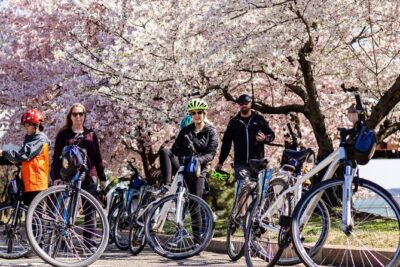
The DC Cherry Blossom Bus Tour with Tidal Basin Guided Walk
Read our review →National Mall & Cherry Blossoms Tour with Optional Museum Tickets
Read our review →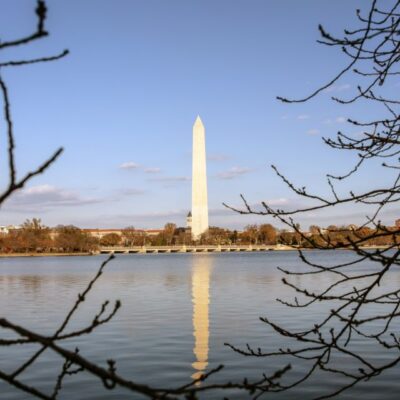
Nagano: 1-Day Snow Monkey & Cherry Blossom Tour in Spring
Read our review →
Nagano Spring: 1-Day Cherry Blossoms & Snow Monkeys Guided Tour
Read our review →Lists this garden visit belongs to