
Review · FRANCE
Giverny: Monet’s House and Gardens Guided Tour
Claude Monet’s garden is not just a pretty stop in Normandy. It is the working idea behind many of his paintings, with the water lily pond, Japanese bridge, flowers, and changing light all arranged to feed his eye. The garden makes more sense with context, and this two-hour visit gives you that context before you wander on your own.
I like the small group limit of 10, which makes it easier to ask questions and hear the guide. I also like the separate entrance, especially at busy times when the regular queue can eat into your visit. The main drawback is price: at $69 per person, this costs more than entering alone, and one person noted that the lack of headphones made it hard to hear every word.
Key points to know before visiting Giverny
- Brigitte is the guide most often named: She combines stories about Monet’s family and art with plant identification, color theory, and practical help inside the crowded garden.
- The two-hour route begins at the water garden: You see the famous lilies and Japanese bridge before moving to the Clos Normand and Monet’s house.
- Skip-the-line entry matters here: Your guide carries the prepaid tickets and leads the group through a separate entrance.
- The group is limited to 10 people: That gives you a better chance to speak with the guide than a large coach tour.
- The gardens change with the season: The site is presented from early spring through the first days of November, with different flowers at different times.
- You can stay after the guided portion: Continue looking around independently or visit the large gift shop before leaving.
Why Monet’s garden is worth seeing with a guide
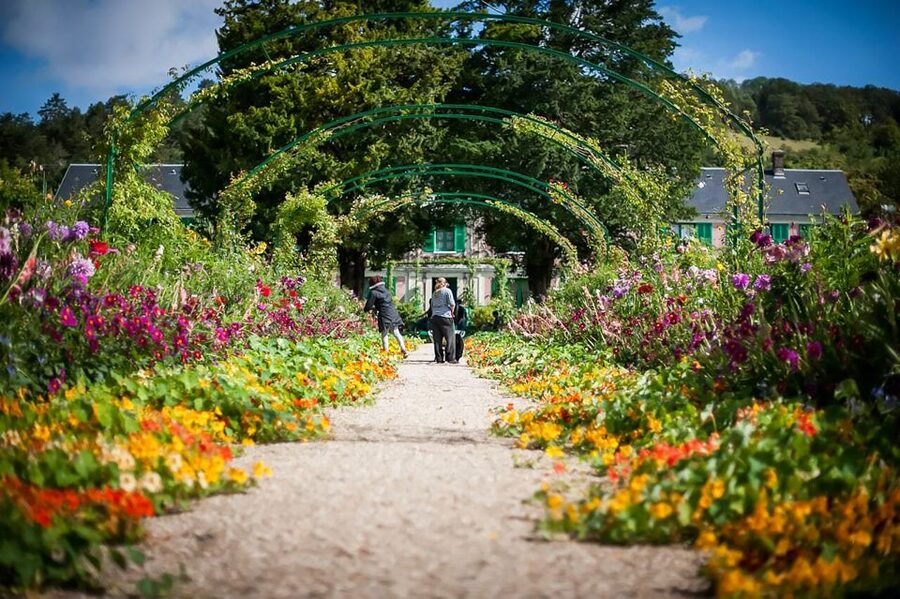
Giverny is easy to admire on your own. The flowers are arranged in bold bands, the paths lead toward carefully framed views, and the water garden looks instantly familiar from Monet’s paintings. But without some explanation, you may see a beautiful garden without understanding how deliberately it was made.
The best guides connect the plants to Monet’s work. Brigitte, who is repeatedly named in the tour feedback, explains how Monet studied light and color, then chose plants to create changing combinations through the seasons. She also uses examples of his paintings and explains color relationships, including complementary colors. That helps you look at the garden as a painter might, not simply as a series of flower beds.
I especially like that the visit covers both art and ordinary life. You hear about Monet’s family, his friends in Paris, the development of the property, and the way his home functioned. That human scale keeps the tour from becoming a lecture about famous paintings.
The guide also points out individual plant species and features of the grounds. If you enjoy gardening, this botanical detail may be as useful as the art history. If you mainly want photographs, it gives you a better idea of why a certain view, flower grouping, or reflection mattered to Monet.
More Monet's Garden and Giverny in France:
- From Paris: Giverny, Monet’s Home & Gardens Half-Day Trip
★ 4.5 · 2,887 reviews - Giverny Monet’s Home and Gardens Half Day Tour from Paris
★ 4.5 · 1,836 reviews - Giverny Small-Group Half Day Trip with Monet’s Gardens from Paris
★ 5.0 · 1,663 reviews
Meeting at Les Nymphéas and entering the gardens
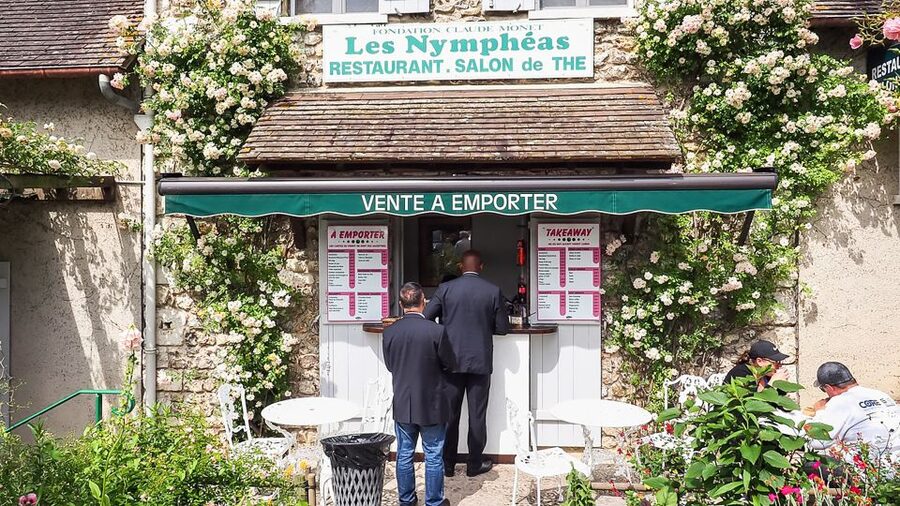
The meeting point is outside Les Nymphéas café and restaurant, the closest dining spot to Monet’s house. Look for a guide with a blue badge and a green folder marked written guided tour. The guide has your prepaid tickets and takes the group to the entrance.
This detail matters. Do not simply walk into the general queue and hope to find the group later. The meeting point is specific, and the instructions say to meet in front of the café. One guest who had car trouble was helped by Brigitte, who left the tickets at the group entrance and alerted staff that the pair was on the way. Still, build in enough time to find the café and guide without rushing.
The separate entrance is one of the clearest practical benefits of the tour. Giverny can draw long lines, particularly on popular spring and summer days. Skipping that wait does not make the site private, but it gives you more time inside and avoids starting the visit in a queue.
The tour is offered in one language at a time, either English or French. It is not a bilingual presentation with constant switching between languages. That keeps the explanation moving and makes the small group easier to manage.
The water garden, lilies, and Japanese bridge
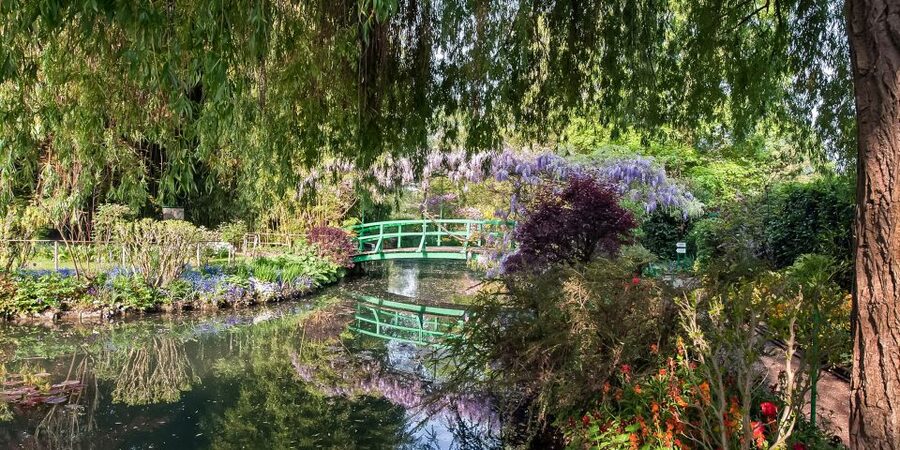
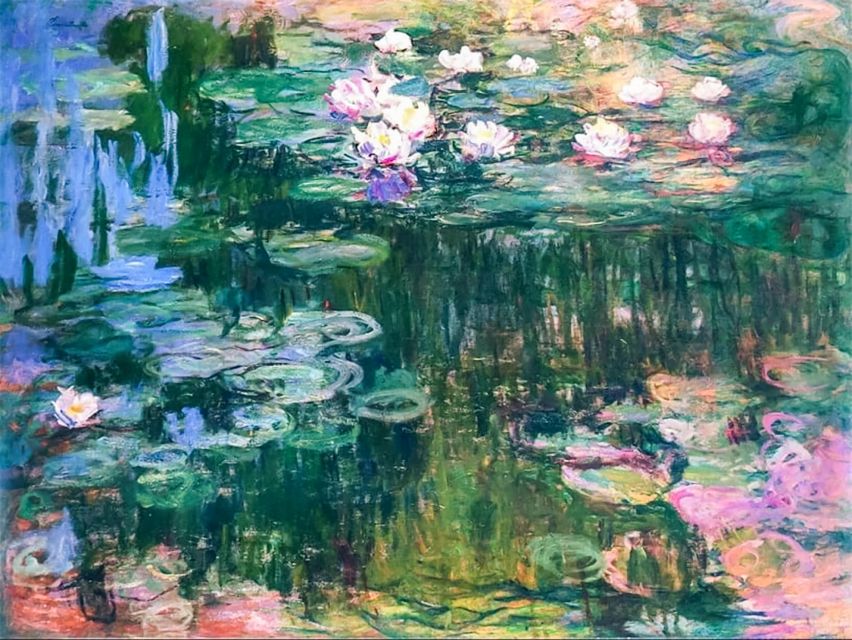
The first main stop is the water garden, the part most closely linked with Monet’s famous water lily paintings. You see the pond, its reflections, and the Japanese bridge that appears in many of his works.
The guide explains the importance of the water, plants, reflections, and light. This is where the visit becomes more than a photo stop. The same pond can look quite different depending on the season, weather, and angle, and the guide helps you notice those changes.
Expect time for photographs, but do not expect an empty scene. The gardens remain open to other visitors, and several groups may be moving through the same paths. A small group helps your guide keep people together, but it cannot remove the crowds entirely.
Brigitte is praised for pacing the route around other groups and speaking clearly. One practical caution is worth noting: at least one person found it difficult to hear because the group had no headphones while other guided groups appeared to use them. Stay close to the guide, especially in busy areas, and ask her to repeat anything you miss.
The Clos Normand and the flowers Monet chose
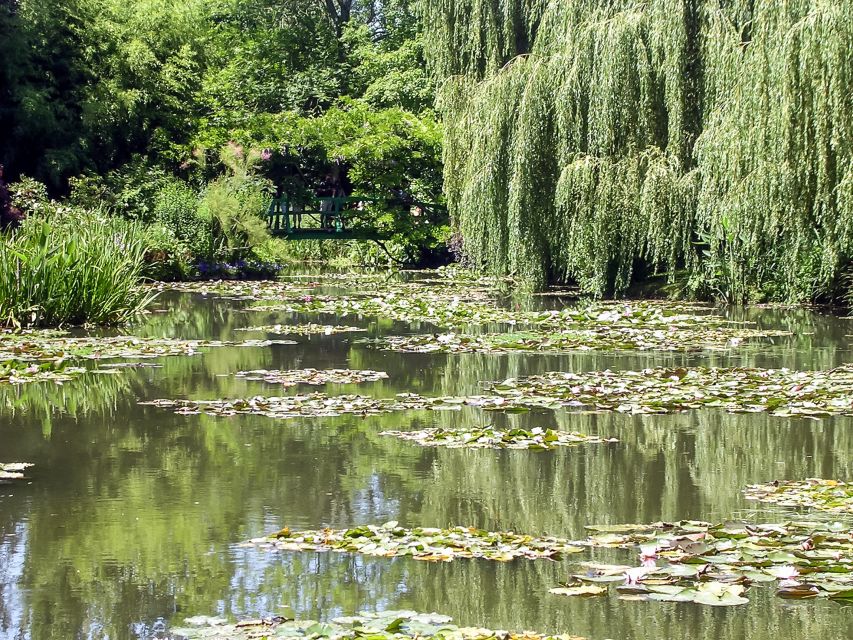
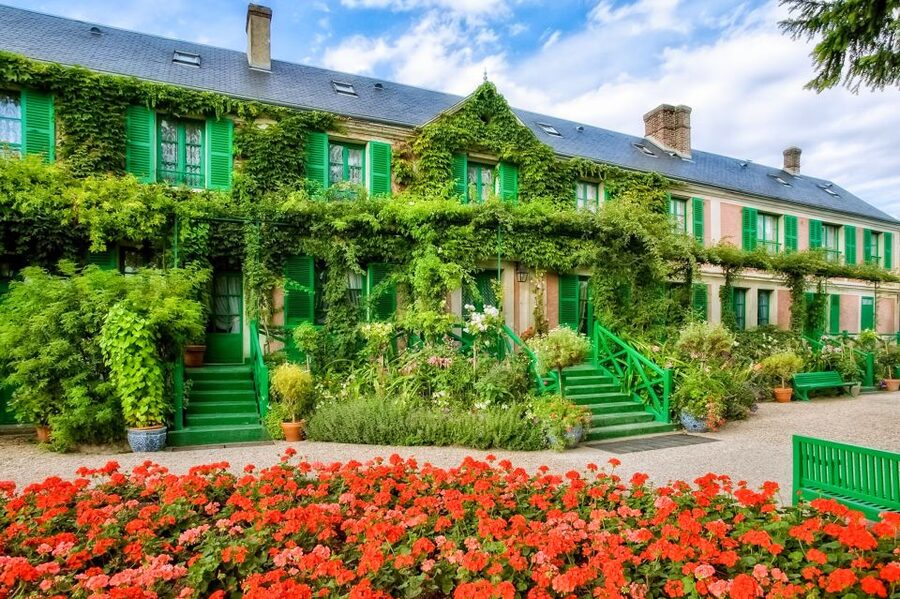
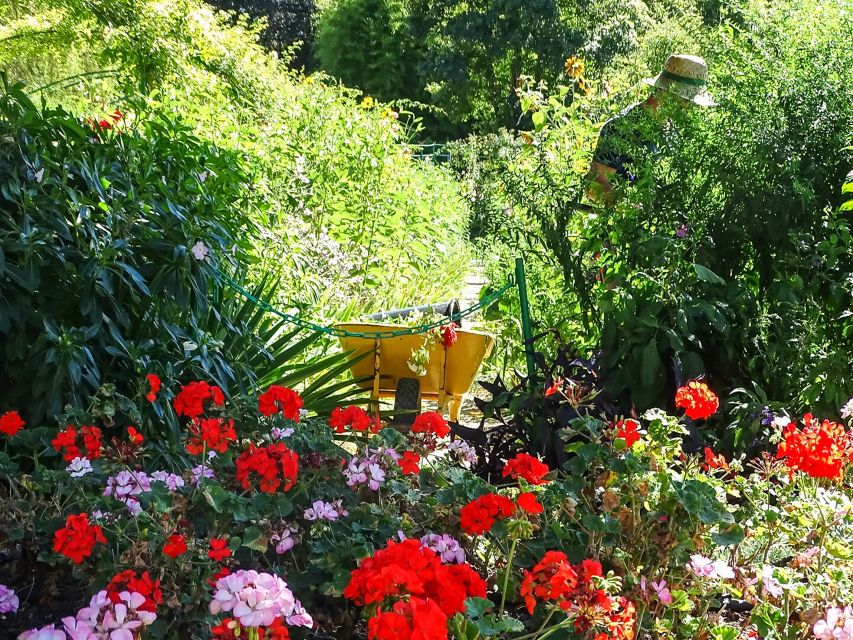
After the water garden, the route continues through the Clos Normand, the flower garden in front of the house. Here the guide points out different species, planting features, and the way the beds are arranged.
The Clos Normand is a good place to understand Monet’s relationship with gardening. The flowers were not just decoration around his home. They supplied subjects, color combinations, and changing effects of light. The guide explains how the garden supported his painting and why certain plant groupings matter.
This part can be especially rewarding in spring, when early flowers begin to fill the beds, and in summer, when the garden reaches its strongest display of color. Early autumn also has appeal, with the garden still open through the first days of November. The exact look depends heavily on your date, so you should not expect the same flowers shown in photographs taken in another month.
The garden is also a good match for people who do not think of themselves as art experts. You do not need to know Monet’s paintings in advance. The guide uses the plants, paths, colors, and views in front of you to explain his choices. I like this direct method because it gives you something specific to observe.
More gardens worth a morning in France:
- Paris: Versailles Palace and Gardens Full Access Ticket
★ 4.6 · 41,579 reviews - Versailles: Skip-the-Line Tour of Palace and Gardens Access
★ 4.7 · 10,429 reviews - From Paris: Versailles Palace & Gardens with Transportation
★ 4.6 · 6,222 reviews - From Paris: Versailles Palace Guided Tour & Gardens Access
★ 4.7 · 3,574 reviews
Monet’s house and the story behind the paintings
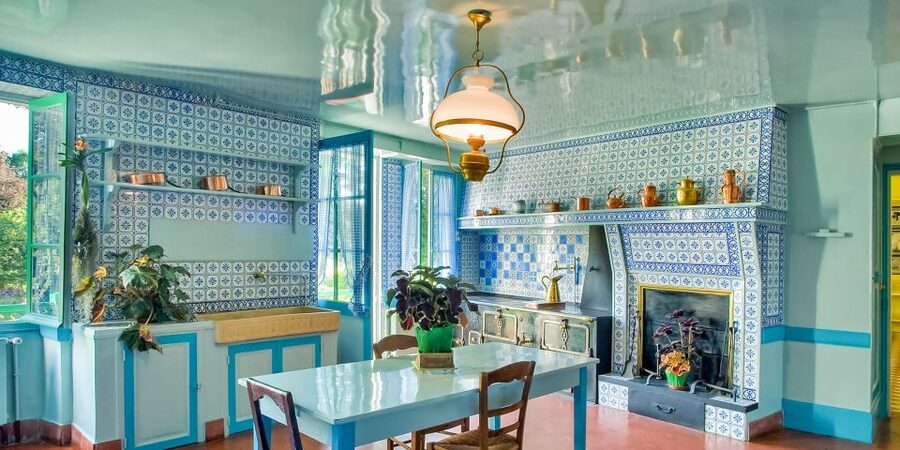
The house adds a more personal side to the visit. You move through rooms connected with Monet and his large family, then hear about his daily life and artistic circle. The house is described as authentic and well preserved, though it is still a public attraction with other groups moving through it.
The guide links the rooms and grounds to Monet’s life rather than treating the house as a stand-alone interior tour. You learn about his family, his friendships with artists in Paris, and the evolution of his painting style. That background makes the garden feel less like a decorative setting and more like a place shaped by a working artist.
I also appreciate the balance between biography and technique. The tour covers Monet’s life, but it does not stop there. You hear how he viewed light, how he used color, and how the garden helped him study both. The most useful explanations are the ones that let you look again at the pond or flower beds with a sharper eye.
At two hours, the visit has enough time for the house and both garden sections without becoming an all-day commitment. Several people found the pace comfortable, with enough opportunity for questions and photographs. If you prefer to examine every room and plant at length, you may want more independent time afterward.
How the small group changes the experience
A group limited to 10 people is a good middle ground. You get the structure of a guided visit without the feeling of being moved through the property in a large crowd.
A small group also lets the guide learn names and interests. Brigitte is praised for including people in the conversation, answering questions, and adjusting examples to the group. That personal contact is useful at Giverny because visitors arrive with different goals. One person may care about botany, another about painting, and another about Monet’s family life.
The size does not solve every problem. You still need to stay near the guide, and a quiet voice or crowded path can make parts of the explanation hard to catch. There is no mention of audio equipment being supplied, so do not assume you will receive a headset. If hearing every detail matters to you, stand near the front and ask questions when the group stops.
The guide’s personality is part of the value. The strongest praise centers on Brigitte’s humor, patience, clear English, and ability to make difficult art ideas understandable. Names are not always recorded consistently, so your guide may be another local professional, but the tour is designed to be led by a licensed local guide in English or French.
Is $69 a fair price?
At $69, this is not the cheapest way to enter Monet’s property. You are paying for more than the admission ticket: a licensed guide, a small group, a two-hour explanation, and skip-the-line access.
For a first visit, I think the price can make sense. The guide fills in details you would likely miss during a simple walk-through, especially the link between the plants and paintings. The separate entrance can also be valuable on a crowded day, when waiting in line would reduce your time inside.
The value is weaker if you already know Monet well, prefer silent independent visits, or plan to spend several hours studying the house and garden at your own pace. The guided portion lasts two hours, though you can remain longer afterward. You will need to decide if the structure and interpretation are worth the added cost.
One person found the price a little high despite enjoying the tour. That is a fair concern. I would book it for the explanation and queue advantage, not merely for access to a pretty garden.
Timing, seasons, and practical comfort
The gardens are described as open from early spring until the first days of November. A past visitor found early morning quieter, while another useful suggestion was to consider a midday entry around 12:30, when some people stop for lunch. These are practical patterns, not guarantees, so check the available start times for your date.
The garden can be hot in summer. One guest became unwell in the heat, and the guide helped arrange a shaded place inside the dining room of Monet’s house. Bring water, wear comfortable shoes, and take the heat seriously even if the visit lasts only two hours.
The activity is wheelchair accessible. Food and drinks are not included, although the meeting point is outside Les Nymphéas café and restaurant. You can stay longer after the tour to continue looking around independently or visit the large gift shop.
Cancellation is flexible: you can cancel up to 24 hours ahead for a full refund. The reserve-now, pay-later option also lets you hold a place without paying immediately, which is useful when your Normandy route is still changing.
Who should book this Giverny tour?
I would recommend it most strongly for a first visit, anyone interested in both art and gardening, and people who want a clear explanation without joining a large group. It is also a smart choice if you have limited time and do not want to lose part of the morning in an entrance queue.
Families and mixed-interest groups may appreciate the guide’s ability to explain Monet in several ways. Children who are not interested in art may respond better to the flowers, pond, bridge, and stories about daily life than to a formal museum talk.
Independent visitors should think carefully. You can stay after the guided portion, so this does not prevent you from having quiet time alone. But the first two hours follow the guide’s pace, and the tour may feel too structured if you want to linger at every flower bed.
Should you book it?
Book this tour if you want Giverny to mean more than a series of lovely photographs. The guide adds useful detail about Monet’s life, painting methods, color choices, and plants, while the small group keeps the visit personal. The skip-the-line entry is a real advantage on busy dates.
Skip it if $69 feels too high for guided interpretation, or if you already have strong knowledge of Monet and prefer to explore slowly on your own. For most first-time visitors, especially those visiting during a crowded season, I think the added explanation and saved queue time justify the cost.
FAQ
How long does the Giverny house and garden tour last?
The guided visit lasts two hours. Afterward, you can stay longer to walk around independently or visit the large gift shop.
What languages are available?
Tours are offered in English or French. Each tour operates in one language only.
Where do I meet the guide?
Meet outside Les Nymphéas café and restaurant, the closest café to Monet’s house. The guide has a blue badge and a green folder marked written guided tour.
How many people are in the group?
The group is limited to 10 participants.
Are food and drinks included?
No. Food and drinks are not included in the tour price.
Is the tour wheelchair accessible?
Yes, the activity is listed as wheelchair accessible.
Newly planted garden visits around France
- Private Half-Day Tour to Monet’s Garden in Paris★ 5.0 · 3 reviews
- Guided tour Monet’s house and gardens/small group★ 4.5 · 68 reviews
- Giverny: Monet’s House & Gardens Private Guided Walking Tour★ 5.0 · 5 reviews
- Monet’s House and Garden & Giverny Village★ 4.5 · 39 reviews
- Visit of the Extraordinary Garden in La Roche sur Yon★ 4.5 · 12 reviews
- Lavender in Sault Small Group Half-Day Trip★ 4.0 · 8 reviews
- Lavender Discovery Private Tour in Provence★ 5.0 · 3 reviews
- Half Day Lavender Road in Sault from Avignon★ 4.0 · 35 reviews
Monet's Garden and Giverny, bed by bed.
From Paris: Giverny, Monet’s Home & Gardens Half-Day Trip
Read our review →
Giverny Small-Group Half Day Trip with Monet’s Gardens from Paris
Read our review →
From Paris: Guided Day Trip to Monet’s Garden in Giverny
Read our review →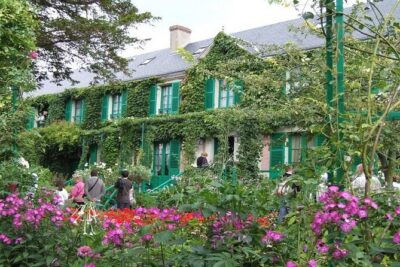
Giverny Small-Group Minivan with Hotel Pickup or Meeting Point
Read our review →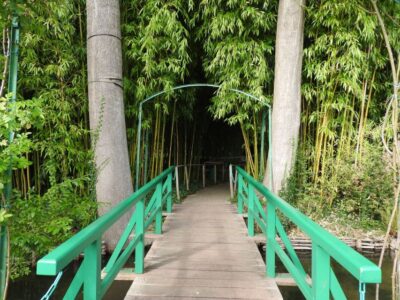
Giverny Village Walking Tour & Skip-the-Line to Monet Garden
Read our review →
From Paris: Monet Gardens & Giverny Bike Tour with Picnic Stop
Read our review →
Giverny Monet’s Garden & Auvers-sur-Oise with Van Gogh House Full Day From Paris
Read our review →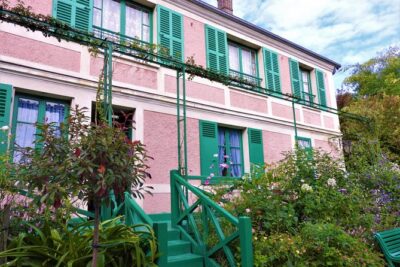
Giverny Monet House and Gardens Skip the line Walking tour
Read our review →Lists this garden visit belongs to