
Review · CHIANG MAI
Cooking class in organic garden and local market tour ThaiCottage
The best part of this Chiang Mai cooking class is that you do not simply watch someone cook. You pound curry paste, work at your own station, and sit down to eat food you helped make. The visit starts at a local market, then moves to an organic herb garden and family kitchen, where the class takes place.
I like the freedom to choose dishes instead of being handed a fixed menu. I also like the small group limit of eight, plus hotel pickup within 3 kilometers of central Chiang Mai. The main caution is that the market visit may be brief and partly independent, and some prep work, such as chopping chicken or cooking rice, may already be done.
Key points at a glance
- Make curry paste by hand: Learn the base of Thai cooking rather than relying only on prepared paste.
- Choose your own dishes: Options have included soup, stir-fry, curry, and dessert.
- Cook in an organic garden: See the herbs and vegetables used during the class.
- Visit a real local market: Get a look at everyday ingredients before cooking.
- Small groups of up to eight: Guides such as Toey, Mac, Kat, Gataii, Tory, and Wave provide hands-on instruction.
- Four hours for $35.86: The price includes transfers within 3 kilometers, ingredients, recipes, water, and the class.
A market start before the cooking begins
The experience begins with pickup from your hotel, provided you are staying within 3 kilometers of Chiang Mai’s city area. That small detail matters. You avoid arranging a taxi or trying to find the cooking school on your own, and the ride gives the class a clear start and finish.
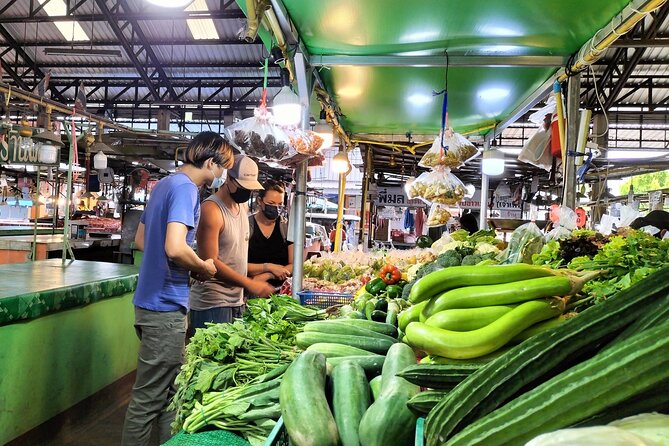
The first stop is a local market. This is not just a quick photo stop. You get to see the vegetables, herbs, spices, and other ingredients used in northern Thai kitchens. It is useful preparation for the class because ingredients that look unfamiliar on a restaurant menu become easier to understand when you see them fresh.
The market portion has one limitation. You may receive some explanations from the guide, but the amount of guided time can vary. One account describes having free time to look around, while another found the market visit too independent and wished for more explanation of the produce. The ingredients for the class may also be prepared or sourced separately rather than bought directly in front of you.
I would treat this stop as a short introduction to Thai food shopping, not as a full market tour. If you want a detailed lesson on every stall and ingredient, this may feel light. If you simply want context before cooking, it does the job.
Cooking classes with a garden harvest around Thailand:
- Chiang Mai: Cooking Class, Market & Thai Herbs Garden Tour
★ 4.9 · 4,824 reviews - We Cook Thai Home Garden Cooking School
★ 4.9 · 378 reviews - Thai Cooking Class with Market & Garden Tour
★ 4.9 · 249 reviews
The organic garden puts ingredients in context
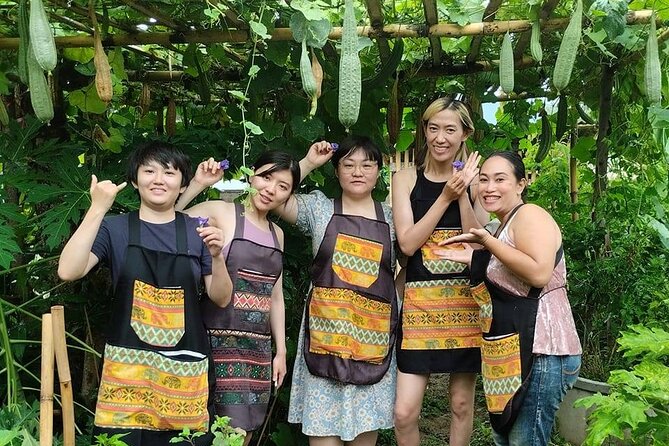
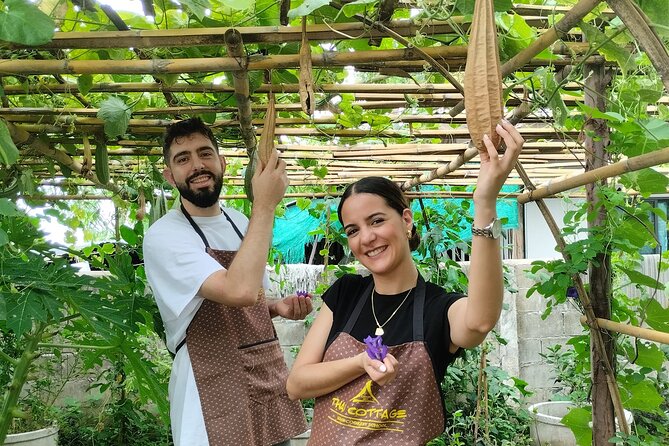
After the market, you continue to the organic garden. Here you can see Thai herbs and vegetables growing before they reach the chopping board. This is one of the more appealing parts of the class because it connects the finished food with its basic ingredients.
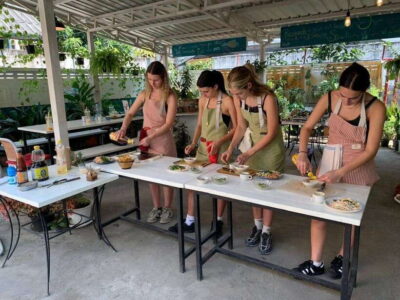
The garden setting also gives the cooking session a more personal feel than a polished restaurant classroom. You cook in an outdoor kitchen garden associated with a traditional Thai family. The atmosphere is practical and home-style, with the emphasis on preparing and eating food rather than performing a formal demonstration.
The setting is not presented as a luxury cooking studio. One account points out that the location and cooking tools could use improvement. Keep that in mind if you expect sleek counters, restaurant-grade equipment, or a spotless show kitchen. The trade-off is a more informal setting and direct contact with the people running the class.
Choosing your dishes keeps the class personal
A major strength is menu choice. You are not forced to prepare a dish you do not enjoy. The available categories have included a soup, stir-fry, curry or main dish, and dessert, with different choices for each person in the group.
One family of three appreciated being able to select different dishes. That arrangement lets each person follow a separate interest, and it also turns the final meal into a shared tasting session. You can compare what everyone made instead of eating several identical plates.
The supplied description refers to choosing six Thai dishes from different categories, while several detailed accounts describe four dishes: soup, stir-fry, a main or curry, and dessert. Another account describes choosing three dishes plus dessert. Because the format appears to vary, check the current menu and number of dishes when booking.
Even with that variation, the important point remains the same: you receive a choice of dishes and cook several parts of a Thai meal. This is more useful than a class built around one single recipe.
Curry paste is the hands-on lesson worth remembering

The curry paste session gives the class its strongest cooking focus. You make the paste from scratch instead of opening a packet. That means working with the herbs and spices that give Thai curry its fresh aroma and heat.
This is also where a patient instructor matters. Guides named Toey, Tory, Mac, Kat, Gataii, and Wave have led different sessions. Mac was praised for adjusting to different skill levels and languages, while Toey was described as energetic and effective at keeping the class moving. Gataii was noted for helping the group work together and explaining local foods.
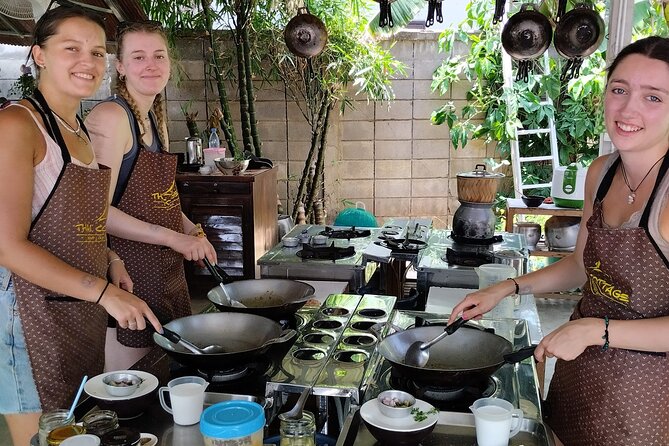
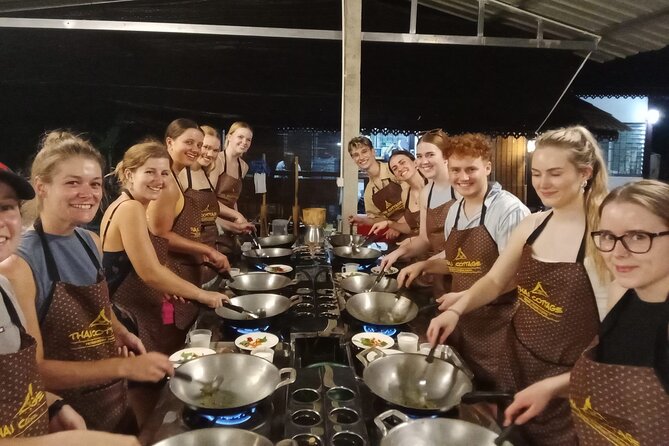
The class is designed for participation, not just note-taking. Each person gets a cooking station, and the instructors demonstrate techniques before you try them. You can expect help with the preparation and cooking process, though the amount of work you do from the very first step may vary.
A useful expectation: this is hands-on, but not necessarily a full restaurant-style from-scratch kitchen apprenticeship. Some ingredients may already be chopped, and rice or potatoes may be cooked before the session. That keeps a four-hour class moving, but it can disappoint you if you want to prepare every ingredient yourself.
More gardens worth a morning in Thailand:
- Bangkok: Night Bike Tour with Temples & Flower Market Visit
★ 4.8 · 751 reviews - Pattaya: Nong Nooch Tropical Garden Ticket for Foreigners
★ 4.5 · 417 reviews - Half day Thai cooking Class + Market tour+Garden tour
★ 5.0 · 237 reviews - Krabi: Authentic Thai Cooking Class+Thai Herbs Garden Tour
★ 4.8 · 237 reviews
Mango sticky rice adds a sweet finish
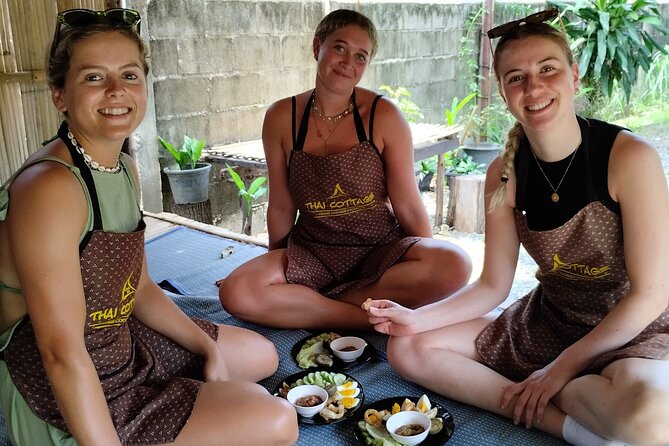
Everyone learns to make sticky rice for mango sticky rice. This gives the class a dessert course and a familiar Thai finish. The recipe is simple enough to remember, but the texture depends on getting the rice and coconut mixture right.
The dessert also balances the savory dishes. After making soup, stir-fry, and curry, you end with something sweet and fresh. Juicy mango is used as a garnish, making the final plate feel like a proper Thai meal rather than a series of disconnected practice dishes.
You should expect to eat what you prepare. The class is not only a demonstration followed by a small sample. The meal is part of the experience, and the food has been repeatedly praised for its flavor.
The instructors make the difference
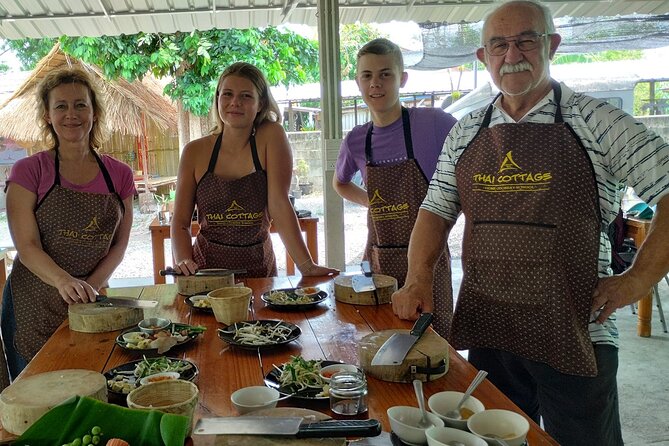
The cooking school’s strongest feature is its teaching style. The guides are described as friendly, patient, and capable of keeping several dishes on schedule. That last point matters more than it sounds. Cooking multiple Thai dishes at once can become confusing, especially when ingredients cook quickly.
One instructor was praised for keeping every dish on track while the group worked. Another handled pickup, market explanations, cooking instruction, and group interaction throughout the day. English-language instructions are included, and the experience has also worked for people with limited English because the demonstrations help carry the class along.
The human side of the class is important. You cook beside other people, share food, and may form a friendly group by the end. One group even continued on to a night market afterward. That is not part of the organized experience, but it shows how the class can become a social afternoon rather than a silent lesson.
Still, instructor style can vary from one date to another. The names associated with past sessions include Toey, Tory, Wave, Kat, Gataii, and Mac. You should not assume a particular guide unless the operator confirms who will lead your class.
What the four-hour schedule feels like
The total duration is about four hours. Pickup comes first, followed by the market visit, the garden stop, cooking, eating, questions, and the ride back to your hotel.
The schedule is full without being an all-day commitment. You have enough time to cook several dishes, but not enough time for a long market lecture or a leisurely lesson on every ingredient. The class works well in a Chiang Mai itinerary because it occupies half a day and leaves room for temples, massage, or an evening market.
The cooking itself is organized in stages. Assistants help clean between dishes and keep the workspace usable. That matters when each person is preparing multiple recipes in a shared outdoor kitchen.
You should wear clothing that can handle food splashes and a warm kitchen setting. The supplied information does not specify a dress code, so simple, comfortable clothing is the sensible choice. Drinking water is included. Alcohol is not included, though it can be purchased.
Is $35.86 good value?
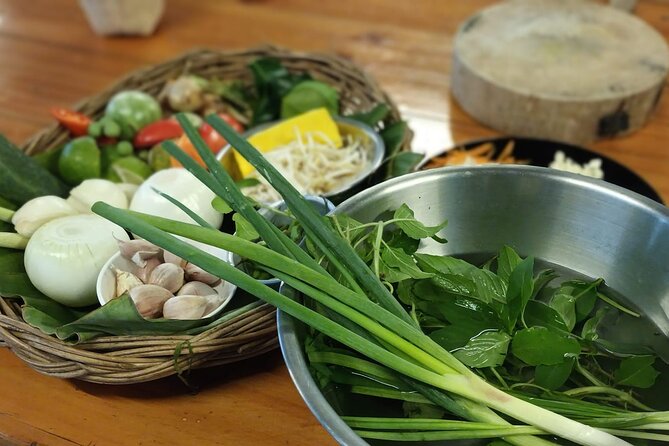
At $35.86 per person, the class offers a solid bundle: hotel pickup and return within the service area, a market visit, garden access, ingredients, drinking water, English recipes and instructions, several dishes, curry paste, mango sticky rice, and a digital recipe book.
The value is strongest if you use the transfer. Transport alone can add cost and planning, especially if you are unfamiliar with Chiang Mai. The recipe book also adds lasting value because you can try the dishes again at home.
The price is less compelling if you want a highly polished facility or a fully from-scratch course. Some tools and the cooking area may feel basic, and a portion of the preparation may be completed before you arrive. You are paying for instruction, food, transport, and a personal group setting, not a luxury culinary school.
The group limit of eight is another reason the price works. You get more direct help than you would in a large demonstration class. For couples, families, and solo visitors who like meeting people, this is a practical middle ground between a private lesson and a crowded group activity.
Who should book this class?
I would recommend it to anyone who enjoys Thai food and wants to understand how the dishes are built. It is especially suitable if you want to make curry paste, choose your own recipes, and eat a meal prepared by your own hands.
Families can split the menu and compare dishes. Couples can choose separate recipes and cook together. Solo visitors can join a small group and may find it easy to meet other people.
This is also a good choice for a short Chiang Mai stay. The hotel transfer removes some planning, and the four-hour schedule gives you a clear half-day activity.
I would hesitate if your priority is a detailed market tour, a fully equipped professional kitchen, or complete preparation of every ingredient from the first cut to the final plate. In that case, ask about the current market format and how much prep is done before class.
Free cancellation is available until 24 hours before the start time for a full refund. Changes or cancellations inside that window are not accepted, and poor weather can lead to a new date or full refund.
Final call: a tasty, practical Chiang Mai choice
I would book this class if you want a friendly, hands-on introduction to Thai cooking without spending a full day or a large amount of money. The curry paste, menu choices, garden setting, and small group size give it more substance than a basic cooking demonstration.
Go in expecting a relaxed family kitchen rather than a polished culinary studio. The market stop may be short, and some prep work may already be finished, but the food, instruction, recipe choices, and personal attention make this a strong value at $35.86.
FAQ
How long does the cooking class last?
The experience lasts approximately four hours, including hotel transfers, the market visit, garden time, cooking, eating, and the return trip.
Is hotel pickup included?
Yes. Round-trip hotel transfer is included for hotels within 3 kilometers of Chiang Mai’s city area.
How many people can join the class?
The maximum group size is eight travelers.
Do I get to choose what I cook?
Yes. You can choose from available Thai dishes and categories. Options described for the class include soup, stir-fry, curry or a main dish, and dessert.
Will I make curry paste from scratch?
Yes. Everyone learns to prepare Thai curry paste from scratch.
Is mango sticky rice included?
Yes. Everyone learns to make sticky rice for traditional mango sticky rice with mango.
Is the market visit guided?
The class includes a visit to a local market, but the amount of guided explanation may vary. Some of the visit may be free time to look around.
Are ingredients and recipes included?
Yes. Ingredients, English instructions, drinking water, and an online PDF recipe book are included.
Can I cancel for a full refund?
Yes, if you cancel at least 24 hours before the experience start time. Cancellations made less than 24 hours in advance are not refunded.
Newly planted garden visits around Thailand
- Koh Samui Footgolf & Botanical Gardens★ 5.0 · 108 reviews
- Morning Cooking Class in Traditional Pavilion with Beautiful Garden – Chiang Mai★ 4.0 · 5 reviews
- One Day Tour Doi Suthep Temple, Palad Temple, Orchid Farm, Longneck hill tribe village (Private tour)★ 5.0 · 7 reviews
- Evening Cooking Class in Traditional Pavilion with Beautiful Garden – Chiang Mai★ 5.0 · 3 reviews
- Doi Suthep Temple, Pha Lat Temple, Sticky Waterfall, Orchid farm★ 5.0 · 31 reviews
- White Orchid Sunset Dinner Cruise Calypso Ladyboy Cabaret Show★ 4.0 · 10 reviews
- White Orchid Dinner Cruise from Bangkok with Pickup & Live Music★ 4.0 · 2 reviews
- White Orchid Dinner Cruise at Bangkok with Pickup & Live Music★ 3.5 · 7 reviews
Chiang Mai Garden Tours, bed by bed.
Chiang Mai: Half Day Cooking Class at Organic Farm
Read our review →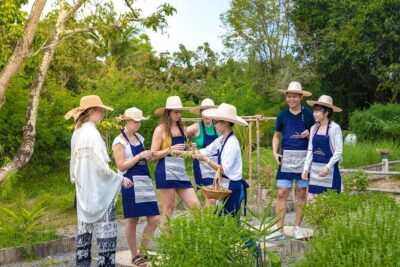
Morning Cooking Class in Traditional Pavilion with Beautiful Garden – Chiang Mai
Read our review →Lists this garden visit belongs to