
Review · RWANDA
Kigali: Traditional Basket Weaving in a Garden
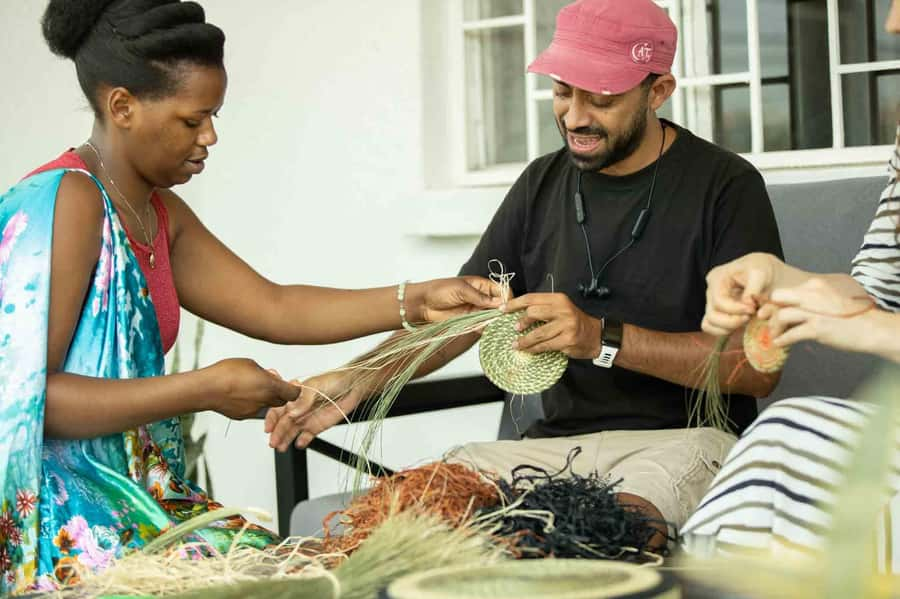
The best part of this Kigali activity is its simple, human scale. You sit with Rwandan women who make basket weaving part of their daily work, learn the basic methods, and leave with something your own hands helped create. Sandrine is especially patient and skilled, making this a good choice even if your craft ability stops at folding a paper napkin.
I like the setting in a peaceful garden, often with coffee or tea close at hand, and I like that the money supports local artisans directly. The main consideration is that two hours is enough for a small basket, coaster, or bowl, not a large finished piece. Your result may be charmingly uneven, which is part of the fun.
Key points to know before you book
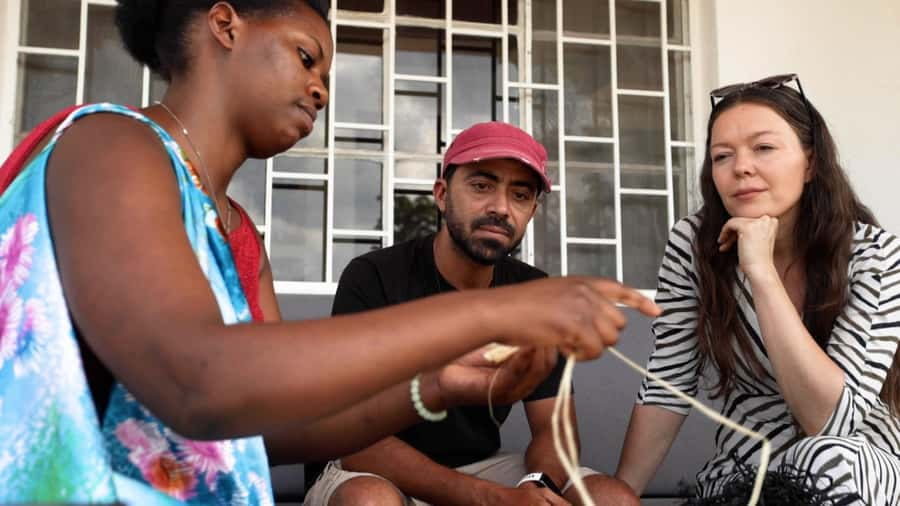
- A hands-on Kigali craft class: You do not just watch a demonstration. You work with the materials and learn the basic weaving process yourself.
- Patient local instruction: Sandrine is praised for clear, kind teaching, while English and French are the listed working languages.
- A small keepsake to take home: Depending on the session, you may make a small basket, bowl, or coaster.
- A garden setting with refreshments nearby: The workshop takes place in a comfortable garden setting, and some sessions include coffee or tea.
- A direct way to support artisans: The activity is designed to put money into local community work, particularly women-led craft production.
- A compact cultural activity: At $30 for two hours, it fits neatly into a free morning or afternoon in Kigali.
Why basket weaving makes sense in Kigali
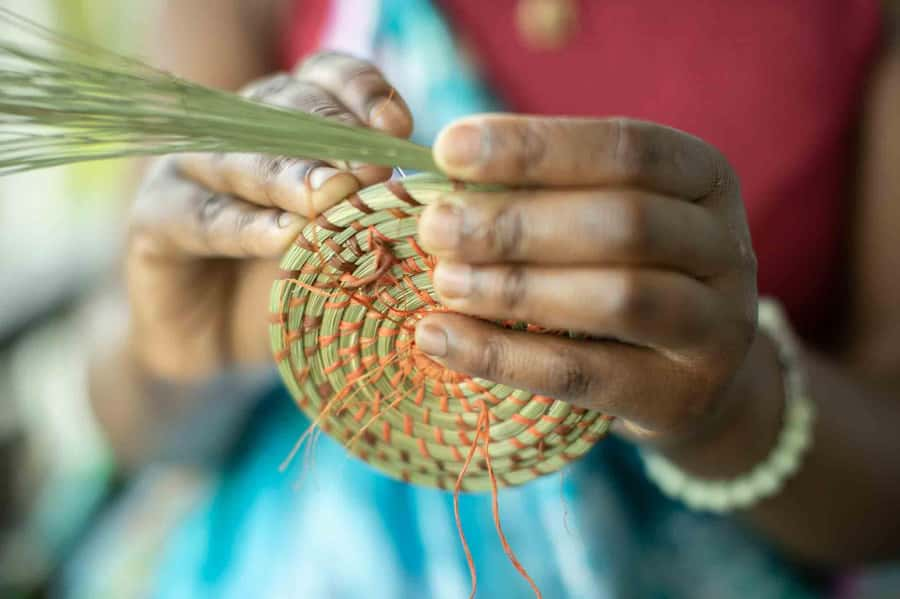
Rwanda is known for its carefully made woven baskets, and the craft carries more meaning than a simple souvenir. Patterns and colors can reflect local traditions, family skills, and the care that goes into making useful objects by hand.
This class gives you a small window into that work. You will hear about the cultural role of basket making, then see how an artisan turns prepared materials into a firm shape. The lesson is practical, but it also shows why handmade objects take time and why a finished basket costs more than a factory-made decoration.
I like this approach because it avoids the usual quick-stop souvenir experience. You are not simply buying a basket and walking away. You are sitting beside the person who knows the technique, asking questions, and trying the process yourself.
The setting also helps. A garden gives the workshop a calm feel, and the pace is suited to conversation. You may be offered coffee or tea, and one workshop has also been held at a pleasant coffee shop. That small touch matters during a craft class. Your hands need time to adjust, and a relaxed setting makes it easier to focus.
More gardens worth a morning in the world:
- Paris: Versailles Palace and Gardens Full Access Ticket
★ 4.6 · 41,579 reviews - Amsterdam: Keukenhof Entry & Shuttlebus with Flexible Return
★ 4.7 · 11,891 reviews - Versailles: Skip-the-Line Tour of Palace and Gardens Access
★ 4.7 · 10,429 reviews
Your welcome with local artisans
The session begins with an introduction from the Rwandan artisans. This is when you can expect to hear about their own connection to weaving and why the craft remains important in their communities.
The welcome is not just a formal greeting before the real activity. It sets up the lesson by explaining what the baskets mean and how the patterns fit into Rwandan culture. If you enjoy meeting people through their work, this opening is one of the strongest parts of the experience.
You will receive the materials and tools needed for the class. No special equipment is required, and you do not need previous weaving experience. The instructors demonstrate the basic movements, then help you copy them.
English and French are listed as the instruction languages. Some sessions may also use a translator when extra explanation is needed. This is useful because weaving can be hard to explain with words alone. Your teacher can point to the exact strand, show the correct tension, and fix a mistake before it spreads.
The teaching style appears to be personal rather than rushed. Sandrine is repeatedly described as patient, friendly, and highly skilled. That matters here. A fast weaver can make the process look easy, but a good teacher slows down enough for you to understand what your fingers should do.
Learning the first rows of your basket
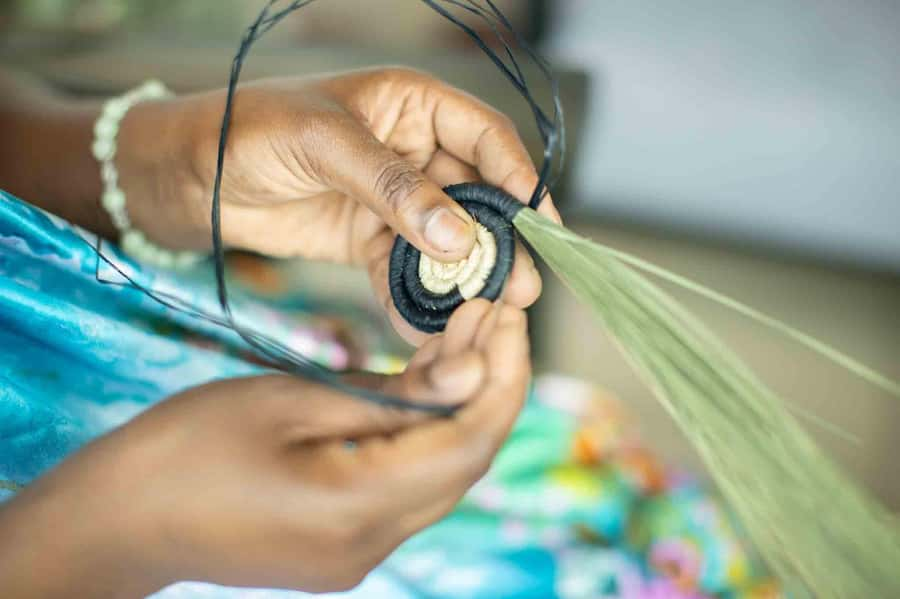
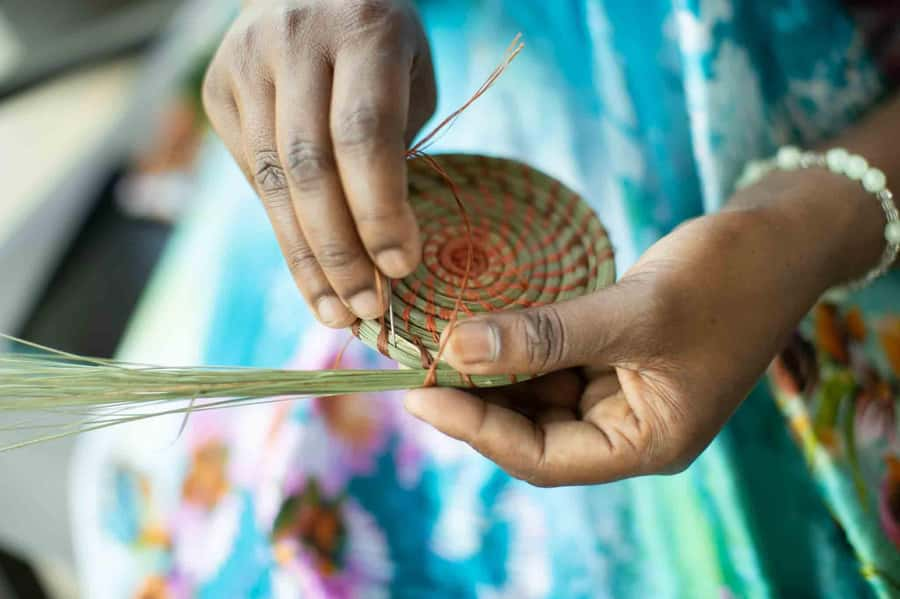
The heart of the activity is the hands-on lesson. You will learn how to position the materials, keep the shape steady, and repeat the over-and-under movement that builds the basket.
At first, the work may feel awkward. The strands can shift, the edge may lose its shape, and your first rows may not look much like the instructor’s. That is normal. The artisan can show you where to hold the piece and how tightly to work.
This is a useful reminder that traditional crafts are learned through touch. Watching a fast demonstration is not enough. You need to try, make a mistake, adjust your grip, and try again.
The exact item you finish may vary. Several sessions have produced small baskets, coasters, or little bowls. The activity description focuses on making a traditional basket, but the short two-hour format means you should expect a modest keepsake rather than a large household basket.
That is not a weakness, but it is worth knowing before you book. You are paying for instruction, cultural context, materials, and time with an artisan, not just for the object you carry home. The finished piece gives you a physical reminder of the lesson, even if the edges are not perfect.
What the patterns and colors can tell you
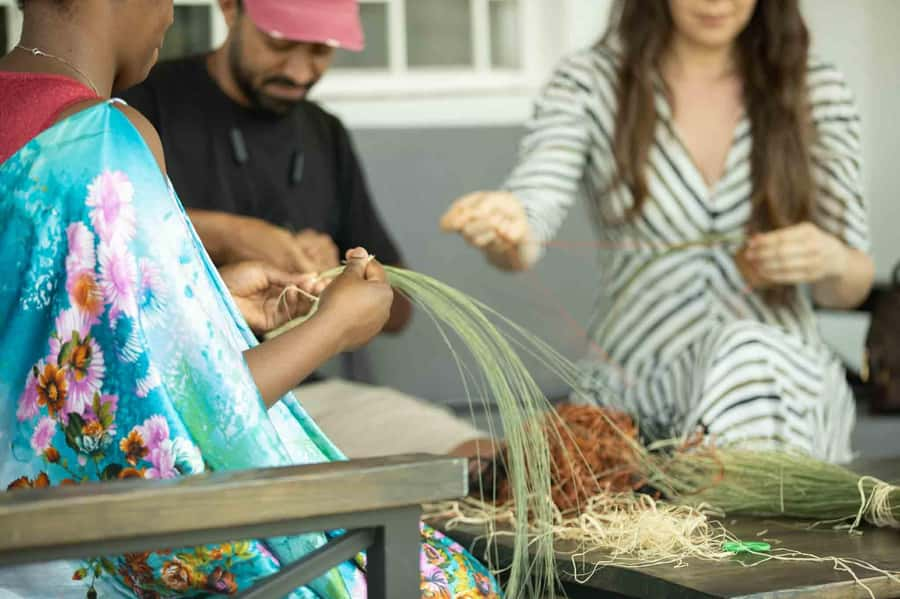
As you weave, the instructor explains the meaning behind the designs and colors used in Rwandan basket making. The patterns are not random decoration. They connect the object to local traditions and the skills passed from one generation to the next.
The session is especially valuable if you want context for the baskets you see in shops or markets around Rwanda. After this class, you will have a better sense of the labor behind each one. You will also understand why two baskets that look similar at first glance may differ in technique, pattern, and finish.
The activity does not promise a long formal lecture, and the amount of storytelling may depend on your group and your questions. One participant wanted more stories and music during the weaving. If you prefer a structured cultural talk, you may find the class lighter on background than a museum visit.
I see that as a fair trade for the practical lesson. The best conversations often happen while your hands are busy. You can ask about the craft, daily life, training, and the meaning of certain designs as the work continues.
Same season, a different set of beds:
- Marrakesh: Majorelle Garden Entry Tickets
★ 4.5 · 9,651 reviews - Vienna: Schönbrunn Palace & Gardens Skip-the-Line Tour
★ 4.7 · 7,739 reviews - Granada: Alhambra & Gardens Tour w/Nasrid Palaces Option
★ 4.2 · 7,022 reviews - From Paris: Versailles Palace & Gardens with Transportation
★ 4.6 · 6,222 reviews
A quiet garden and a cup of coffee
The garden setting is one of the details that gives this workshop its character. Rather than sitting in a plain classroom, you can work in a comfortable outdoor setting with greenery around you.
The location has been described as cozy and pretty, and coffee or tea may be available. A coffee shop has also hosted the activity, giving you the option of pairing the craft with a drink. These refreshments are not listed as a formal part of the price, so treat them as a possible extra rather than a guaranteed inclusion.
The garden is not simply decoration. It suits the pace of weaving. You need to sit for a while, concentrate on small movements, and take breaks when your hands tire. A quiet setting helps the session feel like time spent with local people, not a production line for souvenirs.
If you are hoping for a large, busy cultural show, this is not that kind of outing. The appeal is the calm atmosphere and the chance to focus on one craft. It works well after a museum, city walk, or more demanding sightseeing.
The keepsake you take home
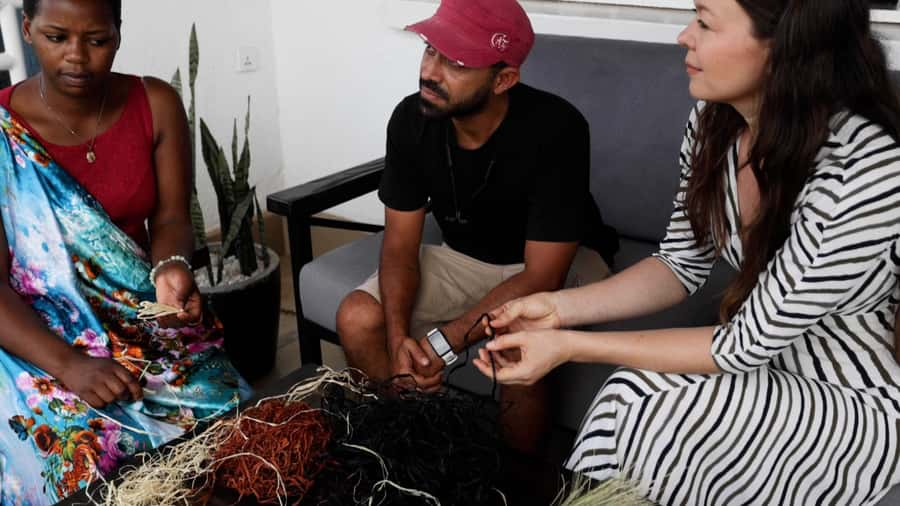
The finished item is small, but it gives the activity a satisfying ending. You may take home a coaster, little bowl, or small basket made during the lesson.
Several practical points follow from this. First, leave room in your luggage for a handmade item. Second, do not judge your work against the instructor’s. A professional weaver may complete a neat piece in minutes, while you are still learning how to keep the rows even.
The uneven parts are useful reminders of the class. You will remember the correction your teacher made, the point where the shape started to hold, and the moment the object looked like a basket instead of a pile of loose material.
If you want a larger Rwandan basket, you may need to purchase one separately. The supplied information only promises the materials and activity, not a larger retail item. Personal purchases are also not included in the $30 price.
How much value do you get for $30?
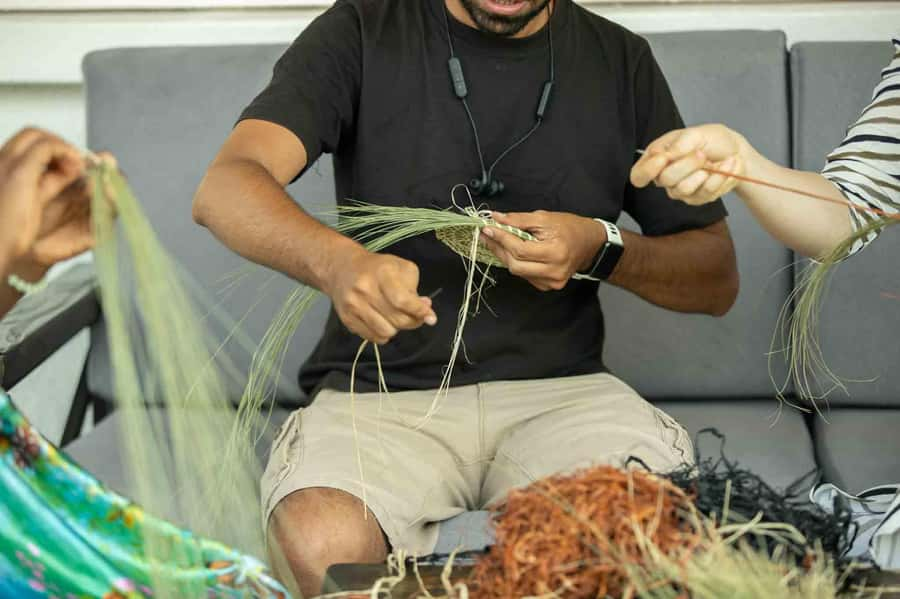
At $30 per person, this is not the cheapest way to spend two hours in Kigali. It is good value if you want personal instruction, local conversation, and a small handmade object, rather than a passive sightseeing stop.
The price includes the welcome, materials, tools, cultural explanation, and teaching. It also supports local artisans and community work. That direct economic benefit is important. You are helping pay for skill and time, not only buying an item through a middleman.
Transportation is not included. You will need to arrange your own way to and from the activity location, and the exact meeting point should be checked when booking. Personal expenses, including any additional drinks or purchases, are also separate.
The value improves if you already plan to be in Kigali and can reach the workshop easily. It fits well into a flexible day because the session lasts two hours. If you must pay a high separate transport cost, include that in your total budget.
Who will enjoy this workshop most?
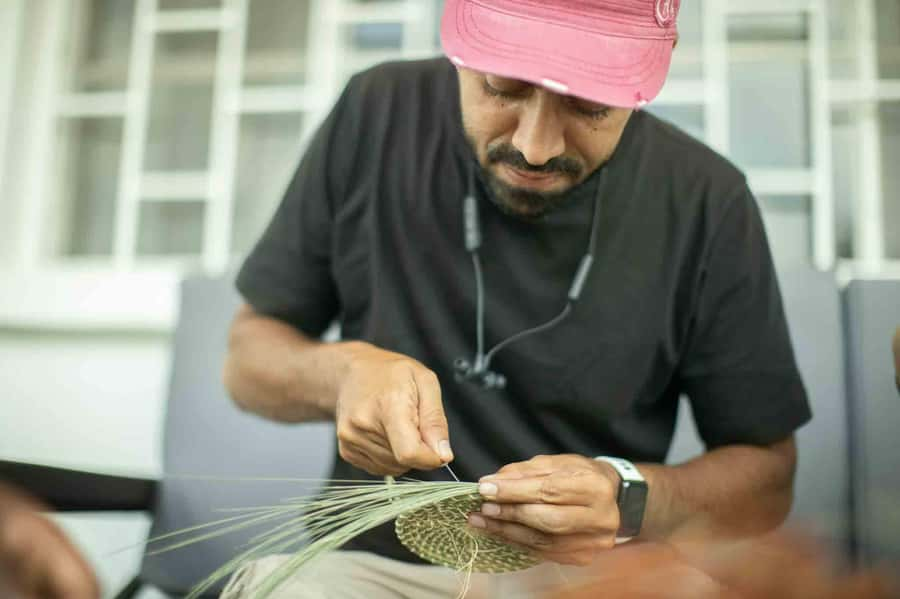
I would recommend the class to anyone who enjoys learning by doing. You do not need to be artistic, and you do not need strong handcraft skills. Patience matters more than talent.
It is a particularly good fit for:
- First-time visitors to Rwanda who want a cultural activity with direct contact and clear local context.
- Solo visitors looking for a calm way to meet an artisan and spend time away from standard sightseeing.
- Couples and families who enjoy making small objects together.
- Small groups that want a shared activity without a packed schedule.
- Shoppers who care about handmade goods and want to understand the work behind them.
- Visitors with a free afternoon in Kigali who prefer a meaningful two-hour experience.
Younger children may find the fine hand movements frustrating, but the supplied information does not give a minimum age. Ask the provider if you are booking for a child.
The class also suits men. One participant was the only man in the session and still enjoyed it, making a coaster to use at home. The important thing is curiosity, not who normally attends craft workshops.
Practical limits to keep in mind
The two-hour duration is both a strength and a limit. It is short enough to fit into most Kigali plans, but it leaves little time for a large project or a long cultural presentation.
You may also find that the amount of conversation changes from one session to another. The instructors are there to teach and share, but if you want more detail, ask questions as you work. You can ask about the materials, the patterns, how the skills are passed on, and how the finished baskets are used.
Instruction should be manageable in English or French. If you prefer another language, the available information does not promise one. A translator has been used in at least one session, but you should not assume that every booking includes translation.
Food allergies are listed under the activity’s restrictions. The reason is not explained, so if this affects you, ask for clarification before booking. Since refreshments may be present at the setting, it is sensible to raise the issue in advance.
Cancellation is flexible: you can cancel up to 24 hours before the activity for a full refund. You can also reserve now and pay later, which helps if your Kigali schedule is still changing.
Should you book the Kigali basket weaving class?
Book it if you want a relaxed, useful cultural activity where you meet local artisans, learn a traditional skill, and take home a small handmade object. The patient teaching, garden setting, and direct support for women-led craft work make the $30 price reasonable.
Skip it if your main goal is to buy a large basket, see many sights in a short time, or watch a polished performance. This is a quiet workshop, and your own hands do most of the work.
For many visitors, that is exactly the point. You leave with more than a souvenir. You leave knowing why the object takes time, why the patterns matter, and how much practice sits behind a neat finished basket.
FAQ
Where does the basket weaving activity take place?
It takes place in Kigali Province, Rwanda, in a garden setting. A coffee shop has also been used as a comfortable workshop location.
How long does the activity last?
The workshop lasts two hours.
How much does it cost?
The listed price is $30 per person.
What is included in the price?
The price includes an introduction by local Rwandan artisans, the hands-on weaving workshop, all required materials and tools, cultural information, and storytelling.
Do I need previous basket weaving experience?
No previous experience is stated as a requirement. The activity is taught by local artisans who guide you through the process.
What can I make during the workshop?
You will work toward a small traditional basket. Depending on the session, the finished item may be a small basket, bowl, or coaster.
Can I take my finished piece home?
Yes. The activity allows you to take home the item you make during the session.
Which languages are available?
Instruction is available in English and French. Translation support has also been used during at least one workshop.
Is transportation included?
No. Transportation to and from the activity location is not included, and personal expenses are separate.
Newly planted garden visits around the world
- Marrakech Majorel garden entry ticket★ 3.0 · 48 reviews
- Marrakech : Madrasa Ben Youssef & Secret Garden and Medina Tour★ 5.0 · 7 reviews
- Majorelle Garden,St Laurent & Berber Museum, Round-Trip & Tickets★ 4.5 · 84 reviews
- Marrakech: Guided City & Gardens Highlights Tour★ 3.5 · 45 reviews
- Marrakech Tour Gardens Majorelle, Menara & Anima Gardens★ 5.0 · 39 reviews
- Half-Day Private Tour to Marrakech Gardens with Hotel Pickup★ 5.0 · 5 reviews
- Majorelle Garden, St Laurent,Berber Museum Round-trip & Tickets★ 4.5 · 13 reviews
- Majorelle Garden, St Laurent and Berber Museum Round Trip Ticket★ 4.5 · 34 reviews