
Review · PAKISTAN
Cherry Blossom Tour -Hunza Valley
The best part of this journey is the road itself. From Islamabad, you follow the Karakoram Highway through steep mountain country, river valleys, old villages, and huge peaks before reaching Hunza’s cherry orchards and historic forts. This is not a quick sightseeing break. It is a full week built around distance, scenery, and time on the road.
I like the private format because you can travel with your own group and have a driver focused on your schedule. I also like the mix of grand views and real cultural stops, especially Baltit and Altit forts, rather than a trip made up only of photo stops. The main drawback is simple: some driving days last 10 hours or more, and meals, accommodation, and certain details should be confirmed before you pay.
- The Karakoram Highway carries you from Islamabad toward the Chinese border through some of Pakistan’s most dramatic mountain country.
- Altit Fort is about 1,100 years old, while nearby Baltit Fort is about 800 years old.
- March and April offer cherry blossoms, but weather and road conditions can affect access.
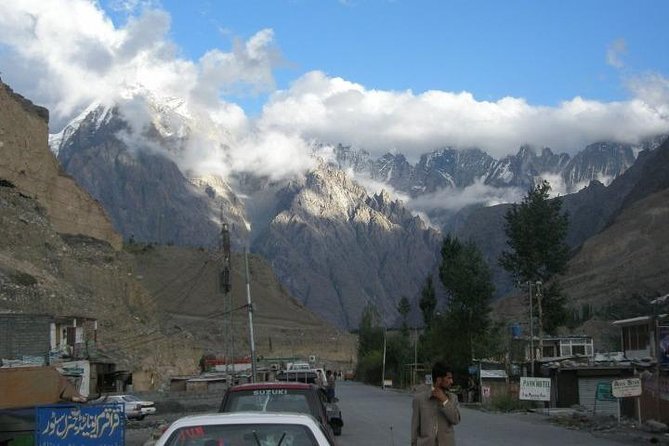
- Rakaposhi, Nanga Parbat, Spantik, Ultar, and other peaks appear at different points along the route.
- Attabad Lake, Passu Glacier, Sost, and the Sacred Rocks of Ganish fill the northern section of the trip.
- The $422.66 price can be good value for a private seven-day journey, but you should check exactly which meals, hotels, tickets, and transport costs are included.
Seven days on Pakistan’s great mountain road
This tour begins in Islamabad at 9:00 am, with pickup from the airport or your hotel. You then head north toward Besham, passing through Abbottabad and Mansehra on the Hazara Express motorway before joining the Karakoram Highway.
The route covers about 1,300 kilometers in total from Hasan Abdal toward Khunjerab Pass and the Chinese border. You will not cover all of that distance, but the highway gives this trip its character. You are not simply being delivered to Hunza. You are watching the scenery change from the Islamabad area to the high valleys of Gilgit-Baltistan.
That also explains the tour’s main challenge. This is a scenic road trip, not a relaxed resort holiday. The first and last days involve roughly five hours of driving, while the Besham to Gilgit stretch on Day 2 is listed at around 10 hours with a lunch break. Day 6 is another long return to Besham.
I would pack lightly, keep water and snacks close, and treat the driving days as part of the experience rather than wasted time. A private vehicle makes those long sections easier because your group does not have to match the pace of strangers.
Day 1: Abbottabad, Mansehra, and the route to Besham
The first day takes you from Islamabad through Abbottabad and Mansehra toward Besham. The newly built Hazara Express motorway helps with the early part of the drive, but the journey still becomes a full day on the road.
This is a useful transition day. You leave the capital behind and begin moving into the northern part of Pakistan, with the road and mountain scenery taking over. The tour provides pickup, so you do not need to arrange a separate transfer to the starting point.
The plan lists a stop in Besham before the group continues toward Gilgit the following day. Since the supplied details do not name the hotel or spell out the overnight arrangement, confirm your accommodation before booking. The same applies to meals. Some are included, but others are left to your preference.
More Cherry Blossom Tours in the world:
- Mt. Fuji, Cherry Blossom & Shiba Sakura Pvt. Day Tour
★ 5.0 · 326 reviews - The DC Cherry Blossom Bus Tour with Tidal Basin Guided Walk
★ 4.5 · 151 reviews - National Mall & Cherry Blossoms Tour with Optional Museum Tickets
★ 4.5 · 112 reviews
Day 2: Nanga Parbat and the mountain meeting point at Jaglot
The drive from Besham to Gilgit takes around 10 hours, including a lunch break. That is a serious amount of time in the vehicle, but the stops give the day a clear purpose.
Near Chilas, just after crossing Raikot Bridge on the Karakoram Highway, you stop at a Nanga Parbat viewpoint. The stop is listed at about 15 minutes, so think of it as a quick look and photo break rather than a long visit.
Nanga Parbat is one of Pakistan’s great peaks, and seeing it from the highway gives you a sense of the scale of the region. Weather matters here. Clouds can cover the summit, so do not judge the value of the stop only by whether the peak appears perfectly clear.
Later, at Jaglot, three major mountain systems meet: the Himalayas, Karakoram, and Hindu Kush. The Indus River joins the Gilgit River here, adding an important geographical detail to an already impressive setting.
Jaglot is another short stop, listed at roughly 15 minutes. I like this kind of pause because your guide can explain what you are looking at instead of giving you only another mountain photograph. Still, the schedule is tight, and you should expect more explanation from the vehicle and viewpoint than a long walk through the area.
Day 3: Danyore, Rakaposhi, and the first Hunza views
Day 3 brings you closer to Hunza. The first stop is the Danyore Suspension Bridge, an old makeshift bridge crossing the River Hunza between Danyore and the premises of the Karakoram University.
The stop lasts about 30 minutes and includes a photo gallery and restaurant. It is a good change of pace after the long road section, although the bridge itself may not suit anyone uneasy with suspension bridges. The itinerary does not promise a long crossing or a special activity, so think of this as a short local stop.
Next comes Rakaposhi View Point. It is described as about an hour from Hunza and two hours from Gilgit, with time for tea or lunch. Rakaposhi rises to about 7,788 meters and is among the world’s highest mountains. From the viewpoint, you may see the snow-covered peak above the clouds, with cold glacier water nearby.
This is one of the trip’s strongest stops because it combines a major mountain view with a practical break. You can sit, eat, take photographs, and enjoy the stream rather than rushing through a roadside lookout.
The wording of the itinerary suggests that lunch or tea may be available here, but not necessarily included in your tour price. Ask your provider what is covered. That small question can prevent confusion during a long day.
Day 4: Hunza’s forts, gardens, and Karimabad
Day 4 is the cultural heart of the trip. You visit Baltit Fort, Altit Fort, Eagles Nest, and Karimabad, with enough time at each place to make the day more than a quick checklist.
More gardens worth a morning in the world:
- Paris: Versailles Palace and Gardens Full Access Ticket
★ 4.6 · 41,579 reviews - Amsterdam: Keukenhof Entry & Shuttlebus with Flexible Return
★ 4.7 · 11,891 reviews - Versailles: Skip-the-Line Tour of Palace and Gardens Access
★ 4.7 · 10,429 reviews - Marrakesh: Majorelle Garden Entry Tickets
★ 4.5 · 9,651 reviews
Baltit Fort and the old capital of Hunza
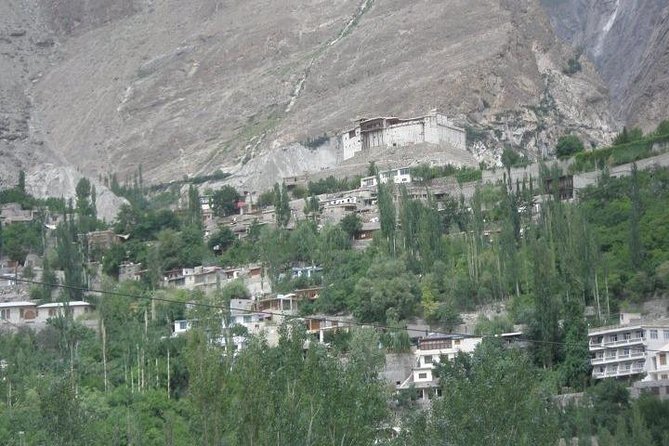
Baltit Fort sits in Karimabad on a flattened spur below the Ultar Glacier. Its position gives it a commanding view of the Hunza Valley and its tributaries.
The fort is about 800 years old and is linked with the old capital of Hunza. You have about two hours here, including the admission ticket. That is enough time to take in the building, the setting, and the valley views without treating it as a rushed photo stop.
The fort helps explain how the valley was governed and defended. Its location is not accidental. From the high spur, you can see why this was a useful seat of power.
Altit Fort and the royal gardens
Altit Fort is older, with an age of about 1,100 years. It was used for centuries as a royal residence by the Mirs of Hunza.
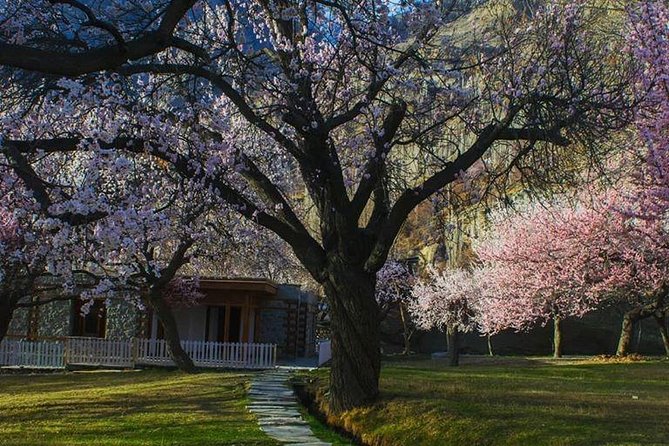
The entrance opens into royal gardens and an apricot orchard, with green fields and a sawdust-covered path leading toward the fort. You have up to four hours listed here, which is generous compared with most stops on the trip.
That extra time matters. Altit is not only an old building. The orchard, gardens, and approach help you understand the relationship between the fort and the surrounding village. I would give this stop your full attention rather than rushing through it to reach the next viewpoint.
The two forts offer different experiences. Baltit gives you the high strategic position and broad views. Altit gives you an older residential setting with gardens and orchard space. Visiting both is one of the tour’s best choices.
Eagles Nest above Hunza
Eagles Nest is located at Duikar, around 10,000 feet above sea level. A jeep is used to reach the viewpoint from Hunza, and the stop is listed at about one hour.
The viewpoint is known for sunrise and sunset, with views toward Rakaposhi, Ultar, Golden Peak, and other snow-covered mountains. On this itinerary, the stop comes after the forts, so check the exact timing if sunrise or sunset is especially important to you.
The higher altitude can also feel different from Karimabad below. The details do not state how the jeep transfer is priced or arranged, so ask about that before the trip.
Karimabad bazaar and walnut cake
Karimabad’s main bazaar gives you time to browse local goods, including handmade clothing, Hunza caps, and dried fruits such as apricots, apricot nuts, almonds, walnuts, and mulberries.
There is also a short stop at Hunza Cafe for its walnut cake. This is the kind of small food detail that makes a mountain tour feel connected to the place, rather than being only a sequence of viewpoints.
You will have about two hours in Karimabad. Use it for shopping, a snack, and a look at daily life in the main town. Since shopping is personal, the private format helps here. You can spend more time browsing or move on when you have had enough.
Day 5: Attabad Lake, Passu, Sost, and Ganish
Day 5 is the most packed northern section of the tour. You visit Attabad Lake, Passu Glacier, Sost, the Sacred Rocks of Ganish, and the Hussaini Suspension Bridge area.
Attabad Lake and the cherry blossom season
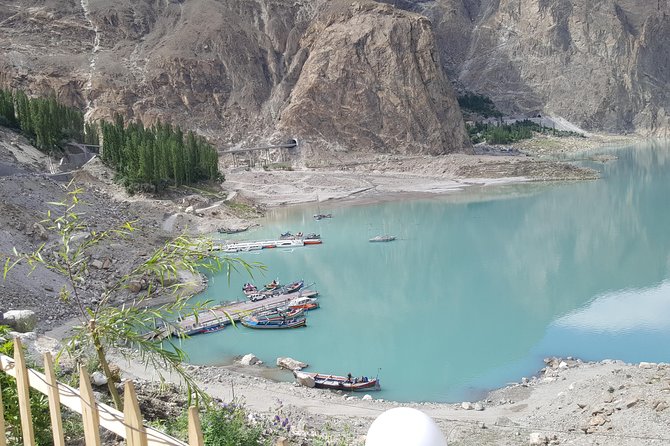
Attabad Lake formed after a major landslide and now fills the Gojal Valley with bright blue water framed by steep mountains. During cherry blossom season, the surrounding colors add another layer to the view.
The stop lasts about two hours, giving you more time than a basic roadside photo break. The details provided do not list boating or another paid lake activity, so do not assume one is included.
If you visit in March or April, this is one of the places where the blossom season can make the trip feel especially distinctive. The exact display depends on weather and timing, so you should treat the blossoms as a seasonal possibility rather than a guarantee.
Passu Glacier
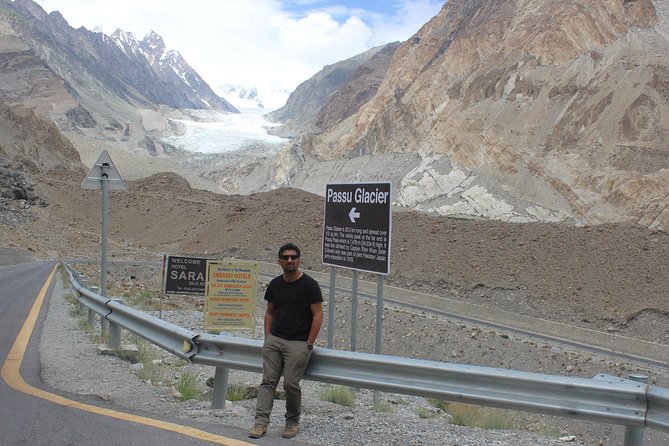
Passu Glacier lies south of Passu village, with Passu Peak behind it. It connects with the Batura Glacier and other glaciers in the region.
The listed stop is only 30 minutes. That is enough for a short look and photographs, but not a long walk or extended glacier visit. The quick timing is sensible within such a full day, though anyone hoping for a longer mountain outing should adjust expectations.
Sost and the limits of the early-season route
Sost is the last town in Pakistan on the Karakoram Highway before the Chinese border. It sits at about 2,800 meters above sea level and gives you a clear sense that you have reached the high northern end of the route.
The itinerary makes an important seasonal point: Khunjerab Pass officially opens in April, so it may not be possible to visit the pass in March or early April. If the border pass is one of your main reasons for booking, ask about opening conditions and the planned turnaround point before you commit.
This is a key distinction between a cherry blossom trip and a border-pass trip. The tour focuses on Hunza and can run when blossoms are out, but early-season access beyond Sost may be restricted.
Sacred Rocks of Ganish and the Hussaini Bridge area
The Sacred Rocks of Ganish, also called Haldeikish, carry carvings dating to the first millennium AD. The rock sits on a hill east of the Hunza River, and the stop lasts about one hour.
This is a valuable cultural pause because it takes you beyond forts and scenery. The carvings point to the long movement of people through these mountain routes.
The day also includes the Hussaini Suspension Bridge area. The bridge crosses the Hunza River between Zarabad hamlet and Hussaini village. The listed stop is about 30 minutes. It is a striking setting, but the tour details do not specify whether you cross the bridge, so confirm that if it matters to you.
Day 6 and Day 7: Returning to Islamabad
After souvenir shopping at NLI Bazaar, Day 6 takes you back toward Besham. The drive is listed at roughly 10 hours or more.
This return day will feel long, especially after several full sightseeing days. The advantage of a private trip is that your group can use breaks in a way that suits you, though the overall distance cannot be avoided.
On Day 7, you continue from Besham to Islamabad, a journey of about five hours or more. You are dropped at your designated hotel or the airport.
If you have a flight on the final day, leave a generous margin. The timing depends on road conditions and the length of stops, and the itinerary itself says five hours or more. I would avoid booking a tight connection.
What $422.66 per person really buys you
At $422.66 per person, this tour deserves a close look at the inclusions. Seven days of private travel through a remote region can offer solid value, particularly if the price covers the vehicle, driver, guide, sightseeing arrangements, and major fort admissions.
Baltit and Altit entrance tickets are included, while many other stops are free. Some meals are included, but others are your choice, so your final cost depends partly on where you eat and what you order.
The main question is accommodation. The supplied details do not name hotels or clearly list lodging, so confirm whether rooms are included in the price. Also ask about fuel, the jeep at Eagles Nest, meals, and any optional activities around Attabad Lake.
For a private group, the price may work well because you are not sharing the full schedule with strangers. The two written accounts associated with Rocket Tourism also point to customized planning, including a longer northern trip involving Hunza, Khunjerab Pass, Skardu, and Taxila. One specifically notes that Mr. Fahd Vohra planned around a mother’s comfort. That suggests customization is worth discussing, especially if someone in your group needs shorter driving sections or more rest.
Who should book this Hunza tour?
I would recommend it to you if you want a guided introduction to Hunza and do not want to arrange a complicated mountain road trip yourself. It suits people who care about forts, rivers, mountain viewpoints, village stops, local food, and the cherry blossom season.
It is also a good fit for a private family group. The route is demanding, but the schedule can be discussed with the operator, and the private format gives you more control than a large coach tour.
I would hesitate if you dislike long drives or want several full days of hiking. This itinerary includes brief stops and viewpoint visits, but it does not describe a trekking program. I would also hesitate if Khunjerab Pass is your top priority and you plan to visit in March or early April, when access may not yet be open.
Rocket Tourism offers free cancellation up to 24 hours before the start time. The experience depends on good weather, and poor conditions can lead to a new date or a full refund. Service animals are allowed, the tour is near public transportation, and most people can take part, but the long road days are the practical issue to consider.
Should you book it?
Book this tour if you want the big Hunza picture in one private trip: cherry blossoms when the season is right, ancient forts, Rakaposhi views, Attabad Lake, Passu, Sost, and a guide who can explain the people and geography along the way.
Before paying, confirm four things: the hotels, included meals, the transport arrangement, and the plan for Eagles Nest and Khunjerab Pass. If those details match your needs, $422.66 per person can be a sensible price for seven days of private travel through a difficult-to-arrange mountain region.
FAQ
When does the cherry blossom season usually take place?
The cherry blossoms are usually out in March and April. The tour can also operate at other times of year, when the trees are not blooming but the mountain scenery remains the main attraction.
How long is the tour?
The tour lasts approximately seven days, beginning in Islamabad and ending with drop-off at a designated hotel or airport in Islamabad.
Is hotel or airport pickup available?
Yes. Pickup is offered from the airport or a hotel in Islamabad, with a listed start time of 9:00 am.
Can I visit Khunjerab Pass in March?
The provided tour details state that Khunjerab Pass officially opens in April, so it may not be possible to visit in March or early April.
Are meals included?
Some meals are included, while other meals are left to your preference. Confirm the exact meal inclusions before booking.
Can I cancel for a full refund?
Yes, you can cancel up to 24 hours before the experience start time for a full refund. If poor weather causes the tour to be canceled, you will be offered another date or a full refund.
Newly planted garden visits around the world
- Sunday Market and Gardens Tour★ 4.0 · 10 reviews
- Botanical Trails of Madeira. Mountain biking Trail Experience★ 5.0 · 42 reviews
- Monte Tropical Garden & Toboggans private Tuk-Tuk tour★ 5.0 · 25 reviews
- Funchal Old Town & Palheiro Gardens Private Tuk Tuk Tour★ 5.0 · 8 reviews
- Kensington Palace VIP Garden Tour with Royal High Tea★ 4.5 · 71 reviews
- Private Half-Day Tour to Monet’s Garden in Paris★ 5.0 · 3 reviews
- Madeira Botanical Gardens and Old Town Tuk Tuk Tour by MadTuk★ 4.5 · 7 reviews
- Secret Gardens of London Private Tour★ 5.0 · 13 reviews
Cherry Blossom Tours, bed by bed.

The DC Cherry Blossom Bus Tour with Tidal Basin Guided Walk
Read our review →National Mall & Cherry Blossoms Tour with Optional Museum Tickets
Read our review →
Nagano: 1-Day Snow Monkey & Cherry Blossom Tour in Spring
Read our review →
Nagano Spring: 1-Day Cherry Blossoms & Snow Monkeys Guided Tour
Read our review →Lists this garden visit belongs to