
Review · DENARAU ISLAND
Mud Pools-Nadi Private Therapeutic Pools, Gardens, Temple, Market &Shopping Tour
The oddest and most memorable part of this Nadi outing is the Sabeto mud bath. You spread warm mud over your skin, let it dry, then wash it away in a geothermal pool. It is playful, messy, and very different from another afternoon beside the pool.
I like two things right away: you get a private air-conditioned vehicle, and the day mixes nature, religion, shopping, and local life. Guides such as Avi, Sami, Sashi, and John have been singled out for explaining Fijian culture, Hindu traditions, markets, and everyday life rather than simply driving between stops.
The main caution is pace. Five stops in four to five hours can feel brisk, and the market visits may include persistent sellers. The mud-pool area is also basic, and you should bring a towel.
Key points to know before booking

- The mud pools are the main event: Expect a hands-on bath with warm mud, hot water, and plenty of laughter.
- Private guiding makes a difference: Your driver-guide can adjust time at the temple, gardens, markets, and shopping stops.
- The temple requires smart casual dress: It is a working Hindu temple with colorful paintings and important religious meaning.
- The Garden of the Sleeping Giant adds quiet beauty: Orchids, mountain views, and a short lookout walk provide a calm break from town.
- Shopping is part of the plan: You visit produce and handicraft markets, with a duty-free or local shop stop possible.
- Plan for extras: Food, drinks, souvenir photos, towels, and an optional massage are not included in the $117.12 price.
A private way to see more than Nadi’s beaches
This tour works as a compact introduction to the Nadi area. In one half-day, you move from a Hindu temple in town to produce stalls, handmade goods, orchid gardens, and volcanic mud pools near the Sleeping Giant mountains.
At $117.12 per person, the value depends heavily on your group size. For a private group, the cost covers a driver-guide, bottled water, transport, and entrance fees. You also get hotel, port, or airport pickup, which can save time and taxi costs. A couple or small family may find it worthwhile because the schedule can be adjusted.
The tour is less compelling if you want long, unhurried visits at each place. The standard plan gives about 30 minutes at the produce markets, one hour at the mud pools, one hour at the orchid gardens, 30 minutes for handicrafts, and one hour at the temple. Those times add up quickly, especially with driving between stops.
Morning and afternoon departures are offered. That flexibility is useful if you are staying on Denarau Island, arriving by cruise ship, or fitting sightseeing around a beach day. Airport pickup and drop-off can also make the tour useful on a travel day, though you should confirm your timing carefully when booking.
More gardens worth a morning in Fiji:
- Nadi: Garden Village Hot Spring & Temple Highlights Tour
★ 4.6 · 339 reviews - CFC Hot Spring Mud Pool,Garden Of Sleeping Giant And Village Visit Half Day Tour
★ 5.0 · 302 reviews - Nadi Sightseeing Including Viseisei Lookout, Village Tour, Garden & Temple Tour
★ 4.5 · 63 reviews
Starting with Nadi’s markets and local life
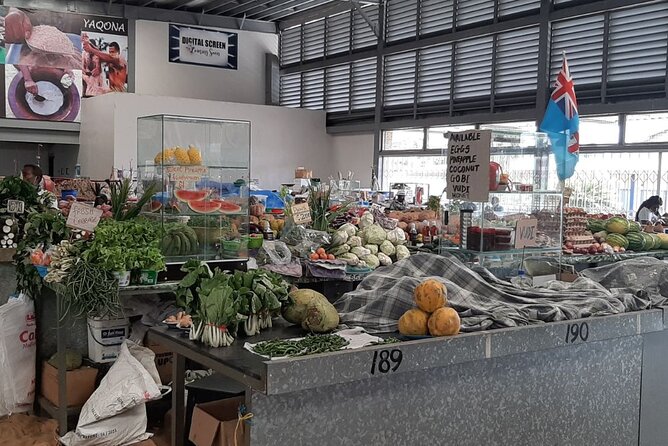
The produce market gives you a quick look at everyday Nadi. You can see local fruit and vegetables, talk with stallholders through your guide, and sometimes try fresh produce or coconut. It is not a polished food tour, so do not expect a long tasting session or included meal.
Your driver-guide adds much of the value here. Sami has been praised for pointing out daily life along the road and introducing visitors to market sellers. Avi has also been valued for explaining local customs, housing, vehicles, restaurants, kava bars, and ordinary Fijian life.
The market stop lasts about 30 minutes. That is enough to look around and buy something small, but it can feel short if you enjoy food markets. You pay for anything you purchase, and food and drinks are not included.
The handicraft stop gives you another chance to shop for locally made goods. Depending on the day, you may visit Nadi’s handicraft market, a duty-free shop, or a local retailer such as Jack’s of Fiji. Available items can include clothing, wooden products, trinkets, and souvenirs. One visitor used this stop to buy a Fijian lali drum.
Here is the practical point: shopping is not just a quick optional add-on. It forms a visible part of the outing. If you dislike browsing shops or prefer more time in gardens and at the mud pools, tell your guide early. The private format gives you a better chance of reshaping the balance.
You may also encounter sales pressure at the markets. One account describes sellers as hounding shoppers, while other experiences found the local contact friendly and enjoyable. Go in with a clear budget, say no politely, and avoid feeling obliged to buy.
Visiting Sri Siva Subramaniya Swami Temple
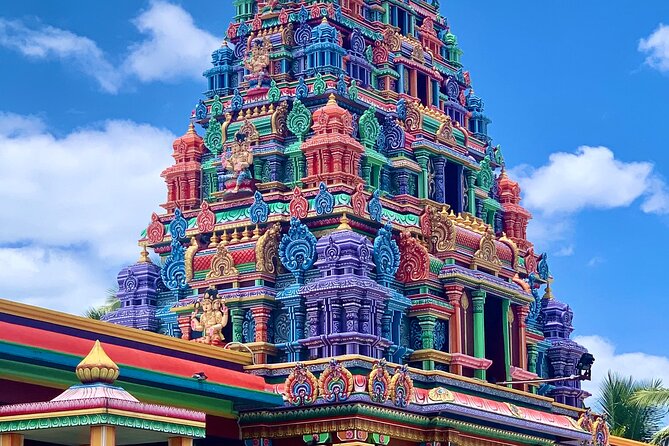
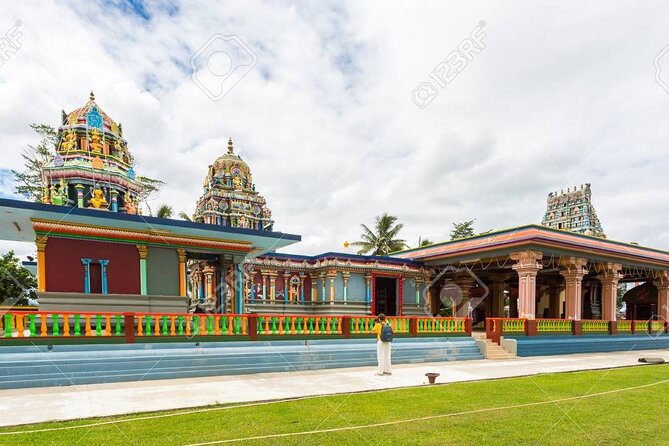
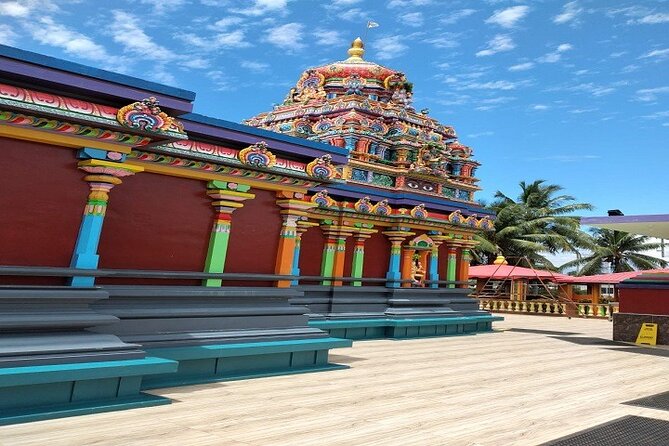
The Sri Siva Subramaniya Swami Temple is one of the most striking stops. Its bright exterior and detailed artwork reflect Fiji’s large Indo-Fijian population and the Hindu faith practiced by many local families.
Inside, a guide explains the paintings, Hindu gods and goddesses, and the purpose of religious ceremonies. This is where a good driver-guide matters most. Avi has been praised for giving a careful explanation of the temple and Hindu beliefs, while Sami has been noted for discussing the meaning of the artwork and ceremonies.
You receive about an hour here, including the guided visit. That is generous compared with the short market stop, and it gives you time to look closely at the colors and details rather than treating the temple as a quick photo stop.
Dress smart casual. The temple is a religious site, not simply a decorative attraction, so respectful clothing is important. The supplied information does not specify exact garment requirements, so ask your operator if you need precise guidance before you go.
The temple is also a good reason to choose this tour instead of arranging a simple taxi around Nadi. A taxi can take you there, but it cannot explain the symbolism, religious practice, and local context in the same way. If culture matters to you, give this stop your full attention.
Orchids and mountain views at the Garden of the Sleeping Giant
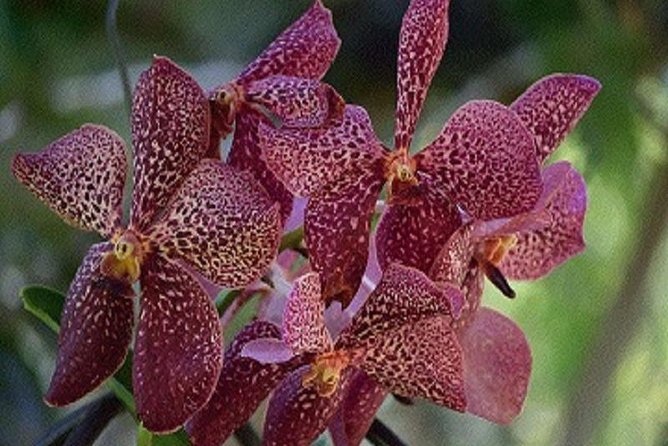
The Garden of the Sleeping Giant provides a softer middle section to the day. The gardens sit near two large mountains and contain more than 2,000 orchid varieties according to the tour description. Another description highlights about 30 to 40 types of Asian orchids and Cattleya hybrids, so the exact count or display can vary.
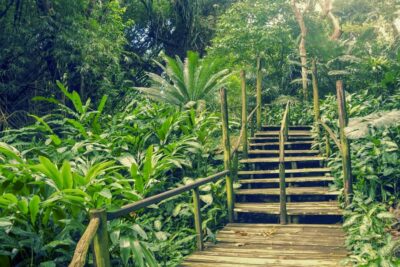
You walk among orchids, flowers, and tropical plants, with the mountain forms visible beyond the gardens. The setting is calmer than the market and less physical than the mud bath. It is a good stop for anyone who likes plants, photography, or a quiet break from town.
The visit lasts about one hour. A short hike to a lookout has been described as worth the effort, but the tour details do not promise a particular route or level of difficulty. If you want the lookout, tell your guide so you do not spend all your garden time at the lower paths.
The gardens are not the place to rush through with your phone out for five minutes. Give yourself time to notice the orchid displays and the views toward the Sleeping Giant mountains. Still, if gardens are your main reason for booking, you may want to ask how much time can be reserved here, since this is a multi-stop tour.
Same season, a different set of beds:
- Garden of Sleeping Giant with Tifajek Mudpool Hotspring Tour
★ 4.6 · 35 reviews - Wonders of Nadi Tour – Hindu Temple, Sleeping Giant Gardens, Markets & Shopping
★ 4.5 · 33 reviews - FIJI: Garden of the Sleeping Giant Tour
★ 4.3 · 22 reviews - Private Tour: Hot spings & Sleeping Giant Garden hiking Adventure
★ 5.0 · 19 reviews
The Sabeto mud bath and hot springs
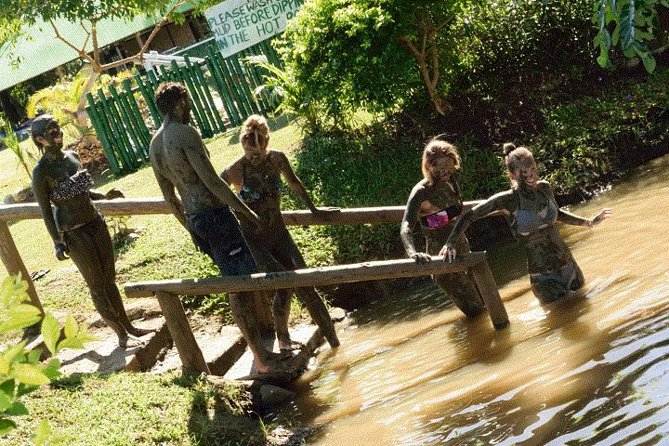
The mud pools at Sabeto are the most unusual stop and usually the one that gives the tour its personality. You coat yourself with warm geothermal mud, wait for it to dry, then rinse off in the hot springs.
The experience is not fancy. One account describes the area as not the cleanest, and that is useful to know before booking. Think of it as a simple outdoor bathing experience rather than a luxury spa. The appeal lies in the natural setting, the novelty, and the fun of doing something messy with your family or private group.
The pool visit lasts about an hour. Staff help explain the process, and guides may assist with applying the mud. The water is warm, but the information does not give a precise temperature, so anyone sensitive to heat should take care.
The pools are believed to have therapeutic properties, but you should treat that as a traditional belief rather than a medical promise. People mainly choose this stop for the unusual ritual and relaxed feeling afterward.
Bring a towel. Towels are not supplied according to the available information. Wear clothing and footwear suitable for getting wet and muddy, though the tour details do not specify changing-room arrangements. Food and drinks are also not included.
An optional massage may be available after the mud bath. Several accounts describe adding a massage and enjoying the result, but it costs extra. The tour price includes entrance fees, not massage services, so ask about the price before agreeing.
The mud pools can become crowded. One group finished just before a large crowd arrived, which suggests that timing affects the experience. A private guide may help you move efficiently, but cannot guarantee an empty pool.
Guides, vehicles, and the private-tour advantage
The driver-guide is central to this experience. Names that appear in the supplied information include Avi, Sami or Sammi, Sashi, and John. Avi is repeatedly praised for cultural explanations and careful driving. Sami is described as friendly, informative, and attentive to comfort. Sashi helped coordinate luggage and a different drop-off location for one group arriving at the airport.
That does not mean every booking will have one of these guides. The important point is that your experience may depend more on the individual guide than on the basic list of stops. A strong guide turns the drive into part of the tour by explaining what you see along the road and answering questions about Fijian life.
The vehicle is described as modern and air-conditioned. Most accounts praise clean, comfortable transport, but one serious complaint describes an old, dirty, smelly vehicle with weak air-conditioning and an uncomfortable driver. That appears to be an exception, but it is a reminder to contact the operator if vehicle condition or guide assignment matters to you.
Private travel is the biggest practical advantage. Only your group participates, and guides may let you spend more or less time at stops. This is especially useful for families, couples, and small groups with different interests. You can linger at the temple, shorten shopping, or ask for more garden time, subject to the day’s schedule.
Who will enjoy this tour most
I would choose this tour if you want a broad taste of the Nadi area without giving up a full beach afternoon. It suits first-time visitors who want culture and nature in one outing, especially those staying on Denarau Island.
It is also a good match for cruise passengers and people with limited time. Hotel, port, and airport pickup make the day easier to manage, and the four to five-hour length leaves room for swimming or dinner.
Families should enjoy the mud bath, though adults should be ready for a basic setting. Couples may like adding the massage after the pools. Plant lovers will appreciate the orchid garden, while culture-focused visitors should give extra weight to the temple and market explanations.
I would hesitate if you dislike shopping, do not want to get muddy, or expect a polished luxury spa. The tour covers a lot, but it is not designed for slow, detailed exploration of one attraction.
At 91 percent recommended and a 4.7 rating from 45 ratings, the overall response is strong. Still, the mixed experience with one vehicle and driver means I would confirm pickup details, vehicle expectations, and any special requests before the day.
What to bring and how to plan your time

Pack a towel, water-friendly clothing, sunscreen, and a small amount of spending money for produce or handicrafts. Smart casual clothing is important for the temple, so avoid planning the whole day in beachwear.
Keep your schedule flexible. The tour lasts approximately four to five hours, but traffic, market time, shopping, and the mud-pool crowd can affect the pace. If you have a flight, cruise departure, or dinner reservation, leave a generous buffer.
The price includes bottled water, the driver-guide, and all listed fees and taxes. It does not include food, drinks, souvenir photos, or the optional massage. Free cancellation is available up to 24 hours before the start time. Changes or cancellations inside that period are not accepted for a refund.
Should you book the Nadi mud-pool tour?
Book it if you want a private, varied half-day with cultural explanation, local markets, orchids, and an unusual mud bath. The combination is hard to reproduce with a simple taxi, and a good guide can make the drive as informative as the stops.
Skip it if you want a quiet garden visit, a serious wellness treatment, or a long beach day with no shopping. For most first-time visitors based on Denarau Island, the tour offers good value when the private vehicle, transfers, and entrance fees are useful. Bring a towel, set modest expectations for the mud-pool facilities, and ask your guide to adjust the time toward the stops you care about most.
FAQ
How long does the tour last?
The tour lasts approximately four to five hours.
Where can pickup be arranged?
Pickup is offered from hotels, ports, or the airport. The tour is based around Denarau Island and Nadi.
Is this a private tour?
Yes. Only your group participates in the activity.
What attractions are included?
The tour includes Nadi’s produce market, a handicraft market or shopping stop, Sri Siva Subramaniya Swami Temple, the Garden of the Sleeping Giant, and Sabeto Hot Springs and Mud Pool.
Are morning and afternoon departures available?
Yes. You can choose a morning or afternoon departure.
Is transportation provided?
Yes. Transport is provided in an air-conditioned vehicle with a driver-guide.
Are admission fees included?
Yes. The tour includes all listed fees and taxes, including the included attraction entries.
Is the massage included?
No. A massage at the mud pools is an optional extra and is not included in the tour price.
What should I wear and bring?
Wear smart casual clothing for the temple and bring a towel for the mud pools. Food, drinks, and souvenir photos are not included.
Newly planted garden visits around Fiji
- garden of the sleeping giant and mudpool tour combo★ 4.5 · 7 reviews
- Mud Pools, Gardens, Markets, Temple & Shopping-Nadi Tour half day★ 4.5 · 5 reviews
- Half Day Mudpools, Veseisei Fijian Village, Gardens of Sleeping Giants &Shopping★ 5.0 · 3 reviews
- Half Day Nadi Tour Temple, Market, Gardens and Mud Pools★ 5.0 · 3 reviews
- Garden Of Sleeping Giant ,Mudpool &Temple Tour From Coral Coast★ 4.0 · 5 reviews
- NADI-SABETO: Exquisite Orchid Garden with Hotspring Mudpool★ 5.0 · 3 reviews
- Nadi: Private Tour with Temple, Garden, Markets & Mud Pools★ 4.3 · 3 reviews
- Garden of Sleeping Giant with Sabeto Hotspring Mudpool Tour★ 3.7 · 9 reviews
Denarau Island Garden Tours, bed by bed.
Nadi: Garden Village Hot Spring & Temple Highlights Tour
Read our review →
Wonders of Nadi Tour – Hindu Temple, Sleeping Giant Gardens, Markets & Shopping
Read our review →
Half Day Nadi “Historical and Cultural Tour” with Village,Temple,Gardens&Markets
Read our review →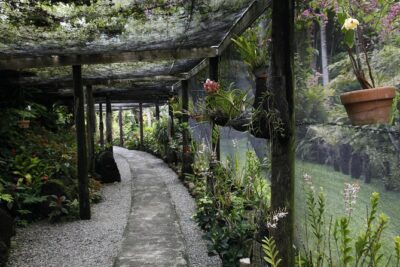
garden of the sleeping giant and mudpool tour combo
Read our review →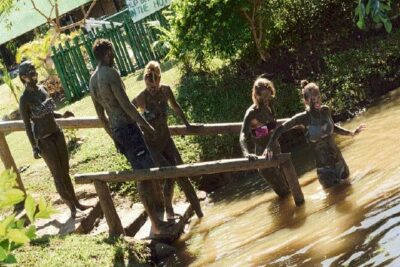
Mud Pools, Gardens, Markets, Temple & Shopping-Nadi Tour half day
Read our review →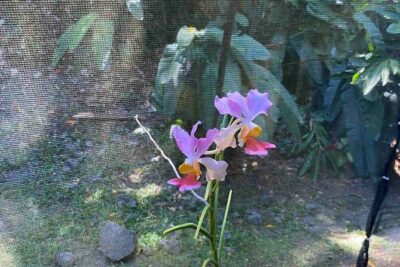
Half Day Nadi Tour Temple, Market, Gardens and Mud Pools
Read our review →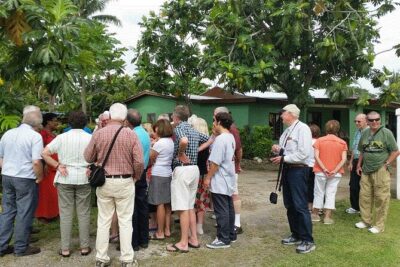
Half Day Mudpools, Veseisei Fijian Village, Gardens of Sleeping Giants &Shopping
Read our review →Lists this garden visit belongs to